
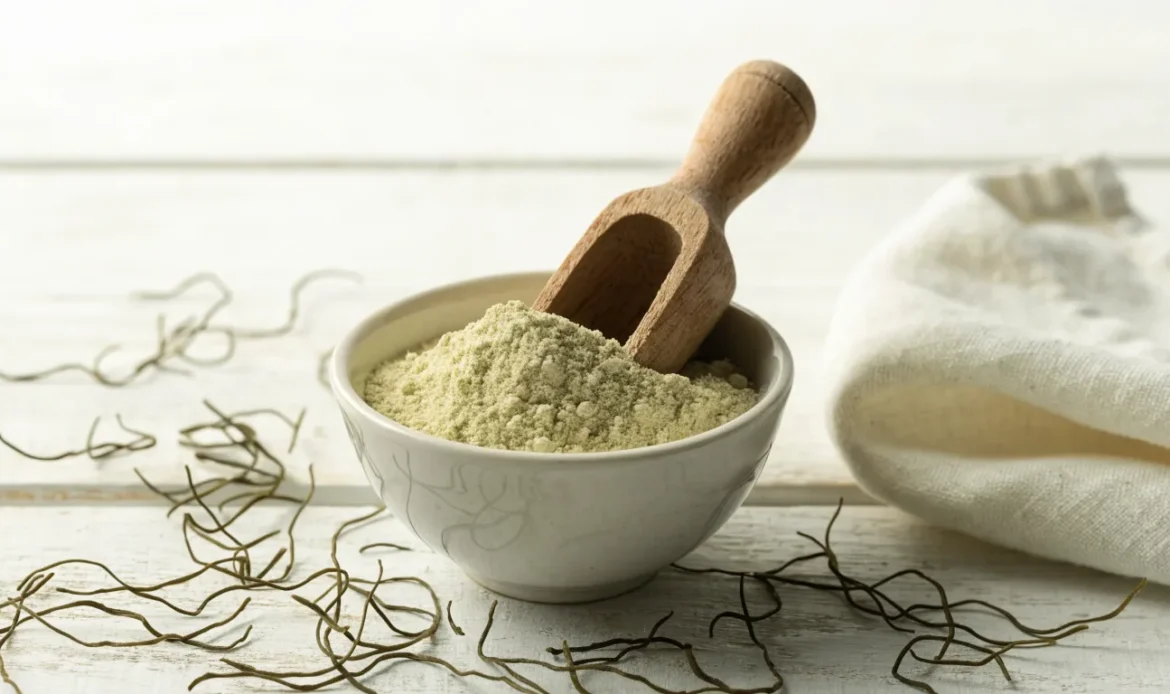
Short answer: Powder is dried, easy to store, and mixes into dry or hot recipes. Gel is rehydrated sea moss ready to scoop and blend into cold drinks or top foods. Pick powder if you want long-term pantry use and flexible dosing. Pick gel if you want a ready, spoonable form for smoothies, desserts, or topical mixes. Both need careful sourcing and safe handling.
Why this guide: you’ll get clear steps to decide which form fits your needs, how to turn one into the other, what safety checks to make, and which questions to ask sellers.
What each form actually is
- Sea moss powder: finely ground, dried sea moss. It is low in water and usually packaged as a dry ingredient. Powder can be mixed into baking, hot drinks, capsules, or smoothies. Dry powders vary by particle size and may clump if humid.
- Sea moss gel: sea moss that has been soaked (if from whole sea moss) or rehydrated and blended with water until it becomes a soft, jelly-like paste. Gel is spoonable and often used directly in cold recipes, smoothies, or topical applications.
What I’m not saying: I can’t tell you how much of any nutrient is in a particular product without a lab report. I can’t promise safety or purity for a given brand. Use the checks below to reduce risk.
How they differ in everyday use
- Convenience: Powder is lightweight and travel-friendly. Gel is ready-to-use and saves a blending step for cold recipes.
- Cooking roles: Powder works well where dry ingredients or heat are okay (baking, hot teas). Gel works well when you want texture or suspension in cold drinks, puddings, or topical mixes.
- Storage & transport: Dry powder is easier to store long-term in a sealed container kept dry. Gel is perishable once made and needs refrigeration or freezing to slow spoilage.
- Portion control: Powder lets you measure small amounts precisely; gel portions can be harder to measure without a scoop.
- Shipping: Dry powder is lighter and less likely to leak. Gel requires insulated shipping and cold packs if the seller ships it fresh.
How to make gel from powder (step-by-step checklist)
Note: making gel from ground dried sea moss is different than rehydrating raw whole sea moss. Below is a safe, basic method for turning quality powder into a spoonable gel-like blend.
Materials:
- Food-grade sea moss powder.
- Clean (preferably filtered) water.
- Blender or food processor.
- Sterilized jar with tight lid.
- Clean spoon and workspace.
Process checklist:
- Clean hands and workspace. Use utensils and containers that were washed in hot, soapy water.
- Measure powder and water. Start with a small test batch to check texture. Add more water for a looser gel.
- Combine powder and room-temperature or warm filtered water in the blender. Let sit a short time so powder hydrates.
- Blend until smooth and uniform. Stop and scrape sides if needed.
- Pour into a sterilized jar. Seal the jar while still warm or at room temperature.
- Cool quickly and move to refrigeration. Label with a prep date.
- Use the gel within a short refrigerated period or freeze portions for longer keeping. Discard if you see mold, off smells, or unusual separation.
Why filtering water matters: tap water contains minerals and sometimes contaminants. Using filtered water reduces an extra source of variability.
What this does not prove: Rehydrating powder changes texture but will not necessarily restore all original compounds or match the profile of gel made from raw, soaked sea moss.
How to store each form safely
General safety cautions:
- Keep items dry, clean, and cool.
- Use clean utensils; don’t dip used spoons back into jars.
- Check jars or powder containers for signs of moisture, mold, or off odors.
- When in doubt, throw it out.
Storage tips:
- Powder: store in an airtight jar, in a cool, dark, dry place. Keep humidity low.
- Gel: refrigerate after opening and use within a short timeframe. You can freeze gel in portion sizes to extend use. Thawed gel may change texture; inspect before using.
I won’t list a universal shelf life. How long a product is safe depends on how it was prepared, how cleanly it was handled, and how it’s stored.
Safety and sourcing checks before you buy
Seaweed products, including sea moss, can vary in iodine and contaminant levels. You can reduce risk with these checks:
- Ask the seller about testing. Look for third-party lab reports for heavy metals, microbiological safety, or iodine when available.
- Check ingredient lists. Pure sea moss should list sea moss (and sometimes water). Avoid products with unexplained additives unless you know their purpose.
- Ask about harvest location and processing steps. Harvest region, drying methods, and cleanliness can affect product variability — sellers who provide clear sourcing and processing info are easier to evaluate.
- If you may be sensitive to iodine or have thyroid issues, talk to a clinician before adding seaweed products regularly. Scientific reviews note wide iodine variability in seaweed and potential risks from high intake [1][2][5].
- Be cautious with raw or untested wild-harvested products. Food-safety agencies recommend monitoring iodine and other contaminants in seaweed products [3].
References that support these points are listed below.
Quick decision guide (table)
| Question | Choose Powder | Choose Gel |
|---|---|---|
| Need easy pantry storage and shipping | ✓ | |
| Want a ready spoonable form for smoothies | · ✓ | |
| Plan to bake or use in hot drinks | ✓ | |
| Want to avoid extra prep steps for drinks | · ✓ | |
| Need precise small doses | ✓ | |
| Selling or shipping multiple units wholesale | ✓ (easier) | |
| Want to make topical products without blending | · ✓ (ready texture) |
Use this guide to match product features to how you plan to use sea moss. Also confirm safety checks above for the product you buy.
Wholesale and buying notes
If you are buying for resale or frequent use, consider:
- Packaging and labeling needs for resale.
- Shipping costs: powders are lighter per volume than gels.
- Storage space and cold-chain capacity if offering gel to customers.
- Request certificates or lab testing for batches if you plan to resell. Operation Supplement Safety and food regulators note that supplements and seaweed products can vary, and documented testing helps buyers manage risk [4].
For questions about wholesale options and requirements, see our wholesale page: /wholesale/. To get product details or ask about testing, use our contact page: /contact/.
Practical recipe ideas (how to use each form)
Powder:
- Stir into hot soups or broths (it dissolves more readily with heat).
- Mix into dry spice blends for savory dishes.
- Add to baked goods by blending with dry flours (test small amounts first).
Gel:
- Scoop into smoothies, cold drinks, or puddings.
- Stir into yogurt or refrigerated desserts.
- Use as a base for topical masks and creams (ensure product is intended and tested for topical use).
Note: Always test a small amount of new food product to check for taste and tolerance.
Conclusion
Choosing between sea moss powder and gel comes down to use, storage, and safety checks. Powder gives flexibility and easier storage. Gel gives ready texture and convenience. Always ask about testing and processing, handle products with clean tools, and inspect for spoilage. If you plan to buy or sell in larger amounts, check packaging, shipping, and documentation needs.
Learn more about sea moss and other products at our learning hub: /learn/. Browse current items at our shop: /shop/. For general info, start at our home page: /. For wholesale or partnership questions: /wholesale/. To ask a direct question: /contact/.
Continue reading
Frequently asked questions
Can I substitute powder for gel 1:1 in recipes?
Not always. Powder and gel differ in water content and texture. If substituting, expect changes in thickness and moisture. Start with a test batch and adjust liquid in the recipe.
Does powder have the same nutrients as gel?
Drying and processing change a product’s chemistry. Powder and gel may differ in nutrient availability and concentration. The exact differences depend on source and method. Reliable lab testing is the only way to know for a specific product [1].
Are there safety risks with sea moss?
Seaweed products can contain high iodine or other contaminants depending on species and harvest location. Ask sellers about testing and consult a clinician if you have thyroid concerns. Scientific reviews discuss risks tied to iodine and seaweed intake [2][3][5].
How can I tell if sea moss gel has gone bad?
Look for mold, foul odors, and unusual color changes. If any of these appear, discard the product. Proper hygiene and refrigeration slow spoilage but do not guarantee indefinite safety.
Can I freeze gel?
Yes — freezing is a common way to extend the usable life of gel. Texture can change after thawing, so freeze in portion sizes you will use at one time.
Should sellers provide lab reports?
Reputable sellers often provide or can supply third-party lab test results for contaminants and heavy metals. This transparency helps buyers evaluate safety and quality [4].
References
- [1] Harvard T.H. Chan School of Public Health, “Seaweed.” https://nutritionsource.hsph.harvard.edu/seaweed/
- [2] Smyth PPA. “Iodine, Seaweed, and the Thyroid.” European Thyroid Journal, 2021. https://pmc.ncbi.nlm.nih.gov/articles/PMC8077470/
- [3] Food Standards Australia New Zealand, “Survey of iodine levels in seaweed and seaweed containing products,” updated 2025. https://www.foodstandards.gov.au/science-data/monitoring-safety/surveyofiodinelevels
- [4] Operation Supplement Safety, “Sea Moss in Dietary Supplements.” https://www.opss.org/article/sea-moss-dietary-supplements
- [5] Blikra MJ et al. “Consequences of acute and long-term excessive iodine intake: A literature review focusing on seaweed as a potential dietary iodine source.” 2024. https://doi.org/10.1111/1541-4337.70037