
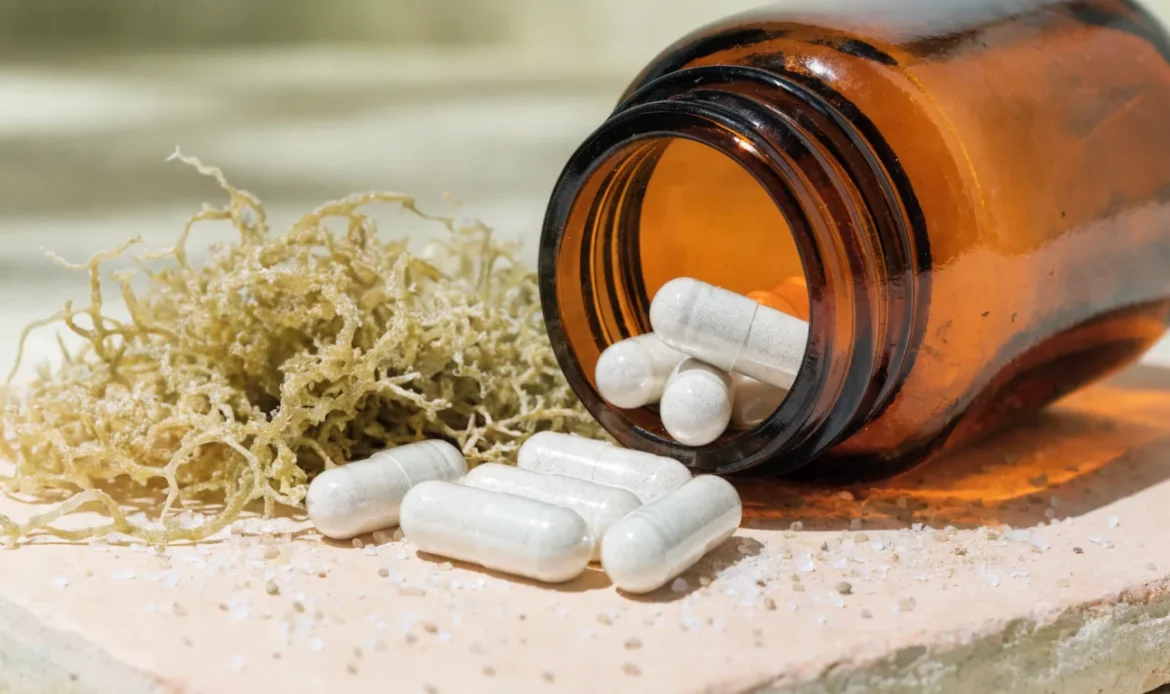
Short answer: Capsules are made from dried, powdered sea moss. Gel is made from raw or rehydrated sea moss blended with water. Capsules are easier to dose and carry. Gel is closer to the whole, minimally processed seaweed. Which is better depends on your needs, how you plan to store it, and how much lab testing you want before you buy.
Why this guide: You will get clear facts, a decision table, safety checks, and steps to compare products. I explain what you can check and what the available information cannot prove.
What each form is and how they are made
Sea moss gel
- Made by soaking raw or dried sea moss, rinsing it, and blending it with water.
- Sold fresh or frozen. It is moist and spreadable.
- Makes it easy to add to smoothies, soups, and recipes.
Sea moss capsules
- Made by drying sea moss and grinding it into powder. The powder goes into capsules.
- Sold as measured pills in bottles.
- Can include pure sea moss powder or a mix with other ingredients or fillers.
How processing changes the product
- Drying and powdering remove water and change texture.
- Gel keeps more of the sea moss’s original moisture and texture.
- Processing can change how the product is used, how it stores, and how much testing is practical.
Short how-to steps (home gel preparation) — food safety first
If you plan to make gel at home, follow safe steps. This is a general process, not a recipe.
- Inspect sea moss for debris, odor, or unusual color.
- Rinse several times in cold water to remove sand and salt.
- Soak 12–24 hours in clean, cool water. Change water if it looks cloudy.
- Rinse again. Place in a blender with fresh water.
- Blend until smooth. Work in small batches.
- Store in a clean glass jar in the refrigerator or freezer. Use within the timeline you and your food-safety method allow.
Food-safety notes:
- Use clean utensils and jars.
- Refrigerate gel promptly. If you freeze, use proper freezer containers.
- Do not leave gel at room temperature for long. How long is safe depends on your preparation and storage, so use conservative caution.
Pros and cons at a glance
Pros of capsules
- Easy to carry and dose.
- Long-term convenience for travel and busy days.
- No need to prepare or blend.
Cons of capsules
- Powder processing can hide fillers or blends. Read labels.
- Capsules may offer less flexibility in how you use the product.
- If you need lab-tested iodine or minerals, capsules may or may not provide batch results.
Pros of gel
- Closer to whole sea moss texture.
- Easier to use in food and drinks.
- You can control water content when you make it.
Cons of gel
- Bulkier and needs cold storage.
- Shorter usable window at home unless frozen.
- Fresh gel may be harder to find with batch lab testing.
Safety and testing: what you can check and what it cannot prove
What you can check before buying
- Ingredient list and whether the product is pure sea moss or a blend.
- Storage instructions (refrigerate, freeze, or shelf stable).
- Any Certificates of Analysis (COA) or third-party lab reports the seller provides.
- Harvest location and processing method when that information is available.
What a COA or test result can tell you
- It reports values for the tested batch at the time of testing.
- Tests can show levels of certain minerals, iodine, heavy metals, and microbes for that batch.
What a COA cannot prove
- That every batch will have the same levels. Seaweed composition varies naturally.
- That the product will remain at the same quality after purchase unless storage is controlled.
- That untested batches are the same as tested ones.
Why testing matters
- Seaweeds can be high in iodine and other minerals. Levels vary by species and location [1][2].
- Testing helps buyers know what was found in a batch, and if a seller is transparent about testing, that is useful to know [4].
Health and iodine caution (what science says)
- Seaweed can be a major dietary source of iodine. Iodine intake from seaweed can be much higher than from land plants [1][2].
- High or variable iodine intake can affect thyroid function in some people. Medical advice is wise if you have thyroid disease, take related medicines, or are pregnant [2][5].
- Labs and regulators monitor seaweed iodine and contamination in some countries; levels vary by product and region [3][5].
How capsules versus gel affect testing and dosing
- Capsules: Each capsule has a fixed weight. That can make dose control simple. But the iodine and mineral content per capsule depends on the powder’s concentration. Ask for batch COAs if you need mineral data.
- Gel: The water content affects concentration. Two tablespoons of gel from one batch will not always match two tablespoons from another batch unless the maker controls water-to-moss ratio and tests batches.
Important buyer steps
- If you want predictable mineral intakes, ask sellers for COAs that show iodine or mineral content per weight.
- Remember: even a COA does not guarantee that every jar or bottle is identical.
Decision guide — Which form fits you?
| Main need | Choose capsules if… | Choose gel if… | What to check before buying |
|---|---|---|---|
| Convenience | You want pre-measured intake and easy travel | You will use it in smoothies or food at home | Label, serving size, storage notes |
| Predictable dose | You want the same capsule dose each time | You can measure gel weight and accept more variation | Batch COA or manufacturer testing info |
| Food use and flavor | You want to mix sea moss in recipes | You prefer texture and flexibility in recipes | Ingredient list and processing method |
| Storage limits | Prefer shelf-stable or small refrigerated items | Can refrigerate or freeze and use quickly | Storage recommendations and safe handling tips |
| Transparency & testing | You need lab-tested supplements | You want minimally processed whole form with clear handling | Certificates of Analysis (COA), harvest/process info |
Use this table to match the product form with your needs. If you want testing, ask suppliers for COAs. If you store gel, plan on refrigeration or freezing.
Practical buying checklist (what to ask or look for)
- Is the product pure sea moss or mixed with other ingredients?
- Does the seller provide batch COAs or third-party tests?
- Where was the sea moss harvested or sourced?
- What processing and drying methods were used?
- What are the storage instructions after opening?
- Are there clear serving size and capsule count details?
- If you have thyroid or health conditions, have you checked with a healthcare professional?
Storage and handling tips
- Follow the supplier’s storage instructions exactly.
- Refrigerate fresh gel and use safe timelines for perishable foods. If you freeze gel, use freezer-safe containers and label with date.
- Store capsules in a cool, dry place away from direct sunlight.
- When in doubt about safety or smell, discard items that look, smell, or feel off.
Next useful question to ask a seller
- Can you show the most recent COA for iodine, heavy metals, and microbes for this product or batch?
- If they provide a lab report, ask which batch it covers and when testing was done.
- Ask about harvest area and processing steps. That helps you understand variability.
Conclusion
Capsules and gel both start from sea moss but suit different needs. Capsules are convenient and pre-measured. Gel is closer to the whole sea moss and works well in food. The safest choice depends on storage, how much testing you want, and whether you need predictable mineral values. Ask sellers for clear information, including batch tests (COAs) when available. If you have thyroid conditions or take related medicines, check with a healthcare provider before adding seaweed products to your routine.
Learn more and shop or ask questions:
Frequently asked questions
Are sea moss capsules stronger than gel?
“Stronger” can mean different things. Capsules have a fixed weight per pill, so dosing is simple. Gel’s strength depends on how much sea moss and water were used. Ask for product details or a COA to compare.
Can I make sea moss capsules at home from my gel?
You can dry and powder gel, then fill capsules, but drying must be safe and complete to prevent spoilage. Drying and grinding at home requires equipment and care to avoid contamination.
Should I avoid sea moss if I have thyroid problems?
Seaweed can contain high iodine. If you have thyroid issues, talk with your healthcare provider before changing your diet. A medical professional can advise based on your condition and medications [2][5].
Do capsules have fillers or additives?
Some capsules contain fillers, carriers, or other ingredients. Read the ingredient list carefully. If you want pure sea moss powder, look for that wording and any testing information.
Are there rules or standards for sea moss products?
Rules vary by country. Some regulators publish surveys or monitoring reports about seaweed iodine and contaminants [3]. Sellers may follow voluntary testing and provide COAs. Check local rules and supplier transparency.
References
- Harvard T.H. Chan School of Public Health, “Seaweed.” https://nutritionsource.hsph.harvard.edu/seaweed/
- Smyth PPA. “Iodine, Seaweed, and the Thyroid.” European Thyroid Journal, 2021. https://pmc.ncbi.nlm.nih.gov/articles/PMC8077470/
- Food Standards Australia New Zealand, “Survey of iodine levels in seaweed and seaweed containing products,” updated 2025. https://www.foodstandards.gov.au/science-data/monitoring-safety/surveyofiodinelevels
- Operation Supplement Safety, “Sea Moss in Dietary Supplements.” https://www.opss.org/article/sea-moss-dietary-supplements
- Blikra MJ et al. “Consequences of acute and long-term excessive iodine intake: A literature review focusing on seaweed as a potential dietary iodine source.” 2024. https://doi.org/10.1111/1541-4337.70037