
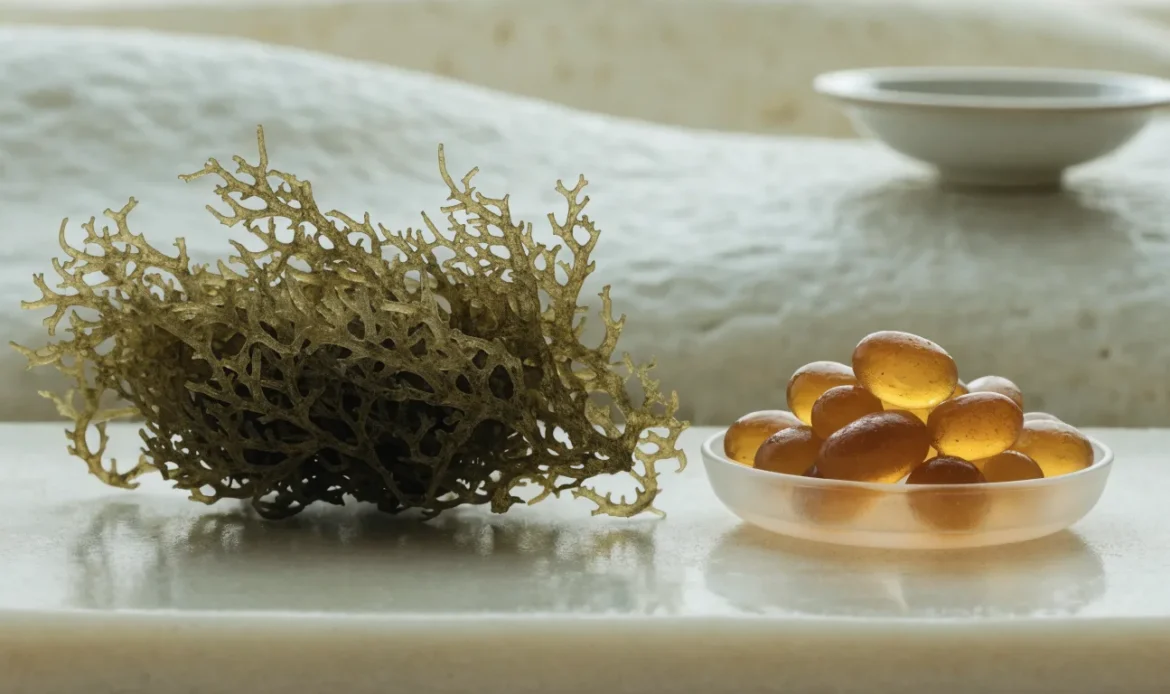
Short answer: Sea moss gummies are chewable supplements that include some form of seaweed or sea moss ingredient plus sweeteners and gelling agents. They can be an easy way to try a seaweed product, but labels and testing vary a lot. Read the label, ask for test results, and check the ingredient list before you buy.
This guide explains what sea moss gummies are, how they’re made, what “true sea moss gummies” might mean, and how to choose a product that fits your needs. It also gives steps to check safety and a simple decision checklist you can use while shopping.
What are sea moss gummies?
Sea moss gummies are soft, flavored chewables that include sea moss or a seaweed extract. Makers use a base ingredient (a powder, gel, extract, or dried seaweed) and combine it with sweeteners, fruit flavor, pectin or gelatin, and preservatives or natural stabilizers to form gummy candies.
“True sea moss gummies” is a marketing phrase. It usually means the product contains actual sea moss rather than only isolated seaweed components or unrelated ingredients. But “true” is not a regulated label. The product label, ingredient list, and available lab reports are the only reliable ways to learn what is in a gummy.
Key terms you may see on a label:
- Sea moss, Irish moss, or specific species name (if listed)
- Seaweed powder or red seaweed extract
- Added vitamins (e.g., vitamin C, biotin) or minerals
- Pectin (vegan) or gelatin (animal-derived)
- Sweeteners like sugar, cane syrup, or fruit concentrate
How gummies are made (short)
Manufacturers start with a seaweed ingredient that may be:
- dried and milled powder,
- concentrated extract,
- pre-made sea moss gel mixed in,
- or a blend of seaweeds.
They add a gelling agent (pectin, gelatin, or modified starch), water, a sweetener, flavor, and sometimes acidifiers to set flavor and texture. The mix is cooked or heated, poured into molds, then cooled and coated or packed. Some gummies are shelf-stable; others need refrigeration depending on formulation and preservatives.
What you cannot tell from packaging alone:
- Exact sea moss species or harvest location unless the label states it.
- Iodine level or contaminants unless the maker shares test results.
- The proportion of sea moss versus other ingredients without a full ingredient breakdown or certificate.
Ingredients and label reading: what to check
Read the label line by line. Pay attention to these items:
- Ingredient order. Ingredients are listed by weight. If “sea moss” is near the end, the product may contain mostly sweeteners and only a small amount of seaweed.
- Exact ingredient name. Look for “sea moss,” “Chondrus crispus,” or the botanical name if given. “Seaweed blend” or “marine algae extract” is less precise.
- Additives. Note if the product uses pectin (plant-based) or gelatin (animal-based). Also check for artificial colors or flavors if you want to avoid them.
- Added vitamins or minerals. These are sometimes included and should be listed with amounts. That helps you avoid doubling up with other supplements.
- Allergen statements. Seaweed allergies are uncommon but possible. Watch for cross-contamination warnings.
- Storage instructions and expiration date.
- Nutrition facts. Serving size, sugar content, and calories matter if you plan to use gummies daily.
If the label lacks detail, ask the seller for more information.
Safety, iodine, and testing
Seaweeds are known to contain iodine and other minerals. Iodine levels can vary widely between species, batches, and processing methods. High iodine intake can affect thyroid function in some people [1][2][5]. National surveys and studies show seaweed products can have a wide range of iodine levels [3][5]. Because of this variability, you cannot assume any single sea moss gummy has a safe iodine amount without testing.
Other safety issues to consider:
- Heavy metals and arsenic. Seaweeds can accumulate metals from their environment. Testing is the only way to know levels in a finished product. Ask for a Certificate of Analysis (COA) showing tests for heavy metals and microbes.
- Microbial contamination. Poor processing or storage can allow microbial growth. COAs and production practices help assess risk.
- Interaction with medicines. If you take thyroid medication, blood thinners, or other prescriptions, ask a clinician about adding seaweed products to your diet.
- Pregnancy and breastfeeding. Because iodine affects thyroid function, discuss seaweed supplements with a health provider before use.
Operation Supplement Safety notes variability and advises caution with sea moss products sold as supplements. They recommend checking product information and testing whenever possible [4]. Scientific reviews also emphasize iodine risks from seaweed when consumed in large or untested quantities [2][5].
How to evaluate “sea moss gummies” claims and reviews
Many products use friendly claims like “supports skin” or “boosts vitality.” Those are marketing phrases. They do not prove a product’s effects.
How to read reviews:
- Prefer verified purchases. Verified buyers are more likely to have actually used the product.
- Look for details. Reviews that mention taste, texture, and packaging give practical clues.
- Watch for timing. Recent reviews reflect current formula and manufacturing.
- Balance extremes. Very short rave or complaint posts may be less helpful than moderate, detailed reports.
- Ask for more info. If a reviewer claims a product caused a reaction, see if others report the same.
Reviews cannot replace lab tests or clinician advice. They are useful for practical matters like taste and shipping, not safety or nutrient content.
What “sea moss glow gummies” usually mean
“Glow” is a marketing term often used to suggest benefits for skin, hair, or nails. A “glow” gummy may contain added vitamins or minerals such as vitamin C, biotin, or other ingredients commonly associated with skin health. The presence of these nutrients does not guarantee any result. Check the label to see what has been added and the amounts.
If a product markets itself for “glow”:
- Confirm which additional ingredients are present and in what amounts.
- Ask whether the sea moss component is bulk or a minor addition.
- Remember that topical skin care and overall diet are major factors for skin health; a single supplement is rarely decisive.
Format comparison: gummies vs other sea moss formats
Below is a simple decision table to compare common sea moss formats. This helps you choose based on your priorities.
| Feature | Gummies | Raw sea moss gel | Powder | Capsules |
|---|---|---|---|---|
| Ease of use | High — chew and go | Medium — spoonable, messy | High — mix into drinks/food | High — swallow like pills |
| Taste control | Flavored, often sweet | Mild sea flavor | Mild to strong sea flavor | Neutral if unflavored |
| Dose control | Pre-measured by serving | Harder to measure | Easy to measure per scoop | Easy to measure per capsule |
| Shelf life | Often longer (if preserved) | Shorter — often refrigerated | Longer — dry storage | Longer — dry storage |
| Sugar or additives | Often contains sugar or syrups | Usually none or minimal | Depends on product | Often minimal |
| Transparency of content | Varies — ingredient ratios not obvious | More transparent if homemade | Varies by manufacturer | Varies by manufacturer |
| Testing easy to request | Yes — ask for COA | Depends on maker | Yes — ask for COA | Yes — ask for COA |
Use this table with the checklist below to make a practical choice.
Practical decision checklist for buying sea moss gummies
Use this checklist when evaluating a sea moss gummy product. It shows what to check, why it matters, and how to verify.
- Check: Ingredient list and order
- Why: Reveals how much sea moss is likely present.
- How: If sea moss is low on the list, the gummy is mostly sweeteners.
- Check: Exact seaweed name or source statement
- Why: “Seaweed” is broad. Species and origin provide context.
- How: Look for botanical names or explicit source information.
- Check: Added vitamins/minerals and their amounts
- Why: To avoid excessive intakes or unwanted duplicates.
- How: Compare to other supplements you take.
- Check: Sweetener type and sugar per serving
- Why: Gummies can add significant sugar.
- How: Read nutrition facts for sugar per serving.
- Check: Gelling agent (pectin vs gelatin)
- Why: Tells you if product is vegan/vegetarian.
- How: Ingredient list will specify.
- Check: Allergen and cross-contamination statements
- Why: Important for food allergies.
- How: Read the label and product FAQ.
- Check: COA or third-party testing for iodine, heavy metals, microbes
- Why: Confirms safety and nutrient content.
- How: Request COA from seller or check product page for lab reports.
- Check: Batch or lot number and expiration date
- Why: Useful in case of recalls or if you need to report issues.
- How: Look on the box or bottle.
- Check: Storage instructions
- Why: Some products need refrigeration or cool storage.
- How: Follow label and pay attention to shipping conditions.
- Check: Return policy and contact info
- Why: Allows you to return unopened or defective goods.
- How: Look on the product page or contact customer service.
Sample questions to ask a seller or manufacturer:
- Can you share a COA for the batch I would buy?
- Which species of seaweed is used, and how much per serving?
- Does this product contain added iodine or minerals?
- What preservatives or sweeteners are included?
- How should the product be stored during shipping?
Where to find sea moss gummies (online and local)
- Local health food stores and co-ops may carry them. Ask staff about storage and sourcing.
- Caribbean grocery stores sometimes stock sea moss preparations and gummy-style products.
- Farmers markets or local makers may sell small-batch gummies; ask for processing and testing details.
- Online sellers often provide ingredient lists and may post COAs. When buying online, check seller policies and recent reviews.
When searching online, use specific terms:
- “sea moss gummies” + “COA” or “certificate of analysis”
- “sea moss gummies” + “pectin” or “gelatin” if you have a preference
- “sea moss gummies near me” plus your city or neighborhood to find local shops
Be cautious buying from unverified sellers who offer no testing or contact information.
How to use sea moss gummies safely
- Start with the serving size on the label. Do not exceed recommendations.
- If you have thyroid disease, are pregnant, breast-feeding, or on medication, talk to your clinician first.
- Watch for reactions. Stop use and consult a clinician if you notice signs of allergy or unusual symptoms.
- Keep gummies out of reach of children. Some gummies can be mistaken for candy.
- Store as directed. Heat or humidity can change texture and potency.
Sea moss gummies reviews: what to look for
When reading reviews, focus on:
- Taste, texture, and mouthfeel.
- Packaging and shipping condition.
- Reported side effects or reactions from multiple users.
- Whether the seller responds to questions and shares lab results.
Good reviews tell you about user experience. They do not confirm nutrient levels or lab safety.
Practical next steps for a buyer
- Identify priorities: taste, vegan, low-sugar, third-party tested, local source.
- Use the decision checklist above when comparing products.
- Ask sellers for a COA and species name if you care about iodine and contaminants.
- If unsure about iodine or interactions, consult a clinician before regular use.
- Buy a small quantity first to test taste and tolerance.
You can learn more about sea moss formats and uses on our learn pages or view our selection in shop if you want samples. For wholesale inquiries, see our wholesale options, or contact us for more information.
- Learn more: Learn
- Shop sea moss products: Shop
- Wholesale inquiries: Wholesale
- Contact customer support: Contact
- Home: Zen Wholesalers
Conclusion
Sea moss gummies are an accessible format for trying seaweed-based products. Labels and testing vary widely. To choose wisely, check the ingredient list, ask for a COA, watch sugar and added nutrients, and consult a clinician if you have thyroid concerns or take medication. Use the checklist and comparison table above to compare options. If you want more detail on formats or to see available products, visit our Learn (/learn/) pages or Shop (/shop/). For business orders, see Wholesale (/wholesale/) or reach out via Contact (/contact/).
Frequently asked questions
Are sea moss gummies the same as fresh sea moss gel?
No. Gummies are processed chewables that combine sea moss or extracts with sweeteners and gelling agents. Fresh sea moss gel is a minimally processed gel made from soaked and blended sea moss. The two formats differ in ingredients, texture, and how they are used.
What does “true sea moss gummies” mean?
“True” is a marketing term. It usually suggests the product contains real sea moss rather than just flavors or unrelated ingredients. To verify, read the ingredient list and ask the seller for details and test results.
Can gummies contain a lot of sugar?
Yes. Gummies often use sweeteners to improve taste. Check the nutrition facts for sugar per serving and choose lower-sugar options if that is important to you.
Should I worry about iodine in sea moss gummies?
Seaweed products can contain variable iodine levels. High iodine intake can affect thyroid function in some people. Ask for testing or a COA for iodine if this is a concern, and consult a clinician if you take thyroid medication [1][2][3][5].
How can I tell if a sea moss gummy is safe?
Look for transparent labels, third-party testing (COA), clear contact info, and informed customer support. Ask for lab results for heavy metals, microbes, and iodine. Check storage and expiration information [4].
Where can I find sea moss gummies near me?
Try local health food stores, Caribbean groceries, co-ops, and farmers markets. Search online with “near me” plus your city or neighborhood. When buying locally, ask about storage and whether the product requires refrigeration.
References
- Harvard T.H. Chan School of Public Health, “Seaweed.” https://nutritionsource.hsph.harvard.edu/seaweed/
- Smyth PPA. “Iodine, Seaweed, and the Thyroid.” European Thyroid Journal, 2021. https://pmc.ncbi.nlm.nih.gov/articles/PMC8077470/
- Food Standards Australia New Zealand, “Survey of iodine levels in seaweed and seaweed containing products,” updated 2025. https://www.foodstandards.gov.au/science-data/monitoring-safety/surveyofiodinelevels
- Operation Supplement Safety, “Sea Moss in Dietary Supplements.” https://www.opss.org/article/sea-moss-dietary-supplements
- Blikra MJ et al. “Consequences of acute and long-term excessive iodine intake: A literature review focusing on seaweed as a potential dietary iodine source.” 2024. https://doi.org/10.1111/1541-4337.70037