
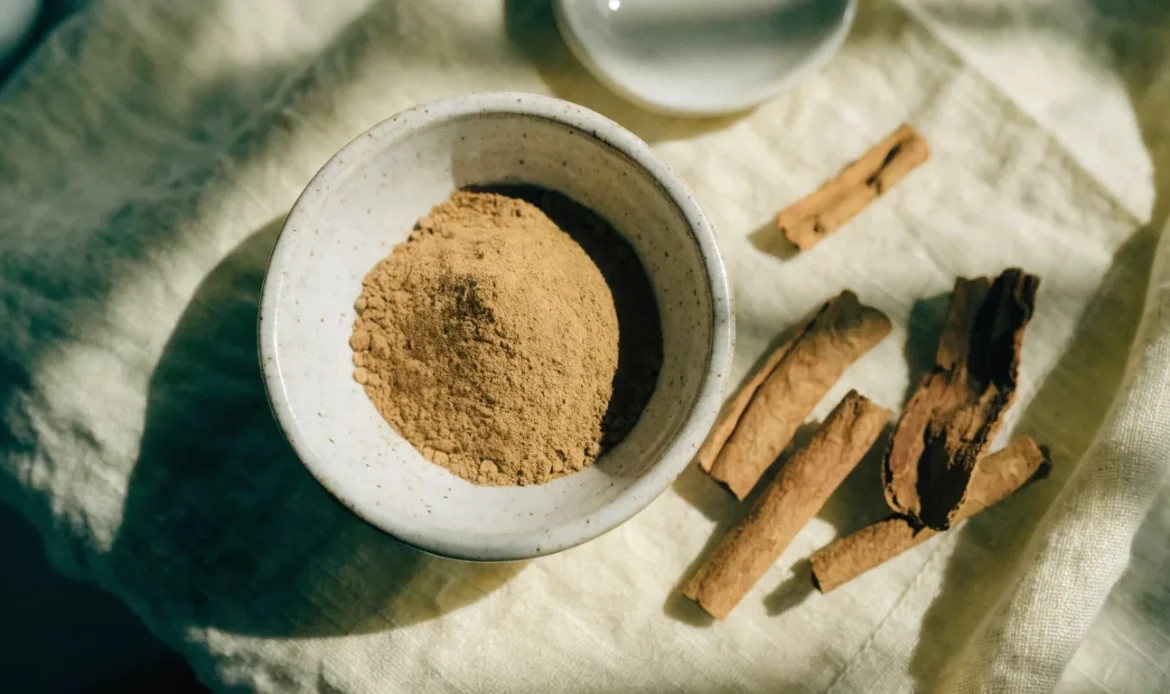
Short answer: Cinnamon powder is ground cinnamon bark. It can come from a few different trees. Chefs use it for sweets, drinks, and savory dishes. Home cooks can make powder from sticks. Read on to learn formats, how to make it, what to check on labels, and how it differs from other botanicals like sea moss.
What is a cinnamon powder?
Cinnamon powder is the fine ground form of the inner bark of trees in the Cinnamomum genus. Two common types you will see are Cinnamomum verum (often called “true” or Ceylon cinnamon) and Cinnamomum cassia (called cassia or Chinese cinnamon). When sellers say “cinnamon bark powder” they mean the bark was dried and ground to a powder.
What the label may show:
- “Pure cinnamon” or “ground cinnamon” — means ground bark only.
- “Cinnamon bark powder” — emphasizes the portion of the plant used.
- Blends or mixed spices — can include sugar, clove, or other spices.
What is a cinnamon powder is basically the same as “ground cinnamon.” If a package lists added ingredients, it is not pure cinnamon powder.
Cinnamon formats and how they differ
- Cinnamon sticks (quills): Rolled strips of dried bark. They last longer. They are good for infusing liquids.
- Ground cinnamon (cinnamon powder): Ready to measure and mix. It’s easy to use in baking and spice blends.
- Bark powder: A term some sellers use to signal the product is made from bark, not leaves or roots.
Both stick and powder come from the same plant parts. The difference is form and how you use them.
Culinary and cultural uses (simple examples)
Cinnamon is used around the world. In the Caribbean, cooks use it in stews, rice dishes, and sweets. Bakers add it to cakes and breads. It flavors hot drinks like tea and cocoa. You will also find cinnamon in spice blends, marinades, and pickles.
Use tips:
- Add powder near the end of cooking to keep the aroma.
- Use sticks to simmer in syrups, stews, or rice.
- Toast whole sticks briefly in a dry pan to release oils before grinding.
Avoid claims that cinnamon cures or treats illnesses. This article focuses on culinary and product-format facts.
How to turn cinnamon sticks into powder (step-by-step)
If you have sticks (quills) and want powder, here are simple, safe steps.
What you need:
- Cinnamon sticks (dry and intact).
- A spice grinder, coffee grinder, or high-speed blender.
- A fine mesh sieve or spice mill for a finer texture.
- A clean, dry jar for storage.
Method:
- Break sticks into smaller pieces by hand or with a knife. Smaller pieces grind easier.
- Use a spice or coffee grinder. Grind in short bursts. Do not overheat the grinder. Stop, shake, and re-grind as needed.
- If you have a mortar and pestle, grind in batches.
- For very fine powder, sift through a fine mesh sieve. Re-grind larger bits and sift again.
- Store in an airtight jar in a cool, dark place.
Safety and tips:
- Clean grinders before use to avoid flavor transfer.
- Grinding fresh gives stronger aroma than old pre-ground spice.
- If you need very large quantities, consider a commercial spice mill or buying ground powder from a supplier.
Measuring and swapping: how powder compares to sticks
- One cinnamon stick is not a fixed weight or volume. Stick size varies.
- Ground cinnamon is easier to measure by teaspoon or tablespoon.
- If a recipe calls for powdered cinnamon and you have sticks, infuse a liquid or grind some fresh powder.
When substituting, a good rule is to taste and adjust. Start small. Add more if needed.
Buying cinnamon powder: what to check on the label
Labels tell you what the product really is. Here are the key things to look for.
- Ingredient list: Should say “ground cinnamon” or “cinnamon” for pure powder. If it lists sugar, starch, or other spices, then it is a blend.
- Botanical name: Look for Cinnamomum verum or Cinnamomum cassia if the seller lists it. This tells you which tree the bark came from.
- Net weight and packaging date: Freshness matters. A date helps you judge that.
- Country or region of origin: Useful for context, but it does not prove quality by itself.
- Processing notes: “Heat-treated,” “steam sterilized,” or “micronized” may appear. These describe processing steps, not quality.
- Certifications: Organic or similar certifications can be useful if those attributes matter to you.
- Allergen statements: Cinnamon is not a top allergen, but blends can include other ingredients that are.
What a label cannot prove alone:
- Laboratory purity or absence of contaminants. For that, look for third-party testing or ask the supplier.
- Exact cultivar or harvest practices unless documented.
- Performance in a recipe — that comes down to taste testing.
Decision guide: choose the right cinnamon format for your use
| Use case | Best format to buy | Why | What to check on label |
|---|---|---|---|
| Daily baking | Ground cinnamon (powder) | Easy to measure and mix | Ingredient list; packaging date |
| Long simmered dishes | Sticks (quills) | Easier to remove; gentle infusion | Look for whole quills and origin |
| Strong aroma for spice blends | Freshly ground stick or high-quality powder | Fresh grind gives more aroma | Botanical name; no fillers |
| Large volume / commercial use | Bulk ground cinnamon from a reputable supplier | Consistent supply and cost | Ask about testing; request COA (certificate of analysis) |
| Gifting or display | Whole sticks or artisan ground | Visual appeal and perceived freshness | Packaging date; storage advice |
Use this table to pick format, then check the label and seller answers before buying.
Storage and freshness tips
- Keep ground cinnamon in an airtight, dark container.
- Store away from heat and sunlight.
- Powder loses aroma over time. Freshness matters more than exact “best by” dates.
- Whole sticks keep flavor longer. Grind what you need for best aroma.
Do not refrigerate spices. Refrigerators add moisture and can cause clumping.
Quality checks and questions to ask a supplier
If you want a reliable product, ask the seller:
- Is this pure ground cinnamon, or is it a blend?
- Which Cinnamomum species is this from (verum or cassia)?
- Can you provide a batch date or packaging date?
- Do you have third-party lab testing for contaminants or purity?
- What storage and shipping conditions do you use?
If the supplier cannot answer these clearly, consider another seller or ask for sample-sized amounts to test at home.
Cinnamon vs. sea moss and other botanicals — how they differ
Cinnamon is a dried spice from tree bark. Sea moss is a seaweed sold for different uses and has different composition and precautions.
Important differences:
- Cinnamon is a plant bark product. Sea moss is a marine algae.
- Labels and safety checks are different for each. Seaweed can contain iodine and minerals that deserve special attention. If you buy both cinnamon and sea moss, do not assume the same handling rules apply.
If you use sea moss products, consult reliable sources about iodine and testing. Seaweed products can vary a lot in iodine content. For background on seaweed and iodine, see References [1–5].
(Those references discuss seaweed, iodine levels, and related testing. Use them when you need to check a seaweed product, not for cinnamon.)
Simple culinary conversions and notes
- For most recipes, ground cinnamon is used by teaspoon or tablespoon.
- Cinnamon can be potent. Start with less if you are not sure.
- Ceylon cinnamon typically tastes milder and sweeter. Cassia tastes stronger and more peppery. Taste to decide how much to use.
Do not assume a fixed ratio of Ceylon to cassia strength. Labels and taste testing are your best guide.
Practical checklist before you buy cinnamon powder
- [ ] Ingredient list: Does it say “ground cinnamon” only?
- [ ] Botanical name listed (Cinnamomum verum or Cinnamomum cassia)?
- [ ] Packaging or production date visible?
- [ ] Any added ingredients or fillers listed?
- [ ] Certifications you care about (organic)?
- [ ] Supplier can answer questions on testing and sourcing?
- [ ] Packaging keeps product dry and sealed?
- [ ] Price seems reasonable for the weight and format?
If buying in bulk for resale or food service, also ask for a certificate of analysis (COA) and storage recommendations.
Where to learn more or buy
- Explore our Caribbean botanicals collection: /shop/caribbean-botanicals/
- See our full shop for other spices: /shop/
- Learn more about ingredients and handling: /learn/
- For bulk or wholesale inquiries: /wholesale/
- Questions or custom orders: /contact/
- Home page for company information: /
Conclusion
Cinnamon powder is a simple product with many uses. It is just ground cinnamon bark, but the form and species change how it tastes and acts in recipes. Check labels for ingredients, botanical names, and dates. If you grind sticks at home, keep tools clean and store powder in airtight jars. If you also buy other botanicals like sea moss, treat them separately and follow product-specific safety guidance.
If you want product help, sample sizes, or wholesale options, visit our Caribbean botanicals collection (/shop/caribbean-botanicals/), our shop (/shop/), or contact us via our contact page (/contact/).
Frequently asked questions
What is the cinnamon powder vs cinnamon bark powder?
Both terms usually mean the same thing: ground inner bark of a cinnamon tree. “Bark powder” just highlights that the bark was used.
How long does ground cinnamon stay fresh?
Ground cinnamon keeps aroma best for months if stored in a cool, dark place. Whole sticks keep their smell longer. Use a packaging or production date to judge freshness.
Can I make cinnamon powder from any cinnamon stick?
Yes. Any dry cinnamon stick can be ground. Different species (Ceylon vs cassia) will give different flavors, so taste first.
Does powdered cinnamon need certification?
Certification is optional. Organic or third-party testing can be useful if you care about those attributes. Labels and COAs add transparency but are not required by law for all products.
Is cinnamon the same as sea moss or related to seaweed?
No. Cinnamon is tree bark. Sea moss is a marine algae. They are different botanicals and need different handling. Seaweed can contain iodine and other minerals; check trusted sources for seaweed safety (see References).
How do I know if ground cinnamon has fillers?
Check the ingredient list. If it lists anything beyond “ground cinnamon,” the product includes other ingredients. Ask the supplier for a full ingredient breakdown if the label is unclear.
References
- [1] Harvard T.H. Chan School of Public Health, “Seaweed.” https://nutritionsource.hsph.harvard.edu/seaweed/
- [2] Smyth PPA. “Iodine, Seaweed, and the Thyroid.” European Thyroid Journal, 2021. https://pmc.ncbi.nlm.nih.gov/articles/PMC8077470/
- [3] Food Standards Australia New Zealand, “Survey of iodine levels in seaweed and seaweed containing products,” updated 2025. https://www.foodstandards.gov.au/science-data/monitoring-safety/surveyofiodinelevels
- [4] Operation Supplement Safety, “Sea Moss in Dietary Supplements.” https://www.opss.org/article/sea-moss-dietary-supplements
- [5] Blikra MJ et al. “Consequences of acute and long-term excessive iodine intake: A literature review focusing on seaweed as a potential dietary iodine source.” 2024. https://doi.org/10.1111/1541-4337.70037