
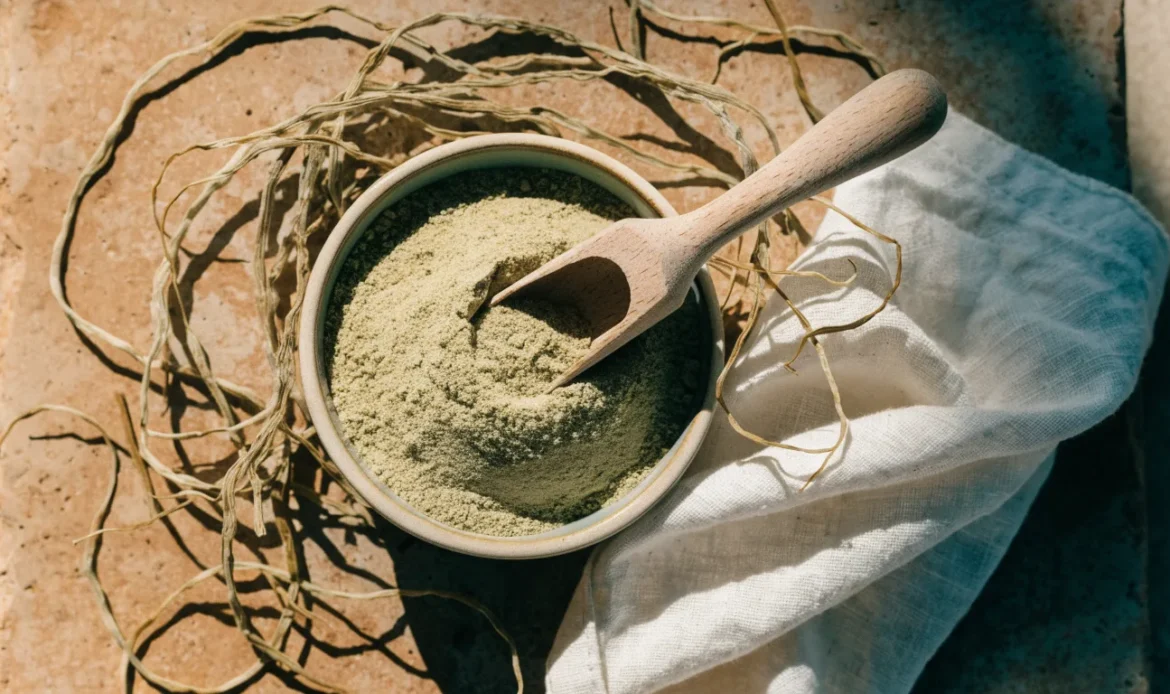
Short answer: Sea moss powder is dried, ground seaweed sold for cooking, blending, and making gels. It comes in many forms. Check testing, ingredient lists, and how it was processed before you buy.
Why this matters: seaweed can hold high iodine and other minerals. That varies by species and place it grew. Good sellers share lab tests and clear labels. If you want to use sea moss powder, this guide explains how it’s made, how formats differ, what to check, and what questions to ask next.
What is sea moss powder?
Sea moss powder is simply seaweed that has been dried and milled into a fine or coarse powder. People use it in smoothies, soups, skincare mixes, or to make a gel. Powdered sea moss may come from different seaweed species. One common name you will see is Irish sea moss, which usually refers to a type of red seaweed often sold for culinary use.
Powder seamoss and sea moss powder are the same idea: dried seaweed turned into a powder. Some products are pure ground seaweed. Others are blended with ingredients like salts, dried fruit, sweeteners, or other powders such as pearl powder. When blends are used, the label should list every ingredient.
Note: seaweed naturally contains iodine and other minerals. The amounts can change a lot by species, season, and place it was harvested [1][2]. That is why testing and clear labels matter.
How sea moss powder is made
Basic steps most suppliers follow:
- Harvest: Seaweed is collected from coastal waters or farms.
- Clean: It is rinsed to remove sand, shells, and sea life.
- Dry: The cleaned seaweed is dried. Drying methods include sun drying, air drying, or low-heat drying.
- Grind: The dried seaweed is milled into a powder.
- Pack: The powder is packed into bags, jars, or bulk containers.
Each step can change the final product. For example, high heat may alter color and flavor. Humidity and storage affect clumping and shelf stability. Some processors add anti-caking agents. Others blend seaweed with other powders. Ask the seller how the product was processed and packed.
Common formats: how they compare
Different formats suit different uses. Below are common formats and what to expect from each.
H3: Powder (pure sea moss powder)
- Form: Fine or coarse dried seaweed powder.
- Use: Mix into drinks, smoothies, soups, or make gels by hydrating.
- Pros: Easy to portion. Often shelf-stable if dry.
- Cons: Taste and texture vary. Iodine level unknown unless tested.
H3: Dried chips or whole dried sea moss
- Form: Pieces of dried seaweed or whole branches.
- Use: Rehydrate in water to make gel or add to broths.
- Pros: Easier to inspect before buying.
- Cons: Takes time to soak and process.
H3: Gel
- Form: Rehydrated and blended sea moss stored as a paste.
- Use: Smoothies, spreads, topical mixes.
- Pros: Ready to use. Mild texture for many recipes.
- Cons: Shorter home storage life. Commercial gels often need refrigeration.
H3: Capsules or tablets
- Form: Powder enclosed in capsules or compressed into tablets.
- Use: Taken as a supplement form.
- Pros: Convenient dosing and no taste.
- Cons: You rely on the label for content. Tests may be missing or limited [4].
H3: Blended powders (e.g., sea moss and pearl powder)
- Form: Sea moss mixed with other powders such as pearl powder.
- Use: Culinary or topical mixes, depending on blend.
- Pros: Combines ingredients for specific uses.
- Cons: Makes it harder to know the sea moss amount and iodine content without lab data.
Quick comparison table (decision guide)
| Format | Ease of use | Typical uses | What to check |
|---|---|---|---|
| Powder (pure) | High | Smoothies, soups, gels | Ingredient list, particle size, COA for iodine/heavy metals |
| Dried chips/whole | Medium | Rehydrate for gel or cooking | Harvest date, cleaning method, visible quality |
| Gel | High (ready to use) | Smoothies, topical | Storage method, preservatives, expiry |
| Capsules/tablets | High (convenient) | Supplement form | Exact ingredient list, batch testing [4] |
| Blended powders | Varies | Recipe-specific | Full ingredient list, percent seaweed, COA for blends |
Use this table to match the format to your needs. If you want to cook, powder or dried chips fit well. If you want a ready mix, a gel or capsule may be better.
Buying checklist: what to ask or look for
Use this short checklist when you compare sea moss powder options.
- Ingredient list: Is it 100% seaweed or a blend?
- Species name: Does the label list the seaweed species (e.g., Chondrus crispus)?
- Processing method: How was it dried and milled?
- Batch code and date: Is there a harvest or pack date?
- Storage instructions: Does the package say how to store it?
- Lab tests / Certificate of Analysis (COA): Are there third-party tests for iodine, heavy metals, and microbes? If yes, request the COA.
- Country or region of harvest: Where was it sourced? (This is a helpful context item, not proof of safety.)
- Packaging: How is it sealed to prevent moisture?
- Contact info: Can you reach the seller with questions?
Do not accept vague answers. If a seller cannot or will not share testing info or clear ingredient details, note that as a risk. Operation Supplement Safety highlights variability and testing gaps in sea moss products sold as supplements [4].
Safety and special concerns
Seaweed can be a concentrated source of minerals, including iodine. Iodine content varies a lot by species and location. Some seaweed types can deliver very high iodine levels, which can affect people with thyroid conditions [2][5]. Food surveys also show big variation in iodine levels in seaweed products [3].
What you can check:
- Ask for iodine test results on the product batch you plan to buy.
- If you have thyroid disease, are pregnant, or are taking iodine-containing drugs, consult your health provider before using seaweed products.
- Check for heavy metals and microbial contamination tests when using seaweed as a food or supplement. The presence and levels of contaminants depend on water quality and processing.
Lab testing matters. A Certificate of Analysis (COA) from a third-party lab is the clearest evidence a batch was tested. If a seller provides a COA, look for the test date, lab name, and results for iodine, heavy metals, and microbes. If there is no COA, the product’s safety profile is less certain [4].
Sea moss and iodine: what science says
- Seaweed is a recognized dietary source of iodine, and amounts are variable [1][2].
- Excessive iodine intake can cause thyroid problems in some people, especially with high or long-term exposure to very iodine-rich seaweed [5].
- Food monitoring programs have found a wide range of iodine levels across seaweed products, which is why labels and tests are important [3].
This means you cannot judge a powder’s iodine level by appearance or price. Testing is the reliable way to know.
Uses and simple preparation tips
Powdered sea moss is flexible. Below are common uses and quick tips.
- Smoothies: Start small. Mix powder into a liquid and blend.
- Soups and stews: Add as a dry thickener. Stir thoroughly.
- Make gel: Hydrate powder with cool water. Let it sit until it swells, then blend. Use the gel as you would other gels in recipes.
- Topical mixes: If you plan to use sea moss in a skin mix, check the product is food-grade and free of contaminants.
Tips:
- Warm liquids help powder dissolve faster, but don’t use very hot water if you want to preserve texture.
- Store dry powder in a cool, dry place in a sealed container.
- If a product is a blend (for example, sea moss and pearl powder), the label should say how much seaweed is in each serving.
Avoid dosing claims or fixed serving sizes from sellers that do not include testing or clarity. If you need dosing information for a health condition, speak with a healthcare professional.
Sea moss and pearl powder: what to know
When you see “sea moss and pearl powder,” you are looking at a blend. Pearl powder is a crushed powder made from pearls used in some culinary and cosmetic traditions. Blends combine different ingredients for texture or cosmetic appeal.
Key checks for blends:
- Full ingredient list with percentages or amounts.
- Tests for the whole product, not just the sea moss component.
- Intended use: culinary or topical? This affects testing priorities.
Because blends dilute the seaweed, their iodine concentration per gram may be lower. But you should not assume this without a COA.
How to verify a supplier
If you are buying sea moss powder—especially in bulk or for resale—ask for:
- A COA for each batch.
- Details on harvest date and location.
- Processing and drying methods.
- Storage and packaging details.
- References or sample sales for quality checks.
If you are a wholesale buyer, negotiate rights to independent testing or to inspect batches before purchase. Wholesale buyers often need additional documentation and traceability.
Practical decision guide: when to choose each format
- Choose powder if: you want flexible use in cooking or to make gels and need easy portioning.
- Choose dried chips if: you want to inspect the product before rehydrating or prefer simple processing at home.
- Choose gel if: you want a ready-to-use product and will use it soon after purchase.
- Choose capsules if: you want no taste and precise capsule counts; check lab tests closely.
- Choose blended powders (e.g., sea moss and pearl powder) if: you want a specific blended outcome, but verify ingredient percentages.
One practical checklist you can copy
- [ ] Ingredient list is complete and specific.
- [ ] Species name is listed.
- [ ] Batch or lot code and date available.
- [ ] COA available for iodine, heavy metals, and microbes.
- [ ] Processing and drying method described.
- [ ] Storage and shelf guidance provided.
- [ ] Seller contact information present.
- [ ] Packaging sealed for moisture control.
- [ ] If buying wholesale, ask about minimums, samples, and traceability.
Next steps and useful links
If you want to browse products, learn more about sourcing, or inquire about bulk orders and testing, start here:
- Visit our home page: [/]
- Browse product choices: [/shop/]
- Learn more about sea moss: [/learn/]
- Ask about wholesale and samples: [/wholesale/]
- Contact our team with questions: [/contact/]
We recommend asking sellers for COAs and clear ingredient lists before making a purchase. If you have a medical condition, a healthcare professional can help interpret test results and advise on safe use.
Conclusion
Sea moss powder is a handy form of dried seaweed. It suits many kitchen and topical uses. But seaweed is not uniform. Iodine and mineral levels vary. The safest route is to buy from sellers who share clear labels and lab tests. Use the checklist here when you shop. If you need help comparing options, reach out through our contact page or explore product choices in our shop.
Continue reading
Frequently asked questions
Is sea moss powder the same as Irish sea moss powder?
Often yes. “Irish sea moss” is a common name for certain red seaweed types that are sold as powdered products. Labels can vary, so check the species name to be sure.
Can I make gel from sea moss powder?
Yes. You can hydrate the powder with cool water, let it sit until it swells, then blend to a smooth gel. Follow the product’s instructions if provided.
Does sea moss powder contain iodine?
Seaweed can contain iodine. The amount varies a lot by species and harvest. Ask the seller for a COA to know the iodine level for a specific batch [1][2][3].
Is sea moss powder safe for people with thyroid issues?
People with thyroid disease should be cautious. High or unpredictable iodine intake can affect thyroid health. Talk with a healthcare provider and request batch testing before use [2][5].
How can I tell if a sea moss powder is pure?
Look at the ingredient list. Ask for a COA. If the label says “pure” but there is no batch testing or full ingredient list, that leaves uncertainty.
What should I do if a seller won’t share testing info?
Consider it a red flag. If testing is important for your use or health needs, look for a supplier willing to share third-party lab results.
References
- [1] Harvard T.H. Chan School of Public Health, “Seaweed.” https://nutritionsource.hsph.harvard.edu/seaweed/
- [2] Smyth PPA. “Iodine, Seaweed, and the Thyroid.” European Thyroid Journal, 2021. https://pmc.ncbi.nlm.nih.gov/articles/PMC8077470/
- [3] Food Standards Australia New Zealand, “Survey of iodine levels in seaweed and seaweed containing products,” updated 2025. https://www.foodstandards.gov.au/science-data/monitoring-safety/surveyofiodinelevels
- [4] Operation Supplement Safety, “Sea Moss in Dietary Supplements.” https://www.opss.org/article/sea-moss-dietary-supplements
- [5] Blikra MJ et al. “Consequences of acute and long-term excessive iodine intake: A literature review focusing on seaweed as a potential dietary iodine source.” 2024. https://doi.org/10.1111/1541-4337.70037