
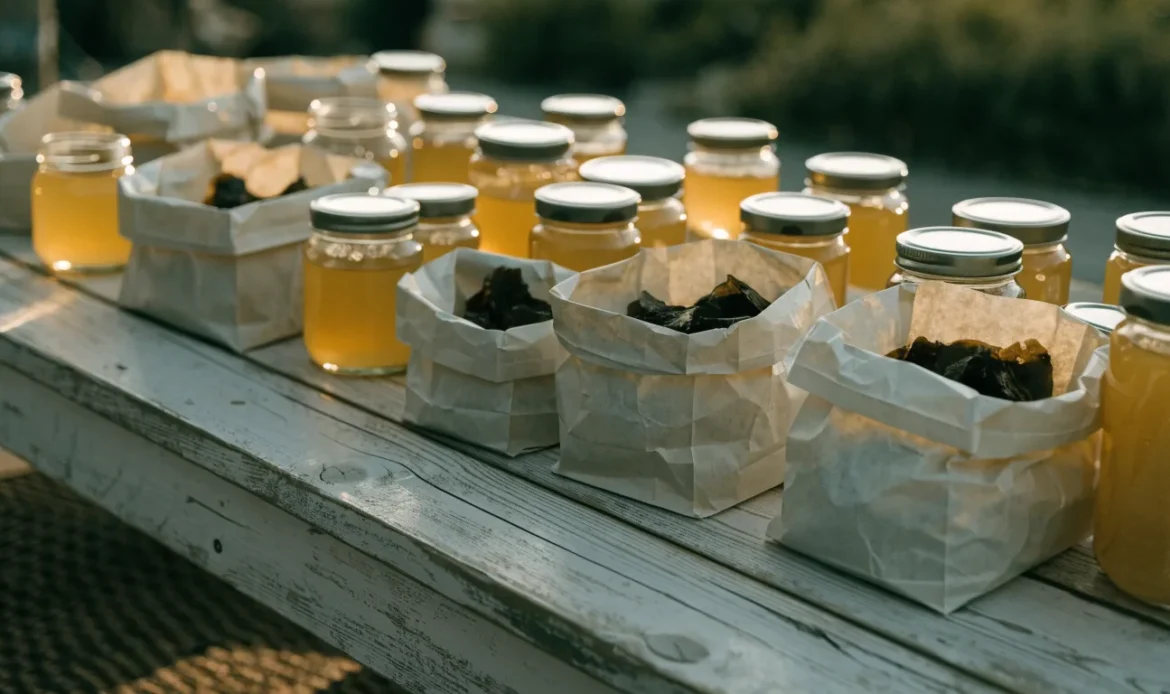
Short answer: The best sea moss to buy is the one that matches your needs and safety checks. Pick a form you will use (dried, gel, powder, capsule), confirm clear sourcing and testing, and avoid sellers who cannot answer simple questions about origin and processing.
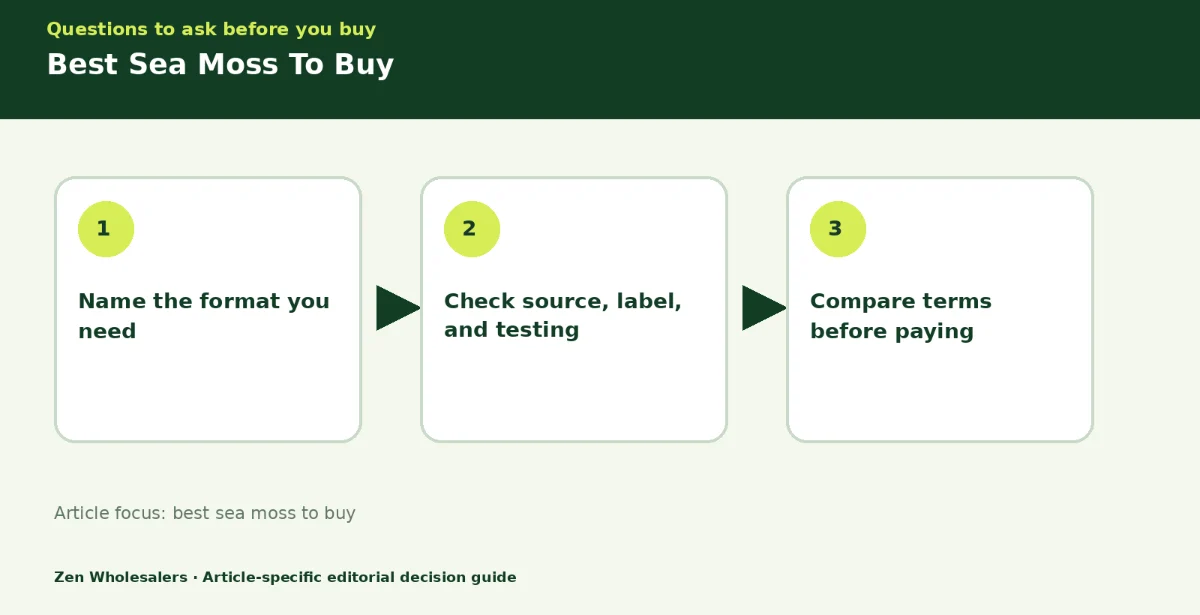
This article gives a clear buying path. It shows what to check and what you cannot assume. It also explains where to look for sea moss, how to compare types and forms, and what questions to ask sellers next.
Why buying sea moss carefully matters
Sea moss is a type of seaweed. Seaweeds can vary widely from batch to batch. Their make-up depends on species, where they grew, when they were harvested, and how they were processed [1]. Some seaweeds can contain a lot of iodine. That can matter for people with thyroid conditions [2][5]. Tests and clear sourcing help reduce risk, but tests for one batch do not guarantee future batches.
What you can check:
- Species or common name of the seaweed.
- Country or region of harvest.
- Drying and processing methods.
- Any third‑party lab test results or certificates.
- Seller policies and how they store and ship product.
What you cannot prove from a label alone:
- That every batch will show the same nutrient or contaminant levels.
- That a seller’s claim means the product was tested by an accredited lab unless a lab report is shown.
- Long-term effects from eating a product—only controlled testing can show that.
Useful next question to ask sellers: “Can you share the most recent batch test (heavy metals, microbes, and iodine)? What species is this, and when was it harvested?”
Sea moss forms: which is best for you
Sea moss is sold in different forms. Each has pros and cons. Pick the form you will actually use.
H3 Dried (raw) sea moss
- Pros: Long shelf life if stored dry; you can make your own gel or cook with it.
- Cons: Requires soaking and rinsing; source and harvest details matter.
- Good for: People who want control over preparation and minimal processing.
H3 Sea moss gel
- Pros: Ready to use for smoothies, drinks, or recipes.
- Cons: Shorter shelf life; needs refrigeration. Homemade gel quality depends on how long the sea moss sat before processing.
- Good for: People who want convenience.
H3 Powder
- Pros: Easy to add to foods and drinks. Often more shelf stable than gel.
- Cons: Processing method matters. Powders may be blended with other ingredients—check the label.
- Good for: Baking, smoothies, or precise dosing.
H3 Capsules or tablets
- Pros: Convenient dosing and travel friendly.
- Cons: Less flexible for culinary use. Capsules hide ingredient proportions; check the label for fillers.
- Good for: People who want a supplement-like option.
Types and color: what the labels mean
Sea moss comes in several colors: gold, purple, green, or red shades. These colors often reflect the species or the time and place of harvest. Color alone does not prove quality. Ask for the species name (for example, Chondrus crispus or other local names) and a harvest region if you want clarity.
Avoid relying on marketing terms like “wildcrafted” or “raw” without details. Ask for harvest method, processing steps, and any lab testing. Labels should answer these basic questions.
Safety and testing: what to ask for and why
Because seaweed can absorb minerals and contaminants from water, testing is important [1][3][5]. The main safety checks buyers often request are:
- Heavy metals (lead, cadmium, mercury)
- Microbial contamination (pathogens, molds)
- Iodine levels
- Pesticides or agricultural contaminants if harvested near farms
What to request from a seller:
- Recent third‑party lab results. Prefer tests that list dates and specific numbers.
- Name of the testing lab or certificate of analysis.
- Batch or lot number that matches the product you will receive.
What a test can and cannot do:
- A test shows results for the tested batch or sample. It does not guarantee every future batch will match.
- A test from an accredited lab is more reliable than an unsigned or vague report.
- Even with tests, check storage and handling: poor storage can change product quality.
Sources with background on seaweed safety and iodine levels include university nutrition summaries and food-safety surveys [1][3][5]. Consumer safety organizations also discuss sea moss sold as supplements [4].
Iodine: a practical safety note
Seaweeds can be a concentrated source of iodine. Iodine intake varies by species and harvest. High iodine intake can affect people with thyroid conditions. If you have thyroid disease, take medications that affect thyroid function, are pregnant, or are breastfeeding, talk to a clinician before making seaweed a regular part of your diet [2][5].
Do not assume a product is low in iodine unless a test shows the iodine amount for that batch. When a seller provides iodine test results, look at the units and the serving size used for the test.
Where to buy sea moss: options and how to search
You can buy sea moss in several places. Each has tradeoffs in transparency, speed, and price.
- Local health food stores and co-ops: You can inspect packaging and ask staff questions. You might find dried sea moss or gel. Search terms: “where to buy sea moss near me” or “where can I buy sea moss near me.”
- Farmers’ markets and local harvesters: May offer freshly harvested sea moss. Ask about harvest spots and processing right away. This is good for direct questions about handling.
- Online retailers and specialty shops: Wider selection and often more product details. Look for clear product pages that list species, harvest region, processing, and lab results if available. You might search “where to buy real sea moss,” “best place to buy sea moss,” or “where to buy organic sea moss.”
- Marketplaces and general e-commerce sites: Convenience is high, but transparency varies. Read seller descriptions and reviews. Ask sellers directly for batch testing if not posted.
Some shoppers look specifically for terms like “Dr Sebi sea moss.” That phrase often refers to a style or source promoted by some communities. If you search that term, still apply the same checks: species, tests, harvest date, and processing details.
If you want sea moss in bulk or for retail use, consider wholesalers. Ask a wholesaler for lead times, minimum order sizes, and testing. For commercial buyers, a clear supply chain and test documentation are essential.
Where to buy organic or certified sea moss
“Organic” claims in seaweed are more complicated than for land crops. Organic certification depends on the certifying body and rules that can vary by country. If “organic” is important to you:
- Ask what body issued the certification.
- Ask what the certification covers (harvest area, processing facility, additives).
- Request the certificate or a link to the certifier’s database.
If a seller cannot show the certificate, treat “organic” as a marketing claim rather than a verified status.
How to spot likely red flags
Ask these quick questions. If the seller cannot answer or avoids them, that is a red flag.
- What species is this product?
- Where was it harvested (country/region)?
- When was it harvested and processed?
- Do you have third‑party lab results for heavy metals, microbes, and iodine?
- How should I store it and how long will it last?
Other red flags:
- Vague origin or “sourced worldwide” without specifics.
- No batch or lot numbers on the packaging.
- No contact information or refund/return policy.
- Unrealistic health claims (avoid sellers who promise cures, disease prevention, or guaranteed health outcomes).
Practical decision guide (table)
Use this table to narrow your choice. Match your priorities and answers.
| Priority | Best form | What to check from seller | Why it matters |
|---|---|---|---|
| Convenience | Gel or capsules | Expiry date, refrigeration need, ingredient list | Easy to use; shorter shelf life for gel |
| Control over prep | Dried raw | Species, harvest date, cleaning/processing steps | You can make your own gel and control cooking |
| Cooking / recipes | Powder or dried | Additives, grind method, particle size | Easier mixing in foods |
| Travel / dosing | Capsules | Full ingredient list, fillers, origin | Easy to take on schedule |
| Safety focus | Any form with tests | Third‑party lab report (heavy metals, microbes, iodine) | Reduces exposure risk |
| Organic preference | Any listed as certified organic | Certification body, scope of certificate | Verifies organic claims if valid |
Decision steps:
- Choose your preferred form.
- Check for species and origin.
- Request or view recent lab tests.
- Confirm storage and shelf life.
- Buy a small amount to try before larger purchases.
How to test a product for yourself (basic checks)
You do not need a lab to do a few basic checks after purchase:
- Smell: Fresh dried sea moss should not smell rotten. Strong fishy or sour odor can indicate spoilage.
- Appearance: Look for signs of mold or unusual spots after rehydrating.
- Packaging: Check for lot number, seal, and expiration or harvest date.
- Texture: Gels should be smooth and consistent. Powders should not clump in a way that suggests moisture intrusion.
These checks do not replace lab testing but help identify obvious problems.
Storage and shelf life basics
Short tips:
- Keep dried sea moss in a cool, dry place in an airtight container.
- Store gel in the refrigerator and follow seller guidance on how long it will keep.
- Powder and capsules often last longer if kept dry and out of heat.
- Freezing gel can extend its life; thaw slowly in the refrigerator.
Always follow seller storage instructions on the label.
Buying in bulk or wholesale
If you plan to buy large amounts:
- Ask for batch test results and certificates of analysis for each batch you will receive.
- Confirm lead times and how the product will be packed and shipped.
- Verify return, refund, and quality dispute policies.
- If you plan to resell, confirm labeling requirements and whether the product is suitable for retail.
For wholesale inquiries, use the seller’s wholesale contact channel. If you are exploring options, you can often start with a sample order.
Where to buy locally or online: tips for search phrasing
Use specific search phrases to find what you want:
- “where to buy sea moss near me”
- “where can I buy seamoss” (alternate spelling)
- “best place to buy sea moss”
- “where to buy real sea moss”
- “where can I buy organic sea moss”
- “where to buy Dr Sebi sea moss” (if you want that specific term)
When you find options, compare product pages for transparency on species, harvest region, processing, and testing.
How to compare final choices
Before you click buy:
- Confirm the species and harvest region.
- Look for batch or lot numbers and ask for tests.
- Check storage instructions and shelf life.
- Read the refund/return policy.
- Start with a small order if you can.
If the seller cannot answer these five items, consider another source.
Helpful internal links
- Browse our collection to compare forms and types at Shop.
- Learn more about sea moss and safety in our resources at Learn.
- If you want larger quantities, visit our Wholesale page to understand options and questions to ask.
- Need help or have vendor questions? Get in touch via Contact.
- Return to our homepage for company information: [/].
Conclusion
The best sea moss to buy is the one that fits how you will use it and that has clear, verifiable sourcing and testing. Always ask sellers for species, harvest region, processing details, and third‑party tests for heavy metals and iodine. If a seller cannot provide that information, consider another source. Start small, check storage and shelf life, and ask for lab reports when safety is a priority.
Frequently asked questions
What is the best sea moss to buy for everyday use?
There is no single best brand for everyone. Choose a form you will use daily (gel, powder, or capsules) and pick a product that gives clear info on species, origin, and testing.
Where can I buy real sea moss locally?
Check health food stores, co‑ops, farmers’ markets, and local harvesters. Ask sellers for harvest and processing details. Searching “where to buy sea moss near me” will show local options.
How can I tell if sea moss is organic?
Ask for the organic certificate and the name of the certifying body. If a seller cannot show a certificate, treat “organic” as a marketing claim.
Is it safe to eat sea moss every day?
Safety depends on the product’s iodine and contaminant levels and on your individual health. If you have thyroid disease or other medical concerns, talk with a clinician before daily use. Sellers can show iodine tests for a batch; that helps you decide.
Where can I buy sea moss in bulk?
Wholesalers, specialty suppliers, and some online sellers offer bulk purchases. Ask them for batch testing, lead times, packaging details, and any sample policies before you commit.
What does “Dr Sebi sea moss” mean on product listings?
That label often reflects a style or source promoted by some communities. Treat it like any other marketing term: ask for specific species, origin, processing, and lab results.
References
- Harvard T.H. Chan School of Public Health, “Seaweed.” https://nutritionsource.hsph.harvard.edu/seaweed/
- Smyth PPA. “Iodine, Seaweed, and the Thyroid.” European Thyroid Journal, 2021. https://pmc.ncbi.nlm.nih.gov/articles/PMC8077470/
- Food Standards Australia New Zealand, “Survey of iodine levels in seaweed and seaweed containing products,” updated 2025. https://www.foodstandards.gov.au/science-data/monitoring-safety/surveyofiodinelevels
- Operation Supplement Safety, “Sea Moss in Dietary Supplements.” https://www.opss.org/article/sea-moss-dietary-supplements
- Blikra MJ et al. “Consequences of acute and long-term excessive iodine intake: A literature review focusing on seaweed as a potential dietary iodine source.” 2024. https://doi.org/10.1111/1541-4337.70037