
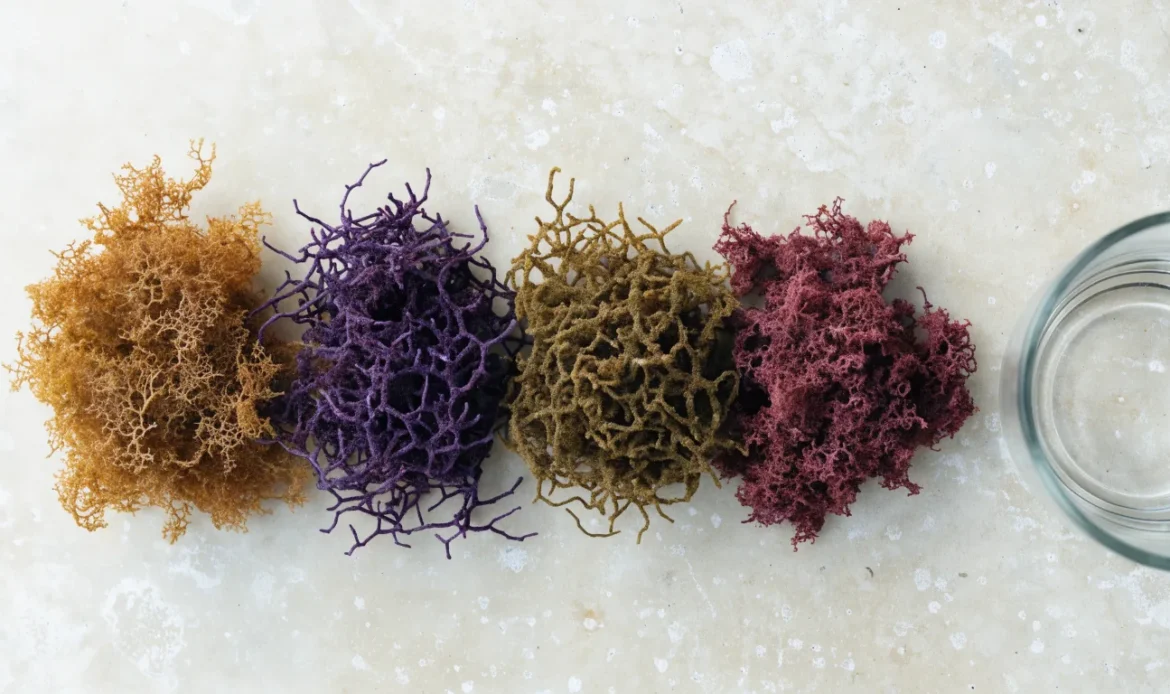
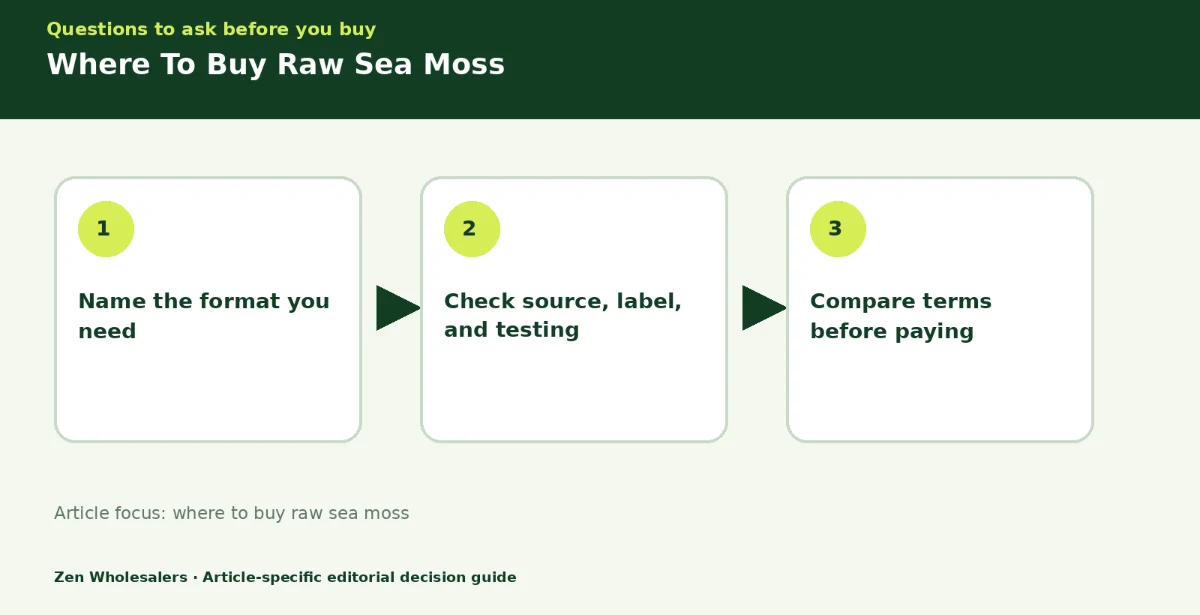
Short answer: You can buy raw sea moss from local markets, health food stores, fish docks, farmers markets, online sellers, and wholesalers. No single place is always best. Pick sellers who share clear origin details, species name, harvest and handling notes, and any lab or shipping documentation. Read on for steps to check those items, a decision table to match options to needs, and a practical checklist you can use while shopping.
Quick overview: common buying channels
- Local Caribbean or ethnic groceries: Often carry sea moss in dried form.
- Health stores and co-ops: May offer packaged sea moss with label details.
- Fish markets, docks, and harvesters: You may meet people who harvest locally.
- Farmers markets and local sellers: Small batches and direct questions possible.
- Online stores and marketplaces: Large selection and photos, but you must verify details.
- Direct from farms and wholesalers: Good for businesses or large orders; ask for batch info.
Where people buy raw sea moss (and what to expect)
Below are common buying places with what you can normally expect and what to ask.
H3: Local Caribbean markets and ethnic groceries
What to expect:
- Dried sea moss sold by weight or in small packages.
- Sellers may know the general origin (region or island).
What to ask:
- Which species is this? (Common names vary; ask for Latin name if possible.)
- When was it harvested or dried?
- How was it handled after harvest?
Why check these things:
- Local sellers can be convenient for “where to buy raw sea moss near me.” But names and origin can be mixed up. Ask clear questions and inspect the product.
H3: Health food stores and co-ops
What to expect:
- Packaged products with ingredient lists and a brand name.
What to ask:
- Can you share harvest origin and species?
- Do you have any lab or quality documentation for this batch?
Why check these things:
- Packaged products may include a lot of useful info on the label. But labels do not always tell the full story. Ask for documentation when you need more detail.
H3: Fish markets and docks / direct harvesters
What to expect:
- Fresh or sun-dried sea moss sold direct by harvesters or local fishmongers.
What to ask:
- Where exactly was this harvested?
- How was it handled, rinsed, and dried?
- Can I see photos of the harvesting or processing area?
Why check these things:
- Direct sellers can give first-hand answers. But record-keeping varies. If a seller cannot answer basic questions, be cautious.
H3: Farmers markets and local sellers
What to expect:
- Small batches. Opportunity to talk with the seller.
What to ask:
- Are you the harvester or do you buy from another supplier?
- Can you describe storage and drying methods?
Why check these things:
- Face-to-face time makes it easier to ask for specifics. Keep an eye on storage hygiene at the stall.
H3: Online stores and marketplaces
What to expect:
- Wide range of species, grades, and pack types. Photos and reviews.
What to ask (via email or chat):
- What is the species (Latin name)?
- Where was it harvested (region, island, GPS if available)?
- When was it harvested and how was it dried/stored?
- Do you provide lab test results for heavy metals, microbes, or iodine?
- Can you provide batch numbers or a harvest date?
Why check these things:
- Online sellers can provide documentation more easily than small local sellers. But a posted lab report is for a sample; it does not guarantee every batch matches that test.
H3: Wholesale suppliers and direct farms
What to expect:
- Larger volumes. Sales geared to retailers or processors.
What to ask:
- Request a product spec sheet and testing documentation.
- What are minimum order sizes and lead times?
- Do you provide traceability or batch records?
Why check these things:
- Wholesale purchases need more documentation. Ask about traceability and the supplier’s handling standards. If you plan to resell, request documentation you can pass to customers.
How to evaluate raw sea moss before you buy
Buying raw sea moss is not just about price or color. Here are concrete checks and what each check can — and cannot — prove.
H3: Check species and naming
- Ask for the species name. Common names vary by region.
- If possible, ask for the Latin name (for example, Chondrus crispus or Gracilaria spp.). This helps you look up typical features such as texture and color.
What it proves:
- A named species helps you compare products and literature.
What it does not prove:
- Naming alone does not guarantee the product is that species unless supported by photos or identification tests.
H3: Check origin and harvest details
- Ask where it was harvested (region or island is a start).
- Ask for a harvest date or season.
What it proves:
- Origin information can indicate likely environmental conditions and harvesting practices.
What it does not prove:
- A stated origin does not guarantee safe handling or uniform quality across batches.
H3: Check handling and processing
- Ask how the sea moss was handled after harvest: rinsed, sun-dried, air-dried, freeze-dried, or frozen.
- Ask about storage during transit and at the seller.
What it proves:
- Handling information helps assess freshness and microbiological risk.
What it does not prove:
- A seller’s description does not replace an independent sanitary or lab check.
H3: Ask about lab testing and documents
- Good questions: Do you have heavy metal, microbiological, or iodine level reports? Are results for this batch?
What it proves:
- A lab result confirms the tested sample met the reported limits on that test date.
What it does not prove:
- Tests are sample-specific. A single report does not prove every batch or package matches the same results.
Relevant safety note:
- Iodine levels in seaweeds vary widely by species and region. For people concerned about iodine or thyroid function, check species and lab values and speak to a healthcare professional. See [Harvard] and the iodine reviews cited in References for context [1][2][5].
H3: Visual and sensory checks
- Look at color, smell, and texture. Fresh sea moss usually has a sea-scent, not a strong rotten smell.
- Watch for unusual discoloration, heavy slime, or off odors.
What it proves:
- Visual checks can reveal gross contamination or poor drying/processing.
What it does not prove:
- Visual inspection can’t detect chemical contaminants or iodine levels.
Buyer decision table
Below is a practical table to help you choose where to buy based on your needs. Use it as a quick decision guide.
| Buying channel | Best when you want | What to check before buying | How to verify |
|---|---|---|---|
| Local Caribbean/ethnic market | Quick pickup, see product in person | Species name, origin, visible cleanliness, packaging | Ask seller for harvest info; inspect product; request contact for follow-up |
| Health food store | Packaged product with label info | Ingredient list, species name, harvest/packaging date, return policy | Read label; ask store for supplier details or lab reports |
| Fish market / direct harvester | Fresh or small-batch supply; chance to ask harvester | Exact harvest spot, handling steps, drying method, photos | Ask to see photos; request handling notes; get harvester contact |
| Farmers market / local seller | Local sourcing, small batches | Source (self-harvested or reseller), storage, drying | Talk to seller; inspect stall; ask for batch info |
| Online store | Wide selection; ability to request documents | Species (Latin), origin, harvest date, lab test reports, photos | Request batch lab reports; check seller reviews; confirm return policy |
| Wholesaler / farm | Bulk purchases for resale or processing | Spec sheet, traceability, batch testing, storage logistics | Request certificates, sample testing, references; ask about lead times |
Use the table to map your priorities. For example, if you want bulk supply with traceability, wholesalers or farms are a natural place to start. If you want to check the item in person, local markets or stores may work better.
Red flags to avoid
- Seller cannot name the species at all.
- No harvest or handling information is available.
- No way to confirm pictures or ask follow-up questions.
- Product has a strong off-smell or visible foreign material.
- Seller refuses to discuss storage or shipping details.
- Lab reports are promised but never shown; or reports lack batch identifiers.
If you see red flags, walk away or ask for written answers. If you need a product for resale, insist on written documentation.
What seller documents mean — and what they do not
- Harvest date: Shows when the sea moss was taken. Useful for freshness. It cannot prove all packages from a supplier are the same age.
- Origin statement: Helps you understand likely species types and environmental context. It does not guarantee safety.
- Lab test report: Shows results for the sample tested. Useful for heavy metals, microbes, or iodine. It does not guarantee every batch will match that result.
- Certificate of analysis (COA): Often attached to lab tests. Look for batch IDs and dates.
- Photos and handling notes: Give a window into processing. They are not a substitute for testing.
Practical steps to buy safely online
- Read the product page carefully. Note species, origin, and any documents linked.
- Contact the seller. Ask the targeted questions in this article.
- Request batch identifiers or lab reports for the exact lot you will receive.
- Check return, refund, and shipping policies.
- If still unsure, order a small sample first to inspect before buying more.
If you care about iodine and other nutrients
- Iodine content varies by species and location. Some seaweeds have high iodine; others have less. If you have thyroid disease, take extra care and consult a healthcare professional before adding seaweed products to your routine. Sources on iodine and seaweed can help you learn more [1][2][5]. Food safety authorities also monitor iodine in seaweed products [3].
Practical buyer checklist
Use this checklist when you shop. Check the items that the seller answers or provides.
- [ ] Species name (ask for Latin name)
- [ ] Origin (region, island, or GPS if available)
- [ ] Harvest date or season
- [ ] Handling steps (rinsed, dried method, storage)
- [ ] Visible photos of raw product and drying area
- [ ] Batch number or identifier
- [ ] Lab test reports (heavy metals, microbes, iodine) for this batch
- [ ] Packaging and storage instructions
- [ ] Return policy and contact info
- [ ] Seller contact name and ability to follow up
If several of these boxes are blank, ask more questions. If the seller cannot or will not answer, consider another source.
Where to go next on Zen Wholesalers
- Learn about our farm and how we document harvest practices: Our Farm.
- Browse product types and packs: Shop.
- If you buy in bulk or resell, see our wholesale options: Wholesale.
- Read more about sea moss basics and safety: Learn.
- Or start at our home page: Home.
Conclusion
Where to buy raw sea moss depends on your needs. For quick, in-person buys, local markets and health stores work well. For documentation and bulk supply, online sellers, farms, or wholesalers may be better. Always ask for species name, origin, harvest date, handling steps, and batch-specific lab reports when those details matter to you. Use the buyer decision table and the checklist in this article as practical steps. If you need more background on sea moss and safety, visit our Learn (/learn/) and Our Farm (/our-farm/) pages.
Frequently asked questions
Where can I buy raw sea moss near me?
Check local Caribbean markets, health food stores, fish markets, farmers markets, and online sellers. Use the checklist in this article to verify species, origin, handling, and any available lab reports before you commit.
How do I tell real raw sea moss from fake or low-quality moss?
Ask for the species name, origin, and harvest date. Inspect the product for off-smells, unusual discoloration, or foreign material. Request photos or a sample if buying online. Lab reports add another level of assurance but are sample-specific.
Should I ask for lab test results?
Asking for test results is reasonable, especially for heavy metals, microbes, or iodine. Keep in mind that a test shows the results for the sample tested. Ask whether the report applies to the specific batch you will receive.
Is one color of sea moss better than another?
Color varies by species, harvest location, and drying method. Color alone does not prove quality or safety. Use species name, handling, and documentation to judge suitability rather than color alone.
Can I buy raw sea moss for resale?
Yes, but you will likely need more documentation. Ask wholesalers or farms for product specifications, batch traceability, and test results you can pass to customers.
I have thyroid concerns. Should I avoid sea moss?
Seaweeds can have variable iodine. If iodine intake matters for your health, consult a healthcare professional before using seaweed products. Look for species and iodine testing on the product to help inform that conversation [1][2][5].
References
- [1] Harvard T.H. Chan School of Public Health, “Seaweed.” https://nutritionsource.hsph.harvard.edu/seaweed/
- [2] Smyth PPA. “Iodine, Seaweed, and the Thyroid.” European Thyroid Journal, 2021. https://pmc.ncbi.nlm.nih.gov/articles/PMC8077470/
- [3] Food Standards Australia New Zealand, “Survey of iodine levels in seaweed and seaweed containing products,” updated 2025. https://www.foodstandards.gov.au/science-data/monitoring-safety/surveyofiodinelevels
- [4] Operation Supplement Safety, “Sea Moss in Dietary Supplements.” https://www.opss.org/article/sea-moss-dietary-supplements
- [5] Blikra MJ et al. “Consequences of acute and long-term excessive iodine intake: A literature review focusing on seaweed as a potential dietary iodine source.” 2024. https://doi.org/10.1111/1541-4337.70037