
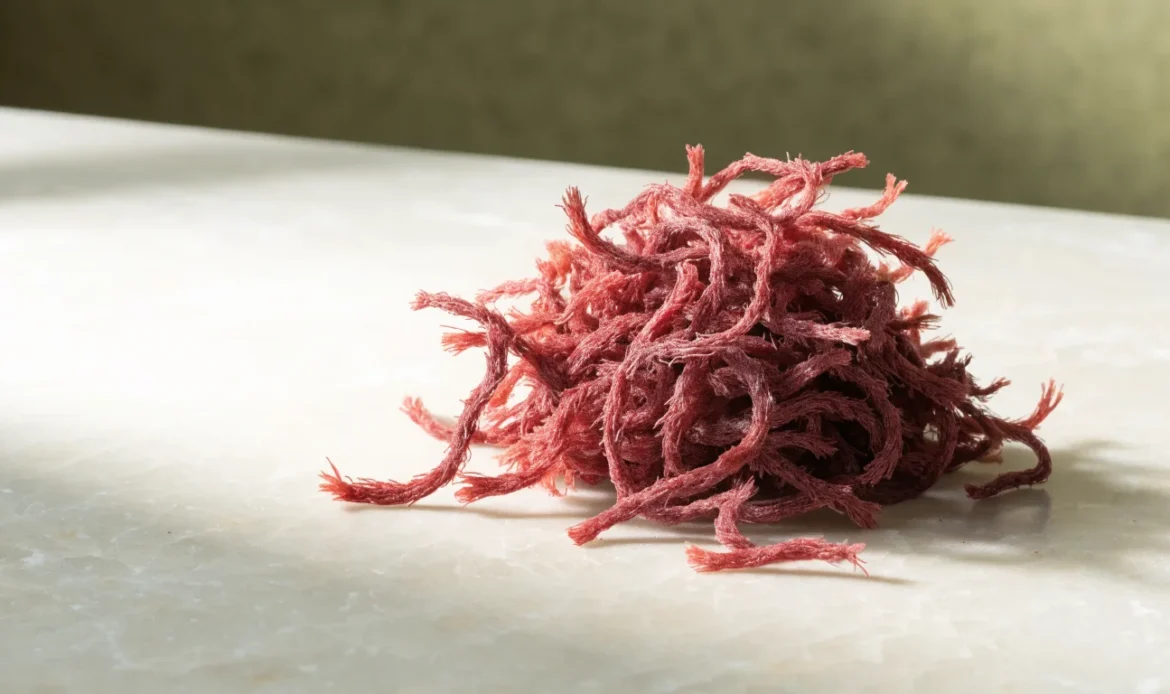
Short answer: Pink sea moss is simply sea moss that has a pink or light-red color. The color can come from natural pigments, light, water, or growing conditions. Color alone does not prove a product is safer, cleaner, or more nutritious. Use testing, clear supplier information, and safe handling to decide.
Why this quick answer first: shoppers often see pink sea moss and want to know if pink means “better.” Color is a clue, not proof. Below you will find clear checks and a practical decision guide to help you buy, prepare, and store pink sea moss.
What is pink sea moss?
Pink sea moss is a name people use for sea moss that looks pink, peach, or pale red. Sea moss is a type of seaweed. Different species and different places can yield different colors. Pink tones may show on whole dried strands, in raw wet clumps, or in gels and powders made from that seaweed.
Key points:
- Pink is a color description. It is not a species name.
- Color can be natural. It can also change with drying, heating, or blending.
- Color does not prove anything about lab testing or safety.
See general seaweed background for how seaweed varies and why testing matters: Harvard T.H. Chan School of Public Health explains how seaweed types and nutrients vary by species and environment [1].
Why is sea moss pink?
Sea moss color comes from several simple factors:
- Natural pigments in the seaweed. Many seaweeds have pigments that make red, brown, or green tones.
- Water and light. Sunlight and water temperature can change how pigments appear.
- Age and season. Young growth can look different from older growth.
- Processing. Drying, sun-drying, heat, or washing can change color.
What color cannot tell you:
- You cannot tell the iodine level, heavy metal level, or microbial safety just by looking at color. Iodine and some contaminants vary a lot between seaweeds and batches [2][3][5].
- “Pink” does not prove a particular place of harvest or that the seaweed was handled in any specific way.
If a seller claims color equals a precise nutrient level or safety, ask for lab results. The evidence shows that seaweed iodine and other contents vary widely and need measurement, not visual reading [2][3][5].
Common formats of pink sea moss
Pink sea moss is sold in several formats. Each format has different handling, shelf needs, and typical uses.
- Raw / Wet: Fresh or never-dried sea moss kept moist. This may look soft and jelly-like.
- Pros: Close to its fresh texture.
- Cons: Perishable. Ask seller about harvest date and cold storage.
- Dried / Whole leaf: Sun-dried or machine-dried strands. Often sold in bags.
- Pros: Long shelf life if dry. Easy to rehydrate.
- Cons: Drying can change color and texture.
- Gel: Rehydrated and blended sea moss. Sold refrigerated or frozen.
- Pros: Ready to add to foods and drinks.
- Cons: Can spoil if kept warm. Ask about water source used in gel.
- Powder: Ground dried sea moss. Convenience for capsules and mixing.
- Pros: Easy dosing, shelf-stable if dry.
- Cons: Harder to visually inspect for debris.
- Capsules and blended supplements: Sea moss mixed with other ingredients in pills or softgels.
- Pros: Convenient dosing.
- Cons: Hard to verify single-ingredient content. Ask for third-party testing information.
When choosing a format, think about how you will use it, how you will store it, and how soon you will use it up.
How to check quality and safety
Look for these seller details when you shop for pink sea moss. Ask for them if they are not visible.
Essential checks
- Harvest information: date or season, general harvest area, and whether it was wild-harvested or farmed.
- Processing and drying method: sun-dried, air-dried, or machine-dried, and where processing happened.
- Storage and shipping practices: cold chain for wet products; dry, airtight packing for dried products.
- Lab testing or Certificates of Analysis (COA): tests for iodine, heavy metals, and microbial contamination are useful. Ask for batch-specific reports.
- Ingredient list: no hidden additives if you expect single-ingredient sea moss.
- Clear contact and business details so you can follow up.
Why tests and COAs matter
- Iodine levels and other minerals can be high and vary by source. Scientific reviews show that iodine in seaweed can be both useful and a risk depending on amount and intake patterns [2][5]. Food safety monitoring also finds wide iodine variation in seaweed products [3].
- Third-party testing helps confirm what is in the product. Agencies and expert reviews recommend testing seaweed products sold as food or supplements [4].
What a seller’s answers cannot prove
- A general “lab-tested” claim is not the same as a current batch COA.
- Words like “wild” or “traditional” do not ensure low contaminants or low iodine.
- Color or photos alone do not prove safety or consistent nutrient content.
If a seller cannot provide clear, recent lab results or harvest details, treat that as a gap in information.
Practical decision checklist — Buyer’s guide for pink sea moss
Use this checklist when deciding what to buy. Answer each line before you purchase.
- What format do I need?
- Want ready-to-use (smoothies, recipes): choose gel or powder.
- Want long storage and flexible use: choose dried whole sea moss.
- How soon will I use it?
- Under 2–3 weeks and refrigerated: gel or wet may work.
- Longer use or bulk: dried or powder is safer for storage.
- Does the seller provide batch COAs?
- Yes, get the COA and note the test date and lab name.
- No, ask for the earliest available COA or consider a different seller.
- Is iodine testing included?
- Yes: compare values and ask about serving-size iodine estimates.
- No: ask seller to test before buying large amounts.
- Are heavy metal and microbial tests available?
- Yes: check results.
- No: consider seeking a supplier who can provide them.
- What is the return or complaint policy?
- Clear policy: safer purchase.
- No policy: riskier in case of product issues.
- For wholesale buyers: request sample batches and COAs for multiple lots. Ask for harvest windows and sustained testing practices.
Use this checklist as a printable buying aid or a conversation guide when you contact a seller.
Table: Quick format comparison
| Format | Ease of use | Storage notes | What to check from seller |
|---|---|---|---|
| Raw / Wet | High (ready) | Refrigerate or freeze | Harvest date, cold chain |
| Dried / Whole | Moderate (rehydrate) | Keep dry, airtight | Drying method, harvest area |
| Gel | High (ready) | Refrigerate/freeze, short shelf-life | Water source, processing date |
| Powder | High (mixable) | Keep dry, airtight | Grinding process, additives |
| Capsules/supplements | High (dose) | As labeled | Ingredient list, third-party testing |
This table is a quick tool. Always verify details with the seller.
How to prepare pink sea moss safely
Basic steps for home preparation of dried or raw pink sea moss.
- Inspect: Look for visible sand, bits of shell, or strong off smells. A mild ocean smell is normal.
- Rinse: Rinse under cool running water to remove sand and debris.
- Soak: Soak in clean, cool water for several hours until softened. Keep it chilled if soaking more than a few hours.
- Trim: Remove hard bits or pieces that do not soften.
- Blend: For gel, blend softened sea moss with clean water until smooth. Use enough water to reach your desired gel thickness.
- Store: Keep gel refrigerated and use within the shelf window the seller recommends. Freeze in small portions for longer storage.
- Clean utensils and surfaces: Follow normal kitchen hygiene to avoid cross-contamination.
Note: Some recipes call for light heating. If you heat, do so gently and avoid overcooking. Always follow food-safety best practices.
Storage and shelf-life guidance
General safe-practice tips:
- Keep dried sea moss in a cool, dry place in an airtight container.
- Store gels in the fridge unless the seller indicates otherwise. Freeze for long-term storage.
- Label containers with date opened or made.
- If you see mold, strong off odors, or sliminess that was not intentional, discard.
Ask sellers for their recommended shelf life and storage conditions for their specific product. These recommendations depend on processing and added ingredients.
Buying pink sea moss wholesale vs retail
If you are a retailer or bulk buyer, additional checks are useful.
Wholesale buyer checklist
- Ask for regular COAs covering iodine, heavy metals, and microbes for each production lot.
- Request sample shipments from multiple lots before placing a large order.
- Confirm harvest seasonality and expected batch variability.
- Check packaging and labeling compliance for your market.
- Seek a clear recall or complaint process.
Retail buyers
- For small amounts, check for clear labeling and recent COAs.
- Prefer sellers who publish batch tests or who will share them on request.
Wholesale relationships should include written quality agreements. If a seller cannot provide basic testing or harvest info, a wholesale partnership carries more risk.
Questions to ask sellers (and how to read the answer)
- Can you share a Certificate of Analysis (COA) for this batch?
- Good answer: a COA with lab name, date, and measured results.
- Less reliable: “We test sometimes” without a dated COA.
- Do you test for iodine and heavy metals?
- Good: yes, with recent lab numbers.
- If no: plan to test a sample or pick another supplier.
- What is the harvest date and location?
- Specific season and general location are helpful. Absolute coordinates are rare, but general region and harvest month help assess variability.
- How do you dry and store the product?
- Clear details about method and timing are useful.
- What is your return policy?
- A clear policy helps in the event of product issues.
Uses of pink sea moss
People use sea moss in many ways. Common uses:
- Smoothies or blended drinks.
- As a thickener in sauces or soups.
- In desserts or puddings.
- As a powdered ingredient in capsules or protein blends.
Avoid treating it as a medicine. Use it as a food ingredient and follow safe serving sizes suggested by the seller or a food professional.
Safety notes about iodine and testing
Important science-based points:
- Seaweed can be a significant source of iodine. Iodine levels vary widely among seaweed species and products [2][3][5].
- Excessive iodine intake can affect the thyroid in some people. Reviews and clinical discussions highlight both benefits and risks of high iodine intake from seaweed [2][5].
- Regulatory and food-safety bodies have surveyed iodine in seaweed products and found wide ranges [3].
- Because of this variability, many experts and food-safety resources recommend testing and clear labeling for iodine content in seaweed products [4].
If you have thyroid issues or are on iodine-restricted diets, talk with a health professional before regularly using seaweed products. A seller’s COA can help estimate iodine intake from a serving.
References for these points include reviews and safety reports from the scientific and food-safety community [1][2][3][4][5].
Conclusion
Pink sea moss is a color variety of seaweed. Color alone does not show safety, exact nutrients, or origin. Use a few clear checks before buying: request batch COAs, ask for harvest and processing details, and choose the format that fits your use and storage needs. If you need more help, use the decision checklist above and contact sellers with the suggested questions.
Next steps:
- Learn more about seaweed basics at our learning pages: /learn/.
- Ready to shop? See available formats at /shop/.
- For business inquiries about bulk or wholesale orders, visit /wholesale/ or contact us at /contact/.
- Return to the home page for more resources: /.
Continue reading
Frequently asked questions
Does pink sea moss mean better nutrients?
No. Color does not prove nutrient levels. Nutrients like iodine vary by species and batch. You need lab tests to know exact content [1][2][3][5].
How can I tell if pink sea moss is spoiled?
Look for strong bad smells, visible mold, or unusual sliminess that was not part of a gel product. When in doubt, do not use it. Follow seller storage guidance.
Is iodine testing necessary?
Testing helps you know how much iodine is in a batch. Because iodine in seaweed can be very different between samples, testing is a helpful safety step, especially for frequent users or for selling the product [2][3][5].
Can I make gel from dried pink sea moss?
Yes. Clean, soak, and blend with clean water to make gel. Store chilled and follow safe handling. Ask the seller for recommended soak times and water quality advice.
Should I buy wholesale pink sea moss?
Wholesale can be a good choice if you need larger amounts. For wholesale, require batch COAs, samples from multiple lots, and clear harvest and processing information before committing.
What lab tests should I ask for?
Ask for iodine content, heavy metal panel (such as lead, cadmium, mercury), and microbial tests. Also ask for test dates and the lab name or accreditation [4][3].
References
- Harvard T.H. Chan School of Public Health, “Seaweed.” https://nutritionsource.hsph.harvard.edu/seaweed/
- Smyth PPA. “Iodine, Seaweed, and the Thyroid.” European Thyroid Journal, 2021. https://pmc.ncbi.nlm.nih.gov/articles/PMC8077470/
- Food Standards Australia New Zealand, “Survey of iodine levels in seaweed and seaweed containing products,” updated 2025. https://www.foodstandards.gov.au/science-data/monitoring-safety/surveyofiodinelevels
- Operation Supplement Safety, “Sea Moss in Dietary Supplements.” https://www.opss.org/article/sea-moss-dietary-supplements
- Blikra MJ et al. “Consequences of acute and long-term excessive iodine intake: A literature review focusing on seaweed as a potential dietary iodine source.” 2024. https://doi.org/10.1111/1541-4337.70037