
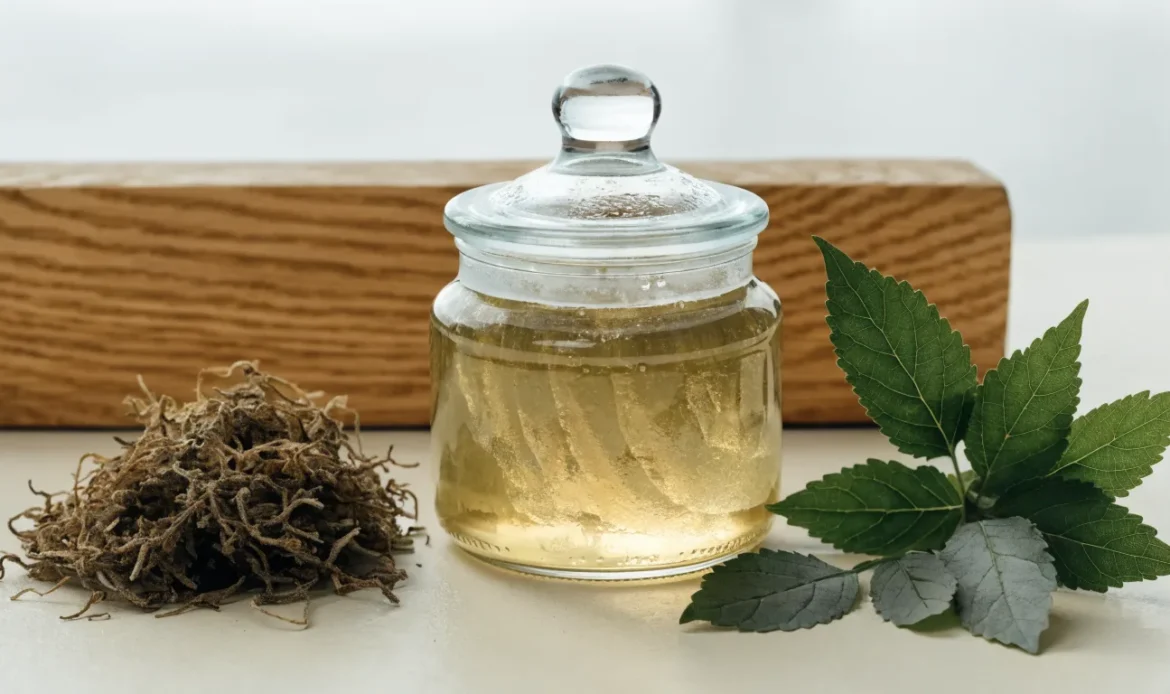
Short answer
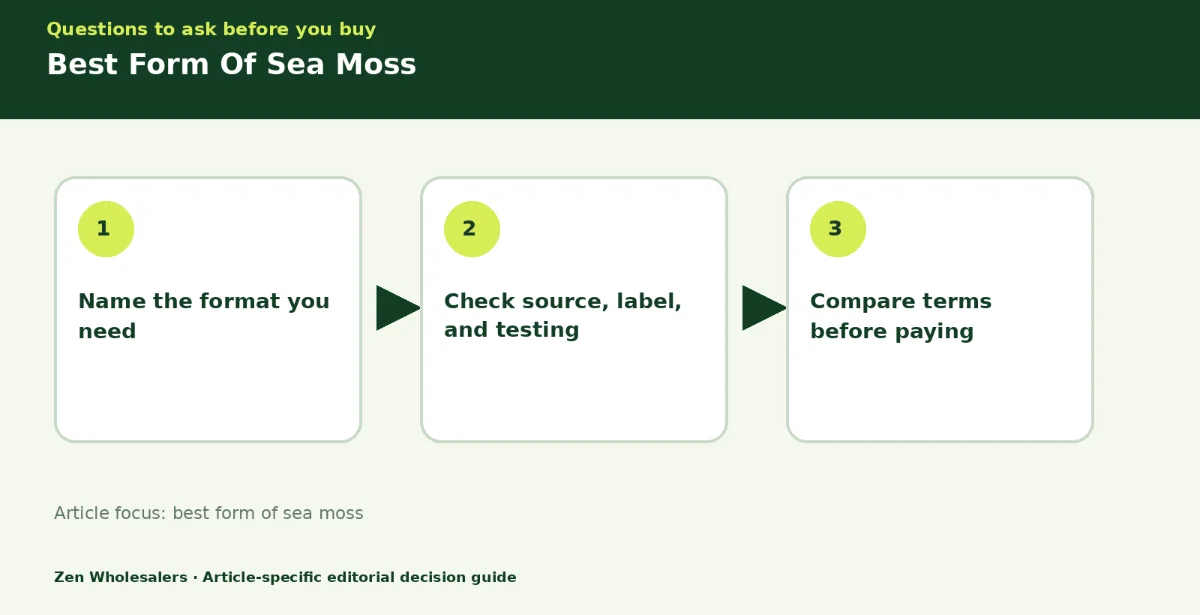
There is no single “best” form of sea moss for everyone. The best form depends on how you will use it and what you want to control. Dried sea moss is best for people who want long storage and do-it-yourself prep. Sea moss gel is best if you want ready-to-use texture in smoothies or recipes. Powders and capsules are best for precise doses or easy mixing. Read the rest of this guide to pick the right form for you.
Why this matters
Sea moss comes in many forms. Each form has real trade-offs. Some are easy to use. Some let you check or change what goes in. Some come ready-made but need trust in the maker. This guide shows the common forms, the exact checks to make, and a plain decision table.
Common forms of sea moss and what they mean
Raw wild sea moss (fresh, wet)
- What it is: Sea moss picked and kept wet. It is rarely sold far from coastlines.
- Pros: Natural texture. Good for cooks who want fresh seaweed.
- Cons: Perishable. Needs refrigeration. Harder to buy safely online.
Dried sea moss (loose seaweed)
- What it is: Sea moss that has been washed and dried. You usually rehydrate it before use.
- Pros: Long shelf life. You control cleaning and gel-making. Easier to store and ship.
- Cons: Needs prep time. Quality can vary by how it was dried and cleaned.
Sea moss gel (ready-to-use)
- What it is: Rehydrated sea moss that has been blended into a gel. Often sold in jars.
- Pros: Convenient. Easy to add to drinks and recipes. No soaking or blending needed.
- Cons: Shorter shelf life. You must trust the maker’s cleaning and storage practices.
Powdered sea moss (dried and ground)
- What it is: Dried sea moss ground into a powder.
- Pros: Easy to measure. Mixes into smoothies, foods, or capsules. Stable if kept dry.
- Cons: You lose some texture. Powders can hide added ingredients unless labeled.
Capsules and tablets
- What it is: Powdered sea moss put into pill form.
- Pros: No taste, precise dosing, convenient for travel.
- Cons: Fewer clues about raw material quality. Less useful for cooking.
Liquid extracts and tinctures
- What it is: Concentrated liquid made from seaweed and solvents.
- Pros: Small amounts go far. Convenient for some uses.
- Cons: Often not standardized. Check labels and tests.
Blended products
- What it is: Sea moss mixed with other seaweeds or herbs.
- Pros and cons depend on what’s added. Read labels closely.
Quick comparison table (useful at a glance)
| Form | Convenience | Shelf stability | Control over cleaning | Use in cooking | Best for |
|---|---|---|---|---|---|
| Dried sea moss | Medium (needs soak) | High if kept dry | High (you clean it) | Good after rehydrating | DIY users, long storage |
| Sea moss gel | High (ready) | Low–medium (refrigerate) | Low–medium (trust maker) | Excellent (texture) | Smoothies, ready recipes |
| Powder | High | High if dry | Low–medium (depends on label) | Good for mixing | Mixing, capsules |
| Capsules | High | High | Low | Not for cooking | Dosing, travel |
| Fresh raw | Low (perishable) | Low | High (you handle) | Best for fresh dishes | Local cooks, restaurants |
Note: Shelf stability and safety depend on storage and on whether the product was processed and tested.
How to decide: uses and priorities
Ask these questions first:
- Will I use sea moss in smoothies or food? If yes, gel or rehydrated dried works well.
- Do I want long storage and to control cleaning? Choose dried sea moss.
- Do I want precise dosing and no taste? Choose powder or capsules.
- Am I buying for a store or to repackage? Look for supplier documentation and wholesale options.
Decision guide (short)
- Need convenience and quick use → Sea moss gel.
- Want long shelf life and control → Dried sea moss.
- Want no taste and precise dose → Powder or capsules.
- Buying in bulk for resale → Ask for testing and wholesale terms.
What you can check before buying
Sea moss products can vary a lot. You cannot prove every claim from a label. But you can check facts that show better transparency.
Look for these items on packaging or product pages:
- Species name or common name. (Helps with expectations.)
- Harvest or harvest region (not a guarantee of quality).
- Date of harvest or processing.
- Cleaning and drying method (sun dried, air dried, low-heat dried).
- Storage instructions and shelf life.
- Ingredient list (no hidden additives).
- Lab test results or certificates for heavy metals, iodine, and microbial safety. A clear lab report is a strong sign of transparency.
- A way to contact the seller (phone, email, or /contact/ page).
What these checks cannot prove
- A label cannot prove exact nutrient amounts unless the product has third-party lab tests that show those numbers.
- A product page cannot guarantee low iodine or low metal content without lab data. Seaweed iodine and metal levels can vary with species, place, and season.
Why iodine and testing matter
Seaweeds can be high in iodine. Iodine intake affects the thyroid. If you have thyroid concerns or take iodine-sensitive medicine, check with a healthcare professional before adding seaweed to your diet. Read more about seaweed and iodine (Harvard Nutrition Source) and research about iodine variability and risks (European Thyroid Journal) [1][2]. Monitoring programs and scientific reviews describe that iodine and metal content can vary by product and region [3][5]. For supplement guidance, reviews and safety groups recommend caution and lab testing [4].
A practical buyer checklist (use this before you buy)
- Verify the product form (dried, gel, powder, capsule).
- Check the ingredient list for added sugars, preservatives, or fillers.
- Look for a species name or clear description.
- Find harvest or processing dates and storage instructions.
- Search for lab test results for heavy metals and iodine. If none are shown, ask the seller.
- Confirm recommended serving size and any usage warnings.
- Note the package size and estimate how long it will last at that serving.
- Read return and refund policy in case the product arrives spoiled or incorrect.
- Contact the seller with specific questions. A clear, prompt reply is a good sign.
- If you have a thyroid condition or take iodine-related medicine, check with your clinician before use.
How to prepare and use each form (basic steps)
Dried sea moss (basic prep)
- Rinse the dried sea moss in cool water to remove sand and debris.
- Soak in clean water for several hours until it expands and softens.
- Rinse again. Trim any dark or tough bits.
- Blend with fresh water to make gel, or use rehydrated pieces in food.
- Store dried sea moss in a cool, dry place until you are ready to use.
Sea moss gel (basic use and storage)
- Use a clean spoon to scoop gel from the jar.
- Keep refrigerated and follow maker’s storage instructions.
- Freeze in ice-cube trays for longer keeping and easy portioning.
Powder and capsules
- Mix powder into drinks or foods as labeled.
- Take capsules as recommended on the label.
- Keep dry and sealed.
Safety notes for preparation
- Clean hands and clean tools reduce microbial risk.
- Follow storage instructions. Gel can spoil if left warm for many days.
- Do not assume all gels are preservative-free or shelf-stable.
What to watch for with safety and labeling
- Hidden additives: Some jars of gel can include other thickeners, sweeteners, or preservatives. Read the ingredient list.
- No lab reports: If a seller cannot or will not show test results for heavy metals or iodine, you may prefer a seller who can.
- Broad health claims: Avoid products that promise disease cures, weight loss, detox, or specific medical results. Such claims are not allowed and may signal misleading marketing.
- Iodine caution: Because iodine levels in seaweed can be high or variable, people with thyroid conditions should consult a clinician before regular use (see [2][5]).
Best options for common buyer needs
For a first-time buyer
- Try small jars of gel or a small bag of dried sea moss. This keeps risk low while you learn prep and taste.
For smoothie users
- Gel is easy to mix and gives a smooth texture. Powder also mixes well without much texture.
For cooks and bakers
- Dried or raw sea moss lets you add texture or gel after you rehydrate. It gives more control in recipes.
For supplement-style use
- Powder or capsules deliver more precise amounts. Look for clear serving-size info and lab reports.
For wholesale buyers or stores
- Ask for supplier documentation: harvest dates, processing methods, and lab tests. Use the /wholesale/ contact page to get formal details. Transparency matters when repackaging or reselling.
Decision flow (short text flowchart)
- Do you want ready-to-use? → Yes → Choose gel.
- Do you want long storage and to control cleaning? → Yes → Choose dried.
- Do you want no taste and precise doses? → Yes → Choose powder or capsules.
- Are you buying in bulk to resell? → Yes → Ask for lab tests and wholesale terms at /wholesale/.
Conclusion
The best form of sea moss depends on your needs. Dried sea moss gives storage and control. Gel gives convenience and texture. Powders and capsules give dosing and ease. No label can prove every ingredient or nutrient without lab tests. Use the checklist here and ask sellers for test results if safety or iodine is a concern. If you plan to resell, ask for formal supplier documentation via our /wholesale/ page. For basic guides, see our /learn/ area. To shop or contact us, visit /shop/ or /contact/.
Continue reading
Frequently asked questions
Is sea moss gel the best form for beginners?
Gel is easy to use and works well in drinks and recipes. It can be a good start for beginners. But gel has a shorter shelf life than dried sea moss. If you want to learn how to make your own gel, dried sea moss gives more control.
Can I trust labels for powdered sea moss?
Labels can tell you ingredients and serving sizes. But labels alone cannot prove nutrient or contaminant levels. For powders, ask the seller for lab tests if you want confirmed iodine or heavy metal data.
How often should I use sea moss?
There is no universal rule. Use depends on your goals, diet, and any health conditions. Because iodine levels can vary in seaweed, people with thyroid issues should talk with a clinician before regular use (see references) [2][5].
What does a lab test for sea moss show?
Lab tests can show levels of heavy metals (like arsenic or mercury), iodine content, and microbial safety. Not all sellers provide tests. If testing is important to you, ask for recent third-party reports.
Is fresh raw sea moss safer than dried?
Not necessarily. Fresh sea moss can be clean and tasty, but it is perishable and needs very careful handling. Dried sea moss is easier to store safely and to inspect before processing.
Where can I learn more about sea moss and safe use?
A reliable place to start is general seaweed resources from nutrition and food safety groups. For detailed product questions and wholesale buying, use our /learn/ pages, visit our /shop/ for product options, or contact us at /contact/.
References
- [1] Harvard T.H. Chan School of Public Health, “Seaweed.” https://nutritionsource.hsph.harvard.edu/seaweed/
- [2] Smyth PPA. “Iodine, Seaweed, and the Thyroid.” European Thyroid Journal, 2021. https://pmc.ncbi.nlm.nih.gov/articles/PMC8077470/
- [3] Food Standards Australia New Zealand, “Survey of iodine levels in seaweed and seaweed containing products,” updated 2025. https://www.foodstandards.gov.au/science-data/monitoring-safety/surveyofiodinelevels
- [4] Operation Supplement Safety, “Sea Moss in Dietary Supplements.” https://www.opss.org/article/sea-moss-dietary-supplements
- [5] Blikra MJ et al. “Consequences of acute and long-term excessive iodine intake: A literature review focusing on seaweed as a potential dietary iodine source.” 2024. https://doi.org/10.1111/1541-4337.70037