
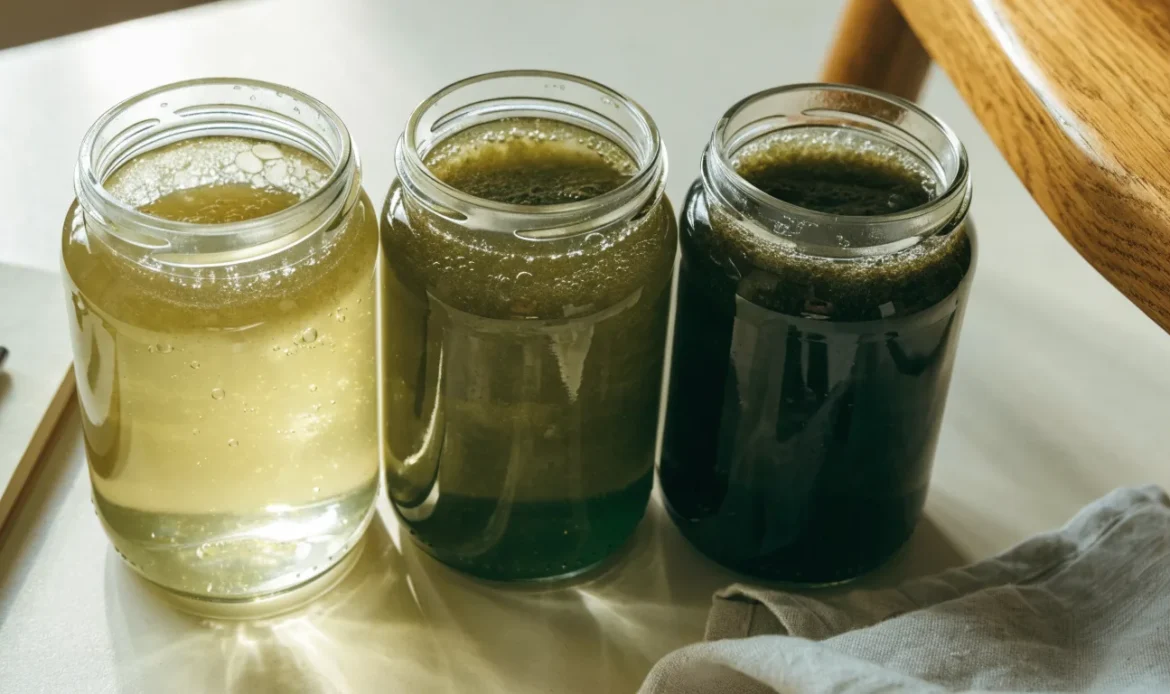
Short answer first: “Isle of Spice Sea Moss” is a product or label name that points to sea moss sold in consumer formats. It tells you the item is seaweed-based, but the label alone does not prove where it was harvested, how it was tested, or its exact nutrient content. Check the product format, seller information, and test results before you buy.
This page explains what that name can mean. It shows common formats. It gives a clear checklist you can use when choosing a sea moss product. It shows what you can check and what you cannot know from labels alone. Links at the end point to useful next steps.
What “Isle of Spice Sea Moss” usually refers to
- The phrase usually appears as a product or brand name. It is not a scientific term.
- It indicates the product is sea moss or a sea-moss based product. Sea moss is a general name for several red algae species sold as food or supplements.
- The label might be used to suggest a Caribbean style or origin. A name alone does not prove origin. If origin matters to you, look for clear seller statements and testing.
What you can expect from a product label:
- A product name such as “Isle of Spice Sea Moss.”
- A format statement (for example: dried sea moss, powder, gel, capsules).
- A list of ingredients and any added flavors or preservatives.
- Seller contact information or a website link.
What a name cannot prove:
- Exact harvest location or method without supporting documentation.
- Exact mineral or iodine levels unless a recent lab report is provided.
- Safety or purity without third-party testing or regulatory checks.
Short guide: common sea moss formats and when people use them
Sea moss is sold in several clear formats. Each format has trade-offs for storage, prep, and use. Below is a simple comparison you can use when deciding which format fits your needs.
| Format | What it is | Pros | Cons | Best for |
|---|---|---|---|---|
| Raw / whole (wet or sun-dried) | Pieces of the seaweed, sometimes dried | Least processed; can be rehydrated and made into gel | Must be cleaned and prepared; shorter shelf handling; variable texture | People who want a whole-ingredient product for DIY gel or cooking |
| Dried (cleaned) | Sea moss dried for longer shelf life | Easier to store; lighter to ship | Needs soaking and blending to use; quality varies | Home cooks and small-batch gel makers |
| Powder | Finely milled dried sea moss | Easy to mix into drinks and recipes; no blending needed | Heat or milling can change texture; check for additives | Smoothies, baking, beverage blending |
| Gel (ready-to-use) | Sea moss blended with water into a gel | Ready for smoothies and recipes; simple to use | Shorter shelf life; shipping weight higher | Daily use in drinks; immediate convenience |
| Capsules / softgels | Concentrated or powdered sea moss in capsule form | Precise serving form; no prep | Harder to measure for recipes; may include fillers | People who want a supplement-like form |
Use this table to match format to your plans. If you plan to make gel at home, whole or dried sea moss is better. If you want convenience, a ready-made gel or powder may fit.
How to read the label and what to ask the seller
When you see “Isle of Spice Sea Moss” on a package or product page, check these items. They help you judge transparency and safety.
- Format and directions
- Does the label say dried, powder, gel, or capsules?
- Are there clear preparation instructions?
- Ingredient list
- Is sea moss the only ingredient?
- Are there added flavors, colorants, or preservatives?
- Seller information
- Is there a company name, address, or phone number?
- Is there a website with more detail or an FAQ?
- Origin and harvest date
- Does the label state where the sea moss was harvested?
- If no origin is listed, ask the seller for details.
- Testing and certificates
- Does the seller show third-party test results for iodine, heavy metals, or microbial safety?
- Are test reports recent and from accredited labs?
- Storage and shelf life
- Are storage instructions listed (refrigerate after opening, keep dry, etc.)?
- Is there a best-by or manufacturing date?
Ask for documents if you care about origin or safety. A responsive seller should be able to say how the product was handled and tested.
Safety points to check and why they matter
Seaweed can contain naturally occurring minerals like iodine. The amounts vary. Some seaweed types can carry higher levels of iodine. High iodine intake may affect thyroid function in some people. Because levels vary widely, product testing helps you know what to expect [1][2][5].
What to check:
- Lab testing for iodine content and heavy metals. Tests that come from accredited labs are more useful.
- Microbial testing if the product is a ready-to-eat gel. Moist products have higher microbial risk if not processed safely.
- Clear storage and use instructions from the seller.
What labels and names do not prove:
- A brand or name does not guarantee low iodine or absence of contaminants.
- A “natural” or “wild” claim does not guarantee safety. Independent testing is the only way to confirm levels of certain minerals or contaminants.
Regulatory and safety context:
- Different countries have different monitoring or survey programs for seaweed iodine and contaminants. That means standards and reported ranges can vary by region [3].
- Industry and public health reviewers have noted that seaweed products can be an important source of iodine and that variability requires attention when used as a regular food ingredient [2][5].
- Consumer safety groups recommend that people who have thyroid issues or are pregnant consult a healthcare professional before adding concentrated seaweed products to their diet [2][5].
What you can reasonably verify before buying
You can check and confirm:
- Product format and ingredient list.
- Seller contact and location (business address or website).
- Recent third-party lab reports if provided by the seller.
- Storage and handling instructions.
- User instructions and suggested use amounts (note: these are not medical recommendations).
You cannot verify from the label alone:
- Exact nutrient intake from a single serving without test data.
- Complete absence of contaminants without testing documentation.
- The honesty of a harvest-origin claim unless accompanied by verifiable traceability documentation.
A practical decision checklist — use this before you buy
Use this checklist when you consider any “Isle of Spice Sea Moss” product. Tick the boxes you can confirm. If many boxes are unchecked, ask the seller for more detail.
- [ ] I know the product format (dried, powder, gel, capsule).
- [ ] The ingredient list shows sea moss as the main ingredient.
- [ ] The seller provides a clear contact method (email, phone, or address).
- [ ] The product page or label lists an origin or harvest area.
- [ ] The seller can provide recent third-party lab test results (iodine, metals, microbial).
- [ ] Storage and shelf-life information are clear.
- [ ] Preparation and use instructions are included.
- [ ] The price and quantity are clearly stated.
- [ ] The seller’s return or refund policy is clear.
- [ ] I read safety notes about iodine and special populations (pregnancy, thyroid issues).
If you cannot check at least five of these items, consider seeking another seller or asking more questions before buying.
How to prepare common formats safely
Dried sea moss
- Rinse it in clean water to remove sand and debris.
- Soak for several hours or until soft.
- Rinse again. Blend with fresh water to make gel if you want.
- Store gel in the fridge and follow seller storage advice.
Powder
- Mix into drinks, soups, or baking as directed.
- Use a measured scoop to control how much you add.
- Keep dry and sealed.
Gel
- Keep refrigerated after opening unless the seller indicates otherwise.
- Use within the time suggested on the packaging.
Capsules
- Follow the serving instructions on the label.
- Keep capsules in a cool, dry place.
Note: This is general guidance. Follow seller directions and hygiene best practices when handling food products.
Questions to ask the seller right now
If you contact a seller about an “Isle of Spice Sea Moss” product, consider these short questions:
- What form is the sea moss and how was it processed?
- Where was it harvested?
- Do you have third-party test results for iodine and heavy metals?
- What is the recommended storage and use-by date?
- Are there any added ingredients?
Good sellers will answer clearly or provide test reports on request.
What the science says (brief, plain summary)
- Seaweeds are a diverse group of marine plants and algae. They can be an ingredient in food and supplements [1].
- Iodine levels in seaweed vary a lot by species and location. That means one product can have very different iodine than another [2][3][5].
- Because of this variability, third-party testing is the most useful way to know the iodine and contaminant levels in a finished product [2][5].
- Some public and food-safety groups recommend attention to seaweed intake when people are pregnant or have thyroid conditions [2][5].
- For product-safety context in supplements, industry and safety groups discuss testing and label transparency as helpful consumer protections [4].
References to this research are listed at the end of this article.
Next steps and useful links
If you want to learn more about sea moss basics and safety:
- Learn more about sea moss and seaweed on our learning hub: /learn/
- See our product formats and available options in the shop: /shop/
- If you are buying in bulk or need business terms, check wholesale options: /wholesale/
- Have questions or want test reports? Contact us: /contact/
- Back to our home page for more resources: /
These links point to general resources. Use them to compare formats and to ask sellers direct questions.
Conclusion
“Isle of Spice Sea Moss” is a label you may find on sea moss products. The name alone tells you it is seaweed-based but not much else. Use the checklist on this page to check format, ingredients, origin, seller contact, and test results. Ask sellers for recent third-party laboratory reports if you want to know iodine or contaminant levels. If you have thyroid issues or are pregnant, talk with a healthcare professional before adding concentrated seaweed products to your routine.
If you want a clear next step, visit our learning hub to read more about sea moss formats and safety: /learn/. If you are ready to compare formats, go to /shop/ or contact us at /contact/ for specific product questions. Businesses can find bulk options at /wholesale/.
Continue reading
Frequently asked questions
Does the name “Isle of Spice Sea Moss” mean the product comes from a specific island?
Not necessarily. Product names can suggest a style or origin, but a name alone does not prove harvest location. Check the label for origin or ask the seller for documentation.
How do I know if a sea moss product is safe to eat?
Ask for third-party lab test results that show iodine and heavy metal levels, and check microbial testing for ready-to-eat gel. Also confirm storage and handling instructions. No single label claim proves full safety.
Is powdered sea moss the same as sea moss gel?
They are different forms. Powder is dried and milled sea moss. Gel is blended sea moss with water. Use depends on convenience and recipe needs.
Should people with thyroid conditions avoid sea moss?
People with thyroid conditions should be cautious because seaweed can contain iodine. Talk with a healthcare professional before regular use. Testing of the product can inform decisions [2][5].
How long does sea moss gel last?
Shelf life depends on how it was prepared and preserved. Follow the seller’s storage instructions. Refrigerated home-made gel typically lasts a shorter time than dried products.
What does third-party testing mean and why does it matter?
Third-party testing means an independent lab checks the product for specific substances. It matters because it provides unbiased data on iodine, heavy metals, and microbes. Ask to see test reports and check the lab accreditation where possible.
References
- Harvard T.H. Chan School of Public Health, “Seaweed.” https://nutritionsource.hsph.harvard.edu/seaweed/
- Smyth PPA. “Iodine, Seaweed, and the Thyroid.” European Thyroid Journal, 2021. https://pmc.ncbi.nlm.nih.gov/articles/PMC8077470/
- Food Standards Australia New Zealand, “Survey of iodine levels in seaweed and seaweed containing products,” updated 2025. https://www.foodstandards.gov.au/science-data/monitoring-safety/surveyofiodinelevels
- Operation Supplement Safety, “Sea Moss in Dietary Supplements.” https://www.opss.org/article/sea-moss-dietary-supplements
- Blikra MJ et al. “Consequences of acute and long-term excessive iodine intake: A literature review focusing on seaweed as a potential dietary iodine source.” 2024. https://doi.org/10.1111/1541-4337.70037