
We should say this before anything else: we sell raw sea moss wholesale, which makes us a competitor of sorts. So this is written to be checkable. Where we state a fact about the company, it comes from its own public marketing or from mainstream coverage. Where we disagree, we disagree with a specific claim and show the reasoning, not with the business.
What the company is
The Transformation Factory is a US-based, Black-owned sea moss gel producer founded by entrepreneur Alexiou Gibson. It became one of the most visible brands in the category after appearing on Shark Tank, and that exposure did a great deal to move sea moss gel from a niche Caribbean product into mainstream American retail.
That is a genuine achievement and worth acknowledging plainly. Much of the current retail demand for sea moss gel — including demand that reaches suppliers like us — exists because brands like this one built a consumer market that did not previously exist.
What it sells
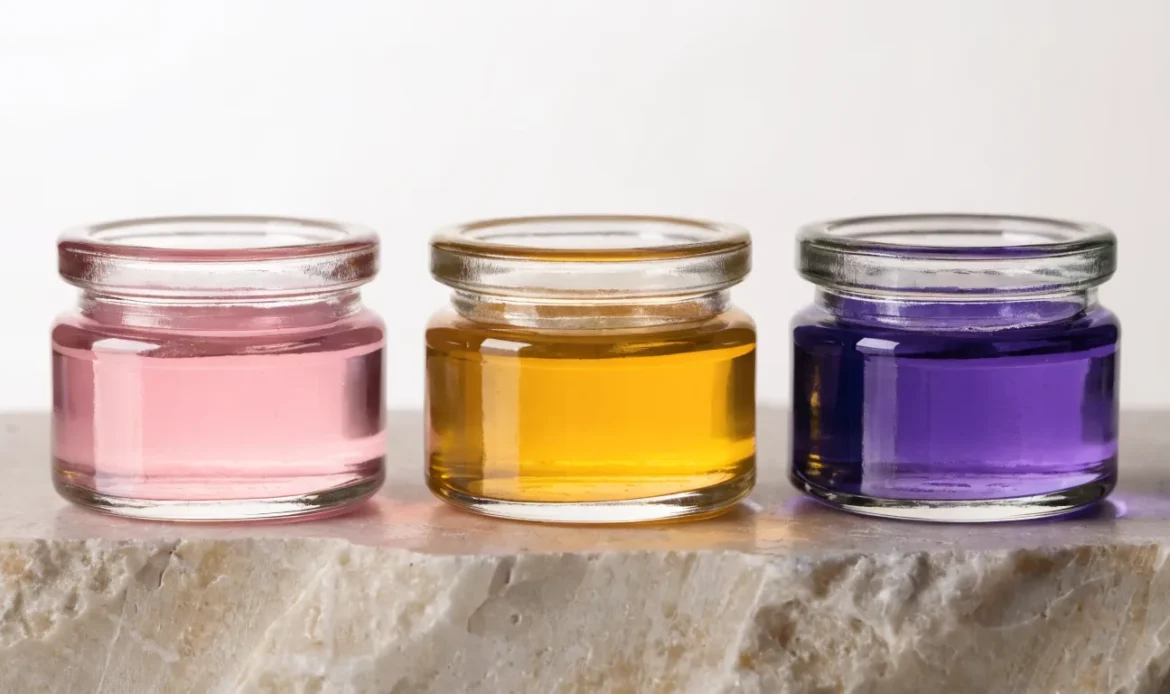
Sea moss gel in a range of fruit flavours, including pineapple, dragonfruit, elderberry and strawberry banana, alongside plain. The marketing describes the products as organic, vegan, keto-friendly and gluten-free, and the sea moss as wildcrafted, harvested from unpolluted waters without chemical fertilisers or pesticides, then blended with spring water.
Two observations on the format rather than the brand, both of which apply to every flavoured gel on the market:
- Flavoured gel contains fruit, and fruit contains sugar. A pineapple or strawberry banana gel is a pleasant thing to eat and is not nutritionally identical to plain gel. Check the panel if sugar matters to you.
- Gel is mostly water. You are paying for water, glass and shipping weight. That is the trade for convenience, and for many people it is a fair one. A pound of dried sea moss makes roughly 12 to 15 jars of 16 oz gel — see our gel method if you would rather make it.
The wildcrafted and Irish claims
The marketing describes the sea moss as wildcrafted and as Irish sea moss. Both terms are used loosely across this entire industry, so this is not a criticism specific to one brand.
Wildcrafted should mean grown in open ocean rather than in tanks or shallow pools. It is worth asking any brand what it means by the word, because it is not a regulated term. We explain the difference and how to spot it.
Irish sea moss properly refers to Chondrus crispus, a cold-water Atlantic species. Most sea moss sold anywhere — including almost everything described as Irish — is Eucheuma cottonii, a warm-water Caribbean and Indo-Pacific species. If a product is described as Irish moss and sourced from the Caribbean, those two descriptions pull in different directions. The species comparison.
Again: this labelling drift is industry-wide and largely inherited. It is a reason to ask questions of any brand, not a reason to single one out.
The 92-minerals claim, checked
This is the one place we will be direct, because the claim appears in this brand’s marketing and across most of the category, and because it is checkable and wrong.
The claim is that sea moss contains 92 of the 102 minerals the human body needs.
It does not survive examination:
- The human body does not require 102 minerals. The essential mineral list runs to roughly two dozen. There is no nutritional framework producing a figure of 102.
- The figure has no analytical source. It traces to Dr Sebi’s teaching, not to any published composition study of sea moss.
- Trace presence is not dietary contribution. Any seaweed contains detectable traces of many elements because it grew in seawater. Detectable is not the same as nutritionally meaningful, particularly in a gel that is roughly 95% water.
What sea moss genuinely supplies is soluble fibre and iodine, plus smaller amounts of calcium, iron and zinc, along with amino acids, fatty acids, carotenoids and polyphenols. That is a decent, honest list. The full trace of where 92 came from.
The 92-minerals line is not unique to this brand — it is the category’s inherited folklore. But repeating it tells you something about how closely a company checks what it prints.
What the evidence supports, for any sea moss brand
No brand can outperform the evidence for the material it sells, so this applies equally to all of them, ourselves included.
There are no large, well-designed human clinical trials of sea moss for meaningful health outcomes. Only two small randomised controlled trials have examined Chondrus crispus in humans, each under 60 adults and under 12 weeks. They reported modest reductions in fasting glucose, improved stool frequency and slight rises in antioxidant capacity.
Everything else — immunity, energy, detox, transformation — rests on laboratory and animal work. Every major claim graded by evidence.
What we would ask before buying, from anyone
- Which species, and harvested where? A country and coast, not “ocean harvested”.
- Is there a certificate of analysis? Iodine and heavy metals, per lot, dated, third party. Seaweed accumulates arsenic, cadmium, lead and mercury from its water.
- What is the iodine content per serving? The adult upper limit is 1,100 micrograms a day and batch variation is substantial. Almost no gel states this.
- What is in it besides sea moss and water? Fruit purees, sweeteners and preservatives are all legitimate and should all be declared.
Those four questions sort this market more effectively than any review, and they apply to us as much as to anyone. If a supplier cannot answer them, that is the answer.
A fair conclusion
The Transformation Factory built a real brand and helped create the retail category. Its flavoured gels are a legitimate product and, for people who want convenience over cost, a reasonable purchase. Reviews for it are mixed, as they are for most direct-to-consumer brands operating at scale; current customer feedback on the retailer you are buying from will tell you more about present-day service than any article can.
Where we part company is the 92-minerals claim, which has no analytical basis and which the whole industry should stop repeating. Sea moss does not need it. Soluble fibre, iodine and a decent culinary ingredient is a perfectly good product to sell.