
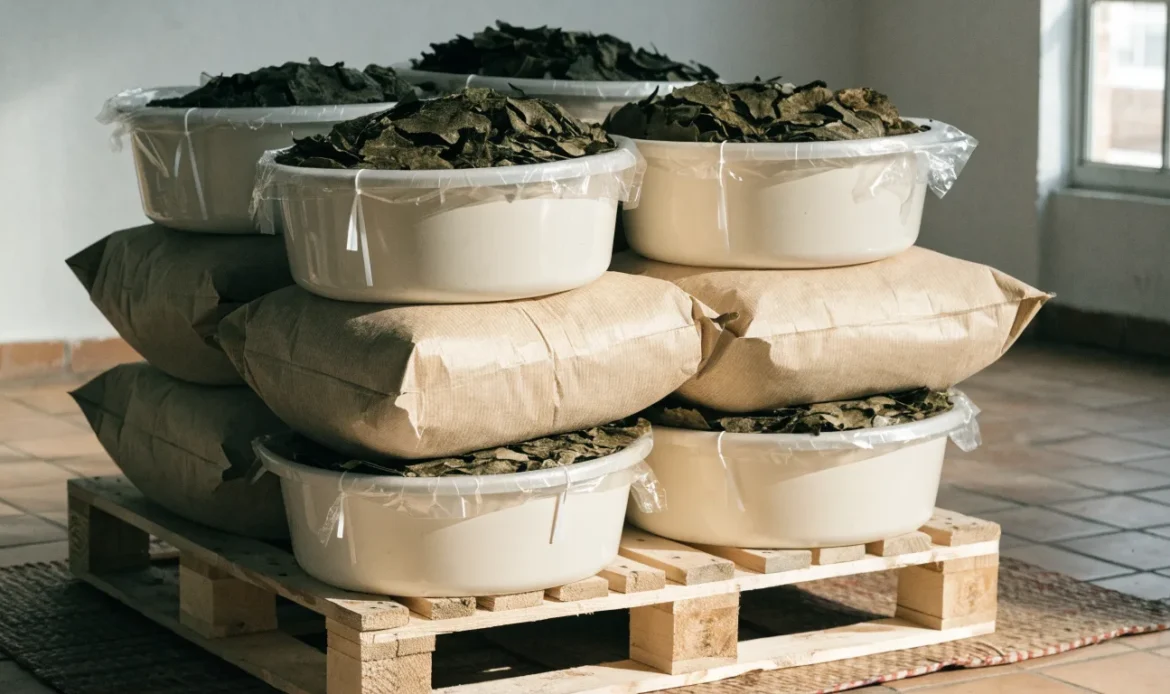
Short answer: A sea moss distributor supplies bulk sea moss products to businesses. To choose one, check product grade, quantity options, product testing, traceability documents, handling and storage rules, quote and order workflows, and account approval steps. Ask for clear proof and be ready to verify what you cannot learn from marketing alone.
Why read this? If you buy sea moss for retail, food service, or manufacturing, this guide helps you ask the right questions. It explains what you can check, what is not proven by a label, and what to request next.
What a sea moss distributor does
A sea moss distributor moves sea moss from harvest or processor to businesses. They may sell:
- Raw dried sea moss
- Blended or cleaned sea moss
- Sea moss gel or puree (processed)
- Packaged retail units for stores
- Large bulk volumes for food makers
Distributors handle orders, storage, transport, and paperwork. Some act as middlemen between harvesters and buyers. Others manage processing, testing, or private-label packing.
What to check first: product format and grade
Start by deciding what you need. Sea moss comes in different formats. Each needs its own checks.
- Raw dried sea moss: Look at moisture content, cleaning level, and foreign matter handling.
- Cleaned/graded sea moss: Check grading rules. Grading touches size, color, and visible debris.
- Processed gel or puree: Ask for processing steps, preservatives used, and recommended shelf life.
- Retail-ready packaged product: Review label copies and retail packaging specs.
Ask the distributor to explain their grading criteria. If they use grades (A, B, etc.), request a written definition for each grade so you can compare batches.
What marketing images cannot prove: color or size photos are helpful, but they do not prove batch consistency, microbial risk, or iodine content. For that you need documents and lab data.
Documentation and testing you should request
Documentation is where a distributor proves claims. Not all documents mean the product is free of issues. But good documents reduce risk.
Important documents to request:
- Certificate of Analysis (COA) for the batch you will buy. A COA should list tests run and results.
- Lab report PDFs showing test methods and lab name.
- Batch number, harvest or production date, and packing date.
- Chain of custody or supplier list that shows where the material came from.
- Storage and handling instructions for the product.
- Any quality system certificates (e.g., HACCP plan or food safety manual) if available.
Recommended tests to see on the COA:
- Microbial tests (total plate count, yeast, mold, E. coli, salmonella)
- Heavy metal screening (lead, mercury, cadmium, arsenic) — if done
- Iodine content or at least acknowledgement iodine varies in seaweed
- Moisture or water activity for dried product
- Any pesticide screening if relevant
Why iodine matters: Seaweeds can vary widely in iodine. This matters for products intended to be eaten regularly. Scientific sources note variable iodine levels in seaweed and recommend awareness and testing [1][2][5]. Food safety authorities also survey iodine in seaweed products [3]. Ask for test results if your buyers need guidance on iodine.
What a COA cannot prove:
- Farmer or harvester practices unless you have traceability that shows exact origin and dates.
- Long-term stability unless you have shelf-life studies.
- Ongoing consistency unless you get COAs for multiple recent batches.
How to read a COA and lab report
Simple steps to read a COA:
- Match the COA to the batch number and dates on the delivery note.
- Confirm the lab name and that it is an accredited lab if accreditation is claimed.
- Look for test methods used (for example, method names or references).
- Check which contaminants were tested and which were not.
- Note limits of detection — sometimes “not detected” means below a high detection limit.
If anything looks vague, ask the distributor to explain the lab method and provide a contact for the lab that ran the test.
Remember: a single COA is a snapshot. For large or ongoing buys, require periodic testing or a testing schedule.
Traceability and provenance: what you can ask for
Traceability helps you link a product to a place and time. Useful traceability documents include:
- Harvest logs or harvester IDs.
- Packing weights and batch labels.
- Transport documents showing handling and temperature if needed.
What traceability can show:
- The general region or supplier of the sea moss.
- When the product was harvested and packed.
- Batch flow through the supply chain.
What traceability cannot prove by itself:
- How sustainably or legally the harvest was done without third-party audits.
- That contamination could not have occurred before or after harvest.
If sustainability or origin is crucial, request an audit report or independent verification from organizations that assess wild harvests.
Handling, storage, and shipping
Sea moss handling affects quality. Ask about:
- Storage temperature and humidity for dried vs processed product.
- Packaging materials and whether packaging protects from moisture.
- Cold chain for gel or refrigerated products.
- Typical shelf life and how it was determined.
Shipping and logistics points:
- Minimum order quantity (MOQ), lead times, and sample policy.
- Incoterms (who pays shipping, who insures).
- Packing lists and pallet markings.
- Whether the distributor offers insurance or handles claims.
Red flags in handling:
- Vague storage instructions or conflicting shelf-life claims.
- Refusal to provide shipping photos for bulk loads.
- Lack of temperature control documentation for refrigerated items.
Quote workflow and account approval: what to expect
A clear business workflow helps reduce mistakes and delays. A typical workflow includes:
- Initial inquiry and specification form.
- Sample request and sample approval.
- Written quote with prices, MOQs, lead time, payment terms, and shipping terms.
- Purchase order placement and deposit if required.
- Production or allocation and final COA for the shipped batch.
- Shipping and delivery documentation.
- Invoice and payment.
Ask the distributor to explain how they handle:
- Price changes for spot buys vs contract buys.
- Shortages and partial shipments.
- Quality disputes and return policy.
- How long accounts take to approve and what documents are needed (business license, resale certificate, bank reference).
Things to look for in quotes:
- Clear unit of sale (kg, lb, case).
- Packaging details (case size, inner packs).
- Lead time that matches your schedule.
- Payment options and any fees.
Quality control measures for buyers
Buyers can run their own checks to reduce risk. Good measures include:
- Start with small pilot orders before scaling.
- Require samples from the same batch you will buy, not just representative photos.
- Insist on third-party testing when health or regulatory risk is high.
- Set quality acceptance criteria in the purchase order.
- Include right-to-inspect clauses or hire a local inspection firm to check loading/packing.
If you will repackage or sell as a food product, ask about allergen control, cross-contact, and label compliance. If you will use sea moss as a supplement ingredient, note that supplement rules differ by market. Guidance on safety and labeling for supplements is available from consumer safety organizations [4].
Pricing model and negotiation points
Distributors may use different pricing models:
- Per weight (kg or lb).
- Per case or pallet.
- Tiered pricing by quantity.
Items to negotiate or clarify:
- Minimum order quantity (MOQ).
- Freight terms and who covers shipping costs.
- Volume discounts or contract pricing.
- Payment terms (net 30, deposit, bank transfer).
- Sample cost and whether it is refundable on order.
Ask for a written quote that you can put on file. Avoid oral promises about grade or testing; get these in writing.
Decision guide: pick the right supplier for your need
Use this simple guide to choose what to ask depending on your use case.
| Use case | Must request | Red flags |
|---|---|---|
| Small retail store selling jars of gel | Retail label sample, COA for iodine or microbial tests, shelf-life data, MOQ ≤ case size | No retail label sample, no shelf-life info |
| Food manufacturer using raw dried sea moss | Batch COA, moisture/water activity, traceability, supplier processing steps | No batch number or COA |
| Supplement ingredient | Full COA, heavy metal and iodine tests, third-party lab results, documentation for supplier quality systems | No lab names or vague testing methods |
| Bulk buyer for repackaging | Packing specs, pallet photos, sample from same batch, loading plan | Inconsistent packaging descriptions |
| Importer | Export docs, customs paperwork, commercial invoice, COAs, shipping terms | Missing export or customs documents |
This table gives a clear checklist on what to demand and what to avoid.
Practical checklist before you sign a contract
Use this checklist when evaluating a distributor. Tick each item before you commit.
- [ ] Confirm product format and grade definition in writing.
- [ ] Receive a COA for the exact batch or promise of one at shipping.
- [ ] Verify lab name and methods on COA.
- [ ] Check for microbial and heavy metal tests on COA (if applicable).
- [ ] Request iodine test or confirm variability and provide buyer guidance.
- [ ] Get harvest/pack dates and batch numbers.
- [ ] Review storage and shelf-life instructions.
- [ ] Ask for sample policy and get a sample from the intended batch.
- [ ] Check MOQ, lead time, and freight terms.
- [ ] Request written quote with payment terms.
- [ ] Confirm return, rejection, and dispute resolution policy.
- [ ] If needed, schedule independent inspection or third-party testing.
- [ ] Ensure lab reports match the shipped batch upon delivery.
This practical checklist gives you a clear path to reduce surprises.
What marketing claims cannot prove — and what to ask instead
Many claims about sea moss list origin, purity, or health benefits. These claims are not proof alone. Here is how to test them.
- Claim: “Wild-harvested from pristine waters.” What to ask: harvest date, harvest area, seaweed species, chain of custody, and third-party sustainability verification if available.
- Claim: “Third-party tested.” What to ask: lab name, copy of the COA, test methods, and whether the COA matches your batch.
- Claim: “Low iodine.” What to ask: iodine test results for the specific batch.
- Claim: “No contaminants.” What to ask: list of tests performed and detection limits.
If a claim cannot be backed by a document or a lab report, treat it as unverified.
Regulatory and safety notes
Seaweed can vary in iodine and contaminants. Public health sources note this variability and recommend testing and caution when seaweed is eaten regularly [1][2][3][5]. Consumer guidance and industry information for supplements also point to safety considerations for sea moss sold as a dietary ingredient [4].
As a buyer, check local food and supplement regulations for labeling, allowable claims, and required tests. Distributors typically do not certify compliance for you; they provide documents you can use to support compliance.
Next steps to take now
- Make a short checklist from the “Practical checklist” above tailored to your use.
- Request a sample and a COA for the same batch.
- Compare COAs across two or three suppliers to see consistency in test types and methods.
- If you plan to scale, include testing and inspection requirements in your contract.
If you want direct help, view our wholesale information at /wholesale/ or learn more about sea moss on our learning pages at /learn/. You can browse products at /shop/ or contact our team at /contact/. For general company info, see the home page at /.
Conclusion
Buying sea moss in bulk requires more than price checks. Ask for written grade definitions, batch COAs, lab names and methods, traceability data, and clear shipping and storage terms. Use small pilot orders and independent testing when the risk is high. Know what documents can prove and what they cannot. That will help you make safer, clearer buying decisions.
Continue reading
Frequently asked questions
What is the difference between a distributor and a processor?
A distributor moves product and handles orders. A processor cleans, grades, or makes gel from sea moss. A company can be both, but ask which services they actually provide.
How often should I ask for COAs?
For continuing supply, ask for a COA per batch shipped. For large contracts, build a testing schedule into your agreement.
Can photos prove batch quality?
Photos help with appearance but do not prove lab safety or consistency. Always ask for sample COAs and, if needed, physical samples.
Should I require third-party testing?
If your buyers demand it or if you use the ingredient for supplements, third-party testing adds assurance. It can be worth the cost for higher-volume or higher-risk uses.
What if the COA is missing a test I want?
Ask the distributor to arrange retesting before shipment or require testing at arrival. Put acceptance criteria in your purchase order.
How can I verify the lab that did the testing?
Ask for the lab’s accreditation status and contact details. Accredited labs will have a number or certificate. You can also ask for the lab’s full report, not just a summary.
References
- [1] Harvard T.H. Chan School of Public Health, “Seaweed.” https://nutritionsource.hsph.harvard.edu/seaweed/
- [2] Smyth PPA. “Iodine, Seaweed, and the Thyroid.” European Thyroid Journal, 2021. https://pmc.ncbi.nlm.nih.gov/articles/PMC8077470/
- [3] Food Standards Australia New Zealand, “Survey of iodine levels in seaweed and seaweed containing products,” updated 2025. https://www.foodstandards.gov.au/science-data/monitoring-safety/surveyofiodinelevels
- [4] Operation Supplement Safety, “Sea Moss in Dietary Supplements.” https://www.opss.org/article/sea-moss-dietary-supplements
- [5] Blikra MJ et al. “Consequences of acute and long-term excessive iodine intake: A literature review focusing on seaweed as a potential dietary iodine source.” 2024. https://doi.org/10.1111/1541-4337.70037