
Wildcrafted is not a regulated term. No agency defines it, nobody audits it, and no certificate exists for it. It costs a supplier nothing to type, which is why almost every sea moss listing carries it.
That does not make the distinction meaningless. It makes it your job to verify. Here is what the word should mean, how it gets stretched, and the checks that settle it before money moves.
What it should mean
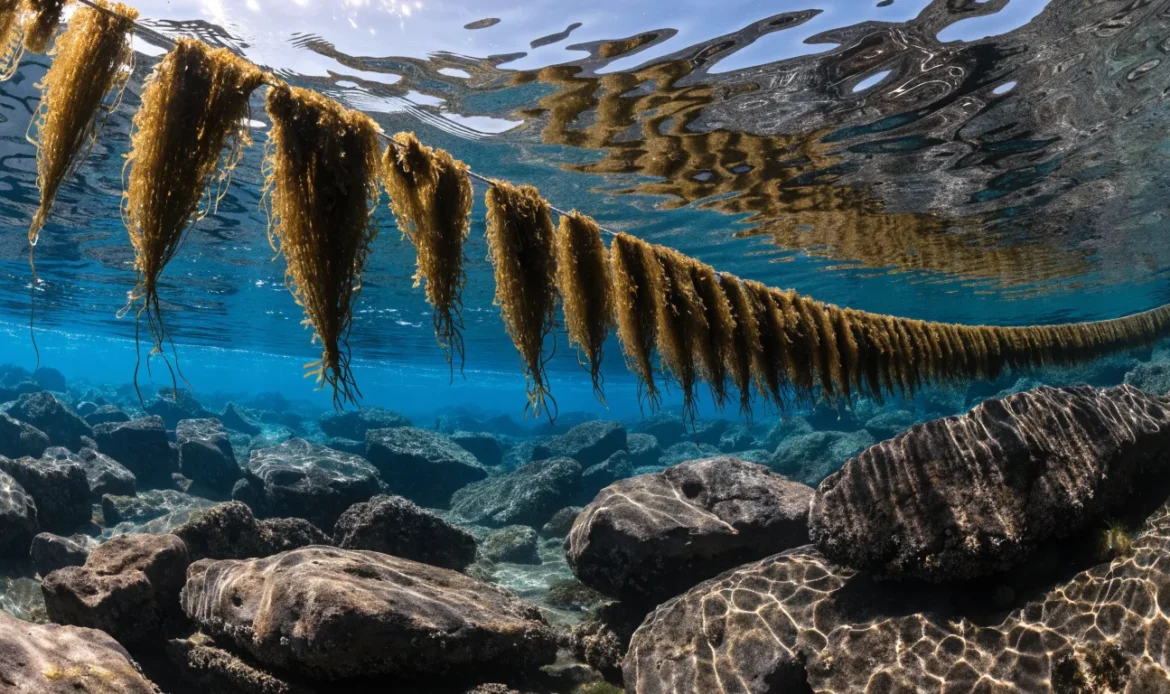
Wildcrafted should mean the seaweed grew in open ocean, on natural substrate or on lines suspended in open water, feeding on the nutrients already in the sea, and was cut by hand.
What it should exclude is seaweed grown in enclosed tanks or shallow land-based pools, where salinity is made up rather than natural, and nutrients are dosed to accelerate growth.
How the claim gets stretched
- Tank-grown sold as wildcrafted. The most straightforward misuse. Common where a supplier needs year-round volume that a season cannot provide.
- Wild-gathered blended with pool-grown. A genuinely wild lot is topped up to fill an order. The claim stays technically attached to part of the shipment.
- Wild in origin, pool in practice. Fragments taken from a wild bed, then grown on in controlled conditions. Marketed on the origin of the seed rather than the conditions of growth.
- Reseller inheritance. A broker repeats the word because it appeared on the invoice they received, having never seen the site.
Why it changes the product
Not mysticism — mechanism. Seaweed absorbs what surrounds it, so the water it grew in shows up in the material.
- Mineral profile follows the water. Open ocean carries a different and more variable mineral load than a dosed tank.
- Salt. Ocean-grown moss carries genuine sea salt that a proper two-phase clean removes. Tank product often carries added salt instead.
- Texture and expansion. Slower growth in open water generally produces a denser frond. Fast tank growth can produce bulk that expands less per pound — which is your cost per finished jar.
- Contaminant exposure cuts both ways. Open ocean means real water quality, good or bad. This is why origin and testing matter more than the adjective. Research published in 2025 in the Journal of Agriculture and Food Research found seaweed consumption can lead to heavy metal accumulation.
The full comparison of wildcrafted versus pool-grown covers what each does to the finished gel.
The checks that actually settle it
1. Ask where it grew, not whether it is wild
“Is it wildcrafted?” invites a yes. “Describe the growing site” does not. A supplier working real water can tell you the coast, the depth, whether it is on natural substrate or line, and how the season runs. A reseller produces adjectives.
2. Ask for photographs with something in them
Not a stock image of a beach. Ask for a photograph of this season’s harvest with boats, lines, or the drying racks in frame. Ask for one of the drying setup. Anyone actually harvesting has these on their phone.
3. Look at the material
Order a paid sample and inspect it:
- Sea salt, not table salt. Genuine ocean moss arrives with a crust of real sea salt before cleaning. It rinses off.
- Variation within the lot. Wild growth is uneven — differing frond thickness and length. Unnaturally uniform material suggests controlled conditions.
- Foreign matter. A little is honest. Wild beds contain small shells, the occasional fragment of other algae. A perfectly clean lot has either been cleaned very well or never grew anywhere wild.
- Colour range. Sun-drying in open air produces a gradient. Uniform colour across a whole lot can mean a controlled dryer, which is fine, or blending, which you should know about.
4. Ask about the season
This is the question that resolves it fastest. Real wild harvest has a season. Growth rates change through the year, storms interrupt cutting, and some months yield poorly.
A supplier who can ship identical volume every month of the year is not describing a wild harvest. They are describing a facility, or a blend, and either is worth knowing about.
5. Ask what the certification does and does not cover
Organic certification is sometimes offered as proof of wildness. It is not the same claim. What organic certification covers for a wild marine plant goes through why.
What to put in the purchase agreement
If the wild claim matters to your brand — and it should if you repeat it on your own label — write it down rather than relying on marketing copy:
- Name the growing method in the specification: open-water line-grown or wild-gathered, not “wildcrafted”.
- Name the harvest region.
- Require a lot COA with heavy metals and iodine, dated and lot-matched.
- Require retention samples so a later dispute has something physical to resolve against.
- Ask what happens in a short season — will the lot be blended, and will you be told?
That last point is the one buyers forget, and it is where an honest supplier separates from a careful one. Being told is the whole difference.
Our own answer, so you can hold us to it
Ours grows on lines in open water off the west coast of Saint Lucia and is cut by hand. We do not grow in pools or tanks, and we do not bleach. It is sun-dried, and it is two-phase cleaned to take out sand and sea salt.
We would rather describe it that way than lean on a word that costs nothing to type. Ask us the five questions above; they are the same ones we would ask a supplier. More on sourcing at the Saint Lucia origin.