
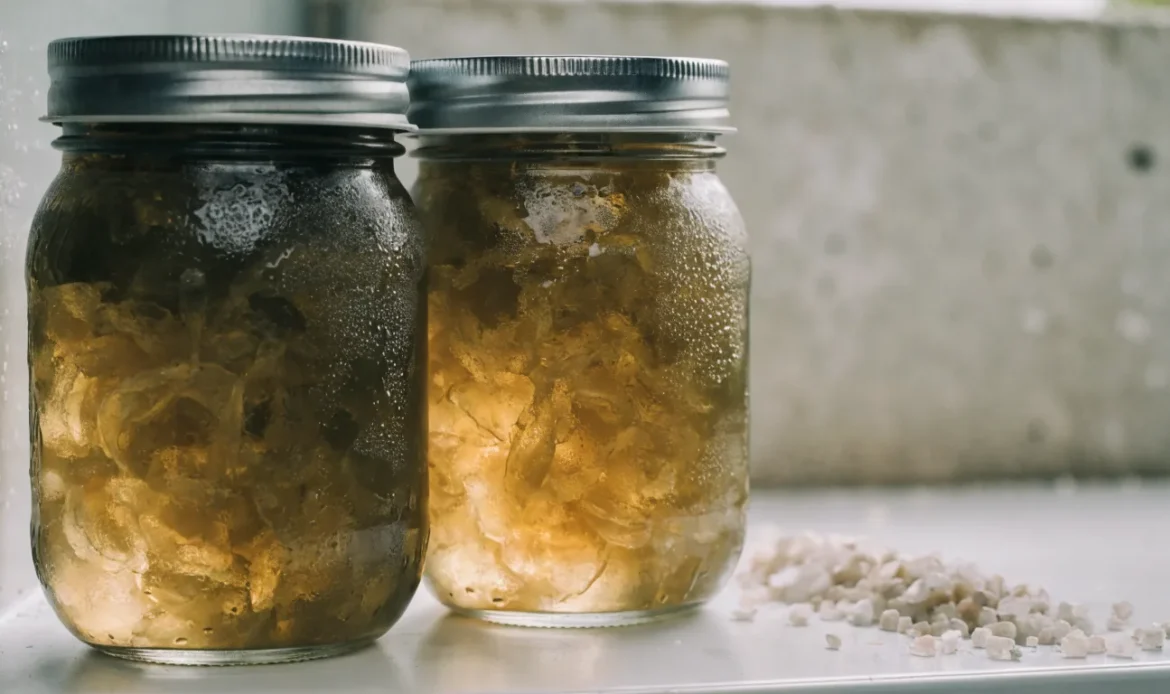
Short answer up front: It depends on the form. Fresh or rehydrated sea moss and prepared sea moss gel are best kept cold. Dried sea moss and sealed powders or capsules are usually stored in a cool, dry place. Always check the product label and the seller’s storage instructions.
This guide explains why storage matters, what to check on labels and packaging, how to store each common form, and how to tell when to throw sea moss away. The next section gives a clear decision checklist to help you pick the right storage for your sea moss purchase.
Why storage depends on the form
Sea moss is sold in several formats. Each format has different moisture, which affects how quickly microbes or molds can grow.
- Dried sea moss has little moisture. That makes it less likely to grow microbes right away. It still needs to stay dry and away from heat.
- Fresh or raw sea moss is wet after rinsing or soaking. Wet products can support bacterial or mold growth if they are left warm.
- Sea moss gel is a made product. It is wet and often mixed with water. That makes it perishable unless stored cold.
- Powders and capsules are processed and may be shelf stable if sealed.
Because moisture and processing change risk, the storage question — “is sea moss supposed to be refrigerated?” — does not have one single answer. Think about the form you bought and follow the guidance below.
(For general information on seaweed types and considerations, see the Harvard T.H. Chan School of Public Health on seaweed [1].)
How refrigeration helps (and what it does not prove)
Refrigeration slows the growth of many bacteria and molds in moist foods. For items that are wet or contain water, keeping them cold lowers that risk. Refrigeration also helps preserve texture and flavor for many fresh foods and prepared products.
That said, refrigeration is not a guarantee of safety. A product that was contaminated before refrigeration can still be unsafe. Labels and vendor instructions often note whether a product was prepared under safe conditions and whether it should be kept cold. If a label recommends refrigeration, follow it.
Manufacturers and sellers may test or set shelf instructions. If you do not see clear instructions on a product, treat wet products as perishable and keep them cold until you can check with the seller.
For regulatory and safety context about sea moss sold as a product or supplement, see Operation Supplement Safety [4]. For reasons to read product labels and check iodine guidance (seaweed iodine varies), see [2], [3], and [5].
Forms of sea moss and simple storage rules
Below are common forms and the typical storage approach. These are plain-language rules you can use to decide whether to refrigerate.
- Dried sea moss (raw, fully dried): Store in a cool, dry place away from sunlight. Keep it in an airtight container or sealed bag to prevent moisture and pests. Do not assume that dried equals indestructible; keep it dry.
- Raw, hydrated sea moss (fresh after soaking or rinse): Treat as perishable. Refrigerate in a sealed container. If not using right away, keep it cold or ask about freezing options.
- Sea moss gel (prepared product): Treat as perishable. Refrigerate after opening and follow label guidance. If the product label or seller directs freezing, you may freeze jars to keep them longer.
- Powder or capsule form: If sealed and dry, these often stay stable at room temperature in a dry place. Once opened, keep the container tightly closed and store where the product label advises.
Because labels and manufacturing methods differ, these are decision rules, not absolute guarantees. If a product gives different instructions, follow its label. If you cannot find instructions, ask the seller.
Practical decision checklist: should I refrigerate this sea moss?
Use this checklist when you first receive sea moss or before you open a package. Answer the questions below to pick storage.
- What is the product form?
- Dried? → Store dry in a cool dark place.
- Wet, soaked, or a gel? → Refrigerate.
- Powder or capsule? → Follow label; usually dry storage.
- Does the package have a storage instruction?
- Yes → Follow the label exactly.
- No → Use the product form rule above and contact the seller if unsure.
- Is the product sealed and unopened?
- Unopened dry product → Keep sealed and dry.
- Opened or exposed → Move to a sealed container; if wet, refrigerate.
- Is the product in a jar or clear container without a label?
- If so, check for manufacturer contact info and treat it as perishable if wet.
- Will you use it soon or later?
- Using soon → Place in fridge if wet.
- Storing longer → For wet products, consider freezing or keeping refrigerated and revisit seller advice.
- Visible or smell check before use:
- Off smell, slimy feel that is not typical for the product, or visible mold → Discard.
This checklist gives practical steps you can take without needing a calendar or shelf-life numbers.
Quick reference table: storage by form
| Sea moss form | Unopened | After opening / after making |
|---|---|---|
| Dried sea moss | Cool, dry, sealed | Keep dry, airtight container |
| Raw / rehydrated sea moss | Keep cool; ask seller | Refrigerate in sealed container |
| Sea moss gel | Refrigerate if labeled; otherwise treat as perishable | Refrigerate; keep sealed; consider freezing if seller permits |
| Powder / capsules | Store as label directs; generally dry place | Keep sealed; follow label |
Note: This table gives simple handling steps. If a seller or label gives different directions, follow those.
How to store each form in detail
Below are practical, step-by-step tips you can use at home.
Dried sea moss
- Keep it in an airtight jar or resealable bag.
- Store it in a cool, dry cupboard away from sunlight, heat, and humidity.
- Avoid storing near the stove or sink where humidity is higher.
- Check the dried moss before use. If you see pests, strong off smells, or clumping from moisture, discard.
Raw or rehydrated sea moss
- After rinsing or soaking, drain excess water well.
- Transfer to a clean, sealed container.
- Place the container in the refrigerator.
- If your supplier gives freezing instructions, you can also freeze portions in freezer-safe bags.
Sea moss gel
- If you buy a jar of gel, read the label first.
- When in doubt, refrigerate gel after purchase.
- Keep jars tightly closed.
- If you plan to store for longer, ask the seller whether freezing is recommended for that recipe. Freezing may change texture.
Powdered sea moss or capsules
- Keep the container tightly closed.
- Store in a cool, dry cupboard.
- If the product is sold as a food supplement, check label storage directions and any regulatory statements.
General storage tips
- Use clean hands or utensils when handling products to avoid introducing contaminants.
- Use clean jars or containers if you transfer product from original packaging.
- Label homemade sea moss gel jars with the date you made them to help you track how long you have had them, but do not rely only on dates to judge safety.
Signs that sea moss may be spoiled
You can check sea moss before use. Look for these signs. If you see any of them, discard the product.
- A sour, rotten, or unusual off smell.
- Visible mold (fuzzy or powdery spots that are not part of the natural texture).
- A slimy texture on dried product that should be dry.
- Unusual or deep color change that was not present when you bought it.
- An odd, stale, or strongly bitter taste.
If you are ever unsure, it is safer to discard the product and replace it.
Freezing sea moss: what to expect
Freezing is an option for many wet sea moss products. It can slow spoilage. Freezing may change texture when thawed. For example, texture can become softer or a bit different after thawing. This is not a safety problem by itself, but it may change how you want to use the product (e.g., smoothies versus recipes that need firmer texture).
If you plan to freeze:
- Use freezer-safe containers or portion into small bags so you can thaw only what you need.
- Thaw in the refrigerator, not on the counter, to keep the product cold as it thaws.
- If the product smells off after thawing or shows signs of mold, discard it.
What you can check about product safety and labels
Sea moss is sold in many ways. It is useful to check a few items before you buy or use a product:
- Ingredient list: Does the product list any added ingredients? If so, follow storage advice for those ingredients too.
- Storage instructions: Does the package say “keep refrigerated” or “store in a cool, dry place”? Follow that instruction.
- Batch or lot number and manufacturer contact: These let you ask questions if you need clarity on storage or safety.
- “Use by” or “best by” dates: These give guidance on quality. They are not guarantees of safety, but useful information.
- For supplements: Check any regulatory or safety statements. For context on supplements and sea moss, see Operation Supplement Safety [4].
If the product lacks clear instructions, contact the seller or manufacturer before opening.
Why iodine and product variability matter
Seaweed, including some forms of sea moss, can vary widely in components like iodine. That variability can affect how people use seaweed products. If you are concerned about iodine intake or have thyroid issues, consult a health professional before using seaweed products regularly. Scientific reviews and surveys document that iodine content varies and that consumers should be cautious when adding seaweed products to their diets [2][3][5]. This is about ingredient content, not storage; but it is a useful reminder to read labels and use products as directed.
(For general information on seaweed and nutrition, see the Harvard T.H. Chan School of Public Health [1].)
Questions to ask before you buy: a purchase checklist
Before buying sea moss, ask or inspect:
- What form is it sold in (dried, fresh, gel, powder)?
- Are there storage instructions on the label?
- Is there a contact or batch number in case of questions?
- Is the packaging sealed to prevent moisture?
- If buying gel or fresh, where and how was it prepared? Does the seller advise refrigeration?
- For supplements, is there a supplement facts panel and any safety statements?
Asking these simple questions helps you know how to store the product when you bring it home. If the seller does not provide clear answers, consider buying from a source that does.
Useful next steps and links
- Learn more about sea moss forms and buying tips at our learning center: /learn/
- Ready to shop? See available products: /shop/
- Interested in bulk or business options? Learn about wholesale: /wholesale/
- Need direct help? Contact our team: /contact/
- Return to our homepage for general company info: /
These links will help you go from storage decisions to buying or asking seller questions.
Conclusion
Is sea moss supposed to be refrigerated? The right answer depends on the form you buy. Wet forms — fresh, rehydrated, or gel — are best kept cold and treated as perishable. Dried sea moss and sealed powders are usually stored in a cool, dry place. Always read labels, use clean containers, and check your product for signs of spoilage. If a label or seller provides storage instructions, follow them. If not, use the checklists in this guide and contact the seller for clarity.
Use the decision checklist before you open a package and when you store sea moss at home. If you often work with sea moss, consider freezing portions of wet products to reduce waste and keep small amounts ready for use. When in doubt about safety or content such as iodine, consult a health professional and refer to product labeling or authoritative sources.
Continue reading
Frequently asked questions
Is sea moss supposed to be refrigerated if I buy it dried?
Dried sea moss is usually stored in a cool, dry place while sealed. Keep it in an airtight container once opened and protect it from humidity.
Is sea moss gel supposed to be refrigerated?
Sea moss gel is a wet, prepared product. Treat gel as perishable and refrigerate if the label or seller recommends it. If in doubt, store it cold.
Can I freeze sea moss gel or fresh sea moss?
You can freeze many wet sea moss products. Freezing slows spoilage but may change texture. Thaw in the refrigerator and discard if it smells off or shows mold.
How can I tell if sea moss went bad?
Look for visible mold, a strong off smell, sliminess where it should be dry, or a strange taste. Any of these signs means you should discard the product.
Does refrigeration affect the nutrients in sea moss?
Refrigeration helps slow spoilage. It does not promise specific nutrient outcomes. If you have questions about nutrient content or iodine, check product labeling and speak with a health professional. Reviews and surveys note that iodine content in seaweed products varies [2][3][5].
What should I do if a product has no storage instructions?
Use the product-form rules above: refrigerate wet products and keep dry products sealed in a cool, dark place. Contact the seller for clarity when possible.
References
- [1] Harvard T.H. Chan School of Public Health, “Seaweed.” https://nutritionsource.hsph.harvard.edu/seaweed/
- [2] Smyth PPA. “Iodine, Seaweed, and the Thyroid.” European Thyroid Journal, 2021. https://pmc.ncbi.nlm.nih.gov/articles/PMC8077470/
- [3] Food Standards Australia New Zealand, “Survey of iodine levels in seaweed and seaweed containing products,” updated 2025. https://www.foodstandards.gov.au/science-data/monitoring-safety/surveyofiodinelevels
- [4] Operation Supplement Safety, “Sea Moss in Dietary Supplements.” https://www.opss.org/article/sea-moss-dietary-supplements
- [5] Blikra MJ et al. “Consequences of acute and long-term excessive iodine intake: A literature review focusing on seaweed as a potential dietary iodine source.” 2024. https://doi.org/10.1111/1541-4337.70037