
Short answer
Sea moss shelf life depends on the form and how it was handled. Dried sea moss is the most stable. Soaked or prepared sea moss and sea moss gel are perishable. In the fridge, treat soaked moss and gel like other fresh foods. Check smell, color, texture, and any seller label or use-by note to decide if it is still good.
Why this matters
People store sea moss in many ways. Each way changes how long it stays fresh. Food safety is the first concern. Sea moss can carry natural salts and microbes from the sea or from handling. That does not mean it is unsafe. But you should check it before you use it. This guide shows what to look for and how to store sea moss to keep it in the best condition.
What you can check now
- Look at the package or jar for any date or handling note.
- Note whether the sea moss is dried, rehydrated (soaked), or prepared as gel.
- Smell and look at the product before use.
- If the product came with storage instructions, follow them.
How condition, handling, and format change freshness
Sea moss lasts longer when it is dry, clean, and sealed. It becomes more perishable once it touches water, is blended, or is mixed with other foods. Temperature matters. Cooler and steady temperatures slow spoilage. Frequent opening and warm kitchen counters speed it up. The source, cleaning steps, and jar cleanliness also matter.
H2: The main sea moss formats and what they mean for storage
H3: Dried sea moss
Dried sea moss is the raw seaweed with the water removed. It is the least perishable form. Keep it dry, cool, and away from sunlight. Use a sealed bag or airtight jar. Moisture, even small amounts, will change how long dried sea moss stays good.
H3: Soaked or rehydrated sea moss
Soaked sea moss has been rinsed and left in water to soften. Rehydrating makes it ready to use or to blend. Once wet, it becomes perishable. Store soaked sea moss in the fridge in a clean, closed container. Change the water if you plan to soak for longer. If you are not sure how it was handled after soaking, check it closely before use.
H3: Sea moss gel
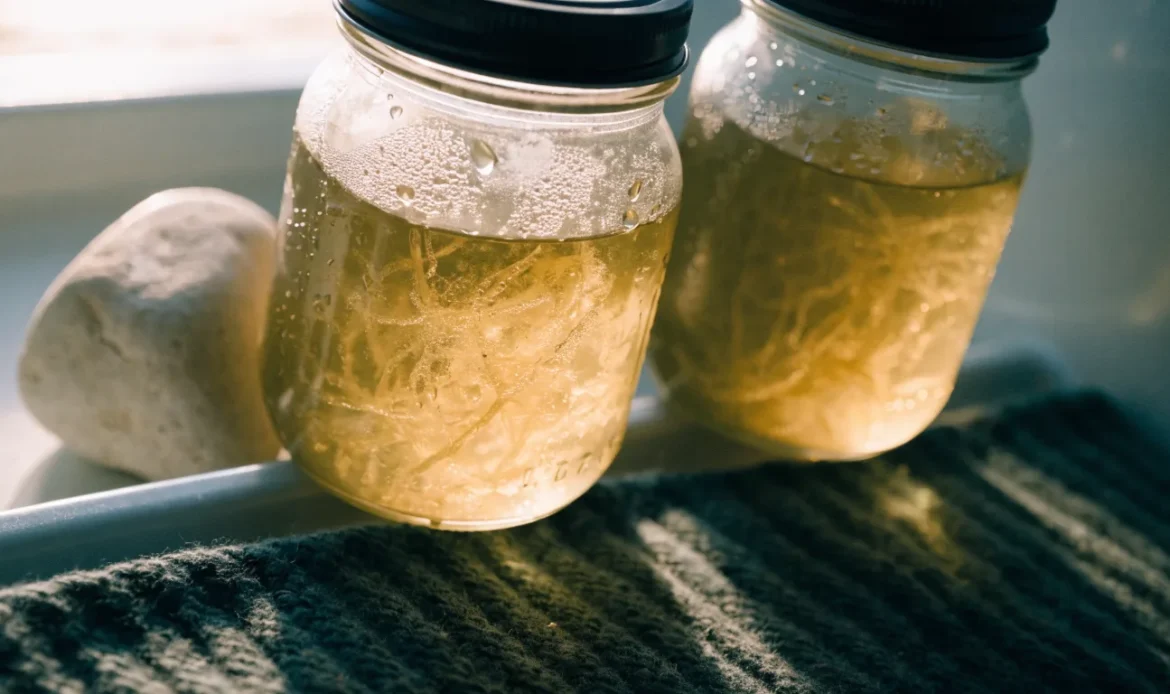
Sea moss gel is blended rehydrated sea moss mixed with water. It is convenient but perishable. Gel is more likely to change color, texture, or smell as it sits. Store gel in a clean, airtight container in the fridge. Use a clean spoon each time you scoop. Cross-contamination from other foods or dirty hands can shorten the gel’s freshness.
H2: How to tell if sea moss has gone bad
You cannot tell exact shelf-life without lab tests. But you can inspect the product. Use these simple checks.
H3: Visual checks
- Color change: If the product looks very different from when you bought it, be cautious. New brown, green, or off hues may be normal for wild sea moss. But odd or dramatic color shifts can mean spoilage.
- Mold: White fuzzy, black, green, or multicolored spots are signs of mold. Toss the product if you see mold.
- Cloudiness or separation: Gel can separate a bit. Small separation can be normal. Big changes in clarity or unusual floating bits are a warning.
H3: Smell and texture checks
- Smell: Sea moss has a mild ocean scent when fresh. A sour, rotten, or strongly off odor is a red flag.
- Texture: Gel should be smooth and slippery. Slimy, stringy, or very watery textures that are new or unexpected can indicate spoilage.
H3: Taste check (last step)
If appearance and smell are OK, you may taste a tiny amount. Do this only if you are confident in cleanliness. Stop if the taste is off. If you feel ill after tasting, stop use and seek medical help.
H2: Practical storage steps (how to store sea moss in the fridge)
Follow these steps to keep sea moss in the best condition while refrigerated.
- Start clean. Use clean hands, clean jars, and clean utensils.
- For soaked moss, drain, rinse, and place in a clean, sealed container.
- For gel, store in a small, airtight jar. Avoid large jars you will open often.
- Label the container with the date you made or opened it. This helps you track how long it’s been in the fridge.
- Keep the product at the back of the fridge where the temperature is most steady.
- Use a clean spoon every time. Do not scoop with fingers.
- If you freeze gel or soaked moss, do so in small portions. Frozen portions thaw faster and reduce waste.
H2: Simple decision guide (table)
This table helps you decide what action to take based on the sea moss format and its condition. It avoids exact time estimates and focuses on signs and actions.
| Format | If it looks, smells, and feels normal | If you see mold, strong off-odor, or slimy texture |
|---|---|---|
| Dried sea moss | Keep sealed in a dry jar. Store in a cool, dark place or fridge if humidity is high. | Discard. Do not try to salvage by rinsing. |
| Soaked / Rehydrated | Keep refrigerated in a clean sealed jar. Change soaking water if left long before use. | Discard. Spoilage in wet moss can spread quickly. |
| Sea moss gel | Keep in airtight jar in the fridge. Use a clean spoon. Label with date opened. | Discard. Do not taste or mix with other foods. |
H2: A practical storage checklist
Use this checklist before you store or use sea moss.
- Was the container clean and airtight?
- Did you label the date you opened or made it?
- Is the item dry (for dried) or kept cold (for soaked/gel)?
- No visible mold or strange color?
- No sour or rotten smell?
- Are you using a clean utensil to scoop?
- If unsure, discard rather than risk it.
H2: How to extend freshness without relying on exact times
You can make sea moss last longer by reducing exposure to spoilage factors.
- Keep items cold and sealed. Low, steady temperatures slow microbial growth.
- Avoid cross-contamination. Do not use utensils that have touched other foods.
- Make smaller batches of gel. Use what you need soon. Large jars get opened more and will age faster.
- Freeze spare portions you will not use soon. Frozen items keep stability longer than open refrigerated jars. Thaw in the fridge before using.
- Dry storage: Keep dried sea moss sealed with a desiccant packet if humidity is a concern.
H2: When buying sea moss, what to look for
You cannot know exact shelf-life just by looking. But you can reduce risk by choosing wisely.
- Ask the seller how the product was cleaned and handled.
- Look for packaging notes and handling instructions.
- Choose sealed, clean packaging.
- Check any label for storage advice and follow it.
H2: Common questions to ask your supplier
- Was this sea moss sun-dried, mechanically dried, or air-dried?
- Has it been stored in a cool, dry place since harvest?
- Were any preservatives, salts, or other additives used?
- Do you have handling or storage recommendations for my climate?
H2: Safety notes about iodine and composition
Seaweed, including sea moss, can contain iodine and other trace elements. Levels can vary by species and by where it was harvested. If you have health questions about iodine or ingredient safety, consult your health provider. For general information about seaweed and iodine, see science summaries from trusted sources [1][2][3][5]. For information on sea moss as a dietary product, see consumer-safety overviews [4].
H2: What we cannot prove without testing
- Exact numeric shelf-life in days or weeks. Shelf-life depends on many variables. These include the source, cleaning method, water quality, temperature, container cleanliness, and exposure to air.
- Whether any given batch contains specific levels of salt, iodine, microbes, or contaminants. Only lab tests can confirm those.
- That a specific smell or texture always equals contamination. Some sea moss naturally varies in smell, color, and feel.
H2: Next useful question to ask yourself
If you are still unsure, ask: “Could I make a fresh, small batch now, and store that instead?” Making smaller, fresh batches reduces the time any product sits in the fridge. It also gives you control over water and cleaning steps.
H2: FAQ
Q1: How long does sea moss last in the fridge?
A1: How long sea moss lasts depends on its format and handling. Dried sea moss is the most stable. Soaked or gel forms are perishable and should be treated like other fresh refrigerated foods. Use visual, smell, and texture checks to decide if it is still safe.
Q2: How long does sea moss gel last in the fridge?
A2: Sea moss gel is perishable. Its freshness depends on how it was prepared, how it’s stored, and how often the jar is opened. Keep gel in a clean, airtight jar in the back of the fridge and use a clean utensil when scooping.
Q3: Can I freeze sea moss gel to make it last longer?
A3: Freezing is a common step to extend the storage life of wet sea moss products. Freeze in small portions to thaw what you need. Thaw in the fridge before use.
Q4: Is it safe to eat sea moss if it tastes a little different?
A4: Small natural taste differences can be normal. However, if the taste is strongly off, sour, or unpleasant, stop and discard the batch. Trust your senses and prioritize safety.
Q5: Are there health risks from stored sea moss?
A5: Stored sea moss itself is not a guaranteed health risk. But poor handling, contamination, or mold can create unsafe foods. If you have concerns about iodine or other trace elements in seaweed, consult a health professional and review scientific resources [1][2][5].
Q6: What if I’m buying sea moss from a seller or in a jar?
A6: Check the label and any storage or handling instructions. Ask the seller about how the product was prepared and stored. Follow any use-by guidance they provide. If in doubt, use your smell and visual checks before consuming.
H2: Suggested visual
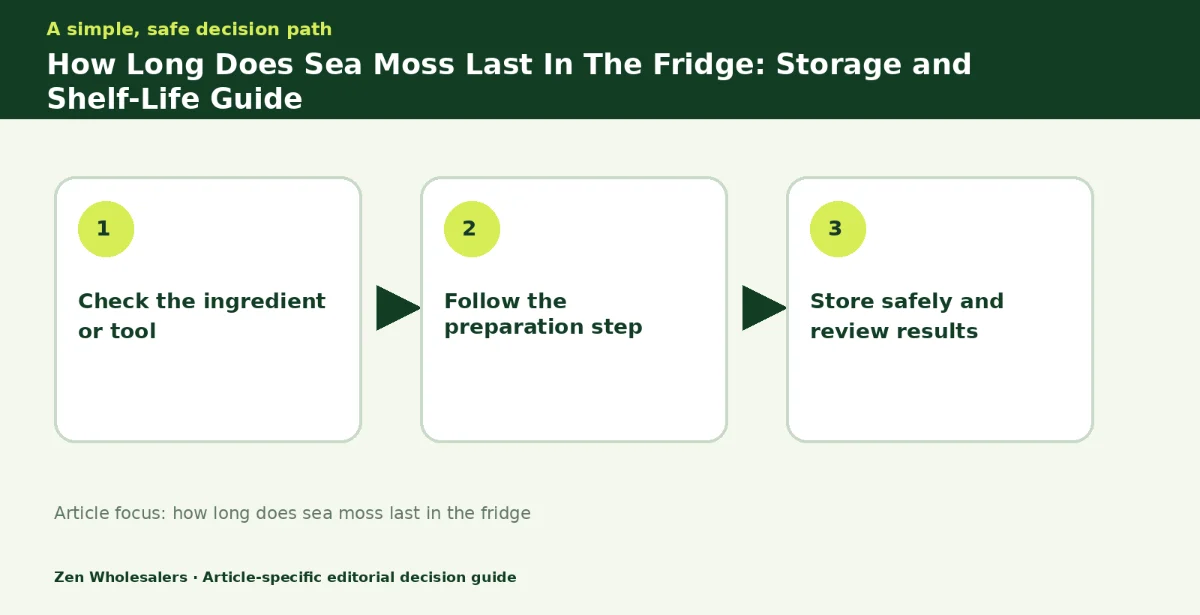
Create a clear, step-by-step process diagram titled “Fridge Storage Steps for Sea Moss.” The visual should be a vertical flow with five numbered steps: 1) Identify format (dried/soaked/gel); 2) Clean container and utensils; 3) Seal and label with date; 4) Store at the back of the fridge; 5) Check daily for smell/color/texture before use. Include small icons for each step (package, jar, label, fridge, nose/eye). Avoid decorative photos. The diagram should be simple and printable. Use colors to show safe (green) and discard (red) decision points.
Conclusion
How long does sea moss last in the fridge? There is no one-size-fits-all answer. The key is the format and the handling. Dried forms are more stable. Soaked moss and gel are perishable. Use clean tools. Keep jars sealed and cold. Label and check the product before each use. When in doubt, discard. If you want more storage tips or supplies, see our storage guide and shop pages listed below.
Helpful links
- Learn more about storage: Sea moss storage guide
- Browse products: Shop sea moss
- Learn more about sea moss and uses: Learn
- Wholesale inquiries: Contact
- Zen Wholesalers home: [/]
Frequently asked questions
What should I check first?
Start with the product or ingredient label, the source information, and whether the seller can answer clear questions.
Is this a replacement for professional advice?
No. Use this article as general education. Ask a qualified professional for personal medical, legal, or food-safety guidance.
Where can I learn more?
Use the Zen Wholesalers Learning Library to compare related guides and choose a useful next question.
References
- Harvard T.H. Chan School of Public Health, “Seaweed.” https://nutritionsource.hsph.harvard.edu/seaweed/
- Smyth PPA. “Iodine, Seaweed, and the Thyroid.” European Thyroid Journal, 2021. https://pmc.ncbi.nlm.nih.gov/articles/PMC8077470/
- Food Standards Australia New Zealand, “Survey of iodine levels in seaweed and seaweed containing products,” updated 2025. https://www.foodstandards.gov.au/science-data/monitoring-safety/surveyofiodinelevels
- Operation Supplement Safety, “Sea Moss in Dietary Supplements.” https://www.opss.org/article/sea-moss-dietary-supplements
- Blikra MJ et al. “Consequences of acute and long-term excessive iodine intake: A literature review focusing on seaweed as a potential dietary iodine source.” 2024. https://doi.org/10.1111/1541-4337.70037