
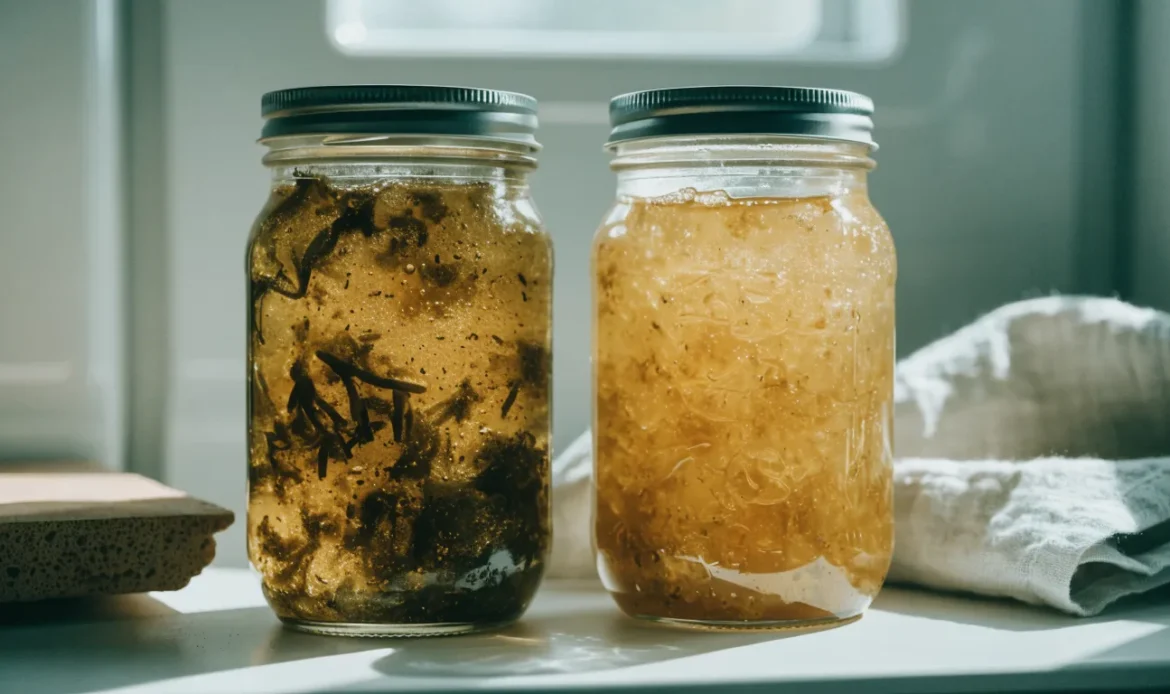
Short answer: It depends on the form. Dry sea moss can stay in a cool, dry place. Wet forms—soaked sea moss and sea moss gel—should be kept cold to slow spoilage. Powders and capsules usually follow package directions. Freezing is an option for longer storage. Read on for clear checks and a short decision guide.
Why form matters: the basic rules
Sea moss is sold in several forms. Each form holds water differently. Water, warmth, and air drive spoilage. Dry sea moss has most of the water removed. That makes it more stable at room temperature. Soaked or fresh sea moss holds water. That makes it perishable. Sea moss gel is wet and made for refrigeration. Powders and capsules are dry and often shelf-stable, but follow the label.
These are general food-safety ideas. For any product, use the seller’s storage guidance. If a vendor includes a storage label, follow it. If you are uncertain, contact the seller or check a laboratory-tested product label.
How storage needs differ by sea moss form
Dried sea moss (raw, dehydrated)
- What it is: Sea moss that has been dried to remove most moisture.
- Typical storage: Keep dry and away from heat, sunlight, and humidity.
- Why: Moisture and warm air let microbes grow.
- Check: Look for moisture, clumping, or any odd smell. If the product becomes damp, move it to refrigeration or dry it out.
Soaked or rehydrated sea moss (fresh)
- What it is: Sea moss that has been rinsed and soaked to soften it for use.
- Typical storage: Keep refrigerated while it is wet.
- Why: It contains water and is more likely to spoil at room temperature.
- Check: Smell, texture, and any cloudiness in the soaking water. If unsure, discard.
Sea moss gel
- What it is: Blended sea moss made into a gel with water.
- Typical storage: Store chilled in a sealed container.
- Why: A gel is a wet food. Cold slows microbial growth.
- Check: Smell for sour or off odors. Watch for bubbling, sliminess, or mold.
Powdered sea moss or dried, ground products
- What it is: Sea moss dried and powdered.
- Typical storage: Keep dry in a sealed bag or jar. Follow package directions.
- Why: Moisture can make powders clump and permit microbes to grow.
- Check: If it absorbs moisture, it may clump or smell stale.
Capsules and supplements
- What it is: Sea moss in pill or capsule form, often with other ingredients.
- Typical storage: Follow label directions. Many are shelf-stable if kept dry.
- Why: Manufacturers may process and package for stability.
- Check: Package integrity, seal, and any storage guidance on the label.
Frozen sea moss
- What it is: Sea moss stored at freezer temperatures, either fresh or in gel form.
- Typical storage: Keep continuously frozen. Thaw in the refrigerator.
- Why: Freezer temperatures slow most biological activity.
- Check: Freezer burn or texture changes. If texture or smell changes after thawing, test before use.
A simple storage table
| Sea moss form | Refrigerator? | Pantry? | Freezer? | What to check |
|---|---|---|---|---|
| Dried sea moss | Optional | Yes (if dry) | Optional | Dryness, smell, pests |
| Soaked / fresh | Yes | No | Yes (if you will not use soon) | Smell, sliminess, clouded water |
| Sea moss gel | Yes | No | Yes (works, may change texture) | Smell, bubbling, mold |
| Powder | Optional (if labeled) | Yes (if dry) | Optional | Clumping, odor |
| Capsules | Follow label | Often yes | Follow label | Seal, expiration on label |
Note: This table gives practical guidance, not exact time limits. A vendor’s label or storage instructions should take priority.
Why refrigeration matters (but what it cannot prove)
Refrigeration slows but does not stop microbial growth. It reduces the speed at which bacteria, yeast, and mold multiply. That makes refrigeration a practical step for wet sea moss forms.
However, refrigeration does not guarantee safety. A product that was mishandled before refrigeration may already have harmful microbes. You cannot tell safety by refrigeration alone.
Also, refrigeration cannot change what is in sea moss. Nutrient content and natural iodine levels vary by seaweed species and source. If you have concerns about iodine or other minerals in seaweed products, consult sources that review seaweed composition and iodine risk [1][2][5]. For products sold as supplements, note that supplement quality and labeling can vary [4]. Packaging and testing information from the supplier is the best place to check.
How to tell if sea moss has gone bad
Look, smell, and test. Here are useful checks:
- Smell: An off, sour, or rotten smell is a clear warning.
- Visual: Mold, unusual fuzz, or dark spots on gel or soaked sea moss.
- Bubbles or gas: Bubbling or pressure in a sealed jar can mean fermentation.
- Texture: Slimy or overly watery texture that is different from when you first stored it.
- Taste test: If it smells and looks fine, taste a very small amount. If it tastes sour or strange, spit it out and discard.
If you see any of these signs, discard the product. Do not try to salvage moldy or strongly off-smelling sea moss.
Practical decision checklist
Use this checklist to decide where to store your sea moss:
- What form did you buy? (dried / soaked / gel / powder / capsule)
- Will you use it within a few days? (If wet: plan to refrigerate)
- Do you have reliable refrigeration? (If not, consider freezing dry portions)
- Is the packaging airtight? (If not, transfer to a clean, sealed jar)
- Is the storage place dry and dark? (Dry forms prefer a cool, dark pantry)
- Do you see or smell anything off right now? (If yes, do not use)
- Do you need to label the jar with date and form? (Yes — write a short date)
- Do you have freezer space for long-term holding? (Freeze single-use portions)
Mark each item as “yes” or “no.” If several answers indicate refrigeration or freezing, follow those steps.
How to store and handle sea moss safely (step-by-step)
- Clean hands and tools. Wash hands, spoons, and jars before touching the sea moss.
- Use clean containers. Glass jars with tight lids work well for wet items.
- Label jars. Write the date and content (e.g., “sea moss gel — made 8/21”).
- Keep wet items cold. Store soaked moss and gels in the refrigerator.
- Use small portions. Store gel or soaked moss in smaller jars so you open one at a time.
- Avoid double-dipping. Use a clean spoon each time to remove product.
- If moving to the freezer, freeze in small portions. That helps thaw only what you need.
- Return sealed containers to cold storage promptly after use.
These steps reduce the chance of contamination and spoilage.
Freezing sea moss: what to expect
Freezing is a useful option. Freezing slows biological activity and can lengthen the time you can keep sea moss. It works for fresh sea moss and for gel. Expect some change in texture after thawing. Gel may become slightly more watery or separate. In many recipes the texture change does not matter.
Thaw in the refrigerator when you are ready to use. Avoid refreezing repeatedly. If a product shows strong off odors or mold after thawing, discard it.
Buying and labeling tips
- Read the vendor storage instructions. Many sellers put storage guidance on their product pages or labels.
- Ask about processing. Was the product sun-dried, mechanically dried, or pasteurized? Processing can affect how a product stores.
- Check packaging. Airtight packaging helps keep dry sea moss free of moisture.
- For supplements, check for testing and clear labeling. Supplements can vary in iodine or other mineral content. If you have concerns about iodine intake or thyroid health, consult a clinician and review authoritative sources on seaweed iodine [2][3][5].
- When in doubt, contact the seller for storage guidance or confirmation.
What to check on the label (if present)
- Storage instructions (e.g., “Keep refrigerated after opening”)
- Processing notes (e.g., “dried,” “blanched,” or “pasteurized”)
- Ingredient list (to spot added liquids or preservatives)
- Lot code or manufacturing date (useful if you need to ask a seller)
- Any safety or allergen notes
Follow label instructions over general advice when they conflict.
When to choose refrigeration vs pantry vs freezer
- Choose refrigeration when the product is wet (soaked, fresh, or gel).
- Choose pantry storage for dry, sealed sea moss when it stays dry.
- Choose the freezer if you need longer holding time for wet items, or if your refrigerator is unstable.
If you are unsure, refrigerate. Refrigeration is the safer default for wet sea moss.
Next step resources
- Learn more about sea moss and seaweed basics: /learn/
- Read our full learning center: /learn/
- Browse available sea moss products: /shop/
- Business or bulk inquiries: /wholesale/
- Questions or custom requests: /contact/
- Return to our homepage: /
Conclusion
Does sea moss have to be refrigerated? It depends on the form. Wet forms (soaked and gel) should be kept cold. Dry forms usually do not need the fridge, but they must stay dry. Powders and capsules follow the label. Freezing is a practical option for longer storage of wet products. Always check appearance and smell, follow vendor instructions, and label your jars. When in doubt, refrigerate wet sea moss or reach out to your supplier for guidance.
Continue reading
Frequently asked questions
Does sea moss need to be refrigerated before I make it into gel?
If you have soaked or rehydrated sea moss, keep it refrigerated once it is wet. That slows spoilage. If you plan to make gel promptly after soaking, keep the moss cold until you blend it.
Can I leave dried sea moss on the shelf?
Yes, dried sea moss is usually fine in a cool, dry pantry. Keep it in a sealed container away from heat and humidity. If it gets damp, move it to refrigeration or dry it again.
Is it safe to freeze sea moss gel?
Yes. Freezing works to store gel for longer periods. Expect some texture change after thawing. Thaw in the refrigerator and check smell and appearance before use.
Will refrigeration change the nutrients or iodine in sea moss?
Refrigeration slows spoilage but does not change inherent mineral content. Natural iodine levels in seaweed vary by species and source. If you have concerns about iodine intake, consult reliable sources or a health professional [1][2][5].
How can I tell if my sea moss gel has gone bad?
Bad gel may smell sour, show mold, develop bubbles, or have unusual color. When in doubt, discard it.
Do capsules and powders need refrigeration?
Most powders and capsules are shelf-stable when kept dry. Follow the product’s label. If the label says to refrigerate after opening, follow that guidance.
References
- [1] Harvard T.H. Chan School of Public Health, “Seaweed.” https://nutritionsource.hsph.harvard.edu/seaweed/
- [2] Smyth PPA. “Iodine, Seaweed, and the Thyroid.” European Thyroid Journal, 2021. https://pmc.ncbi.nlm.nih.gov/articles/PMC8077470/
- [3] Food Standards Australia New Zealand, “Survey of iodine levels in seaweed and seaweed containing products,” updated 2025. https://www.foodstandards.gov.au/science-data/monitoring-safety/surveyofiodinelevels
- [4] Operation Supplement Safety, “Sea Moss in Dietary Supplements.” https://www.opss.org/article/sea-moss-dietary-supplements
- [5] Blikra MJ et al. “Consequences of acute and long-term excessive iodine intake: A literature review focusing on seaweed as a potential dietary iodine source.” 2024. https://doi.org/10.1111/1541-4337.70037