
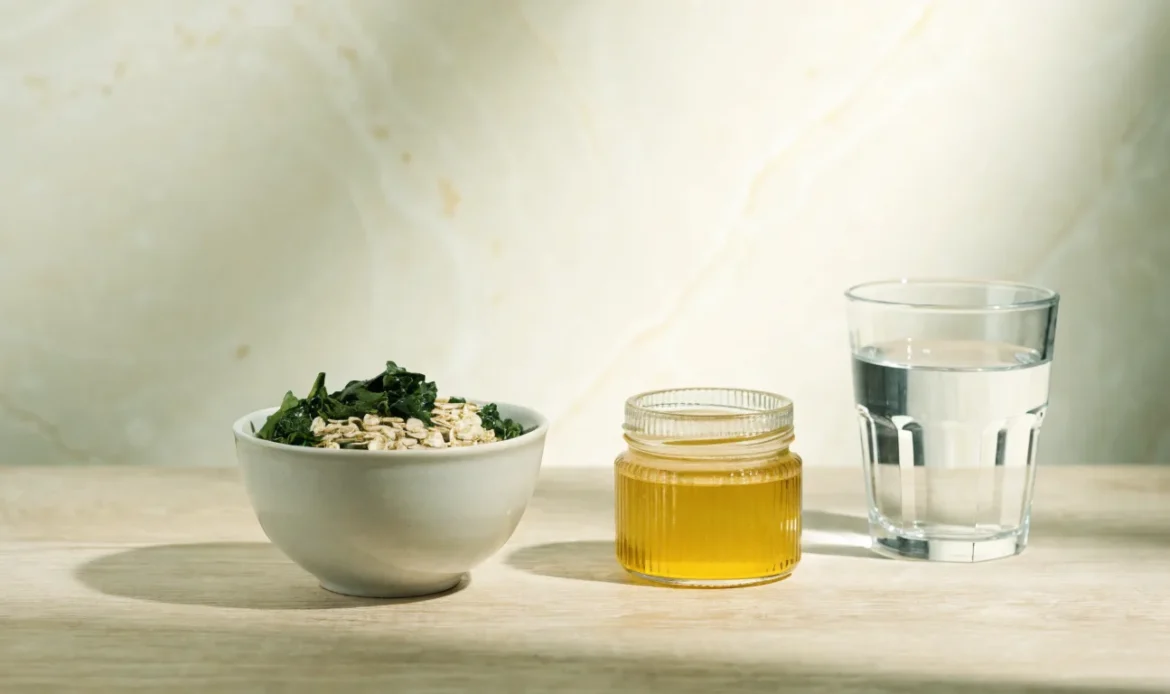
Short answer: Yes. Sea moss contains fiber. The fiber comes mainly from seaweed polysaccharides. How much fiber you get depends on the species, how the product was processed, and the serving size.
This guide answers the simple question first. Then it explains the kinds of fiber in sea moss. It covers how different formats (fresh, dried, gel, powder, capsules) change fiber amounts. It shows what you can check on a label. It also lists safety points to watch, and it gives a clear buying and use checklist. Sources are included at the end.
What “fiber” means for sea moss
“Fiber” is the term for plant carbohydrates that the human body does not fully digest in the small intestine. In seaweeds, many of these carbohydrates are complex sugars called polysaccharides. Those include substances often named in scientific writing, such as carrageenans (in red algae) or other algal polysaccharides. These compounds act like fiber in that they resist digestion and add structure to the seaweed tissue [1].
Seaweed fiber is not exactly the same as the fiber in wheat or vegetables. It often has different chemical building blocks and different physical properties. Those differences affect how the fiber behaves in foods and in the gut. Sea moss — a name used for some red and other algae species sold for food — contains types of these polysaccharides that are counted as dietary fiber in food science [1].
Key point: Sea moss contains fiber-like polysaccharides, but the type and amount vary by species and processing. The presence of iodine and other minerals in seaweed is also important to know before you use it regularly [2][3][5].
The main types of fiber-like compounds in sea moss
Sea moss and many seaweeds contain several kinds of non-digestible carbohydrates. Below are plain descriptions of the common groups you may see in product or science descriptions.
- Sulfated polysaccharides (example: carrageenans). These are long sugar chains found in some red algae. They can thicken and gel foods. They act like soluble fiber because they absorb water and form gelatinous material in the gut [1].
- Alginate- or agar-like compounds. Other seaweeds have different gelling or thickening polysaccharides. These behave in ways similar to soluble fiber.
- Structural fibers. Some parts of seaweed are more like insoluble fiber. Those parts do not form gels as much, but they add bulk.
- Oligosaccharides and resistant carbohydrates. Small amounts of sugars that resist digestion can feed gut microbes. Research into specific effects is ongoing [1].
What this means in practice: sea moss contains a mix of soluble and insoluble fiber-like compounds. The exact mix depends on the species and how the product was prepared.
Why format and processing change fiber content
Different product formats change how much fiber you will get per serving. Water and other added ingredients also change the concentration.
- Fresh or raw sea moss: Fresh sea moss contains water. So the fiber content per gram of fresh product is lower than dried forms. If you eat a small piece of fresh seaweed, you get fewer grams of fiber than if you eat the same dry weight.
- Dried sea moss: Drying removes water. Per gram, dried sea moss has a higher concentration of fiber and other solids.
- Sea moss gel: Gel is usually made by rehydrating dried sea moss and blending it with water. Gel keeps many of the polysaccharides that make sea moss thick and jelly-like. The fiber per tablespoon in gel depends on how much sea moss was used to make that gel and whether anything else was added.
- Powder: Powdered sea moss is typically dried and ground. Because it is concentrated, powder often contains more fiber per teaspoon than an equal volume of gel. But label values vary by brand.
- Capsules or supplements: Capsules often have powdered sea moss or extracts. The fiber per capsule depends on the capsule size and other ingredients in the formula [4].
Takeaway: If your main goal is to get fiber from sea moss, choose a form and serving size that match your needs. Labels and ingredient lists are the way to tell how concentrated a product is.
What sea moss fiber does — and what we do not know
Fiber from any food interacts with the digestive tract in a few general ways:
- It is resistant to digestion in the small intestine. That is what makes it “fiber.”
- Some fibers absorb water and form gels. These are often called soluble fibers.
- Some fibers add bulk without gelling. These are often called insoluble fibers.
- Some fibers can be used by gut microbes and can lead to fermentation in the large intestine.
Sea moss contains fiber-like polysaccharides that can absorb water and form gel-like textures. These properties are one reason why people use sea moss gel in cooking and in recipes that need a thickener [1].
Limits of current knowledge and what to check
- Sea moss species differ. Not all sea moss products come from the same algae species. Different species have different polysaccharide profiles.
- Processing matters. Heating, drying, and extraction can change the structure of the polysaccharides.
- Human studies are still limited. There is scientific interest in seaweed polysaccharides, but many specific effects depend on dosage, species, and manufacturing. Avoid claims that one serving will produce a specific health outcome.
Safety considerations linked to sea moss (including fiber context)
Seaweeds, including products sold as sea moss, can contain minerals and compounds beyond fiber. Some of these need attention.
- Iodine can be high and variable. Seaweeds can contain large amounts of iodine, and levels vary by species and harvest area. High iodine intake can affect thyroid function in some people. Scientific reviews and health sources discuss iodine risks with seaweed products [2][5]. Monitoring iodine exposure is especially important if you have a thyroid condition or take thyroid medication.
- Contaminants and heavy metals. Seaweed can sometimes accumulate metals or other environmental contaminants. Product testing and third-party analysis are the ways to check for this potential issue. Reliable products may provide lab reports or testing data.
- Product consistency and label transparency vary. Supplements and foods called “sea moss” are sold in many forms. Some contain added ingredients, fillers, or other seaweed extracts. Check the ingredient list and supplement facts panel. The safety guidance from consumer and supplement-safety organizations recommends caution with untested seaweed supplements [4].
- Fiber alone is not the whole safety picture. A product may have fiber but also carry risks from iodine or contaminants. Do not assume fiber presence equals overall safety.
Sources for these points include public health reviews and supplement safety organizations that note variability in iodine and other compounds in seaweed [2][3][4][5].
Practical decision guide: Which sea moss format to choose if you care about fiber
Use this quick checklist and table to compare formats. The table summarizes common pros and cons related to fiber concentration and label transparency. After the table, you will find a step-by-step checklist you can follow when buying.
Format comparison table (what to check and why)
- Fresh sea moss
- What it is: Undried algae, often sold wet.
- Fiber concentration: Lower per gram compared with dried forms because of water.
- Pros: Minimal processing if truly fresh.
- Cons: Short shelf life. Harder to measure fiber per serving without lab data.
- What to check: Source, harvest method, storage instructions.
- Dried sea moss
- What it is: Sea moss with water removed.
- Fiber concentration: Higher per gram.
- Pros: Long storage life, concentrated.
- Cons: May be mixed with other seaweeds; check label.
- What to check: Ingredient list, any added preservatives, origin details if available.
- Sea moss gel
- What it is: Rehydrated and blended sea moss, often mixed with water.
- Fiber concentration: Variable. Depends on recipe and dilution.
- Pros: Easy to use as an ingredient in food.
- Cons: Can be diluted; per-serving fiber lower if heavily watered.
- What to check: Ingredient list and how much sea moss was used to make the gel (if provided).
- Powdered sea moss
- What it is: Dried and ground sea moss.
- Fiber concentration: Often higher per scoop than gel.
- Pros: Easy to measure; good for recipes and supplements.
- Cons: Powder quality varies; check for fillers.
- What to check: Nutrition facts for fiber per serving and any added ingredients.
- Capsules and extracts
- What it is: Dried powder or extract in capsule form.
- Fiber concentration: Depends on capsule fill and extract method. Extracts may concentrate certain molecules but not necessarily whole-fiber content.
- Pros: Convenient.
- Cons: Hard to get a significant fiber amount from a few capsules.
- What to check: Supplement facts, serving size, third-party testing for contaminants and iodine.
Step-by-step buying checklist (practical)
- Know your goal.
- If you want fiber in food (texture and bulk), a concentrated dried powder or a gel made from a concentrated base may work.
- If you want a small supplemental dose, capsules could be handy but may give little fiber.
- Read the label.
- Look for “dietary fiber” or “total carbohydrate – dietary fiber” on nutrition facts.
- If nutrition facts are missing, treat the product as having unknown fiber content.
- Check the ingredient list.
- Watch for added thickeners, fillers, sugars, or other seaweed species. Those affect fiber and other components.
- Ask for testing or certificates if you are concerned about iodine or contaminants.
- Reliable sellers may provide lab reports. Third-party testing for heavy metals and iodine gives extra transparency.
- Consider serving size.
- Compare fiber per serving rather than relying on package photos. Different serving sizes can be misleading.
- If you have thyroid concerns or take thyroid medication, check iodine details with a clinician or pharmacist. Iodine content in seaweed can be high and varies widely [2][3][5].
- Start with a small amount.
- New foods or concentrated sources of fiber can change digestion. Start small to see how your body responds.
- Store according to instructions.
- Keep products fresh and check for signs of spoilage. Dried products last longer; gel may need refrigeration.
How to use sea moss in food when you want fiber and texture
Here are practical and safe ways to use sea moss formats for texture and fiber:
- Use powder in smoothies. Powdered dried sea moss blends easily and adds a thicker texture per scoop than fresh seaweed. Measure servings and check the nutrition facts when available.
- Make gel from dried sea moss and use it as a thickener. If the gel recipe is concentrated, it will bring more polysaccharide fiber to the recipe. Adjust water ratios to control concentration.
- Add dried shreds to soups or stews. Dried fragments can rehydrate and add bulk and texture. Note that cooking temperature and time can change the texture of the polysaccharides.
- Use capsules only when you want convenience. Capsules may not provide large amounts of dietary fiber in a single dose.
Cooking note: Heat, acid, and mechanical processing can alter the physical properties of seaweed polysaccharides. These changes affect how the fiber behaves in a recipe. That is why recipes for sea moss gel often recommend certain soaking and heating steps.
What you can check that proves something — and what you cannot prove from a label
What you can check:
- Nutrition facts that list “dietary fiber” per serving.
- Ingredient list to see if the product is pure sea moss or mixed.
- Presence of third-party lab reports for contaminants, iodine, or nutritional analysis.
What a label or photo cannot prove on its own:
- Exact species or exact harvest location (unless the seller documents it).
- Full spectrum of polysaccharides and their amounts without lab data.
- Lack of contaminants unless backed by testing.
- Specific health effects for an individual.
When in doubt, ask the seller for a product specification sheet or lab report. If they do not provide such information, treat the product as having unknown concentrations of fiber and other minerals.
Conclusion
Yes — sea moss contains fiber-like polysaccharides. The type and amount depend on the species, how it is processed, and the product format. If you want sea moss primarily for its fiber content, focus on product formats that concentrate solids (dried powder or concentrated gel) and check nutrition facts or lab reports. Always check ingredients and ask for testing data if you are concerned about iodine or contaminants. Use the buying checklist above to compare products and choose the right format for your needs.
If you want more background on seaweed and safety, our Learn pages explain how seaweed fits into a diet. Explore more at these links:
- Learn more about sea moss and seaweed: /learn/
- Browse products and formats: /shop/
- Wholesale inquiries and sourcing info: /wholesale/
- Contact us with questions about product testing: /contact/
- Return to our homepage: /
Continue reading
Frequently asked questions
Does sea moss gel have fiber?
Yes. Sea moss gel contains the seaweed’s polysaccharides, which count as fiber-like material. How much fiber is in a tablespoon of gel depends on how the gel was made and how much sea moss was used. Check the product’s nutrition facts or ask the seller for details.
Is the fiber in sea moss the same as fiber in fruits and vegetables?
Not exactly. Sea moss fiber is made up of different polysaccharides than many land plants. Some of these form gels and have different physical and chemical properties. Both types are considered dietary fiber, but they are not identical in structure.
Does processing like drying or boiling remove fiber?
Processing changes the physical structure of the polysaccharides. Drying concentrates fiber per gram by removing water. Boiling and extraction can change how the fiber behaves (for instance, making it more gel-like). These processes may alter function, but they do not simply erase the presence of fiber.
Can sea moss cause digestive upset?
Any concentrated source of fiber can change digestion, especially if you increase intake suddenly. If you have a sensitive digestive system, start with small amounts. If you have specific digestive conditions, ask a clinician before adding a new concentrated fiber source.
How can I tell if a sea moss product has a lot of iodine?
Iodine levels in seaweed are highly variable. A nutrition label may not list iodine. The best way to know iodine content is to look for third-party lab testing or a product quality report. Public health reviews note that seaweed iodine can be high and variable [2][3][5].
Are sea moss supplements regulated?
Dietary supplements are regulated differently than food in many countries. Product quality, labeling, and testing can vary. Organizations that monitor supplements advise consumers to seek transparency and testing data for seaweed products [4].
References
- Harvard T.H. Chan School of Public Health, “Seaweed.” https://nutritionsource.hsph.harvard.edu/seaweed/
- Smyth PPA. “Iodine, Seaweed, and the Thyroid.” European Thyroid Journal, 2021. https://pmc.ncbi.nlm.nih.gov/articles/PMC8077470/
- Food Standards Australia New Zealand, “Survey of iodine levels in seaweed and seaweed containing products,” updated 2025. https://www.foodstandards.gov.au/science-data/monitoring-safety/surveyofiodinelevels
- Operation Supplement Safety, “Sea Moss in Dietary Supplements.” https://www.opss.org/article/sea-moss-dietary-supplements
- Blikra MJ et al. “Consequences of acute and long-term excessive iodine intake: A literature review focusing on seaweed as a potential dietary iodine source.” 2024. https://doi.org/10.1111/1541-4337.70037