
Short answer: Yes — sea moss can make some people sick in certain situations. Most risks come from contamination, too much iodine, or improper storage and preparation. You can cut risk by checking the source, preparing it safely, and watching for signs of spoilage.
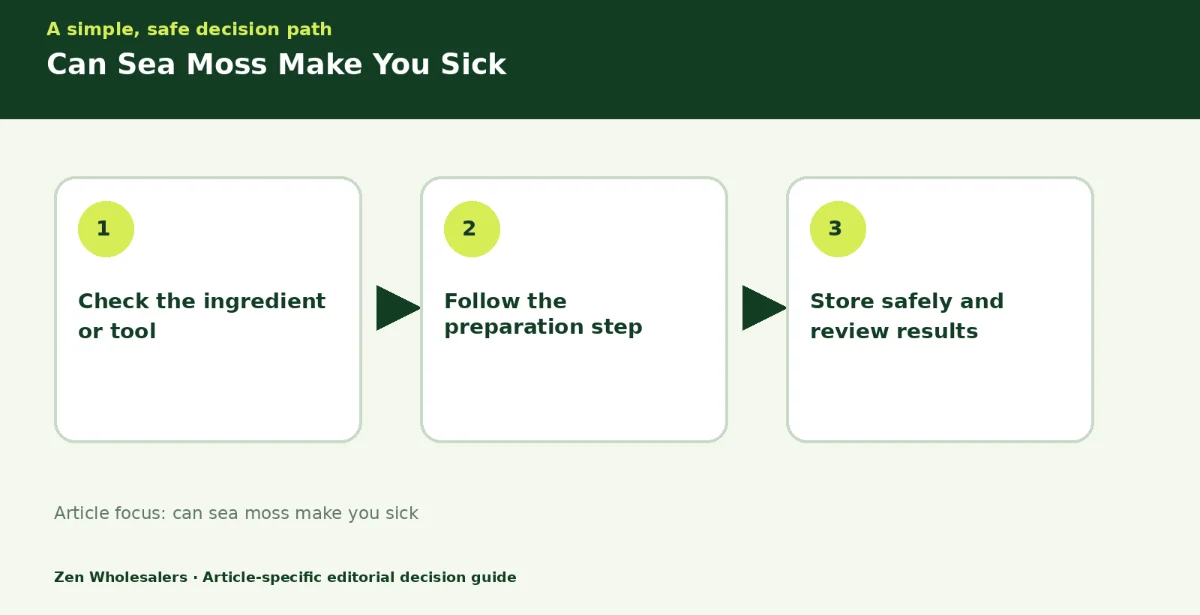
This guide gives a clear yes-or-no start. Then it shows what to check, how to prepare sea moss safely, and a decision checklist to help you decide next steps.
How sea moss can cause illness — the main reasons
- Contamination during harvest, processing, or storage. Sea moss can pick up bacteria, mold, or other contaminants if it is not handled cleanly. Suppliers who test and document their processes reduce this risk, but you cannot know without checking the label or asking the seller. (See [4].)
- High iodine levels. Some seaweeds—including varieties sold as sea moss—can contain large amounts of iodine. Too much iodine can affect the thyroid for some people. This is a key reason people with thyroid conditions or pregnant people need to be careful. (See [2], [5].)
- Chemical or heavy‑metal exposure from the water where it grew. Sea plants absorb minerals and compounds from their environment. That includes both useful nutrients and unwanted contaminants when the water is polluted. Surveys and reviews note this is a potential concern and a reason to prefer tested products. (See [1], [3].)
- Additives, fillers, or mislabeling. Some packaged products include extra ingredients, or they may not name the species or source of the seaweed. That can create unexpected reactions or risks. Regulatory and supplement-safety groups advise checking labels and supplier information. (See [4].)
- Improper home preparation or storage. If sea moss or sea moss gel is not rinsed, cooked (or made into gel) correctly, or stored safely, it can grow bacteria or mold that cause stomach illness.
We cannot test every product. The statements above describe common paths for risk. They do not prove any single package will make you sick.
Who is more likely to get sick from sea moss
- People with thyroid conditions. Because of iodine concerns, people with hypothyroidism, hyperthyroidism, autoimmune thyroid disease, or those taking thyroid medicine should be cautious and ask a clinician before using seaweed products. (See [2], [5].)
- Pregnant or breastfeeding people. Iodine needs change during pregnancy. Ask a clinician before adding concentrated seaweed sources to your diet. (See [2].)
- Young children. Their iodine needs and tolerance differ from adults. Use caution and consult a pediatrician before giving seaweed products to young children.
- People with weakened immune systems. They may get sicker from foodborne microbes that would cause milder illness in healthy adults.
- People with seafood or seaweed allergies. Allergy reactions are possible. If you have known allergies, avoid new seaweed products until you check with an allergist or clinician.
If you fall into one of these groups, a healthcare provider can help you decide whether sea moss is safe for you.
What you can check before buying sea moss
Before you buy, do these checks. If a product fails one or more checks, treat it as higher risk.
- Supplier transparency: Can you find the harvest location, species name, or processing information on the label or the seller’s site? Clear sourcing is a good sign.
- Testing and certificates: Does the supplier mention third-party testing for heavy metals, microbiology, or iodine? If yes, look for readable test summaries or ask customer service for a certificate of analysis.
- Ingredient list: Is it only sea moss and water? Watch for added sugars, unknown powders, or fillers.
- Processing steps: Does the seller describe how the product is cleaned, dried, or transformed into gel? Look for basic hygiene steps and temperature controls.
- Packaging: Is the product sealed and labeled with lot or batch numbers? That makes recalls and tracing easier if problems occur.
- Reviews and contact info: Are there current, verifiable reviews? Is there a customer service address or phone number you can contact with questions?
None of these checks guarantees safety. They reduce uncertainty and help you decide which products to trust.
(If you sell or buy in volume, ask for lab results before committing to a large purchase.)
How to prepare sea moss safely at home — step-by-step
This is a practical process people commonly use. It focuses on lowering contamination risk and making sea moss ready to eat or blend.
- Inspect the raw sea moss.
- Look for visible sand, foreign bits, or odd odors. Fresh sea moss should not smell strongly rotten. If it smells sour, moldy, or chemically odd, discard it.
- Rinse thoroughly.
- Use cool, running water. Rub pieces between your fingers to remove sand, grit, and surface impurities.
- Soak until soft.
- Many people soak dried sea moss in water until it softens. Change the soak water if it becomes cloudy or very dark.
- Clean after soaking.
- Pick out hard bits, shells, or visible debris. Give the softened pieces another quick rinse.
- Turn into gel or cook it.
- You can blend soaked sea moss with fresh water to make a gel or cook it according to a trusted recipe. Heat can reduce some microbes, but it does not guarantee removal of chemical contaminants.
- Cool and transfer to a clean container.
- Use a clean, food‑grade container with a lid.
- Refrigerate or freeze promptly.
- Keep the product cold and use it appropriately. See the Storage section below for spoilage signs and safety advice.
These steps lower risk from surface microbes and sand. They do not remove heavy metals or iodine. For those concerns, supplier testing is the key control.
Storage and spoilage — what to watch for
- Use clean containers. Food-grade, airtight containers keep products drier and slow microbial growth.
- Keep sea moss cold when prepared. Refrigeration slows microbial growth. Freezing extends the time it stays usable. Don’t leave prepared sea moss out at room temperature for long periods.
- Smell and look. Throw away sea moss or sea moss gel with sour or off smells, visible mold, unusual sliminess, or strange colors. These are signs of spoilage.
- No universal shelf life. Shelf life depends on processing, packaging, and how it’s stored. A product label or seller should give recommended storage conditions and use-by guidance. If no guidance exists, treat the product as higher risk and use caution.
- If in doubt, discard. Food-safety advice is clear: do not taste something that looks or smells wrong.
We avoid promising specific storage times because those depend on product and processing variables.
Iodine and thyroid — what science says and what you can do
Seaweeds can contain large amounts of iodine. For some people, especially those with thyroid issues or those who are pregnant, this can cause problems. Scientific reviews and clinical literature discuss that seaweed is a variable but meaningful source of iodine in the diet. (See [1], [2], [5].)
What you can do:
- Ask the supplier whether they test iodine content. Some suppliers provide iodine data by batch.
- If you have a thyroid condition, speak with your healthcare provider before starting seaweed supplements or regular seaweed use.
- Avoid consuming large amounts of concentrated seaweed products without guidance from a clinician.
We cannot say how much iodine is in any given product without test results. Testing and healthcare guidance are the reliable routes to reduce uncertainty.
Decision checklist: Should you use this sea moss product?
Use this checklist when you hold a product or read a product page. Answer each item for the product you are evaluating.
- Source transparency: Can you find where it was harvested and the species name?
- Testing: Is there third-party testing for heavy metals, microbial contamination, or iodine listed or available on request?
- Ingredient clarity: Is the ingredient list short and specific?
- Processing info: Does the seller describe cleaning and processing steps?
- Packaging: Does it have lot numbers, seal, and clear labeling?
- Storage instructions: Are safe storage directions included?
- Seller contact: Is there a customer-service contact for questions or to request test results?
- Your health status: Do you have thyroid disease, are you pregnant, breastfeeding, or immunocompromised?
If most answers are “Yes,” the product is lower risk. If two or more are “No,” treat the product as higher risk and consider not buying it or asking for lab results first.
This checklist helps you decide before you buy or use a product. It cannot fully prove a product is safe, but it reduces unknowns.
Practical signs to stop using a product immediately
Stop using and discard sea moss if you notice any of these:
- Sudden sour or rotten odor.
- Visible mold, heavy discoloration, or sliminess not explained by the recipe.
- Any strong, chemical smell or taste.
- New gastrointestinal symptoms after trying the product (seek medical advice).
If you suspect contamination linked to a product purchase, contact the seller and your local health department or consumer protection agency. Keep the packaging and any batch numbers as evidence.
Buying in bulk or wholesale — extra steps
If you buy sea moss for resale or in large quantities, do these additional checks:
- Request certificates of analysis for each lot.
- Ask about harvest timing and sea conditions.
- Ask whether the product is traceable by batch or lot number.
- Understand storage requirements during shipping and at your facility.
Wholesale purchases carry more potential liability. Traceability and testing reduce business risk.
When to talk to a healthcare professional
Talk with a clinician if:
- You have a history of thyroid disease.
- You are pregnant or breastfeeding.
- You are on medications that affect or are affected by iodine or thyroid function.
- You have a compromised immune system.
A clinician can help you weigh benefits and risks for your specific health situation. This guide does not replace medical advice.
Common myths and clear facts
- Myth: Sea moss is always safe because it is “natural.”
Fact: Natural does not mean safe. Natural products vary in contaminants and nutrient levels depending on where and how they are harvested. (See [1].)
- Myth: Rinsing alone removes all risks.
Fact: Rinsing removes surface sand and some microbes, but it does not remove chemical contaminants or iodine.
- Myth: All sea moss is the same.
Fact: Seaweed species, harvest location, and processing methods vary widely. These differences change nutrient and contaminant profiles. (See [1], [3].)
Useful next steps
If you want to learn more about seaweed safety and sourcing, read our learning resources. If you plan to buy, check product pages and contact sellers for test reports.
- Learn more about seaweed and safety on our main learning hub: /learn/
- Browse our available products: /shop/
- For wholesale inquiries and traceability info: /wholesale/
- Contact us with product questions: /contact/
- Return to our home page: /
(Those links are provided so you can ask sellers for lab reports, batch info, or other safety data.)
Conclusion
Can sea moss make you sick? Yes, under certain conditions. Most problems come from contamination, high iodine, or poor storage and processing. You can reduce risk by checking supplier transparency and testing, preparing the product with clean technique, and watching for spoilage signs. If you have a thyroid condition, are pregnant, or are otherwise vulnerable, ask a clinician before use. Use the checklist above to help decide whether a product is safe enough for you.
Continue reading
Frequently asked questions
Can sea moss cause an allergic reaction?
Yes. Like other sea foods and sea plants, sea moss can cause allergic reactions in some people. If you have a known seafood or seaweed allergy, avoid it or ask your clinician. Watch for hives, swelling, difficulty breathing, or other allergy signs.
Is wild-harvested sea moss safe?
Wild-harvested sea moss can be safe, but it is more variable. Water quality where it was collected strongly affects safety. If a seller cannot document harvest area and testing, treat wild-harvested products with added caution.
Can sea moss make my thyroid worse?
Seaweeds can contain high iodine. For people with thyroid conditions, sudden or high intake of iodine sources can affect thyroid function. Consult a clinician before using concentrated seaweed products. (See [2], [5].)
If I rinse sea moss, will that remove contaminants?
Rinsing removes sand and some surface dirt. It does not remove all microbes or chemical contaminants. Proper supplier testing and safe storage are important.
How do I know if sea moss gel has gone bad?
Toss it if it smells sour or off, shows visible mold, has unusual colors, or develops an unexpected slimy film. When in doubt, discard.
Can children use sea moss products?
Children have different nutrient needs and tolerances. Before giving sea moss or seaweed products to children, check with a pediatrician.
References
- [1] Harvard T.H. Chan School of Public Health, “Seaweed.” https://nutritionsource.hsph.harvard.edu/seaweed/
- [2] Smyth PPA. “Iodine, Seaweed, and the Thyroid.” European Thyroid Journal, 2021. https://pmc.ncbi.nlm.nih.gov/articles/PMC8077470/
- [3] Food Standards Australia New Zealand, “Survey of iodine levels in seaweed and seaweed containing products,” updated 2025. https://www.foodstandards.gov.au/science-data/monitoring-safety/surveyofiodinelevels
- [4] Operation Supplement Safety, “Sea Moss in Dietary Supplements.” https://www.opss.org/article/sea-moss-dietary-supplements
- [5] Blikra MJ et al. “Consequences of acute and long-term excessive iodine intake: A literature review focusing on seaweed as a potential dietary iodine source.” 2024. https://doi.org/10.1111/1541-4337.70037