
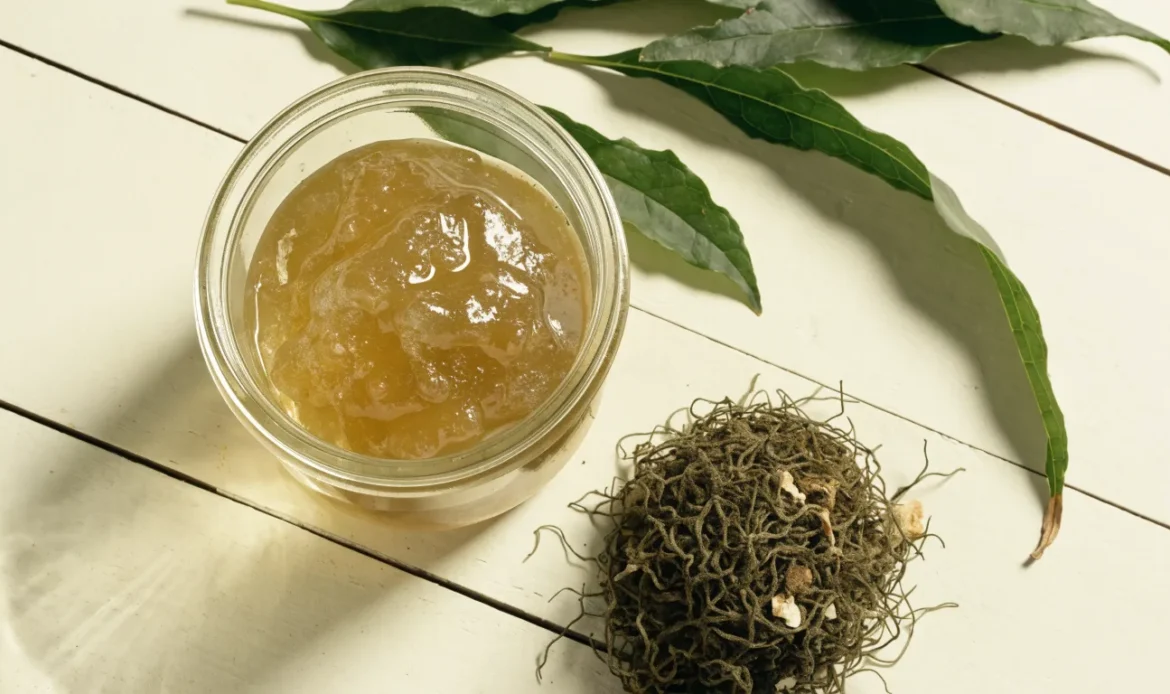
Short answer up front
Third party tested sea moss means an independent lab, not the seller, has tested the sea moss and issued results. Those results usually come as a Certificate of Analysis (COA). A COA can show what was tested, when the sample was taken, and the measured values. It helps you compare products. It does not prove every safety or quality claim, and it cannot replace clear labeling, good handling, or honest sourcing. Read on to learn what to look for and what questions to ask next.
Why this matters
Sea moss is a wild or farmed seaweed product. Its makeup and any contaminants can vary a lot. Independent testing gives a snapshot for a batch. That snapshot can be useful if you know how to read it. Public health groups and food authorities note that seaweed products can have variable iodine and other contents. Testing helps buyers see that variability rather than guess about it [1][3].
What “third party” means
- Third party = an independent lab or testing company with no stake in selling the sea moss.
- The lab should be outside the seller’s organization.
- A COA from a third party shows results signed or stamped by the lab.
H2: What independent labs test for in sea moss
Labs can run different tests depending on the sample and the buyer’s request. Common types of tests include:
H3: Contaminants and heavy metals
Labs often test for heavy metals such as lead, cadmium, mercury, and arsenic. Heavy metals may be present in seaweed from polluted waters or natural sources. Testing can show whether a batch contains detectable amounts and whether levels meet the limits used by a lab or regulator. Which metals are tested and what limits are used can vary by lab and by region.
H3: Microbiology
Microbial testing checks for bacteria or other microbes. Labs may report total plate counts and specific organisms such as E. coli or Salmonella. Microbiology results tell you how many microbes were detected when the sample was taken and under the lab’s test methods.
H3: Iodine and minerals
Seaweeds can contain iodine and other minerals. Iodine levels in seaweed can vary widely by species and location [1][3]. Because iodine affects thyroid function, testing for iodine content is common. Scientific and regulatory reviews highlight that iodine intake from seaweed can be unpredictable, so measuring iodine in product batches is useful for buyers and sellers [2][5].
H3: Residual pesticides or organic pollutants
If the supplier uses farming practices or collects from areas with known discharges, a buyer may want tests for pesticides, PCBs, or other organic pollutants. These tests are less common unless requested.
H3: Identity and composition
Some labs can test for species identity or key markers of the seaweed. This helps confirm what species are present and whether the product matches its label.
H2: What a Certificate of Analysis (COA) usually shows
A COA is the document you should ask for. It is the lab’s report for a specific sample and batch. A clear COA typically includes:
- Company or client name (the company that ordered the test).
- Lot or batch number from the seller.
- Date the sample was taken and date tested.
- Sample description (form: raw, dried, gel, powder).
- Tests performed and methods used (e.g., ICP-MS for metals).
- Results with units (e.g., mg/kg) and detection limits.
- Pass/fail or comparison to a specified standard when relevant.
- Lab name, accreditation or certificate number (if applicable), and an authorized signature.
- Contact details for the lab.
What to check on the COA
- Is the lab listed by name and contact info?
- Is there a batch or lot number that matches the product label?
- Are the tests and units clearly listed?
- Is there a test date close to the product’s packaging date?
- Does the COA show methods or detection limits?
- Is there a statement of accreditation or scope, if the lab claims accreditation?
H2: How to verify lab independence and credibility
A COA is only as useful as the lab behind it. Here are steps to check a lab’s credibility:
- Lab contact: Call or email the lab with the COA reference to confirm it issued the report. A real lab can confirm a COA number.
- Accreditation: Ask whether the lab is accredited to a known standard (for example, ISO/IEC 17025). Accreditation does not guarantee perfect results but shows the lab follows recognized quality rules.
- Lab scope: If the lab claims accreditation, request the scope or look it up on the accreditor’s site. The scope shows which tests the lab is accredited to run.
- Methods: Check whether methods listed are accepted or standard methods in that field (e.g., common methods for metals or microbiology).
- Chain of custody: Ask if the seller used a documented chain of custody for sampling and shipping. Proper chain of custody reduces risk of sample mix-ups.
H2: What testing can and cannot prove
Testing can:
- Show the measured amount of a given substance in the tested sample at the time of testing.
- Confirm that a batch met the limits used by that lab or client.
- Help compare different batches or suppliers when the same methods are used.
Testing cannot:
- Prove that every package from a company is safe forever. A COA applies to the tested sample or batch. Future or past batches may differ.
- Prove the origin or harvest method by itself. Species ID tests help, but a COA does not show the full supply chain.
- Guarantee long-term safety at home. Proper storage and handling after purchase still matter.
- Replace clear ingredient labeling or truthful marketing. A COA is one piece of information, not a full safety certificate.
H2: Practical decision checklist — what to ask or look for
Use this checklist when you evaluate a sea moss product that claims to be third party tested. These checks are practical. They help you see what the COA shows and what it does not.
| Step | Question to ask or check | Why it matters |
|---|---|---|
| 1 | Ask for the COA for the specific lot or batch you will buy. | COAs are batch-specific. A generic COA is less useful. |
| 2 | Verify the lab name and contact info on the COA. | Confirms the document came from a real lab. |
| 3 | Check test date and sample date. | Recent dates mean the COA applies to the batch sold. |
| 4 | See tests run and units used (e.g., mg/kg). | Ensures the product was tested for risks you care about. |
| 5 | Look for method names or references (e.g., ICP-MS). | Methods tell you how the lab measured the item. |
| 6 | Confirm lot number on COA matches product label or seller record. | Prevents mismatch between COA and product. |
| 7 | Ask whether the lab is accredited and for the scope. | Accreditation shows lab quality controls. |
| 8 | Ask for chain-of-custody details for sampling. | Good sampling reduces error or bias. |
| 9 | Compare multiple COAs if buying many batches or from multiple suppliers. | Shows consistency over time. |
| 10 | Ask what other tests the seller runs routinely (if any). | Helps judge their quality systems. |
H2: How this applies to different sea moss formats
Third party testing is relevant for all sea moss formats. Each format has its own handling and risk points.
H3: Raw or fresh sea moss
- Fresh sea moss can change quickly. Microbial counts can rise if not stored cold. A COA is a snapshot for the sample. If the COA is older than packaging, ask how the product was stored since sampling.
H3: Dried sea moss (whole or shredded)
- Drying reduces water activity and can lower microbial growth. Tests for heavy metals and iodine remain relevant. For dried product, confirm that the sample came from the same drying and grinding process used for the batch you buy.
H3: Sea moss gel
- Gel is moist and can be more vulnerable to microbes. Microbiology results are important. Check the sample date and storage conditions used before testing.
H3: Powder or capsule supplements
- Powders and capsules undergo processing steps. Testing for heavy metals, microbiology, and any additives is useful. If the product is sold as a dietary supplement, labeling and regulatory requirements may apply in the seller’s country; test results should align with those labels.
H2: Red flags to watch for
- A COA missing the lab name, signature, or contact info.
- A COA that lacks a batch or lot number.
- Results with no test methods or units.
- A seller who refuses to provide a COA for the lot you will receive.
- Multiple COAs that do not match product labels.
- A lab that cannot confirm it issued the COA when contacted.
- Claims of “certified” without a clear certifying body or scope.
H2: Practical steps to request and use a COA
- Ask the seller before you buy. Request the COA for the exact lot.
- If you see a COA online, check the lot number and dates. Match them to the product.
- Call the lab on the COA and confirm the COA number if you want extra assurance.
- Keep a copy of the COA with your order records. You may need it later.
- If you buy multiple batches over time, request COAs for more than one batch to watch for consistency.
H2: Questions a careful buyer can ask a seller
- Which lab did you use for testing? Can you share the COA for this lot?
- Were samples taken by the seller, by a third party sampler, or by the lab? (This is about chain of custody.)
- What tests do you run on every batch? Which are on request?
- Do you have species ID or traceability documents?
- How long after testing do you ship the product?
- How should I store the product after opening?
H2: What regulators and experts say about seaweed testing
Public health and food safety experts note that seaweed content varies. Seaweed species and where they grow influence mineral and iodine content [1]. Surveys of seaweed products show variable iodine levels, which can lead to very different iodine intake from one product to another [3]. Reviews of iodine and seaweed point out potential risks from high iodine intake and recommend caution and monitoring [2][5]. For these reasons, testing seaweed products for iodine and other components is a common practice.
H2: Cost and access — what to expect
- COAs are not free for sellers. Running full testing can add cost.
- Some sellers include COAs online. Others provide COAs on request.
- If a seller offers third party testing, they should be willing to share the COA for the lot you will receive.
H2: How to compare two products with COAs
- Make sure both COAs cover the same tests and use the same units and methods.
- Compare batch dates to see which is more recent.
- Check for consistent results across batches if you are choosing a long-term supplier.
- Look for differences in the tests run (a product tested only for microbes is not directly comparable to one also tested for heavy metals and iodine).
Frequently asked questions
What should I check first?
Start with the product or ingredient label, the source information, and whether the seller can answer clear questions.
Is this a replacement for professional advice?
No. Use this article as general education. Ask a qualified professional for personal medical, legal, or food-safety guidance.
Where can I learn more?
Use the Zen Wholesalers Learning Library to compare related guides and choose a useful next question.
References
- [1] Harvard T.H. Chan School of Public Health, “Seaweed.” https://nutritionsource.hsph.harvard.edu/seaweed/
- [2] Smyth PPA. “Iodine, Seaweed, and the Thyroid.” European Thyroid Journal, 2021. https://pmc.ncbi.nlm.nih.gov/articles/PMC8077470/
- [3] Food Standards Australia New Zealand, “Survey of iodine levels in seaweed and seaweed containing products,” updated 2025. https://www.foodstandards.gov.au/science-data/monitoring-safety/surveyofiodinelevels
- [4] Operation Supplement Safety, “Sea Moss in Dietary Supplements.” https://www.opss.org/article/sea-moss-dietary-supplements
- [5] Blikra MJ et al. “Consequences of acute and long-term excessive iodine intake: A literature review focusing on seaweed as a potential dietary iodine source.” 2024. https://doi.org/10.1111/1541-4337.70037