
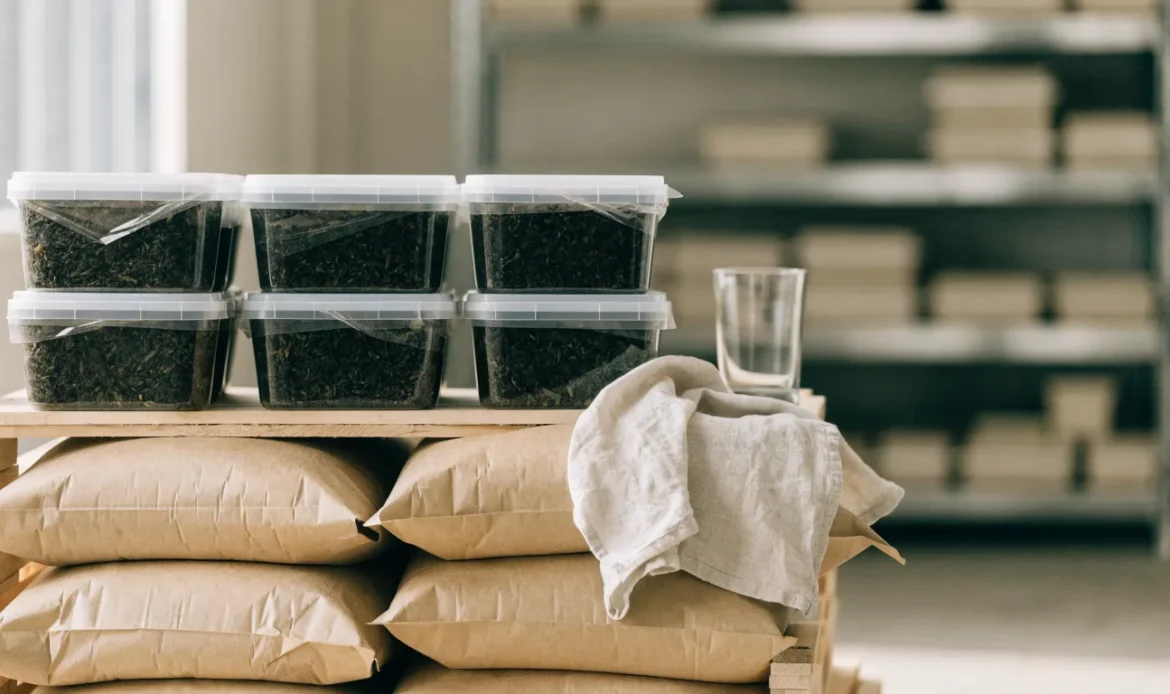
Short answer: Sea moss vendors sell sea moss in many forms—raw, dried, gel, powder, and capsules. To choose a vendor, check what form you need, ask about source and harvest practices, look for recent lab testing for contaminants and iodine, read labeling and storage directions, and confirm return or wholesale terms.
This guide gives a quick answer, then a step-by-step checklist and decision help. It shows what you can verify and what a vendor’s claims do not prove. Use the checklist to ask focused questions before buying.
What are sea moss vendors and what they sell
Sea moss vendors are businesses that harvest, process, package, or resell sea moss products. Common product forms include:
- Raw/whole sea moss (wet or fresh)
- Dried sea moss (dried whole pieces)
- Sea moss gel (reconstituted or blended)
- Powder (dried, milled)
- Capsules or tablets (supplement format)
- Blends and flavored products (sea moss mixed with other ingredients)
Vendors can be small local sellers, online shops, or wholesale suppliers. Some sell direct to consumers. Others sell to stores, cafes, or manufacturers.
What a vendor does not automatically prove: a sales page that lists a country, a harvesting method, or a “batch number” does not by itself prove product safety or consistent nutrient levels. You need more specific documents or tests to confirm those things. See “What you can check” below.
How sea moss vendors differ: key factors to compare
When you compare vendors, look at these features. Each tells you something useful, but none alone proves everything.
- Product form and packaging
- Different forms suit different uses. Gel is ready to mix into drinks or foods. Dried sea moss lasts longer.
- Packaging should include storage directions and a harvest or best-by date if the vendor provides one.
- Sourcing and harvest information
- Vendors may list where the sea moss was harvested or grown. This is helpful but not a full safety guarantee.
- Ask for harvest methods, seasonal harvest times, and handling after harvesting (e.g., rinsing, drying).
- Lab testing and Certificates of Analysis (COA)
- A recent COA from an accredited lab that lists tests for heavy metals, microbial contamination, and iodine is useful.
- Note the test date and batch ID. A COA for one batch does not certify every batch unless vendors test regularly.
- Labeling and ingredient transparency
- Labels should list all ingredients, allergens, storage, and recommended use.
- For blended products, the label should show all added ingredients.
- Safety and dosing guidance
- Vendors should include safe handling and, when applicable, guidance about iodine variability or supplement use.
- They should avoid making medical claims. If a vendor does make health claims, that is a red flag for regulated markets.
- Returns, shipping, and shelf life
- Clear return or refund policies matter for perishable items.
- Shipping methods for wet or gel products and expected transit times affect product quality on arrival.
- Wholesale terms
- Wholesale vendors usually offer minimum order quantities, pricing tiers, and shipping terms.
- Ask about lead times, packing for bulk orders, and whether the wholesale price includes testing documentation.
What you can check—and what those checks do and do not prove
A good buyer knows which questions yield meaningful proof and which do not.
Useful checks that provide real information:
- Recent lab COA that lists tests and a batch or lot number. This shows a lab ran tests on that sample.
- Test details: what contaminants were tested and the exact results.
- Harvest or lot dates and handling notes. These help confirm freshness and traceability.
- Clear ingredient and allergen labeling. That confirms what is claimed to be in the package.
Things that are helpful but do not prove safety on their own:
- A vendor statement like “hand-harvested” or “sustainably harvested.” These require more detail to verify (who, when, and documented practices).
- A generic “lab-tested” badge without a COA or test date.
- Origin alone: listing a location tells you where it came from but not about contaminants or iodine levels.
Why testing matters: Seaweed products can have variable iodine and may pick up contaminants from the water. Published reviews and surveys show iodine levels vary widely across seaweed types and products [1][2][3][5]. A COA that reports iodine and heavy metals gives specific, test-based information you can rely on for that batch.
Iodine and safety: what vendors should disclose
Seaweed can contain varying amounts of iodine. This variability matters because iodine intake affects thyroid function in some people. Scientific sources recommend being mindful of iodine content in seaweed products [2][5]. A vendor who provides COA iodine results or product labeling that reports iodine content is giving useful data.
Regulatory surveys have found a wide range of iodine levels in seaweed products. That means you cannot assume one product’s iodine content is the same as another’s, even if they are the same species [3]. If iodine is a concern for you, ask for the iodine test result for the specific batch you plan to buy.
Where to look for test results and what to ask for
Ask the vendor:
- “Do you have a Certificate of Analysis (COA) for this batch or lot?” If yes, ask for the COA file or link.
- “When was this batch tested and which lab performed the test?”
- “Which contaminants and nutrients were tested?” (Look for heavy metals, microbial tests, and iodine.)
- “Do you test every batch, and how often?”
If a vendor provides a COA:
- Verify the lab’s name is visible and the document lists the tested parameters, batch ID, and test dates.
- Note if the COA is for raw sea moss or for a finished product (e.g., gel). Tests for a finished product may not reflect the raw ingredient.
Decision guide: Choosing a vendor by your use case
Use this guide to pick a vendor type based on how you plan to use sea moss.
- I want ready-to-use sea moss for smoothies or foods:
- Look for gel or paste.
- Check refrigeration and shipping times.
- Ask for use-by dates.
- Expect a shorter shelf life.
- I want long-term storage or recipes:
- Dried sea moss is easier to store.
- Ask about drying method and moisture content.
- Check packaging for moisture protection.
- I need a standardized supplement form:
- Choose powdered or capsules with COAs.
- Confirm dosing instructions and test data for iodine.
- I am buying in bulk for retail or manufacturing:
- Ask about wholesale terms, lot traceability, and bulk COAs.
- Verify lead times and storage recommendations.
Practical checklist: questions to ask a sea moss vendor before buying
| Question to Ask | Why it matters | What a clear answer looks like |
|---|---|---|
| Which product form is this (raw, dried, gel, powder)? | Matches product to your use and storage plan. | Clear label and storage instructions. |
| Where and when was this batch harvested? | Helps with traceability and freshness. | Specific location and harvest date or lot number. |
| Do you have a Certificate of Analysis for this batch? | Shows lab testing for contaminants and iodine. | COA with lab name, test date, and batch ID. |
| Which lab ran the tests? Is it accredited? | Lab quality affects COA reliability. | Lab name and accreditation if available. |
| What tests were run (heavy metals, microbes, iodine)? | Tells you which risks were checked. | COA lists specific tests and numeric results. |
| How should I store this product and how long does it last? | Ensures quality once you get it. | Clear storage temp, shelf-life or use-by date. |
| What is your return or refund policy for perishable items? | Protects you if product arrives spoiled. | Clear, written policy. |
| For wholesale: minimum order, lead time, and packaging? | Operational details for buying in bulk. | Clear MOQ, lead time, and packing method. |
| Do you add any fillers, flavors, or preservatives? | Ensures ingredient transparency. | Full ingredient list on label or product page. |
| Do you make any health claims? | Helps identify regulatory compliance or overreach. | Vendor avoids medical claims and offers general use guidance. |
Use this checklist during email or phone contact. Keep copies of COAs and labels for your records.
Comparison table: common sea moss product forms
| Form | Typical use | Buyer checks | Pros | Cons |
|---|---|---|---|---|
| Raw/wet | Rehydrate or make gel | Harvest date, handling, shipping time | Fresh texture, flexible use | Short shelf life, shipping cost |
| Dried | Rehydrate later, recipes | Drying method, moisture, shelf life | Longer shelf life, easier shipping | Must rehydrate for some recipes |
| Gel/paste | Ready to add to drinks | Refrigeration, use-by date, added ingredients | Convenience, ready-to-use | Perishable, may include additives |
| Powder | Supplements, recipes | COA for finished powder, dose info | Easy dosing, longer shelf life | Processing may alter nutrient profile |
| Capsules | Supplement form | COA, ingredient list, serving size | Measured dose, easy use | Less flexible, may include binders |
This table helps match the product form to your use case. It also shows what to check for each form.
Buying wholesale from sea moss vendors
If you need bulk product, ask about:
- Minimum order quantity (MOQ) and price tiers.
- Bulk packaging and palletizing for shipping.
- Batch traceability and whether COAs accompany shipments.
- Lead time and scheduling (seasonal products may have limited windows).
- Samples: request a small sample to test before a large order.
Remember: a COA for a single sample does not prove all future batches will test the same. Ask how often the vendor tests and whether they can provide COAs for recent batches.
What to do when you receive the product
- Inspect packaging for damage, correct labeling, and lot number.
- Check the product against the vendor’s storage and use instructions.
- For perishable forms, confirm freshness and note any off smells or visible spoilage.
- Keep COAs and purchase records in case you need to ask the vendor questions later.
If you plan to resell or use the product in manufactured foods, keep documentation for traceability.
What vendors should disclose but often do not
- Exact test dates and the lab that ran the tests.
- The harvest or lot number that matches the COA.
- Full ingredient lists for blended products.
- Storage and handling guidance for each product form.
If a vendor does not share these details on request, treat the lack of transparency as a reason to pause and consider alternatives.
Next steps and useful links
- Want to learn more about sea moss basics and preparation? See our Learn page: Learn.
- Ready to browse current product forms? Visit our shop: Shop.
- Interested in bulk or wholesale options? Learn more here: Wholesale.
- Have a specific question for our team? Reach out: Contact.
- Return to the main site: Home
These links will help you move from research to action, whether you buy a small sample or plan a larger order.
Conclusion
Sea moss vendors offer many product forms for different needs. The best vendor for you depends on the form you want, how the product was handled, and whether the vendor provides clear, batch-specific test data. Ask for COAs, harvest and lot information, and clear storage and return policies. Use the checklist above to compare vendors and to ask focused questions that produce verifiable answers. If iodine or contaminants are a particular concern, request recent test results and discuss them with a qualified professional.
For more basic information on seaweed and health considerations, visit our learning pages and the shop links above to explore product options: Learn (/learn/), Shop (/shop/), Wholesale (/wholesale/). If you have a specific question, contact us: Contact (/contact/).
Frequently asked questions
Can I tell iodine levels from the label?
Not usually. Labels rarely show iodine unless the vendor tests and lists the result. Ask for the COA for batch-specific iodine numbers.
Does a “lab-tested” badge mean the product is safe?
Only if the vendor provides a COA with details (lab name, tests run, batch ID, and dates). A generic badge without documentation is not reliable.
Is dried sea moss safer than fresh?
Dried forms are easier to store and ship. Safety depends on handling, drying method, and testing. Ask for COAs and storage guidance.
How often should a vendor test batches?
There is no universal rule. Regular testing (for example, each production batch or frequent sampling) gives better assurance. Ask how often they test and request COAs for recent batches.
Can I use sea moss if I have thyroid concerns?
Talk with a qualified healthcare professional. Because iodine content can vary, ask the vendor for batch-specific iodine test results and share them with your provider.
What does a Certificate of Analysis show?
A COA lists lab-tested parameters for a specific sample or batch, like heavy metals, microbial counts, or iodine. It provides test results and test dates but applies to that tested sample, not automatically to every batch.
References
- Harvard T.H. Chan School of Public Health, “Seaweed.” https://nutritionsource.hsph.harvard.edu/seaweed/
- Smyth PPA. “Iodine, Seaweed, and the Thyroid.” European Thyroid Journal, 2021. https://pmc.ncbi.nlm.nih.gov/articles/PMC8077470/
- Food Standards Australia New Zealand, “Survey of iodine levels in seaweed and seaweed containing products,” updated 2025. https://www.foodstandards.gov.au/science-data/monitoring-safety/surveyofiodinelevels
- Operation Supplement Safety, “Sea Moss in Dietary Supplements.” https://www.opss.org/article/sea-moss-dietary-supplements
- Blikra MJ et al. “Consequences of acute and long-term excessive iodine intake: A literature review focusing on seaweed as a potential dietary iodine source.” 2024. https://doi.org/10.1111/1541-4337.70037