
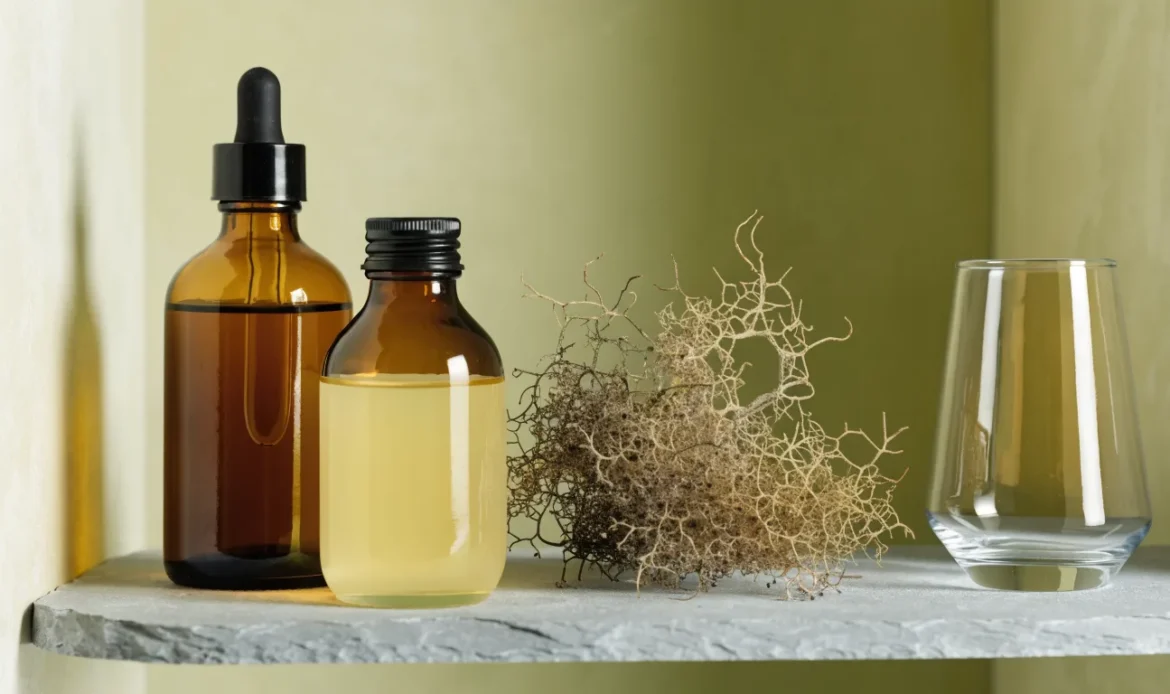
Short answer: Sea moss hair products are shampoos, conditioners, masks, gels, and oils that include sea moss or seaweed extracts for texture and nutrients. Some people like them for moisture and texture. Scientific evidence for direct hair growth or medical benefits is limited, and safety depends on product quality and iodine content. Read labels and ask a clinician if you have thyroid issues or allergies.
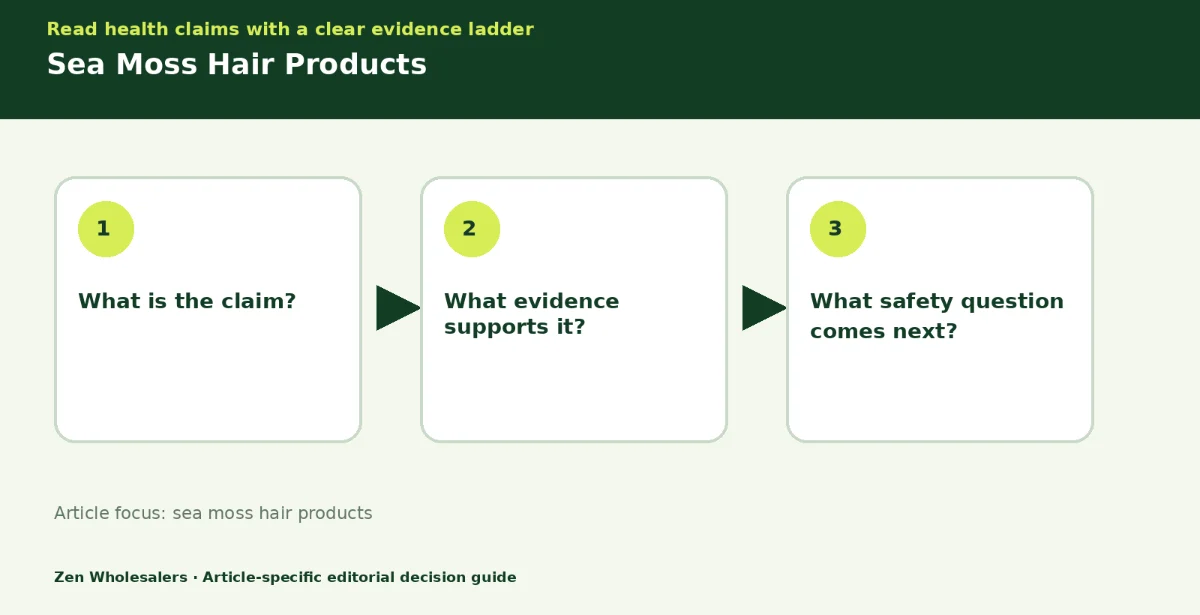
Why this matters: sea moss products are popular. They come from a food that contains minerals and polysaccharides. That does not mean every product is safe or proven to treat hair problems. This article explains what sea moss is, what the evidence does and does not show, how to choose a product, a checklist to follow, safety steps, and next questions to ask.
What sea moss (and seaweed) is — simple facts
- Sea moss is a general term for several red seaweeds used as food and ingredients. It has long been used in Caribbean and other coastal food traditions.
- Seaweeds contain minerals such as iodine, calcium, iron, and other micronutrients, and they have complex carbohydrates like alginates and carrageenans that affect texture. These are natural food components, not guaranteed treatments. [1]
(If you want a short primer on benefits beyond hair, see our /learn/benefits/ page.)
Types of sea moss hair products
Manufacturers add sea moss or seaweed extracts in many forms. Common product types:
- Shampoos and cleansers: usually include seaweed extracts for texture, minerals, and for marketing.
- Conditioners and leave-in creams: promise smoothing, slip, or detangling.
- Hair masks and rinses: thicker formulas that sit on hair for several minutes.
- Styling gels and creams made from sea moss gel or extracts: used for hold or moisture.
- Oils and serums with seaweed-derived ingredients: mixed with carrier oils.
Each product type delivers ingredients differently. A rinse-off shampoo gives short contact time. A leave-in mask gives longer contact. That affects how much of any ingredient actually reaches the hair shaft or scalp.
What sea moss contains and why people think it helps hair
Sea moss contains several classes of compounds that are relevant to hair product makers and users:
- Minerals and trace elements (including iodine). These are inherent to seaweed as a food. [1]
- Polysaccharides and gels (for example, carrageenan-like substances) that add thickness and film-forming properties. These affect feel and manageability.
- Small amounts of vitamins and antioxidants as part of the whole food matrix.
Why that matters for hair:
- The polysaccharide-rich extracts can add slip, help detangle, or form a light film on hair. This can make hair feel smoother or easier to comb.
- Minerals do not automatically transfer from a topical product into the hair in a way that changes hair growth. The outer hair shaft is dead protein; topical products mostly change appearance and manageability, not internal health.
Key point: ingredients that change hair texture or manageability are not the same as ingredients that change hair growth or treat scalp disease. Evidence for the latter is limited.
What the scientific evidence actually shows
Short summary: Direct clinical proof that sea moss products stimulate hair growth or cure hair loss is lacking. Most claims for topical sea moss are based on traditional use, ingredient chemistry, or small lab studies—not strong clinical trials.
Details and how to read studies:
- Food composition work shows seaweed can be rich in minerals, including iodine. That is a food-level fact. [1]
- Studies and reviews about iodine make clear that seaweed can be a concentrated iodine source. Too much iodine can affect the thyroid. If a product is ingested or if a topical product is used widely and contains large amounts of seaweed extract, there is a theoretical risk of increased iodine exposure. For thyroid-sensitive people, this matters. [2] [3]
- Most hair-product claims are supported by small lab tests, ingredient logic, or traditional practice rather than randomized clinical trials. That means the evidence is suggestive for improved texture or temporary manageability, and weak for treating hair loss or medical scalp conditions.
Bottom line: expect sensory and cosmetic changes (smoother hair, different hold), but do not expect proven medical outcomes from most sea moss hair products.
Product label reading: what to check (short checklist)
Use this checklist before buying or using a sea moss hair product:
- Ingredient list: Is “seaweed extract,” “Chondrus crispus,” “Irish moss,” or “sea moss gel” listed? Check where it appears in the list. Early listing means higher concentration.
- Additives and preservatives: Look for known preservatives (e.g., phenoxyethanol, potassium sorbate) if you care about shelf life. If the product claims “no preservatives,” check storage instructions.
- Iodine or mineral claims: If the label claims nutrient levels, be cautious. Topical labels rarely list iodine amounts. If you have thyroid disease, ask the maker for testing results before regular use.
- Third-party testing: For supplements or ingestible products, look for independent lab testing or a Certificate of Analysis (CoA). For topical cosmetics, look for safety testing or preservative challenge tests.
- Allergen statements and country of origin: If you have seaweed or seafood allergies, check warnings and origin.
- Intended use and claims: Does the product say “cosmetic,” “supplement,” or “therapeutic”? Cosmetics are regulated differently than ingestible supplements or drugs.
Decision guide: Which sea moss hair product might suit you?
| Your goal | Product type to consider | What sea moss likely provides | Evidence strength |
|---|---|---|---|
| Smoother, easier-to-comb hair | Conditioner, mask, or leave-in with seaweed extract | Polysaccharides add slip and film; improves combability | Low–moderate (cosmetic effect) |
| Light styling with natural hold | Sea moss-based styling gel | Natural gelling agents provide hold | Low–moderate (cosmetic effect) |
| Deep moisture for dry hair | Thick masks with sea moss plus oils | Film-forming and occlusive effects help retain moisture | Low–moderate |
| Concern about scalp disease or hair loss | Consult a clinician; avoid relying on sea moss alone | Sea moss is not proven to treat disease | Very low (no clinical proof) |
Use this guide as a starting point. “Evidence strength” here refers to how much clinical research proves an outcome for hair growth or scalp disease, not to whether the product will cosmetically improve hair feel.
How to test a product safely at home
Try this short patch-and-trial approach before wide use:
- Patch test: Apply a small amount behind your ear or inside wrist. Wait 24–48 hours for irritation.
- Single-strand test: Apply a small amount to a few strands to check texture and residue.
- Short trial: Use the product for 1–2 hair washes to see immediate cosmetic effects.
- Watch for scalp signs: redness, itching, flaking, or unusual hair shedding. Stop and rinse if any appear.
If you experience systemic symptoms (palpitations, sudden changes in weight, anxiety), stop use and speak with a clinician, especially if you suspect iodine exposure.
Safety and when to ask a clinician
Safety notes:
- Iodine content in seaweed can be high and variable. Topical cosmetics usually add far less iodine than food, but products vary. People with thyroid disease or those taking thyroid medication should be cautious and ask a clinician before regular use. [1] [2] [3]
- Sea moss sold as an ingestible supplement has had safety concerns from regulators and supplement-safety groups. These include variable iodine levels and inconsistent manufacturing practices. If a product is meant to be eaten or used as an ingestible “hair smoothie,” treat it like a supplement and check for lab testing. [4]
- If you have seafood or seaweed allergies, treat sea moss products as potential allergens.
When to ask a clinician:
- You have a known thyroid condition (hypothyroidism, hyperthyroidism, autoimmune thyroid disease).
- You are pregnant, breastfeeding, or planning pregnancy.
- You are taking thyroid medication or other prescribed drugs.
- You have a severe scalp condition (infected or inflamed scalp, sudden hair loss).
- You plan to ingest sea moss or take it as a supplement.
If you need clinical advice for your hair or scalp condition, seek a dermatologist, primary care clinician, or pharmacist. Do not rely only on product labels or marketing claims.
Practical checklist before buying
- Does the product clearly list the seaweed/sea moss species?
- Is the ingredient order realistic (sea moss near top if it’s a core ingredient)?
- Is there a preservative system to prevent spoilage?
- Does the brand provide testing or a CoA for ingestible products?
- Are there allergy or thyroid warnings?
- Can you contact the seller for batch or lab information? (If so, save the response.)
Follow our buying checklist and contact the brand with questions. For business buying or larger orders, see /wholesale/ and /shop/ for vendor details and contact routes.
Common claims and what they actually mean
- “Packed with minerals” — True in the food sense: seaweed can contain minerals. That does not guarantee topical mineral absorption into the hair shaft. [1]
- “Promotes hair growth” — Not proven by strong clinical trials for sea moss specifically. Research on hair growth requires controlled clinical studies, which are largely absent for topical sea moss products.
- “Natural” or “food-based” — Natural does not guarantee safety, purity, or effectiveness. Natural extracts can still cause irritation or deliver variable mineral loads.
Conclusion
Sea moss hair products can change how hair looks and feels. The ingredients that add slip or hold are useful for styling and manageability. But strong clinical evidence for hair growth or medical treatment is not available. The main safety concern is variable iodine content in seaweed-derived products and the general need for quality controls in supplements. Read labels, do a patch test, and consult a clinician if you have thyroid disease, plan to ingest sea moss, or have a serious scalp condition.
If you want to explore more, read our guides on related topics at /learn/ and learn more about specific benefits at /learn/benefits/. To browse products, visit our /shop/ page. For wholesale options or business questions see /wholesale/, or reach out directly on our /contact/ page.
Continue reading
Frequently asked questions
Will sea moss hair products make my hair grow faster?
There is no strong clinical proof that topical sea moss makes hair grow faster. Sea moss extracts can change how hair looks and feels, but they are not proven treatments for hair growth.
Are sea moss hair products safe for people with thyroid conditions?
Seaweed can contain iodine, which affects the thyroid. Topical products usually have less risk than ingestible ones, but people with thyroid disease should consult a clinician before regular use. [2] [3]
Can I eat sea moss and use sea moss on my hair at the same time?
You can, but be mindful that eating seaweed adds iodine to your diet. If you eat concentrated sea moss supplements or raw seaweed, that is a separate exposure from a cosmetic product. Ask a clinician if you have concerns. [1] [4]
How do I avoid getting a low-quality product?
Look for clear ingredient lists, manufacturer contact info, third-party testing (for ingestibles), and safe preservative systems. Check seller responses to questions about testing. See our /shop/ or /wholesale/ pages for purchasing options and vendor support.
Are sea moss gels sold as hair products the same as the edible sea moss gel people use in smoothies?
Not always. Cosmetic formulas and edible gels are formulated differently and are regulated differently. Don’t use a cosmetic product as food and don’t use a food product as a cosmetic unless the label supports both uses.
I have a sensitive scalp. How should I try a sea moss product?
Patch test first. Use a small amount, wait 24–48 hours, and watch for irritation. If irritation occurs, stop use and wash thoroughly.
References
- [1] Harvard T.H. Chan School of Public Health, “Seaweed.” https://nutritionsource.hsph.harvard.edu/seaweed/
- [2] Smyth PPA. “Iodine, Seaweed, and the Thyroid.” European Thyroid Journal, 2021. https://pmc.ncbi.nlm.nih.gov/articles/PMC8077470/
- [3] Food Standards Australia New Zealand, “Survey of iodine levels in seaweed and seaweed containing products,” updated 2025. https://www.foodstandards.gov.au/science-data/monitoring-safety/surveyofiodinelevels
- [4] Operation Supplement Safety, “Sea Moss in Dietary Supplements.” https://www.opss.org/article/sea-moss-dietary-supplements