
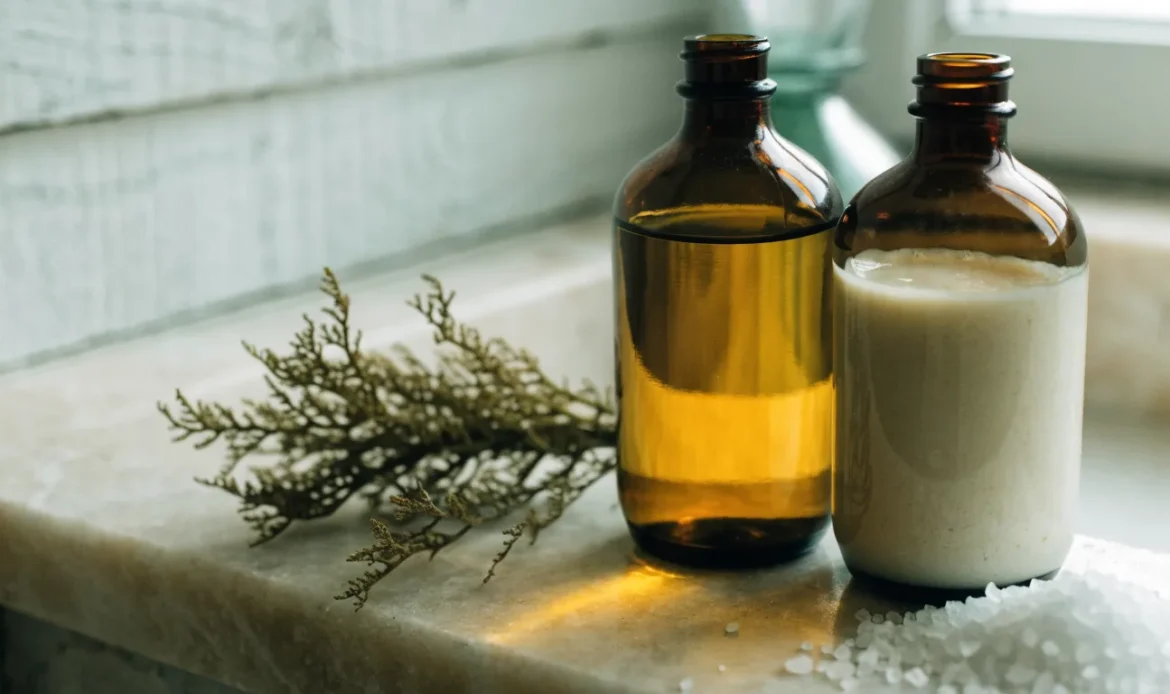
Short answer: Sea moss hair oil is a topical product made with seaweed extracts and carrier oils. People use it to add moisture and to support scalp and hair feel. Scientific proof that sea moss oil improves hair growth or repairs damage is limited. Follow safety checks and talk with a clinician if you have thyroid issues, are pregnant, or take iodine-sensitive medicines.
What is sea moss hair oil?
Sea moss hair oil is a product that blends seaweed (often called sea moss) or its extracts with a carrier oil. Makers may use raw dried seaweed, powders, cold extracts, or commercial seaweed extracts mixed into oils such as coconut, jojoba, or almond. The mix is then bottled for scalp or hair use.
- “Sea moss” is a common name for several red seaweeds that people eat and use in products.
- In hair oil, seaweed is usually intended to add minerals, polysaccharides, or a slippery texture that helps spread the oil.
Seaweed is a food and ingredient family, not a single substance. Its nutrient content and safety depend a lot on species, where it grew, and how it was processed. [1]
How people expect it to work (mechanisms)
People choose sea moss hair oil for a few plausible reasons:
- Moisture and slip. Oils and seaweed gels can make hair feel smoother and reduce friction. This helps prevent tangles and breakage when combing wet hair.
- Scalp feel. Some seaweed extracts are soothing and may help the scalp feel less dry.
- Minerals and plant compounds. Seaweeds contain iodine, trace minerals, and complex carbohydrates (polysaccharides). In theory, these could affect scalp biology, but topical benefit is not proven.
These are plausible mechanisms. They do not mean sea moss hair oil will change hair growth or cure scalp disease. Evidence that topical seaweed delivers meaningful mineral doses to hair roots is limited. [1]
What the scientific evidence says (short summary)
- Food composition and lab data show seaweeds contain nutrients like iodine, iron, and polysaccharides. These facts come from food science and nutrition analyses. [1]
- Clinical proof that sea moss or seaweed applied as a hair oil causes faster growth, thicker hair, or healing of scalp disease is weak or absent. Most human studies focus on oral intake or lab models, not on cosmetic oils applied to the scalp. Evidence for topical hair benefits is largely anecdotal or based on small, early-stage studies.
- There are safety concerns about iodine exposure and contaminants in seaweed-derived products that can be significant, especially with frequent use or with products that concentrate the seaweed. [2][5]
In short: composition is known, early research is limited, and strong clinical trials for topical sea moss hair oil are missing.
Sources that support these points: the nutrition and seaweed review for composition and variability, and reviews on iodine and health risks for safety concerns. [1][2][5]
What seaweed contributes (food facts you can check)
Seaweeds can contain:
- Iodine — often high and highly variable by species and location. Excess iodine can affect thyroid function in some people. [2][5]
- Polysaccharides — these are complex sugars used in food and thought to affect texture and moisture. [1]
- Trace minerals — such as iron, magnesium, and others in small amounts. Amounts vary widely. [1]
These are general, food-science facts. They do not prove that topical application transfers clinically important amounts into the body or hair roots.
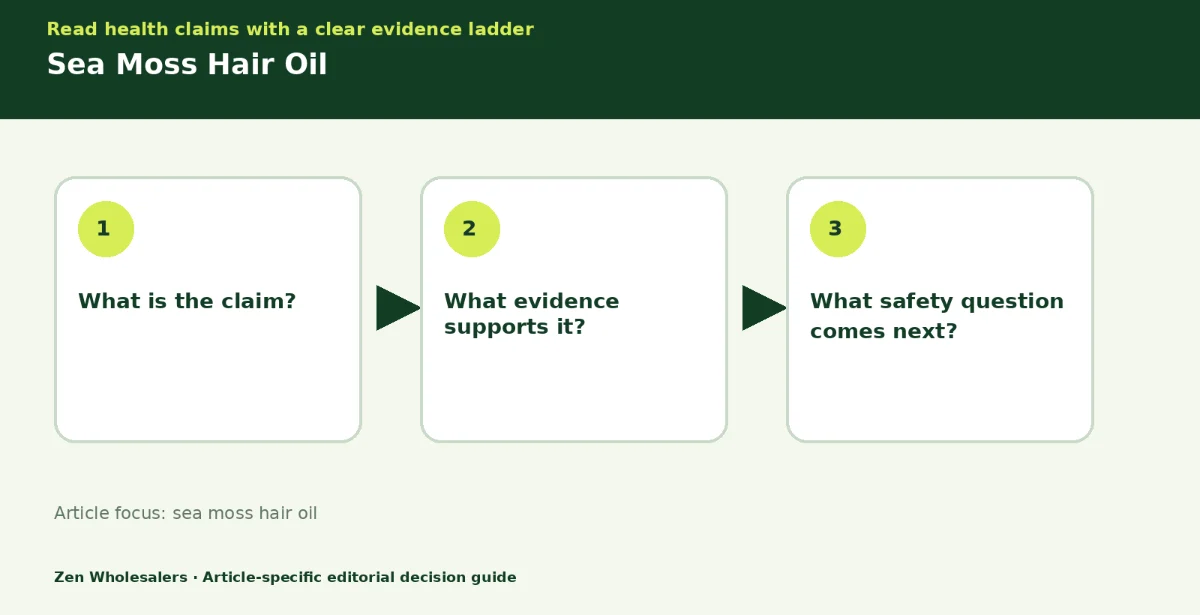
Evidence strength ladder (how to read claims)
- Food composition and lab analysis: fairly strong for showing what is inside seaweed. [1]
- Traditional use and cosmetology reports: widespread but not clinical proof. These tell us people have used seaweed on skin and hair for a long time.
- Small lab or animal studies: hypothesis-generating, not proof for humans.
- Human clinical trials on topical seaweed hair oil: limited or lacking. Do not assume large benefits based on lab or tradition alone.
Safety and when to ask a clinician
Seaweed products can be safe, but they can also pose risks. Check these points before using sea moss hair oil:
- Iodine exposure: Seaweeds can be very high in iodine. Repeated skin contact or absorption through damaged skin may increase iodine exposure in some scenarios. If you have thyroid disease, are pregnant, breastfeeding, or take medications affecting thyroid function, talk to your clinician first. [2][5]
- Product purity and contamination: Seaweed harvested from open water can carry pollutants, microbes, or heavy metals. Look for products with third-party lab tests or clear sourcing statements. [4]
- Allergies and skin reactions: Do a patch test. Stop use if you get redness, rash, burning, or swelling. Avoid use on open wounds.
- Interactions and systemic effects: If you take iodine supplements or thyroid medicines, adding high-iodine topical products could be relevant. Discuss with your clinician. [2][5]
- Regulation and claims: Dietary supplements and cosmetic products are regulated differently than foods and medicines. Some seaweed supplements lack consistent testing. Check for independent testing or company transparency. [4]
Ask a clinician when you have known thyroid disease, pregnancy or breastfeeding, unexplained skin reactions, or if you are taking medicines affected by iodine.
Cited safety sources: iodine and thyroid review and the supplement safety resource. [2][4][5]
How to check a product before you buy
These checks help you avoid low-quality or risky products.
- Read the label for species name and country or region of harvest.
- Look for third-party lab testing for microbial safety, heavy metals, and iodine. [4]
- Check the ingredient list for added fragrances, essential oils, or allergens.
- Prefer products that describe their processing (cold extraction, solvent-free, etc.).
- Find the return policy and contact info. If no contact or transparency, be cautious.
Practical decision checklist: Should you try a sea moss hair oil?
Use this short checklist before trying a product. If any row says “Stop or consult,” follow that advice.
| Factor to check | What to look for | Action |
|---|---|---|
| Thyroid health | You have thyroid disease, or are pregnant/breastfeeding | Consult a clinician before trying |
| Ingredient transparency | Full species name, harvest area, processing | Prefer transparent products |
| Third-party testing | Lab tests for iodine, heavy metals, microbes | Look for a lab report or batch certificate |
| Skin sensitivity | History of eczema/allergic contact dermatitis | Do a small patch test for 48 hours |
| Product claims | Promises of cure, big growth, or medical effects | Treat claims skeptically; no product can guarantee medical results |
| Use plan | How often you will apply | Start slowly; monitor skin and symptoms |
| Return/customer service | Clear contact info and returns | Prefer companies with good customer support |
If you are unsure about any item, contact the seller and ask for lab reports or proof of safety. For health-related concerns, ask your clinician.
How people commonly use sea moss hair oil (practical notes)
- Apply a small amount to dry ends to reduce frizz. Oils help seal hair cuticles and reduce moisture loss.
- For the scalp, do a patch test first. If no reaction, some people massage a small amount into the scalp and leave for a short time before washing.
- Use a clear routine and track results in a simple log: date, product, amount, any reaction, and hair observations over 4–8 weeks. This helps you judge whether it helps your hair feel different.
Remember: these are practical tips, not medical instructions. Avoid heavy, daily use until you know how your skin and scalp react.
How to read product claims responsibly
- If a company cites “traditional use” or “nutrient-rich,” that is different from clinical proof. Traditional and nutritional facts are useful context, but they do not demonstrate specific hair results. [1]
- If a product claims to “balance hormones,” “cure thyroid issues,” or “guarantee regrowth,” treat those claims as medical and ask for clinical evidence. Legitimate clinical trials should be cited and accessible.
- Check for independent lab tests rather than trusting only internal company tests.
What to expect after trying it
- Short-term: hair may feel smoother, softer, and less frizzy because of the oil carrier and seaweed polysaccharides. That is a cosmetic effect, not a change in hair biology.
- Long-term: changes in hair density, thickness, or growth require strong clinical evidence. Expect to monitor results and be cautious about attributing unrelated changes to the product.
Alternatives and complements
If your goals are scalp moisture or reduced breakage, consider evidence-backed, low-risk options alongside or instead of sea moss oil:
- Use a quality carrier oil (coconut, jojoba, argan) for moisture and slip. These are well-studied as moisturizers for hair.
- Maintain gentle hair care: avoid tight styles, reduce heat styling, and use a wide-tooth comb.
- Check nutrition and overall health with a clinician if you have persistent hair shedding or scalp issues.
Sea moss hair oil can be one tool among many. It is not a medical treatment.
Conclusion
Sea moss hair oil blends seaweed with oils to give hair moisture and a smooth feel. Food science tells us seaweeds contain iodine, minerals, and polysaccharides, which explains some of the cosmetic effects. However, strong clinical proof that topical sea moss oil improves hair growth or treats scalp disease is limited. There are safety points to check, especially about iodine and product purity. Use a careful decision checklist, ask for lab data, do a patch test, and consult a clinician if you have thyroid disease, pregnancy, or other health concerns.
If you want to learn more about the benefits of natural ingredients for hair and body, see our learning pages on benefits and wellness: /learn/benefits/ and /learn/. Browse our product options and lab-tested items at /shop/, or contact us about wholesale orders at /wholesale/ or general questions at /contact/. For home, company, or brand pages, visit /.
Continue reading
Frequently asked questions
Does sea moss hair oil make hair grow faster?
There is no strong clinical proof that topical sea moss oil makes hair grow faster. Some people report cosmetic benefits like less breakage, but these are not the same as increased growth. Expect limited scientific support.
Can sea moss oil affect my thyroid?
Seaweed can be high in iodine. Repeated exposure or products with concentrated seaweed could add to iodine intake in some situations. If you have thyroid disease or take related medicines, talk with your clinician before use. [2][5]
Is topical seaweed safe during pregnancy?
Pregnancy raises special safety questions about iodine and product purity. Ask your clinician before using seaweed-based products while pregnant or breastfeeding. [2]
How can I check if a sea moss hair oil is pure?
Ask the maker for third-party lab reports for iodine, heavy metals, and microbes. Look for clear sourcing, species names, and processing details. If none are available, consider choosing another product. [4]
What should I do if I get a rash?
Stop using the product. Rinse the area with water. If the rash is mild and resolves, you may be allergic to an ingredient. If you have swelling, trouble breathing, or the reaction spreads quickly, seek medical care.
Can I make my own sea moss hair oil at home?
Homemade preparations can work for cosmetic feel, but homemade seaweed extracts may lack safety testing. If you make your own, source dried seaweed from a reputable supplier, and do a patch test. Be extra cautious if you have thyroid or other health concerns.
References
- [1] Harvard T.H. Chan School of Public Health, “Seaweed.” https://nutritionsource.hsph.harvard.edu/seaweed/
- [2] Smyth PPA. “Iodine, Seaweed, and the Thyroid.” European Thyroid Journal, 2021. https://pmc.ncbi.nlm.nih.gov/articles/PMC8077470/
- [4] Operation Supplement Safety, “Sea Moss in Dietary Supplements.” https://www.opss.org/article/sea-moss-dietary-supplements
- [5] Blikra MJ et al. “Consequences of acute and long-term excessive iodine intake: A literature review focusing on seaweed as a potential dietary iodine source.” 2024. https://doi.org/10.1111/1541-4337.70037