
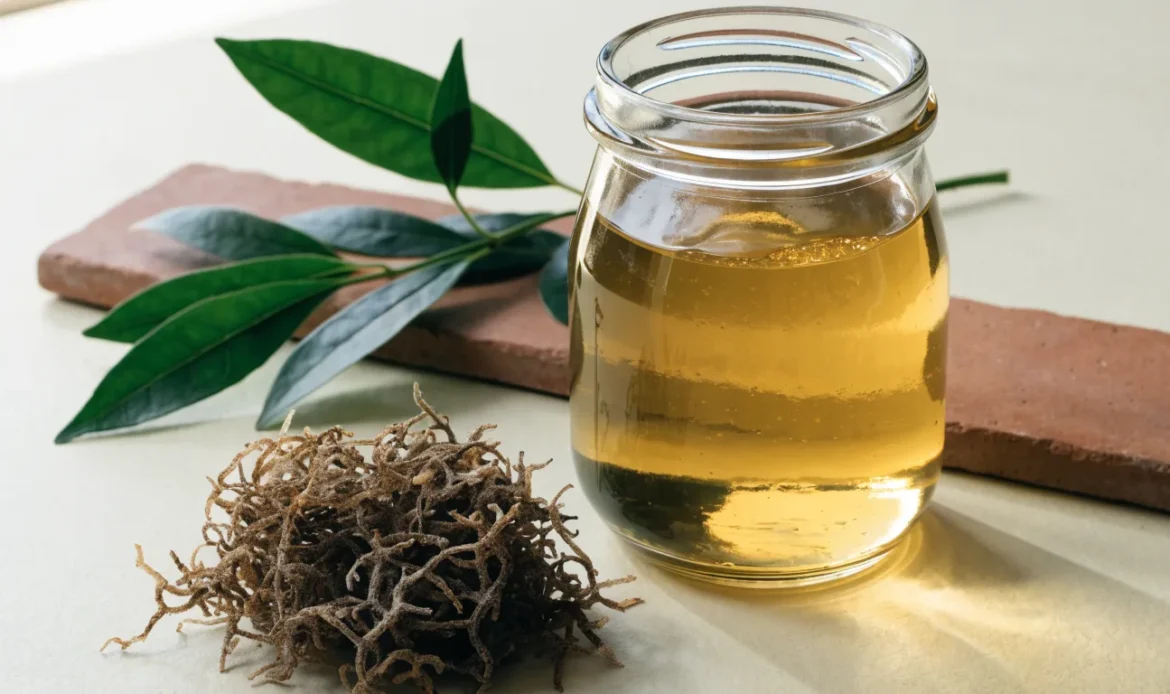
Short answer: Sea moss is a food made from seaweed that supplies minerals, fiber, and some nutrients. People use it as a food, an ingredient, or a supplement. Scientific evidence for specific health effects in people is limited. Learn what is known, what is uncertain, and how to choose and use sea moss more safely.
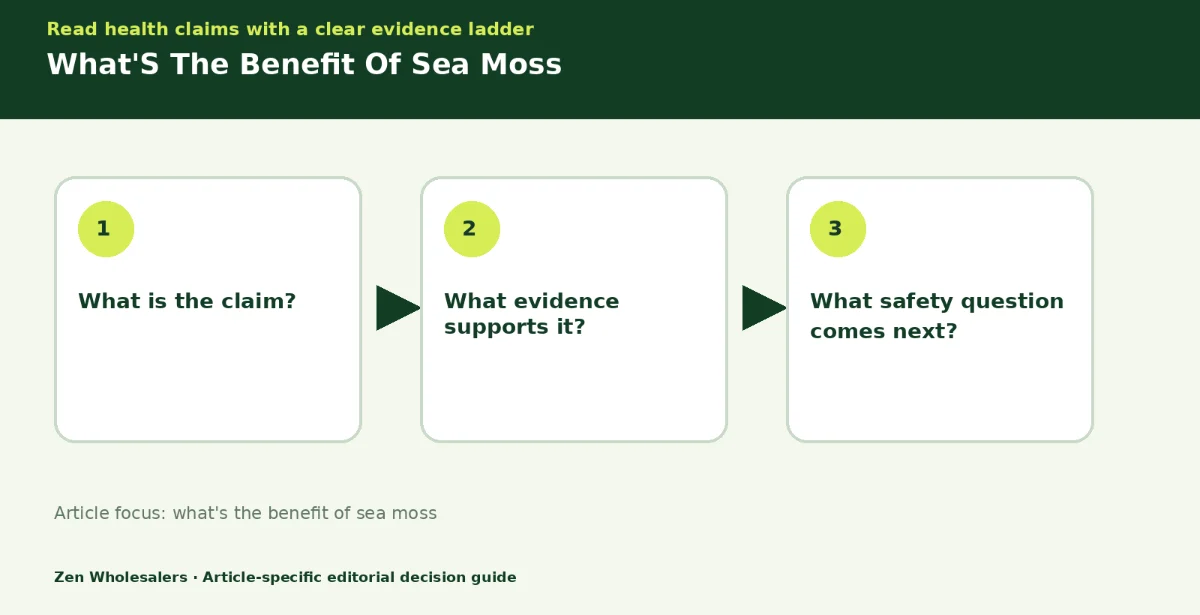
Why this article: you want a clear answer and a next step. Below you will find what sea moss is, what the best evidence says, how to read product claims, and a practical checklist for buying and using it.
What sea moss is, simply
Sea moss usually refers to edible red seaweeds from coastlines. People prepare it fresh, dried, powdered, or mixed into gels and capsules. As a food, it adds texture and some minerals and fiber. It is part of long food traditions in some places. Seaweed in general is a source of vitamins and minerals when eaten as food. citeturn1search0
What nutrients are in sea moss (food composition)
When you eat sea moss as a food, it can provide:
- Minerals such as iodine, calcium, magnesium, and iron.
- Some fiber and complex carbohydrates.
- Small amounts of vitamins (varies by species and preparation).
These nutrient amounts vary a lot by seaweed species and where it grows. Seaweed can be a meaningful source of iodine for people with low iodine in their diet. The general role of seaweed as a nutrient source is described by nutrition experts. citeturn1search0
What this means in plain terms: sea moss is better thought of as a mineral-rich ingredient than a single “cure.” If you need iodine, calcium, or fiber, seaweed can add to your intake. But exact amounts differ by product. You cannot assume a serving of sea moss delivers a fixed amount of any nutrient unless a label or lab report states the amount.
What the scientific evidence shows and what it does not
Short version: most claims about sea moss come from traditional use, lab research, or small/early studies. High-quality clinical proof in people for specific health outcomes is limited.
- Food-tradition evidence: Many cultures use seaweeds as food and cooking ingredients. This shows seaweed has a long history in diets. Traditions do not equate to clinical proof, but they show the plant is edible and has culinary value.
- Laboratory and animal studies: Some lab and animal research tests compounds from seaweeds. These early studies can suggest biological effects. They do not prove the same results will happen in people.
- Human clinical evidence: There are few large, well-controlled studies testing sea moss supplements for health outcomes. That means we cannot claim sea moss will reliably produce specific medical benefits for most people.
What you can check: look for human clinical trials if a product claims a specific health benefit. If no human studies are cited, treat the claim as unproven.
Why the distinction matters: lab results can show potential. But people’s bodies, diets, and health conditions are complex. Only good human studies can show whether a food or supplement causes a measurable health effect.
How people commonly use sea moss
People use sea moss in several ways:
- As a cooked ingredient in soups, stews, and smoothies.
- Rehydrated or blended into gels for recipes.
- Dried or powdered as an ingredient in foods.
- Sold as capsules, gummies, or tinctures marketed as supplements.
Using it as a food is different from taking concentrated extracts or high-dose supplements. Food-based use usually gives smaller and more variable nutrient amounts.
Evidence strength ladder (how strong is the proof?)
- Strong: Nutrient content of seaweed as food (we have compositional data). citeturn1search0
- Moderate: Laboratory or animal findings about compounds in seaweed (suggestive but not applied to people).
- Weak: Claims of specific health outcomes in humans (few large, high-quality trials).
- Unknown: Long-term safety of high-dose sea moss supplements (data are limited and product quality varies). citeturn1search3turn1search4
Safety, contaminants, and why some caution is needed
Seaweed can concentrate minerals and other elements from seawater. That can be a benefit (iodine, for example) and a risk (too much iodine, heavy metals, or environmental contaminants). Two common safety points to know:
- Iodine variability and risk: Seaweed is a variable source of iodine. Some types and batches have high iodine that can cause thyroid issues if intake is excessive over time. Scientists review iodine from seaweed and how it can affect the thyroid. citeturn1search1turn1search4
- Supplements and product variability: Sea moss products labeled as supplements can vary in content and purity. Some products lack consistent testing or accurate labeling. Independent testing and clear product reports are more reassuring. Operation Supplement Safety explains concerns about sea moss dietary supplements and the need for testing. citeturn1search3
What this means: eating small amounts of sea moss as part of a varied diet is different from taking concentrated, daily supplements. If you use sea moss supplements, product quality matters more.
Safety and when to ask a clinician
Talk with a clinician if any of these apply to you:
- You have thyroid disease or take thyroid medication.
- You are pregnant, trying to become pregnant, or breastfeeding.
- You have a condition that requires careful mineral balance (for example, kidney disease).
- You take prescription medicines that can be affected by extra iodine or minerals.
Also ask a clinician if you plan to take sea moss supplements daily or in high amounts. Do not use this article as medical advice. A clinician can check your diet, tests, and medicines and give advice for your situation.
How to read sea moss product claims
When you read labels or product pages, check for:
- Clear ingredient list (species name or “seaweed” type).
- Nutrition facts or a certificate of analysis (COA) from a third-party lab.
- Testing for contaminants, heavy metals, and iodine content.
- Honest language that describes traditional use or nutrient content rather than claiming cures.
If a product promises a medical outcome (weight loss, cure, detox), be skeptical. Reliable products will describe composition and lab testing rather than promising health results.
Practical checklist: Should you try sea moss and how to do it safer?
Use this short decision guide before buying or using sea moss.
Checklist — Sea Moss Buying & Use Quick Guide
- Purpose: Know why you want sea moss (recipe ingredient, mild mineral source, or a supplement).
- Form: Choose food forms (dried or fresh) for cooking or a supplement only if you need a concentrated product.
- Label checks: Look for species name, ingredient list, and nutrition facts.
- Lab testing: Ask for a third-party COA showing iodine and heavy metal content for supplements.
- Frequency: Use food amounts occasionally if unsure. Avoid daily high-dose supplements unless tested and advised by a clinician.
- Health status: If you have thyroid or kidney conditions, or are pregnant, consult a clinician first.
- Source trust: Buy from brands that share testing info and clear sourcing.
- Return & contact: Prefer sellers with clear contact information and return policies.
This checklist helps you choose more safely. It does not replace medical advice.
Practical decision table: How to use sea moss based on your goal
| Your goal | Best option | What to check |
|---|---|---|
| Use as a cooking ingredient | Dried or fresh sea moss | Species, source, culinary use directions |
| Try it for mineral variety | Small food servings | Nutrition facts or label info |
| Want concentrated supplement | Branded supplement with testing | Third-party COA, iodine and contaminants |
| Avoid extra iodine | Skip supplements; limited food amounts | Ask seller for iodine content |
Use the table to match your goal with the safer approach.
Questions to ask a seller or product page
- What species of seaweed is this?
- Is there a recent third-party lab test (COA) showing iodine and heavy metals?
- Where and how was it harvested or grown?
- Are there storage and use instructions?
- What is the recommended culinary use or serving size (if a food)?
Good sellers will answer these plainly. If a seller refuses to provide test results for supplements, consider a different product.
What the available information cannot prove
- No single product label or tradition can prove a medical benefit.
- Lab or animal studies do not prove human outcomes.
- A claimed “detox” or “cure” on a product page is not the same as clinical proof.
- Product purity claims are not guaranteed without independent testing.
Thinking this way keeps expectations realistic. If you want to know whether sea moss will help a specific condition, the next useful question is: “Are there human clinical trials on this product or ingredient for that condition?” If the answer is no or unclear, consult a clinician before taking a supplement.
How to use sea moss in recipes (simple ideas)
- Add small amounts of rehydrated sea moss to soups for texture.
- Blend softened sea moss into a smoothie for a thicker texture and extra minerals.
- Use powdered sea moss like other seaweed powders in small amounts for savory dishes.
Start with small portions and notice how it affects flavor and texture. Cooking methods alter texture and sometimes nutrient availability.
Where to learn more and where to buy safely
If you want more educational pages, visit our learning hub for seaweed and sea moss: Learn (/learn/). For product options and lab-tested items, see our shop: Shop (/shop/). If you represent a business and want wholesale options, view our wholesale program: Wholesale (/wholesale/). For general site navigation or questions, visit our home page: Home (/).
If you have product-specific questions, contact the seller or manufacturer directly. For medical questions, contact a clinician.
Conclusion
Sea moss is a nutrient-rich seaweed used as food and in supplements. It provides minerals and fiber as part of a varied diet. However, evidence for specific clinical benefits in people is limited. Safety depends on species, source, and product quality—especially iodine content and contaminant testing. Use the checklist and questions here to choose more safely. If you have a medical condition or take medicines, ask a clinician before using concentrated sea moss supplements.
If you want more education on seaweed and the science behind its nutrients, visit our learning hub: Learn (/learn/). If you want to shop tested products, see our Shop (/shop/). For wholesale inquiries, go to Wholesale (/wholesale/).
Frequently asked questions
Is sea moss the same as other seaweed?
Sea moss usually refers to certain edible red seaweeds. It is one type of seaweed. Different seaweeds have different nutrient profiles. citeturn1search0
Can sea moss cure or treat disease?
No reliable evidence shows sea moss cures disease. Some early studies exist, but strong human clinical proof is limited. Treat sea moss as a food or a supplement with uncertain effects.
Is sea moss high in iodine?
Sea moss can be a source of iodine, but levels vary by species and batch. Too much iodine can cause thyroid problems in some people. Talk with a clinician if you have thyroid concerns. citeturn1search1turn1search4
Are sea moss supplements safe?
Safety depends on product quality. Supplements can vary widely, and independent lab testing is important. Ask for a certificate of analysis and check for iodine and contaminants. citeturn1search3
How should I start using sea moss in my diet?
Start small. Use it as a cooking ingredient or in a recipe. Track any new symptoms and talk to a clinician if you have health conditions or take regular medicine.
Where can I find testing information for a sea moss product?
Ask the seller for a third-party COA that shows iodine levels and contaminant testing. Reputable sellers will share this information.
References
- Harvard T.H. Chan School of Public Health, “Seaweed.” https://nutritionsource.hsph.harvard.edu/seaweed/ citeturn1search0
- Smyth PPA. “Iodine, Seaweed, and the Thyroid.” European Thyroid Journal, 2021. https://pmc.ncbi.nlm.nih.gov/articles/PMC8077470/ citeturn1search1
- Operation Supplement Safety, “Sea Moss in Dietary Supplements.” https://www.opss.org/article/sea-moss-dietary-supplements citeturn1search3
- Blikra MJ et al. “Consequences of acute and long-term excessive iodine intake: A literature review focusing on seaweed as a potential dietary iodine source.” 2024. https://doi.org/10.1111/1541-4337.70037 citeturn1search4