
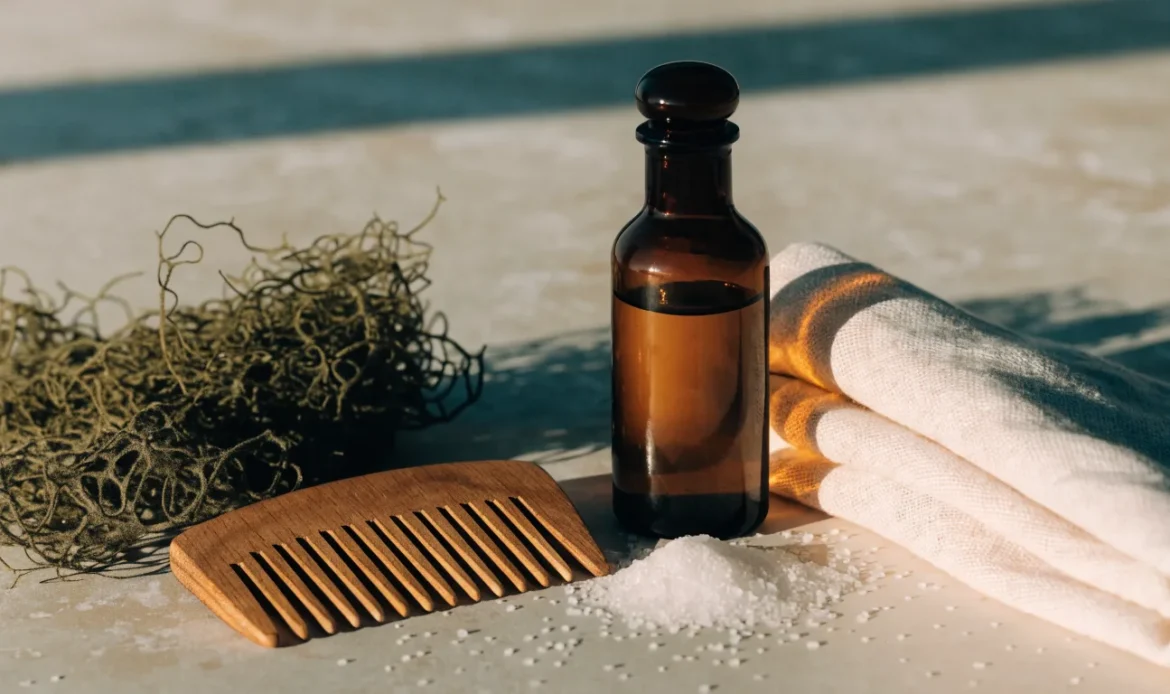
Short answer: Sea moss contains nutrients that the body and hair need. Some people use it as food or a topical gel for hair care. But strong clinical proof that sea moss makes hair grow is limited. Use clear safety checks and ask a clinician if you have thyroid disease, are pregnant, or take medicines.
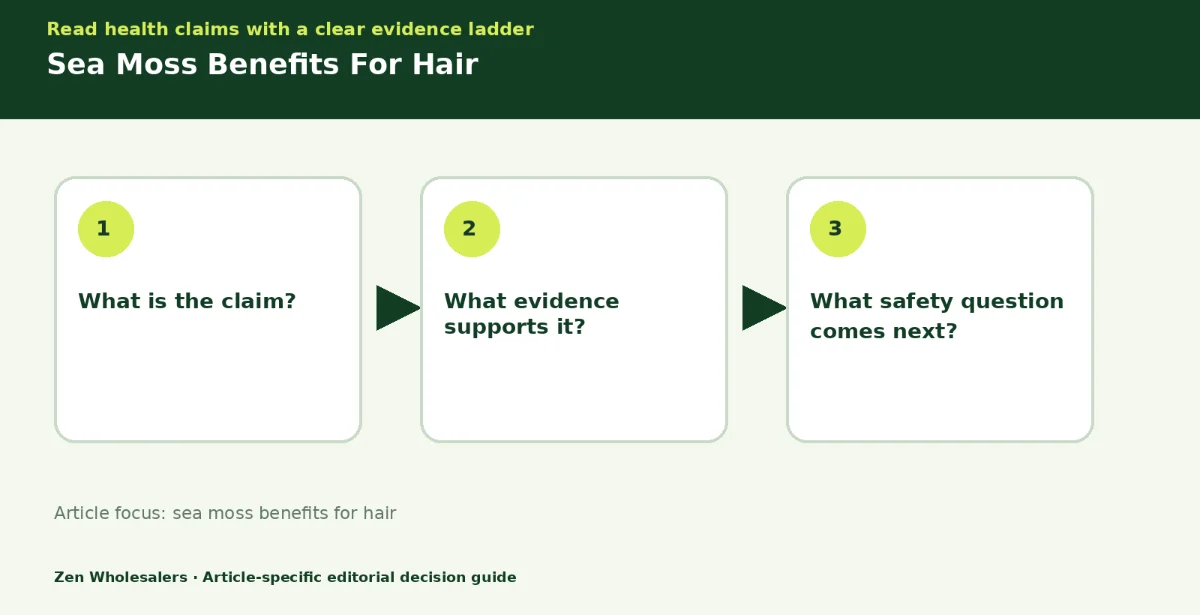
Why this page: It explains what sea moss might do for hair, what science and tradition say, what is not proven, and how to decide if it is worth trying.
How sea moss could affect hair — simple facts
- Sea moss is a type of seaweed. Seaweeds are food sources of minerals and some vitamins. These nutrients matter for hair cells and scalp health. [1]
- Seaweed can contain iodine, iron, zinc, and small amounts of other minerals. These nutrients support normal body functions that also affect hair. [1]
- Some people use sea moss as a food, in smoothies, or made into a gel and applied to hair and scalp. These uses come from food tradition and home care. The tradition is older than modern trials.
- Lab and animal studies can show biological effects of seaweed compounds. But lab results do not prove the same effects happen in people when they eat or apply sea moss.
Evidence type summary:
- Food composition: we know what nutrients seaweed contains. That is measurable. [1]
- Early research: a few early studies or lab tests look at isolated compounds. These are not clinical proof of hair benefit.
- Tradition and anecdote: many people report benefits from using sea moss on hair. Anecdotes do not prove cause and effect.
- Clinical proof: high-quality human trials directly showing sea moss improves hair growth or thickness are limited or absent.
Sea moss nutrients and why they matter for hair
Hair is mostly protein (keratin). Hair health also needs:
- Building blocks (protein, some amino acids).
- Minerals like iron, zinc, and iodine that affect metabolism.
- Good scalp circulation and skin health.
Sea moss can provide:
- Iodine and other trace minerals. Iodine helps the thyroid, which affects hair growth patterns. Too much or too little iodine can change thyroid function. [2] [5]
- Small amounts of iron and zinc. These are linked to hair health when a real deficiency exists. Sea moss is not a guaranteed source of any nutrient in a fixed dose. [1]
- Polysaccharides and other compounds that may help scalp moisture when used topically. The science on topical effects is limited.
Plain fact: the nutrient mix in sea moss could support hair indirectly by supplying building blocks or minerals. But that depends on how much sea moss a person eats, what else they eat, and individual needs.
What the research actually shows (and what it does not)
- We can measure minerals in seaweed. That part is solid. Many seaweeds are richer in iodine than land plants. [1]
- Reviews of iodine and seaweed show that iodine amounts vary a lot by species and location. That means you cannot assume all sea moss products have the same iodine level. [2] [5]
- Reviews about consequences of high iodine intake show that too much iodine can cause thyroid problems in some people. This is a real safety concern for seaweed consumers. [5]
- There are few, if any, large clinical trials that test sea moss specifically for hair growth. Most supportive claims rely on nutrient logic, lab work, or tradition.
- Supplements and processed sea moss products may vary in purity and content. Independent testing is not always available for every product. [4]
Takeaway: The strongest evidence is about nutrient content and potential iodine risk. The weakest evidence is clinical proof that sea moss reliably improves hair in people.
Sea moss hair benefits people talk about
People commonly report:
- Softer hair and improved manageability after using sea moss gel as a conditioner.
- Reduced breakage when the hair feels more moisturized.
- Scalp soothing or reduced flaking in some users.
- Better hair growth or thicker hair over weeks or months in a few anecdotal reports.
Why these reports may happen:
- Topical moisture: sea moss gel can act like a humectant and help hair hold moisture.
- Placebo and care routines: trying a new routine often includes gentler handling and more attention to hair. That itself can reduce breakage.
- Nutrient correction: if someone had a mild deficiency, adding a source of minerals could help. But that depends on how much and what else they eat.
What these reports do not prove:
- That sea moss will grow new hair in everyone.
- That sea moss works better than proven medical treatments for hair loss.
- That any observed change is due only to sea moss and not to other factors.
Topical vs. oral use — what to expect
Topical use (gel, mask, rinse)
- How it might help: adds moisture, may form a light film on hair, can soothe the scalp.
- What it cannot do directly: change thyroid function or fix internal nutrient deficiencies through skin contact.
- Safety notes: check for skin sensitivity. Rinse products thoroughly if irritation occurs.
Oral use (food, smoothies, supplements)
- How it might help: provides minerals and nutrients that support the body and hair over time.
- What it cannot do: instant cosmetic changes to hair. Internal benefits take time and depend on overall diet.
- Safety notes: oral seaweed can deliver iodine. Too much iodine can harm the thyroid in some people. [2] [5]
Choosing a product: what to check
When you consider sea moss for hair, check these things:
- Product type: raw dried sea moss, prepared gel, or supplement capsule.
- Ingredient list: is it pure sea moss or mixed with sweeteners and additives?
- Source and species: where was the sea moss harvested? Some regions have different mineral profiles.
- Testing and labels: does the seller provide third-party testing for heavy metals or microbiological safety?
- Clear instructions: does the product include safe use directions and storage tips?
- Return policy and customer support: can you contact the seller with questions?
Practical internal checks: ask for lab reports or a certificate of analysis if you are buying for regular use. If the vendor cannot provide basic testing or clear sourcing, consider another supplier.
Decision guide: Should I try sea moss for hair?
| Question | If Yes — next step | If No — next step |
|---|---|---|
| Do you want to try a topical hair gel or mask? | Test a small skin patch first. Use on a small hair section for one wash. | Try other conditioners or see a stylist. |
| Do you have thyroid disease or take thyroid meds? | Talk to your clinician before eating sea moss. Consider topical use only after clinician OK. | Avoid oral seaweed until clinician approves. |
| Are you pregnant or breastfeeding? | Talk to your clinician before taking seaweed orally. | Prefer food sources with clinician guidance. |
| Do you take multiple supplements or meds? | Ask a pharmacist or clinician about interactions. | Avoid adding more supplements without advice. |
| Do you want a food approach (add to diet) or a quick cosmetic fix? | For food approach, choose culinary-grade seaweed and track changes over months. For cosmetic, try a small topical test. | If you want fast, proven treatments for hair loss, consult a clinician for options. |
Use this guide to match intent and safety needs.
Practical routine tips if you decide to try sea moss
- Start small. Test topical use on a small patch of skin for 24–48 hours.
- Keep a short diary. Note products used, diet changes, and any scalp reactions.
- Use sea moss gel as a conditioning step. Rinse well if you notice buildup.
- Pair oral seaweed use with a balanced diet. Don’t rely on sea moss alone for nutrients.
- Prioritize products with clear sourcing and testing information.
Safety and when to ask a clinician
Key safety points:
- Iodine content varies a lot by seaweed species and harvest site. This variation affects thyroid risk. If you have thyroid disease, talk to a clinician before eating sea moss. [2] [5]
- Excessive iodine intake can lead to thyroid dysfunction in some people. This can cause changes in hair and other body systems. [5]
- Supplements labeled as “sea moss” may be inconsistent in content and purity. Look for third-party testing when available. [4]
- If you are pregnant or breastfeeding, consult your clinician before taking sea moss orally. High iodine or contaminants can be risks during pregnancy.
- If you have sensitive skin, test topical sea moss on a small area first. Stop use if you get redness, itching, or swelling.
When to ask a clinician or pharmacist:
- You have an existing thyroid condition or take thyroid medicine.
- You are pregnant, breastfeeding, or planning pregnancy.
- You are on multiple medications or immune-modulating drugs.
- You have unexplained hair loss. A clinician can check common causes like nutrient deficiency, hormonal issues, or skin conditions.
What to check in product claims and lab reports
When a seller provides a lab report or certificate of analysis (COA), look for:
- Testing date and lab name.
- Tests for heavy metals (lead, mercury), microbes, and iodine level if available.
- Results that match what the product label promises.
- If the COA is missing or vague, ask the seller for clarification.
Be cautious of broad claims like “cures hair loss” or “clinically proven to regrow hair.” These are not supported by strong clinical evidence.
Practical decision checklist
Use this short checklist before trying sea moss for hair:
- [ ] I want a topical trial or to add sea moss to my diet?
- [ ] I checked for thyroid disease or pregnancy. If yes, I will ask my clinician.
- [ ] I tested a small skin area if using topically.
- [ ] I asked the seller for testing or clear sourcing information.
- [ ] I will track results for 8–12 weeks and note any side effects.
Natural conclusion
Sea moss contains minerals and compounds that could support hair when used as food or a topical. The strongest facts are about nutrient content and the safety concern of iodine. The weakest part is direct clinical proof that sea moss reliably grows hair. If you try sea moss, do so with safety checks: test skin, confirm product testing, and talk to a clinician when you have thyroid disease, pregnancy, or other health concerns. Keep expectations realistic and track results over time.
If you want products or guidance from us, visit our shop or reach out. You can also learn more about general benefits and wholesale options.
- Learn more about benefits: /learn/benefits/
- Browse hair-friendly products: /shop/
- Wholesale or bulk inquiries: /wholesale/
- General learning hub: /learn/
- Contact our team with product or safety questions: /contact/
- Home page: /
Continue reading
Frequently asked questions
Will sea moss make my hair grow faster?
There is no strong clinical proof that sea moss increases hair growth in all people. It contains nutrients that may support hair health if a person is low in those nutrients. Most claims rely on nutrient logic, tradition, or small reports, not large trials.
Is it safer to use sea moss on my hair than to eat it?
Topical use avoids iodine intake from eating sea moss. But topical use can still cause skin reactions in some people. If you have thyroid disease, topical use may be safer than eating it, but ask your clinician before starting any new routine.
Can sea moss cause thyroid problems?
Seaweed, including some sea moss, can be high in iodine. Too much iodine can cause thyroid dysfunction in some people. Talk with your clinician if you have a thyroid condition. [2] [5]
How long until I see results on hair?
Hair changes from diet or scalp care take weeks to months. Clinical evidence for timelines with sea moss is not established. Track changes and consult a clinician for unexplained hair loss.
Are sea moss supplements safe?
Supplements vary in quality. Some may lack testing or have undisclosed ingredients. Look for third-party testing and clear labeling. If in doubt, consult a clinician or pharmacist. [4]
Where can I learn more about general benefits of seaweed?
Authoritative nutrition summaries about seaweed can help you learn its nutrient profile and safety considerations. See reliable nutrition resources for broader context. [1]
References
- [1] Harvard T.H. Chan School of Public Health, “Seaweed.” https://nutritionsource.hsph.harvard.edu/seaweed/
- [2] Smyth PPA. “Iodine, Seaweed, and the Thyroid.” European Thyroid Journal, 2021. https://pmc.ncbi.nlm.nih.gov/articles/PMC8077470/
- [4] Operation Supplement Safety, “Sea Moss in Dietary Supplements.” https://www.opss.org/article/sea-moss-dietary-supplements
- [5] Blikra MJ et al. “Consequences of acute and long-term excessive iodine intake: A literature review focusing on seaweed as a potential dietary iodine source.” 2024. https://doi.org/10.1111/1541-4337.70037