
Short answer first: Many people can use small amounts of whole sea moss as a food, but sea moss supplements can contain variable and sometimes high iodine. High or unpredictable iodine may change how well thyroid conditions are controlled and could affect thyroid medicine. Talk with your clinician before adding sea moss regularly.
Why this short answer? The main concern is iodine. Seaweeds are a natural source of iodine. Too much iodine, or sudden changes in iodine intake, can cause the thyroid to make too much or too little hormone in some people. The scientific and regulatory evidence about sea moss products is limited and variable. Below we explain the evidence, what you can check, and clear next steps.
How sea moss relates to the thyroid — what we know
- Seaweeds, including forms sold as “sea moss,” are a known source of iodine. Iodine is an essential mineral the thyroid uses to make thyroid hormones. Iodine in seaweed can be helpful where diets lack iodine, but it can also be high. [1]
- The thyroid responds to changes in iodine intake. In some people, a sudden large increase in iodine can trigger thyroid problems. Both low and excess iodine can lead to thyroid dysfunction in susceptible individuals. This relationship is well described in clinical literature. [2]
- The amount of iodine in seaweed and seaweed products is highly variable. Tests of commercial seaweed products and surveys of seaweed have found wide ranges of iodine content between species, harvests, and product types. This means two containers of “sea moss” may not deliver the same iodine amount. [3]
- Excessive iodine intake can have real health consequences for the thyroid. Reviews of the evidence link high iodine exposure from seaweed to both temporary and longer-term thyroid dysfunction in some people, especially when intake is very high or begins suddenly. [5]
(References for these points are listed in the References section at the end.)
Key distinctions: food tradition vs. supplement vs. unknown product
- Traditional food: Whole, minimally processed seaweed eaten occasionally as food is different from concentrated supplements. As a food, seaweed may be part of a balanced diet, and many cultures have long histories of seaweed use. [1]
- Packaged products and supplements: Capsules, powders, gels, or concentrated extracts called “sea moss” are more likely to have variable iodine levels and other quality issues. Product labels are not always reliable for iodine content. [3][5]
- Unclear labeling: Some products claim to be “wild-harvested” or “pure” but give no iodine analysis or lab report. That increases uncertainty for someone on thyroid medication.
Does sea moss interact directly with thyroid medicines?
Direct drug–nutrient interaction data specific to sea moss plus thyroid medicines (for example, levothyroxine) are limited. The main clinical concern is indirect: if sea moss changes your iodine intake enough to change thyroid hormone production, your medication needs could change. That may require dose adjustments or more frequent monitoring. [2][5]
Because most thyroid medication dosing aims to replace or reduce thyroid hormone to a narrow target, anything that shifts your thyroid’s hormone production—like a large or sudden iodine change—can matter. For this reason, clinicians usually advise stable, predictable iodine intake rather than sudden or large changes. [2]
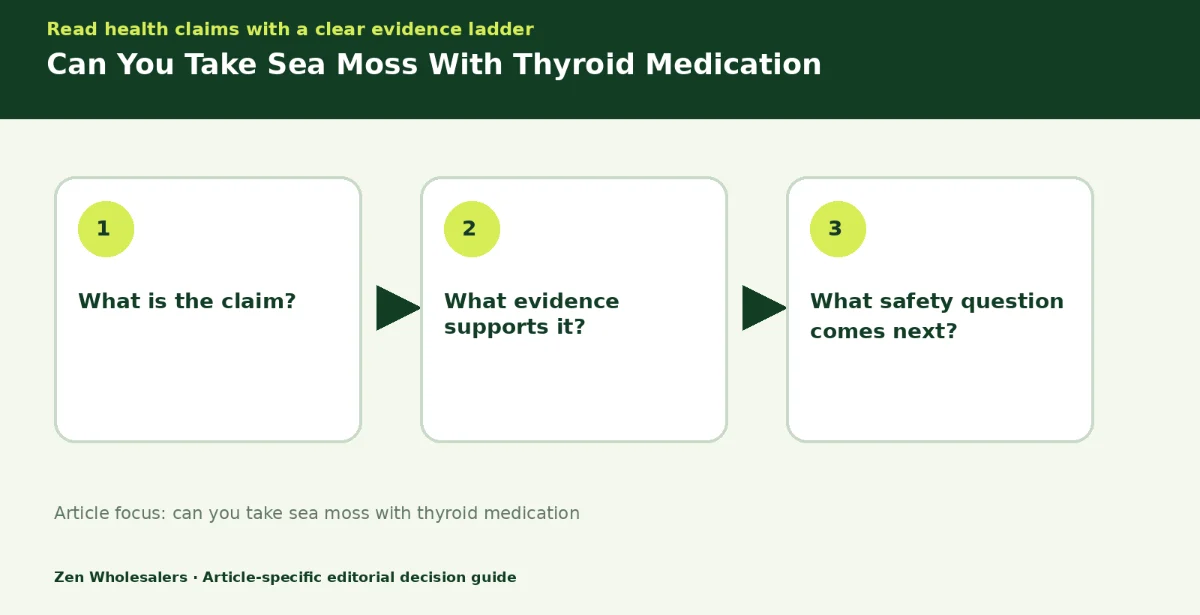
Evidence strength ladder — how confident are we?
- High confidence: Seaweed is a source of iodine. Iodine affects thyroid function. Clinical and review literature document that both too little and too much iodine can cause thyroid dysfunction. [1][2][5]
- Moderate confidence: Iodine content of seaweed products varies widely; surveys show large ranges between products and species. [3]
- Low confidence: Precise outcomes for a given person taking a specific sea moss product with thyroid medication. There are few controlled clinical trials about sea moss supplements and thyroid drugs. Product variation and limited clinical studies reduce certainty.
This ladder matters because it shapes recommendations: we can say what is possible and plausible, but not predict exactly what will happen for any single person.
Practical risks for people on thyroid medication
- Unpredictable iodine intake may change thyroid hormone levels. This could make existing medication too high or too low relative to your needs. [2][5]
- Some sea moss products may be concentrated or mixed with other seaweeds that are higher in iodine. Labels may not list iodine content. [3]
- If a person has autoimmune thyroid disease (like Hashimoto’s or Graves’), their thyroid can be especially sensitive to changes in iodine. Sudden increases or decreases in iodine intake can trigger flares or shifts. [2][5]
- Non-iodine issues (product contamination, inaccurate labeling) add risk when buying untested supplements. Because supplement quality varies, consumers should be cautious.
Safety and when to ask a clinician
Ask your clinician or a pharmacist before trying sea moss if you:
- Take ongoing thyroid medication (levothyroxine or other thyroid drugs).
- Have autoimmune thyroid disease.
- Have had recent thyroid lab tests that required dose changes.
- Are pregnant, breastfeeding, or planning pregnancy (iodine needs and thyroid function are particularly important during pregnancy).
What to ask your clinician or pharmacist:
- “If I want to try sea moss, what monitoring should I expect?” (They may suggest a baseline thyroid-stimulating hormone [TSH] test and follow-up tests after a few weeks to months.)
- “Should I avoid certain products or forms?” (They may advise against concentrated supplements with no iodine testing.)
- “How often should my thyroid labs be checked if I add sea moss?” (Clinician will advise based on your history.)
A clear decision checklist
Use this checklist if you are on thyroid medication and thinking about sea moss. Answer each row and follow the recommended action.
| Question | If yes | If no |
|---|---|---|
| Do you take thyroid medication regularly? | Stop. Do not start any sea moss supplement without clinician approval. | If you still want to use it, treat as general public guidance (see below). |
| Is your thyroid condition autoimmune (Hashimoto’s or Graves’)? | Discuss with your clinician first. Autoimmune disease can be sensitive to iodine changes. | Still check with clinician if you take medication. |
| Is the sea moss product labeled with measured iodine content or third-party testing? | Prefer products with testing and clear iodine numbers; discuss safe ranges with clinician. | Avoid concentrated supplements without testing. Do not assume “natural” means safe. |
| Do you plan to use sea moss regularly (daily) rather than occasionally as food? | Only proceed with clinician input and baseline labs. | Occasional food use still carries some risk but is lower—ask clinician if unsure. |
| Are you pregnant or breastfeeding? | Do not add supplements without medical approval; iodine needs change in pregnancy. | Even if not pregnant, talk to clinician if you are on thyroid meds. |
This checklist is a decision guide, not a substitution for medical advice.
Practical steps if you choose to use sea moss
- Treat single-use foods differently than supplements. Using a small amount of whole seaweed as food occasionally is not the same as taking daily concentrated supplements. [1][3]
- Prefer products with lab results. If a product shows measured iodine per serving from a reputable lab, that helps clinicians estimate risk. [3]
- Start slowly only with clinician approval. For people on thyroid medication, clinicians commonly recommend checking thyroid labs before and after changing diet or supplements. [2]
- Keep a record. Note product brand, amount, frequency, and any symptoms. Bring this to your clinician visits.
- Report symptoms. If you notice palpitations, sudden weight change, heat intolerance, new fatigue, or other symptoms that suggest thyroid change, contact your clinician.
What tests and monitoring are useful
- Baseline TSH and free thyroid hormone tests (often free T4). A baseline helps compare future tests if you change your iodine intake. [2]
- Repeat testing after a change. Timing is clinician-dependent. Because thyroid hormone changes can take weeks to show, clinicians often re-check labs several weeks to a few months after a significant change in iodine intake. [2]
- Consider iodine exposure history. Tell your clinician about all sources: iodized salt, multivitamins, seaweed products, prenatal vitamins, and other supplements.
Product questions: gel, dried, capsules — does form matter?
Form influences concentration and predictability:
- Whole or culinary seaweed: Often used in cooking. Iodine will vary by species and batch, but amounts are usually lower per typical food portion than in concentrated supplements. [1][3]
- Powder/capsule/extract: These can concentrate the active minerals and are more likely to deliver higher, less predictable iodine amounts per serving. [3]
- Gel or blended sea moss: Gel prepared from raw sea moss may have variable water content and iodine concentration depending on preparation and source. Lack of testing increases uncertainty.
Because labels and third-party testing are inconsistent in the market, form matters mainly for how concentrated and predictable the iodine dose will be.
Conclusion
Sea moss as a food can be part of some diets. But for people on thyroid medication, the key issue is iodine and its variability in seaweed products. That variability makes predicting effects difficult. If you take thyroid medication, do not start regular sea moss supplements without discussing it with your clinician. Ask for baseline thyroid tests, prefer products with lab-tested iodine, and plan follow-up testing. These steps reduce uncertainty and help your clinician manage your medicine safely.
If you want to learn more about sea moss benefits for general nutrition, visit our benefits page or browse our learning hub. If you’re considering a product from our store, reach out so we can share lab testing and product details.
- Learn more about sea moss benefits: /learn/benefits/
- Explore our learning hub: /learn/
- Visit the shop for tested products: /shop/
- Contact us for product questions: /contact/
- Back to home: /
Continue reading
Frequently asked questions
Can sea moss replace my thyroid medicine?
No. Sea moss is not a substitute for prescribed thyroid medication. Medicines are given to reach a specific hormone target. Changing or stopping medication needs clinician supervision.
Is all sea moss high in iodine?
Not all sea moss has the same iodine. Iodine varies by species and batch. Some seaweed types are very high in iodine; others are lower. Product testing matters. [3]
Will one small serving of sea moss affect my medicine?
A single small food serving is less likely to cause sudden changes, but it depends on the iodine content. The risk rises with regular or concentrated use. If you take thyroid medicine, ask your clinician. [2][3]
How can I choose a safer product?
Prefer products with third-party lab results showing iodine per serving. Avoid concentrated supplements with no testing. Discuss brands and lab reports with your clinician.
Should I stop my thyroid medication if I take sea moss?
Never stop or change your medication without clinician advice. Stopping medication abruptly can cause symptoms and medical risks.
What symptoms mean I should see a doctor?
New or worsening fatigue, weight changes, heart rhythm changes, tremor, heat or cold intolerance, or other unusual symptoms. These could indicate a thyroid change and need testing.
References
- Harvard T.H. Chan School of Public Health, “Seaweed.” https://nutritionsource.hsph.harvard.edu/seaweed/
- Smyth PPA. “Iodine, Seaweed, and the Thyroid.” European Thyroid Journal, 2021. https://pmc.ncbi.nlm.nih.gov/articles/PMC8077470/
- Food Standards Australia New Zealand, “Survey of iodine levels in seaweed and seaweed containing products,” updated 2025. https://www.foodstandards.gov.au/science-data/monitoring-safety/surveyofiodinelevels
- Blikra MJ et al. “Consequences of acute and long-term excessive iodine intake: A literature review focusing on seaweed as a potential dietary iodine source.” 2024. https://doi.org/10.1111/1541-4337.70037