
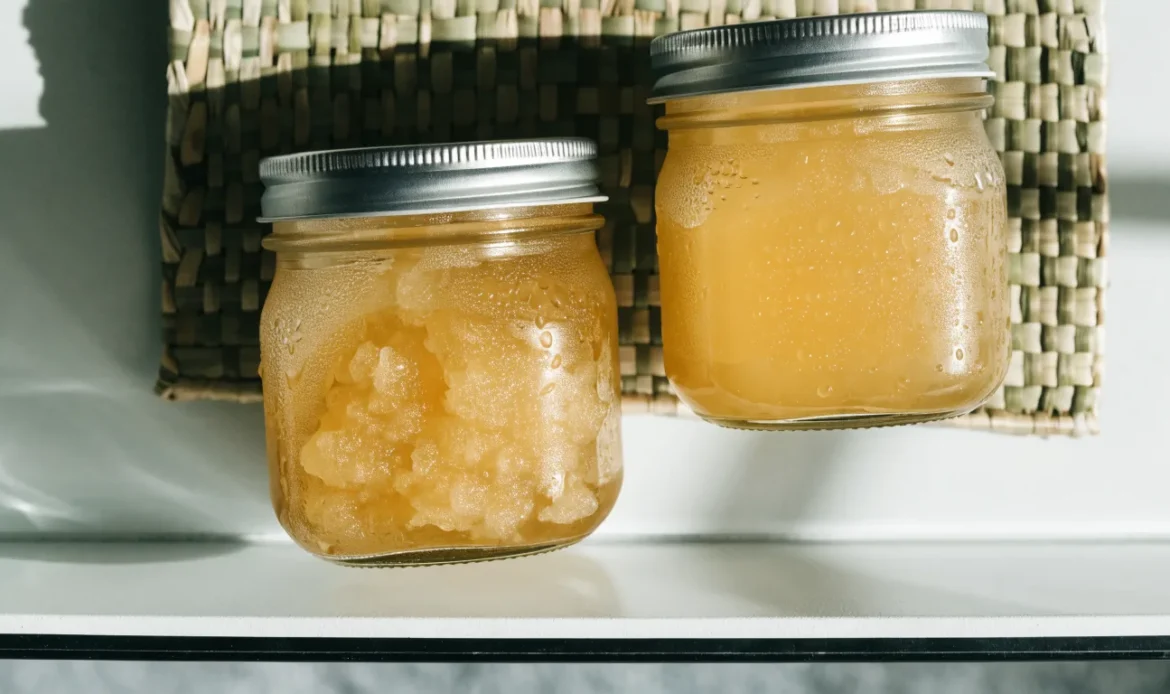
Short answer: It depends. Sea moss gel shelf life varies with how it was made, how it is stored, and the container it’s in. Check the product label. Keep gel cold and sealed. Use your senses. When in doubt, throw it out.
This guide explains what affects how long sea moss gel lasts. It gives clear steps for storage. It shows how to check for spoilage. It also offers a short decision guide so you can act safely.
Why you can’t rely on one fixed number
- Sea moss gel is a wet, fresh food. That makes it more perishable than dried seaweed.
- Makers use different recipes. Some add only water. Others add flavor, acid, or natural stabilizers. These choices change how long the gel stays fresh.
- Storage steps matter a lot. How quickly the gel is cooled after making it, how often a jar is opened, and whether clean tools are used all change freshness.
- Labels, handling, and temperature control are what you can check. A trustworthy maker will list a use-by date and storage tips. If you made the gel yourself, the safest approach is to follow careful food-safety routines.
What affects sea moss gel shelf life
Ingredients and water content
- Sea moss gel is mostly water plus dissolved seaweed solids. The higher the water content, the more chance for microbes to grow if conditions allow.
- Add-ins can change acidity and texture. Acidic ingredients (like citrus) can slow some kinds of spoilage, but they do not make gel sterile.
Processing and cleanliness
- Rinsing raw sea moss and using clean utensils lowers the starting load of microbes.
- Blending introduces air. That can change how the gel behaves.
- Pasteurizing or adding preservatives will change shelf life. Not all products are treated the same way.
Packaging and oxygen exposure
- Air lets bacteria and molds grow. An airtight jar slows that exposure.
- Frequent opening and dipping with non-clean utensils raises risk.
Temperature and the cold chain
- Cold slows microbial growth. That’s why refrigeration is standard.
- If the gel warms up repeatedly, it ages faster.
- Freezing stops growth while frozen, but quality can change on thawing.
Form and format
- Homemade gel tends to be fresher but may have more variability.
- Commercial gels may include processing steps that affect longevity. Always check the label.
Safety note about composition
Seaweed and seaweed products vary in mineral content, including iodine. This variability can affect how some people use sea moss in their diet. If you have specific health concerns, consult a healthcare professional. For background on seaweed composition and iodine variation, see sources in the References section [1][2][3][4][5].
How to store sea moss gel safely (step-by-step)
1) Cool promptly
- After making or receiving sea moss gel, cool it quickly. Do not leave it at room temperature longer than necessary.
2) Use clean containers
- Use glass jars or food-safe plastic that seal well.
- Clean and dry the lid and rim before closing.
3) Portion for use
- If you plan to use small amounts, divide gel into single-use jars or ice-cube trays before storing. This cuts down on repeated jar openings.
4) Keep sealed and cold
- Store in the coldest part of your refrigerator, not the door.
- Always close the lid tightly.
5) Use clean utensils
- Scoop gel with a clean spoon every time. Do not use fingers or a used knife.
6) Freeze for longer storage
- Freeze portions for long-term holding. Thaw in the fridge, not on the counter.
7) Label jars
- Note the date you made or opened the jar. Label whether it is fresh or frozen.
How to tell if sea moss gel has gone bad
Use these signs together. No single sign proves spoilage, but several signs together suggest you should not eat it.
Smell
- Fresh gel has a mild, ocean-like scent.
- A strong sour, rancid, or off smell is a red flag.
Appearance
- Cloudy liquid that is different from usual, heavy separation, or a color change can be a sign.
- White patches, green or black fuzz, or obvious mold are definite discard signs.
Texture and feel
- Excessive sliminess or a frothy, bubbly surface that you have not seen before can mean fermentation or contamination.
Fizziness or pressure
- If a sealed jar builds pressure or pops unexpectedly, do not taste it. This could mean fermentation or microbial activity.
Taste
- If everything else looks okay but the taste is off or sour, do not swallow more—discard it.
When in doubt, throw it out. It is safer to discard questionable gel than to risk illness.
Unrefrigerated gel: what to do and what to expect
- Fresh sea moss gel should not be kept at room temperature for long. Heat and warm ambient temperatures speed up spoilage.
- If gel has been left out of refrigeration for a short time (for example, during preparation or transport), check for any of the spoilage signs above before returning it to cold storage.
- If gel has been warm for an extended time, discard it. Visual checks alone won’t always find bacteria that can cause illness.
- For transport, use an insulated cooler with ice packs. Keep the gel cold until you can refrigerate it.
Practical checklist for safe storage and inspection
Use this short checklist before storing or using sea moss gel.
Quick storage checklist
- Clean hands and clean utensils used to handle gel.
- Airtight, food-grade container ready and dry.
- Cool the gel before sealing, or refrigerate immediately if already cool.
- Label with date of making or opening.
- Portion into small jars or freezer trays for single use.
- Store in the coldest part of the fridge.
- Freeze portions you won’t use soon.
- Check for off smells, mold, bubbles, or color change before use.
- Discard if any definite spoilage signs appear.
Decision guide: what to do by condition
- Freshly made or newly opened and kept cold: keep refrigerated, use within a reasonable time, portion if needed.
- Warmed or left unrefrigerated beyond short handling: discard if unsure; do not taste to test.
- Sealed but shows internal pressure, odd smell, or mold: discard.
- Frozen and thawed in fridge: use promptly and check for quality; do not refreeze.
How freezing changes gel
- Freezing halts microbial growth but can affect texture.
- Thawed gel may be thinner or slightly separated. Stir gently and check smell and appearance.
- Use thawed gel sooner rather than later. Avoid refreezing thawed gel.
Can you add things to make gel last longer?
- Avoid chemical preservative advice unless it appears on a reputable commercial product label.
- Small culinary steps that can help quality:
- Portioning into small jars reduces repeated exposure.
- Keeping the gel chilled and using clean utensils slows spoilage.
- Adding fresh citrus at time of serving can change flavor and mild acidity, but it is not a guaranteed preservative. Do not rely on citrus to preserve older gel.
- If you buy a commercial product, follow the maker’s label instructions.
Label reading: what matters
- Look for a production or best-by date.
- Look for storage instructions like “keep refrigerated” or “freeze for long-term storage.”
- If a product lacks clear storage guidance, treat it cautiously. Reach out to the seller for instructions.
Homemade gel vs commercial gel: what to expect
- Homemade gel does not have standardized processing. Be conservative in storage and use quick clean practices.
- Commercial products may include handling or processing steps that extend quality. That does not mean they are immune to spoilage. Check labels and contact the seller if you have questions.
What sellers and buyers can check
If you are buying pre-made gel:
- Ask how the product was made.
- Ask about any added ingredients.
- Ask for storage guidance and a best-by date.
- Ask how they ship the gel and how it is kept cold during transit.
If you make gel at home:
- Rinse the raw sea moss well with clean water.
- Use clean tools and pots.
- Cool gel promptly and follow the storage checklist.
Safety and health pointers (non-medical)
- Seaweed products vary in mineral content, including iodine. This affects how people use seaweed. If you have specific dietary or medical concerns involving seaweed, discuss them with a qualified healthcare professional. For more about variability and iodine in seaweed, see References [1][2][3][5].
- If you sell gel, provide clear storage and shelf-life guidance to your customers.
Suggested visual
- Create a numbered process diagram titled “Store Sea Moss Gel Safely.” Include five panels:
1) Rinse and blend step with clean tools.
2) Cool quickly and pour into airtight jars. Show a labeled jar with date.
3) Portioning and freezing step showing ice-cube tray and freezer.
4) Refrigerator storage location: show jar in back shelf (not door) and use clean spoon illustration.
5) Spoilage check: show icons for smell, mold, and discard bin. Use simple labels: “Check smell,” “Look for mold,” “Toss if unsure.”
Continue reading
Frequently asked questions
How long do sea moss gel last if I refrigerate it?
That depends on how the gel was made and how it has been handled. Proper refrigeration slows spoilage, but you should follow the product label or your own notes. Check for off smells, color change, mold, or bubbles. If any of these appear, discard the gel.
Is thawed sea moss gel safe to use?
Thaw in the refrigerator and use promptly. Thawed gel may change texture or separate. Check smell and appearance before using. Avoid refreezing thawed gel.
Can I leave sea moss gel unrefrigerated during a day out?
Keep it cold during transport. Do not leave gel at room temperature for long. If it stays warm for an extended time, discard it. Use a cooler or insulated bag with ice packs for trips.
Does adding lemon or lime make sea moss gel last longer?
Adding citrus changes flavor and can raise acidity in a serving. It is not a guaranteed preservative. Do not rely on citrus alone to preserve older gel. Keep gel cold and sealed.
How can I make sea moss gel last longer without chemicals?
Portion the gel, use airtight containers, cool quickly, store in the coldest part of the fridge, and freeze extra portions. Use clean utensils each time you scoop the gel.
What should I do if my purchased gel lacks storage instructions?
Contact the seller and ask for storage and handling guidance. If you cannot get clear instructions, treat the gel conservatively: keep it cold, portion and freeze what you won’t use soon, and check it carefully for spoilage before use. Internal links and next steps Learn more storage tips on our storage page: /learn/storage/ Browse our learning resources: /learn/ If you want to shop for gel and storage supplies, visit /shop/ If you are a business interested in bulk orders, visit /wholesale/ Questions? Contact us at /contact/ Return to the Zen Wholesalers home page: / Conclusion Sea moss gel does not have one fixed shelf life. It depends on ingredients, cleanliness, packaging, and temperature. Follow the product label when you can. Keep gel cold, use clean tools, and check for smell, mold, or odd texture before using. Portion and freeze extras. When in doubt, throw it out. If you need more help, visit our storage pages or contact the seller.
What should I check first?
Start with the product or ingredient label, the source information, and whether the seller can answer clear questions.
Is this a replacement for professional advice?
No. Use this article as general education. Ask a qualified professional for personal medical, legal, or food-safety guidance.
Where can I learn more?
Use the Zen Wholesalers Learning Library to compare related guides and choose a useful next question.
References
- [1] Harvard T.H. Chan School of Public Health, “Seaweed.” https://nutritionsource.hsph.harvard.edu/seaweed/
- [2] Smyth PPA. “Iodine, Seaweed, and the Thyroid.” European Thyroid Journal, 2021. https://pmc.ncbi.nlm.nih.gov/articles/PMC8077470/
- [3] Food Standards Australia New Zealand, “Survey of iodine levels in seaweed and seaweed containing products,” updated 2025. https://www.foodstandards.gov.au/science-data/monitoring-safety/surveyofiodinelevels
- [4] Operation Supplement Safety, “Sea Moss in Dietary Supplements.” https://www.opss.org/article/sea-moss-dietary-supplements
- [5] Blikra MJ et al. “Consequences of acute and long-term excessive iodine intake: A literature review focusing on seaweed as a potential dietary iodine source.” 2024. https://doi.org/10.1111/1541-4337.70037