
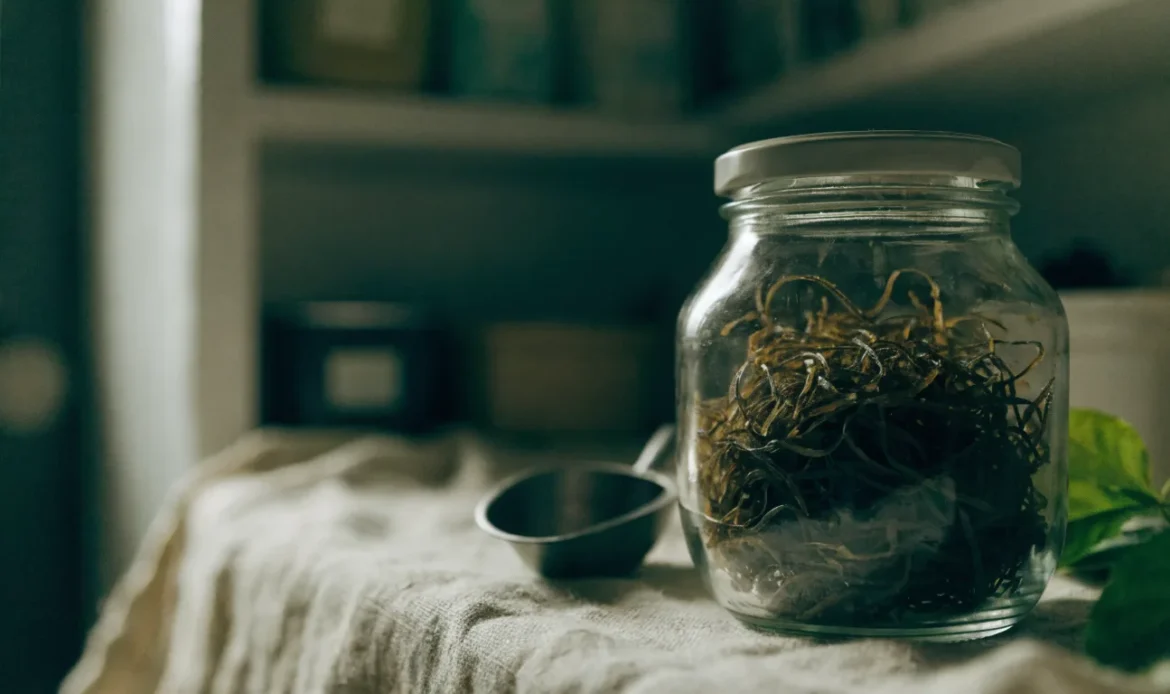
Short answer: Sea moss powder shelf life is not one fixed number. It depends on how the powder was dried and packed, how much moisture is in it, and how you store it. Check the product label and look for signs of spoilage. Below are simple ways to keep your powder fresh and safe.
What “shelf life” really means for sea moss powder
Shelf life can mean different things:
- How long the product keeps its normal smell, color, and texture.
- How long it is safe to eat without risk of mould or pests.
- What the maker guarantees on the package (a “best-by” or “use-by” date).
Because seaweed products vary a lot, you should look for the date and storage advice on the package. If a date is not there, ask the seller. Some risks tied to seaweed are about iodine and heavy metals. If you have thyroid issues or special health concerns, check product information and talk with a healthcare provider before you add a lot of seaweed to your diet [1][2][4][5].
Key factors that affect sea moss powder shelf life
Below are the main things that change how long a powder stays fresh.
- Moisture level in the powder. Dry powders last longer. Any moisture invites mould or clumping.
- How the powder was dried. Gentle drying and low final moisture help stability. Overheating can change smell and color.
- Packaging type. Airtight, opaque, and sealed packaging slows spoilage. Vacuum or oxygen-barrier bags add protection.
- Presence of oxygen absorbers or desiccants. These lower humidity and oxygen inside the pack.
- Storage temperature and light. Heat and sunlight can speed up chemical changes and flavor loss.
- Handling and contamination. Dipping wet spoons or hands into the jar can introduce moisture and microbes.
- Product additives. Some mixes may include sugars, fruits, or probiotics. These ingredients can shorten shelf life compared with pure dried sea moss powder.
What you cannot tell from a picture or a short description:
- Exact moisture content.
- Sanitation of the processing facility.
- Lab testing for iodine, heavy metals, or microbes, unless the seller provides them.
If these details matter to you, ask the seller for lab reports or product specs.
How to read the label and what to ask the seller
When you shop, check or ask for:
- A clear “best-by” or manufacture date.
- Storage instructions (keep refrigerated? keep sealed?).
- Ingredient list (is it pure sea moss powder or a blend?).
- Any lab testing or certificates available for iodine, heavy metals, or microbiology.
- Whether the product was vacuum sealed, has oxygen absorbers, or contains a desiccant.
- The seller’s return or quality policy.
Seaweed can be a major source of iodine. Iodine levels vary by species and harvest. If you have thyroid disease, or are pregnant, ask about iodine levels and consult your clinician [1][2][3][5].
Safe storage practices (easy steps)
Follow these steps to slow down degradation and keep the powder usable:
- Keep the powder dry. Use a dry scoop or spoon each time.
- Store in an airtight container. Resealable bags, pantry jars with tight lids, or vacuum-sealed pouches work.
- Use opaque containers or keep the package in a dark place. Light speeds quality loss.
- Keep in a cool, stable place. Avoid heat near stoves, ovens, or direct sun.
- Use food-grade desiccants or oxygen absorbers if you plan long storage.
- Label the container with the date you opened it.
- If you plan to store very long term, divide into smaller portions so you open only what you need each time.
- Never return used or wet utensils to the container.
A refrigerator can help in warm or humid climates. But refrigeration can bring moisture into the package when you open it. Keep the powder in a sealed bag inside the fridge, and bring it to room temperature before opening to avoid condensation.
How to spot spoilage or unsafe powder
Even without a date, you can check the powder for signs that it is not good to use:
- Off or sour smell. If it smells rotten or strange, discard it.
- Visible mold or fuzzy growth. Throw it away immediately.
- Discoloration beyond what the original product shows.
- Large, wet clumps or a musty odor—these suggest moisture has entered.
- Evidence of insects or larvae. Discard the product and clean the storage area.
- If you develop unusual symptoms after consuming, stop use and seek medical advice.
If you see any of the above, do not try to salvage the product by removing the mold or drying it further. Mold roots can penetrate powders, and toxins may remain.
Practical decision checklist: What to do with your sea moss powder
| Condition you find | Quick check | What to do |
|---|---|---|
| Powder is dry, normal color, normal smell, within labeled date | Visual and smell check | Keep and use. Store as recommended. |
| Powder is clumped but smells normal | Break clumps and inspect for moisture or mold | If no mold, can usually use. Move to airtight container with desiccant. |
| Off or sour smell | Smell plus look for color change | Discard. Do not taste. |
| Visible mold or fuzz | Look closely under light | Discard package and clean storage area. |
| No date on package | Check with seller for manufacture or pack date | If seller cannot provide a date or lab info, consider caution; store like new but use quicker. |
| Concern about iodine or contaminants | Ask for lab report or spec sheet | If report unavailable and you have health risks, avoid heavy intake and consult a provider. |
Storing for bulk or wholesale purchases
If you buy large quantities:
- Ask the supplier about processing, drying method, and moisture content.
- Request packaging options (vacuum sealing, food-grade drums, or smaller retail packs).
- Rotate stock: use first-in, first-out.
- Inspect each incoming batch for signs of moisture or pest damage.
- Keep documentation (batch numbers, dates, lab reports) with inventory for traceability.
If you are reselling, clear storage instructions and accurate dates help customers store the product safely.
What testing or data can help you decide?
If you want more certainty, these tests or documents are useful:
- A moisture-content test (Karl Fischer or other lab tests). Lower moisture usually means longer stability.
- Microbiological testing for common spoilage organisms.
- Heavy metal and iodine testing for safety and labeling.
- A clear lot code and manufacture/pack date.
If a seller provides lab reports, read them. If they are absent, ask what controls are in place.
Next questions to ask when buying
- Is there a best-by or pack date?
- Can I see a recent lab report for iodine and contaminants?
- What drying method and moisture level were used?
- How is the product packaged and sealed?
These answers help you estimate how long the powder will stay fresh and safe.
Conclusion
Sea moss powder can stay usable for a long time when it is dry, well-packaged, and stored in a cool, dark place. However, shelf life varies by product, packing, and handling. Always check the product label for dates and storage advice. Look for clear signs of spoilage and discard any package that smells off, shows mold, or contains insects. If you have thyroid concerns or other health issues, ask about iodine testing and talk with your clinician before using seaweed products regularly [1][2][3][4][5].
Useful internal pages:
- Learn more about safe storage: /learn/storage/
- Explore other learning guides: /learn/
- Browse our products: /shop/
- Wholesale options and bulk info: /wholesale/
- Contact us with product questions: /contact/
- Back to home: /
Continue reading
Frequently asked questions
How long does unopened sea moss powder last?
Shelf life varies. The maker’s “best-by” or “pack” date is the most reliable guide. If no date is provided, treat the product as shorter-lived and store it in a cool, dry place. Ask the seller for more specifics.
Can I refrigerate or freeze sea moss powder?
Yes, refrigeration or freezing can slow degradation, especially in hot or humid climates. Keep the powder in a fully sealed, moisture-proof package to prevent condensation when you open it.
Is clumping a sign of spoilage?
Not always. Clumping often means moisture got in. Check for smell or mold. If the powder smells normal and there is no visible mold, you can usually break up the clumps and use the powder. If in doubt, discard.
What if the package has no label or date?
Ask the seller for details about when it was packed and how it was dried. If no details are available, store conservatively and use sooner. For people with health risks, avoid heavy consumption of unlabeled seaweed products.
Should I worry about iodine in sea moss powder?
Seaweed can contain high or variable iodine levels. Iodine content depends on seaweed type and source. If you have thyroid conditions, are pregnant, or need to limit iodine, check product testing or consult a healthcare provider before use [1][2][3][5].
How do I handle an opened jar safely?
Use a dry, clean scoop. Reseal the jar after each use. Label with the opening date. Store in a cool, dark place or inside a sealed bag with a desiccant.
References
- [1] Harvard T.H. Chan School of Public Health, “Seaweed.” https://nutritionsource.hsph.harvard.edu/seaweed/
- [2] Smyth PPA. “Iodine, Seaweed, and the Thyroid.” European Thyroid Journal, 2021. https://pmc.ncbi.nlm.nih.gov/articles/PMC8077470/
- [3] Food Standards Australia New Zealand, “Survey of iodine levels in seaweed and seaweed containing products,” updated 2025. https://www.foodstandards.gov.au/science-data/monitoring-safety/surveyofiodinelevels
- [4] Operation Supplement Safety, “Sea Moss in Dietary Supplements.” https://www.opss.org/article/sea-moss-dietary-supplements
- [5] Blikra MJ et al. “Consequences of acute and long-term excessive iodine intake: A literature review focusing on seaweed as a potential dietary iodine source.” 2024. https://doi.org/10.1111/1541-4337.70037