
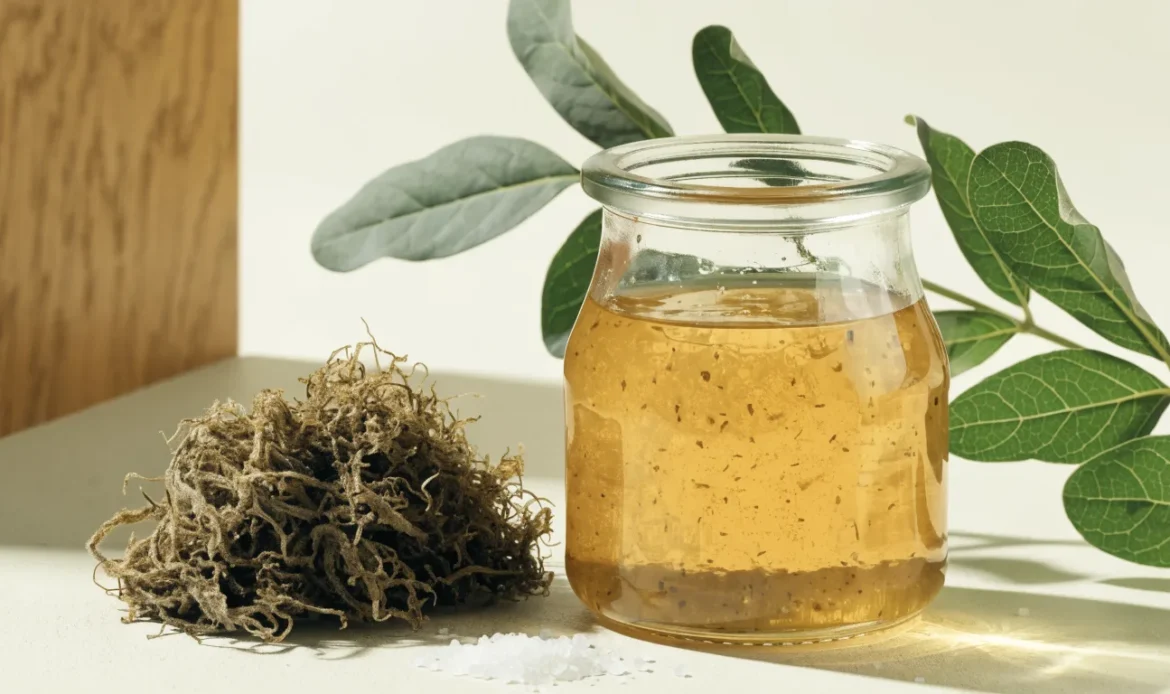
Short answer: People typing “sea moss com” are usually looking for online information or sellers of sea moss. This page explains what “sea moss” means, the common product formats you will see online, what you can verify about a product, what you cannot prove from a label alone, and a practical checklist to help you decide what to buy next.
Why this matters: sea moss products vary a lot. Some are raw seaweed, some are processed gels or powders, and some are sold as dietary supplements. Knowing what to check will help you make safer, clearer choices.
What is “sea moss”?
“Sea moss” is a common name for several red algae that people use as food or ingredient. The term covers different species and forms. In online listings, sellers use the same name for raw seaweed, dried pieces, gel, powders, or capsules. That can make buying confusing.
Seaweed is a general food group. It includes brown, green, and red seaweeds. Sea moss usually refers to red seaweed used for food texture or nutrition. Seaweed in general is part of many diets worldwide and shows up in many products and recipes [1].
Common product formats you will see online
When you search sites or marketplaces, you will meet a few standard formats. Each has trade-offs for storage, cost, and how you use it.
- Raw/whole seaweed: Fresh or wet seaweed that has been harvested and sold with moisture. It usually needs refrigeration and quick use.
- Dried seaweed/whole leaf: Seaweed dried for storage. You rehydrate it before use. It keeps longer than fresh.
- Sea moss gel: A hydrated, blended form. It is ready to use in drinks, smoothies, or recipes. Often sold refrigerated.
- Powdered seaweed: Dried and milled to powder. Easy to add to smoothies, capsules, or recipes.
- Capsules/tablets: Powdered seaweed packed into pills. Sold as dietary supplements.
- Blends: Seaweed mixed with other ingredients or herbs. Check the full ingredient list.
Each format changes how you store it, how long it lasts, and how it is tested or labeled.
What you can check on a product page
When you find a listing, look for clear, specific statements. These are things you can ask or verify.
- Product format: Is it raw, dried, gel, powder, or capsule? This affects storage and shelf life.
- Ingredient list: Does it list only seaweed or other added ingredients? Are preservatives, sugars, or thickeners named?
- Harvest or source description: Sellers may say a region or body of water. That can help you ask follow-up questions. A region name alone does not prove safety or testing.
- Processing steps: Was it sun-dried, oven-dried, freeze-dried, or cooked into gel?
- Storage and use instructions: How to keep it and how long after opening.
- Third-party testing or Certificate of Analysis (COA): If a vendor offers a COA, ask which lab issued it and which tests were run.
- Allergen, contamination, or heavy metal testing: See if the seller lists testing for heavy metals, microbes, or iodine.
- Label claims: Find exact wording for health or structure/function claims. Avoid vague promises about cures or guaranteed results.
These items are useful. They let you compare products on the facts the seller provides.
What product claims do NOT prove
Some statements on a product page sound reassuring but do not prove safety or quality on their own. Here is what to question.
- “Lab tested” without details: This does not say which tests were done, which contaminants were checked, or which lab ran them.
- “Natural” or “wild-harvested”: These words describe a process or origin, but not the safety, levels of environmental contaminants, or species identity.
- Country or region alone: Knowing a harvest region is a start. It does not guarantee consistent iodine level, low heavy metals, or uniform species. Testing is needed for that.
- “Organic” for wild seaweed: Organic certificates have rules and may not cover wild harvest in some jurisdictions. Ask for the certificate and scope if the label uses the term.
- Short shelf-life claims: A shelf-life claim must be backed by storage conditions and processing details. Labels that lack storage temperatures or “use by” dates are less useful.
- Health claims without evidence: Words that promise specific medical benefits are not scientific proof. They are marketing and may be misleading.
When you see these claims, ask for specifics. A credible seller will share test details or explain why they use the terms.
Safety notes: iodine and testing you should know about
Seaweed can contain iodine. Iodine levels in seaweed vary a lot by species and location. High iodine intake can affect the thyroid in some people. Scientific reviews and public health resources say seaweed iodine content is variable and can sometimes be high enough to be a concern for people with thyroid issues or who are pregnant [2][3][5].
What the research and regulators note:
- Iodine in seaweed varies by species and harvest location. That means one batch can differ from another [2][3].
- Excessive iodine intake can have health consequences for some people. Reviews caution about both short-term and long-term high iodine exposure from seaweed sources [5].
- Surveys of commercial seaweed products show wide differences in iodine levels across products [3].
What you can do when buying:
- Ask the seller whether they test for iodine and how much is in their product batch.
- Check for lab testing that includes heavy metals and microbial safety.
- If you take thyroid medication, are pregnant, or have a thyroid condition, talk with a healthcare professional before adding seaweed products to your routine. This is standard safety advice for foods that can supply iodine [2][5].
Operation Supplement Safety notes that sea moss sold as dietary supplements has raised questions about labeling and testing. If you choose capsules or pills, ask what testing was done on the final product [4].
How to compare product formats for your needs
This section helps you match format to use case. Think about how you plan to use sea moss.
- If you want to cook with seaweed for texture (soups, stews): dried seaweed or raw seaweed is common. You will rehydrate and measure by volume or weight.
- If you want an ingredient for smoothies or shakes: sea moss gel or powder is easy and quick.
- If you want convenience and measured dosing: capsules or tablets are simple. But capsules hide the raw product form and processing. Ask for ingredient sourcing and lab tests.
- If you want to add small amounts to recipes: powder is useful. Check for added fillers or anti-caking agents.
- If you plan to resell or use in food production: consider bulk dried product or wholesale gel. For resale, you will want clear documentation from your supplier about harvest, testing, and storage.
No single format is “best.” Choose based on how you will use it and which seller provides clear information.
Practical decision checklist
Use this checklist when you compare two or more listings or when you contact a seller. The table below puts each check into three columns: What to check, Why it matters, How to verify.
| What to check | Why it matters | How to verify |
|---|---|---|
| Product format (raw/dried/gel/powder/capsule) | Affects storage, shelf life, and use | Read product title and description. Ask the seller how it is processed. |
| Full ingredient list | Detects additives, sugars, or stabilizers | Check label image and description. Ask for a detailed ingredient statement. |
| Batch or harvest date | Freshness and batch traceability | Look for harvest or packed date on label. Ask seller for batch info. |
| Storage instructions and shelf life | Ensures safe storage and correct use | Product page or label should show storage temp and “use by” or “best before.” |
| Certificate of Analysis (COA) or lab report | Shows what tests were run and results | Request the COA. Ask which lab and what tests (iodine, metals, microbes). |
| Tests for iodine, heavy metals, microbes | Key safety checks for seaweed products | Confirm which tests were included on the COA or ask the seller to run them. |
| Origin/harvest region and species | Helps identify likely iodine and composition ranges | Ask for species name and harvest region. Understand this does not replace testing. |
| Harvest method and processing (sun-dried, freeze-dried, heat-treated) | Affects texture, nutrient retention, and contamination risk | Ask seller to describe processing steps and hygiene controls. |
| Third-party certifications (if any) | Independent checks can add confidence | Request copies of certificates and clarify scope. |
| Clear contact and return policy | You need recourse if product is wrong or unsafe | Confirm seller contact, returns, and refunds before buying. |
Use this checklist as a short script when you contact a seller. Keep questions simple and specific.
What to ask a seller — exact questions you can copy
- What is the species name of the seaweed in this product?
- Where and when was this batch harvested?
- Do you have a recent Certificate of Analysis (COA) for this batch? Which lab issued it?
- Which tests are on the COA? (iodine, arsenic, lead, cadmium, mercury, microbes)
- How is the product processed and packaged?
- What is the shelf life and storage requirement?
- Do you add any ingredients? If so, what and why?
- What is your return or refund policy if the product does not match the listing?
A useful seller will answer these directly or point you to documents.
Buying wholesale or large quantities
If you need large volumes, ask for:
- Batch traceability and COAs for each large lot.
- Shipping and storage requirements for transportation.
- Minimum order quantity, lead time, and sample availability.
- Any supply agreements or food-safety documentation needed for resale.
For wholesale inquiries, use the contact options the seller lists. If you are exploring wholesale sea moss, you can start at our wholesale page and contact the team through the listed channel: /wholesale/ and /contact/.
What the available information cannot prove
Even with good answers, some things remain uncertain unless verified by independent testing or inspections.
- Regional label or seller statements cannot prove consistent iodine level across all batches. Iodine varies by species and time of year [2][3].
- A COA must be current and specific to the batch you receive. A COA for an earlier batch does not prove the new batch has the same results.
- A seller’s internal quality controls are only as reliable as the records and independent audits. Ask whether testing is done by accredited labs.
- “Wild-harvested” does not equal “low contaminant levels” or “safe for everyone.” Environmental contaminants can be present depending on harvest site.
These limits mean you should combine label checks, lab tests, and seller transparency to make the best decision.
How to prepare common sea moss formats at home (basic, general guidance)
These are simple, non-medical preparation notes. They are typical steps people follow for culinary use. Follow the seller’s specific instructions when provided.
- Dried seaweed: Rinse well to remove sand and debris. Soak in water until rehydrated. Use in soups or recipes.
- Sea moss gel: Keep refrigerated and use within the stated shelf life. Many people add small amounts to smoothies or recipes for texture.
- Powder: Mix into liquids or recipes. Check whether the powder is concentrated or intended as a direct substitute for gel.
- Capsules: Follow the dosage on the product label. Do not exceed the recommended serving on label without professional advice.
Always follow storage and use instructions on the product label.
Conclusion
“Sea moss com” is a phrase people use when searching for sea moss information or products online. Sea moss appears in many formats. Each format has different needs for storage, testing, and use. When you buy, focus on clear facts: product format, ingredient list, harvest or batch date, storage instructions, and testing details such as a Certificate of Analysis. Ask for specifics when a product page is vague. Remember that labels and marketing language do not prove safety by themselves. If you have a thyroid condition or are pregnant, speak with a healthcare professional before using seaweed products. For more resources, start with our learning pages at /learn/, browse available products at /shop/, or contact us at /contact/ for questions about buying or wholesale options at /wholesale/.
Continue reading
Frequently asked questions
Is “sea moss” the same as “Irish moss”?
They are related terms. “Irish moss” is a common name for some red algae species. “Sea moss” is a broader term used for various red seaweeds that people use as food. Species and region vary, so check the product for the specific species name when possible.
How do I know if a sea moss product is safe?
Safety comes from clear labeling and testing. Look for ingredient lists, harvest or batch dates, storage instructions, and a Certificate of Analysis (COA) that lists tests for iodine, heavy metals, and microbes. If these are missing, ask the seller directly.
Can I trust a “lab tested” label?
“Lab tested” is a starting point. Ask which lab did the testing and which tests were done. A COA is better than a single phrase. Make sure the COA applies to the batch you buy.
Are sea moss pills and gels the same?
They come from similar raw material but are processed differently. Pills are usually powdered and encapsulated. Gels are hydrated and used fresh. Processing can change texture and concentration. Check the ingredient list and testing for each format.
If I have thyroid issues, can I use sea moss?
Seaweed can contain variable levels of iodine. People with thyroid conditions should talk with a healthcare professional before using seaweed products. Scientific reviews and public health resources note that iodine levels in seaweed vary and may affect thyroid function in sensitive individuals [2][5].
Where can I learn more or buy?
For more general information, visit our learning pages: /learn/. To view products, see /shop/. For wholesale inquiries, visit /wholesale/. To contact our team with questions, go to /contact/ or return to our home page at /.
References
- Harvard T.H. Chan School of Public Health, “Seaweed.” https://nutritionsource.hsph.harvard.edu/seaweed/
- Smyth PPA. “Iodine, Seaweed, and the Thyroid.” European Thyroid Journal, 2021. https://pmc.ncbi.nlm.nih.gov/articles/PMC8077470/
- Food Standards Australia New Zealand, “Survey of iodine levels in seaweed and seaweed containing products,” updated 2025. https://www.foodstandards.gov.au/science-data/monitoring-safety/surveyofiodinelevels
- Operation Supplement Safety, “Sea Moss in Dietary Supplements.” https://www.opss.org/article/sea-moss-dietary-supplements
- Blikra MJ et al. “Consequences of acute and long-term excessive iodine intake: A literature review focusing on seaweed as a potential dietary iodine source.” 2024. https://doi.org/10.1111/1541-4337.70037