
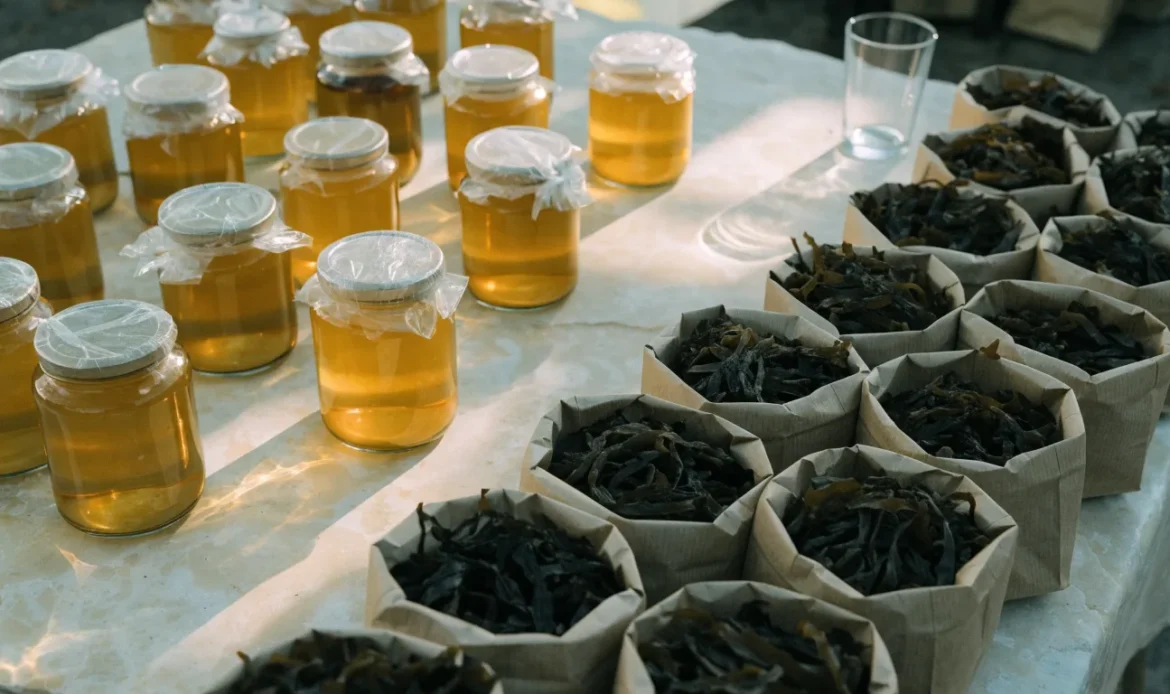
Short answer: To find sea moss within 5 miles, search maps and local listings for “sea moss” or “sea moss near me,” check Caribbean grocers, health food stores, farmers markets, and community groups. Call or message sellers to confirm stock, format (raw, dried, gel, powder), and any lab testing. Use the checklist below before you buy.
This page gives clear steps you can use today. It also shows what you can check and what you cannot prove from a label or photo. If you want deeper help, see our fuller guides in the Learn hub (/learn/) or contact us at Contact (/contact/).
Why this guide
- Many sellers use different names and formats.
- Sea moss varies a lot by how it’s processed.
- Some risks, like iodine content, are real and vary by batch.
- This guide helps you find a local seller and decide if a product fits your needs.
How to look for “sea moss near me within 5 mi” — quick steps
- Open Google Maps, Apple Maps, or Yelp.
- Type “sea moss” or “sea moss near me.” Add your city if needed.
- Set the map view to a 5-mile radius. Zoom to see nearby options.
- Search specific store types: “Caribbean grocery,” “health food store,” “herbal shop,” “farmers market.”
- Check social apps: Facebook Marketplace, Instagram, or local community groups for nearby sellers.
- Call or message sellers. Ask the short questions in the “What to ask sellers” section.
Where to check locally
- Caribbean and West Indian grocery stores. These often stock raw or dried sea moss.
- Natural food stores and co-ops. They may carry forms like dried seaweed, gel, or powder.
- Farmers markets and pop-ups. Local harvesters or makers sometimes sell prepared gel.
- Herbal shops and vitamin stores. Look for packaged or jarred sea moss.
- Online sellers offering local pickup. Some small sellers list pickup zones or delivery windows.
- Community groups. Local groups often share sellers and small producers.
What “within 5 mi” means in practice
- Use the map’s scale. Zoom in until the circle shows roughly 5 miles.
- If a listing shows a city but no address, message them for a precise location or pickup options.
- Mobile apps sometimes filter by distance. Use the app filter if available.
What formats you may find
- Raw/dried sea moss: seaweed strands, either wet or fully dried.
- Sea moss gel: softened and blended sea moss, often stored in jars.
- Powder: dried sea moss ground into powder.
- Capsules or blended supplements: sea moss as an ingredient in a product.
Each format has different handling and storage needs. Ask the seller which format they sell and how they recommend storing it.
How to judge a local seller — what you can check
You can directly check:
- Packaging labels. Look for harvest or pack dates, list of ingredients, and a contact.
- Seller transparency. Do they say where they source the sea moss? Are they willing to answer questions?
- Batch or lot information. A seller who tracks batches can give more precise answers.
- Lab reports or certificates of analysis (COA). If the seller has these, ask to view them.
- How the product looks and smells. Strong fishy odors, visible dirt, or mold are red flags.
- Storage conditions in the shop. Is the product kept cool and sealed?
What you cannot prove by sight or a photo
- Exact harvest location or accuracy of a “wild-harvested” claim unless documented.
- Levels of iodine, heavy metals, or specific contaminants without lab testing.
- How long the product sat between harvest and sale unless dates are shown.
- The identity of the seaweed species unless a seller provides clear testing or species information.
Safety notes and what to ask about iodine
- Iodine content in seaweeds varies a lot by species and location. Some seaweeds can have high iodine. High iodine intake may affect the thyroid for certain people [2][5].
- Ask sellers if they test for iodine or if a COA is available.
- National surveys show seaweed products can vary in iodine content. Reliable testing is the only way to know levels for a specific product [3].
- If you have a thyroid condition or take iodine-sensitive medications, discuss seaweed use with a health professional before buying. We do not give medical advice here.
What the research says (short)
- Seaweed is a widely used food group with many species and uses [1].
- Iodine in seaweed can be both a nutrient and a risk when intake is high [2][5].
- Testing programs have found large variation in iodine levels across products [3].
- Sea moss sold as a supplement may be subject to supplement oversight; check regulation and testing claims [4].
Practical buying tips for sea moss within 5 miles
- Call first. Confirm format, price, and stock before visiting.
- Ask for harvest or pack dates. Fresher is often better for raw or gel products.
- Request any test results. Ask for the lab name, date, and which tests they ran.
- Check packaging. Ingredients should be clear. Avoid vague or empty labels.
- Look at storage. Gel should be refrigerated. Dried sea moss should be clean and dry.
- Compare samples visually. Note color and texture. Different colors don’t guarantee quality, but extreme signs (mold, strong odor) are warning signs.
- If possible, buy small amounts first to evaluate the seller.
Decision checklist — quick table to use before buying
| Item to check | What to look for | Why it matters |
|---|---|---|
| Seller contact | Phone, email, or clear shop address | You can follow up or ask questions later |
| Format | Raw/dried, gel, powder, capsule | Each has different storage and use needs |
| Harvest/pack date | A date or recent batch number | Helps estimate freshness |
| Ingredients label | Only sea moss or clearly listed additives | Know what you are buying |
| Lab report (COA) | Tests shown and lab name | Shows testing for iodine, heavy metals if present |
| Storage on display | Sealed jars, refrigeration for gel | Prevents spoilage |
| Smell and appearance | No mold, no very strong rotten smell | First-line quality check |
| Return policy | Can you return or get a refund? | Reduces buyer risk |
If a seller can’t answer these, consider buying a small amount or choosing another seller.
Questions to ask sellers (short script)
- “Do you have sea moss in stock today? What format is it?”
- “When was this batch harvested or packed?”
- “Do you have a certificate of analysis or lab tests for this batch?”
- “Where is the sea moss sourced from?” (If they give a region, ask for more detail.)
- “How should I store this at home and how long will it last?”
- “Do you offer local pickup or delivery within 5 miles?”
- “What is your return or refund policy if I find a problem?”
What sellers’ answers can and cannot prove
- A COA from a recognized lab can show test results for a batch. Ask for the lab name and date to check authenticity.
- A vendor’s claim about origin or safety is useful but not proof unless backed with documentation.
- Pictures can show appearance but not contaminants or iodine level.
Preparing and storing different formats (basic, safe steps)
- Dried/raw sea moss: Rinse well with fresh water before use. Soak until soft if you plan to make gel.
- Sea moss gel: Keep refrigerated and note the jar’s pack date. Discard if it smells off or shows mold.
- Powder/capsules: Store in a cool, dry place. Check the expiry or best-by date.
We do not give medical advice. If you have health concerns, check with a healthcare provider before changing your diet.
Local vs online: pros and cons
- Local pros: You can inspect product, ask questions, and avoid shipping time.
- Local cons: Smaller sellers may lack lab testing or clear labeling.
- Online pros: Some sellers post COAs and more detail. Wider selection of formats.
- Online cons: Shipping can affect freshness for gel or hydrated product.
Price and value (how to compare)
- Compare like-for-like. Price per unit of the same format helps.
- Factor in freshness, batch documentation, and storage.
- A higher price does not always mean higher safety or testing. Use the checklist above to compare.
Red flags to avoid
- No clear ingredient list or harvest/pack date.
- Seller refuses to answer basic questions about the product.
- Visible mold, very strong rotten odors, or products stored openly in unsanitary conditions.
- Claims of guaranteed health cures or promises about medical results. These are not verifiable and should raise concern.
If you want to test a product yourself
- Ask for a COA first. If none, a paid third-party lab can test for iodine and contaminants, but testing costs money.
- Ask the seller if they have batch numbers so tests match a seller’s claim.
Suggested next questions to refine your choice
- Do I want raw sea moss, gel, or powder for my use?
- Is immediate refrigeration possible after purchase?
- Do I need a COA because of health considerations?
- Is the seller willing to provide a refund if the product is spoiled?
Suggested local search phrases to try
- “Sea moss near me”
- “Sea moss within 5 miles”
- “Caribbean grocery near me sea moss”
- “Sea moss gel near [city name]”
- “Sea moss pickup near me”
Hands-on pickup etiquette
- Bring cash and confirm the price before you go.
- Inspect the seal on packaged goods.
- If buying gel, ask for a cold pack or buy last on your route to keep it cool.
Suggested visual
Create a product-format comparison diagram. Show four columns: Raw/Dried, Gel, Powder, Capsules. Under each, show: typical label fields (harvest date, ingredients, batch number), storage icon (dry jar, fridge, cool dry), buyer checklist ticks (ask for COA, smell/appearance check), and a small “what to ask” callout. Add an annotation that says: “Photos and color are not proof of iodine levels or origin. Request lab reports for chemical testing.”
Where to learn more
- Read general seaweed background and food uses at our Learn hub.
- For step-by-step preparation and recipes, see our Learn hub pages on formats and storage.
- If ready to buy after checking local sellers, browse options at our Shop.
- If you want bulk or regular local delivery options, read wholesale terms at Wholesale.
- Have questions or need help finding a local seller? Contact us or visit our Home.
Frequently asked questions
Will a store name “sea moss” on a label tell me the species?
Not always. Sellers sometimes list “sea moss” without a species name. Species matters for texture and iodine levels. If species is important to you, ask the seller for details or a lab ID.
Can I judge safety by the color of sea moss?
Color gives clues. But color alone cannot prove safety or iodine. Dark or unusual colors can be natural or due to processing. Look for mold, bad smells, or unclear labeling as more reliable red flags.
Should I avoid sea moss if I have a thyroid condition?
Seaweed can contain variable iodine. If you have a thyroid condition, speak with a healthcare provider before using seaweed products. A provider can advise based on your situation and any medications you take [2][5].
Is a lab report the same as a guarantee?
No. A lab report applies to a specific batch tested at a specific time. It is helpful but does not guarantee every jar of the same product has identical levels. Ask for the report date and batch number.
How do I know a COA is real?
Check the lab name, date, and batch number on the COA. Contact the listed lab if you need verification. Reputable sellers will share clear COAs and answers.
What if a local seller only offers gel and I want dried sea moss?
Ask if they sell dried or can recommend where to buy it locally. Some sellers prepare gel from dried sea moss and may sell both or point you to another local shop. Conclusion Finding sea moss within 5 miles is usually possible if you search the right places. Use local maps, Caribbean and natural food stores, markets, and community groups. Call before you go. Ask for harvest and pack dates, labels, and any available lab tests. Visual checks and storage conditions tell you a lot, but testing is needed to confirm iodine or contaminants. Use the checklist here to decide, and ask the targeted questions listed above. For more step-by-step help, see our Learn hub (/learn/) or browse options at our Shop (/shop/). If you need bulk options or regular supply, check Wholesale (/wholesale/) or Contact (/contact/) us for assistance. Return to Home (/) for our latest guides.
What should I check first?
Start with the product or ingredient label, the source information, and whether the seller can answer clear questions.
Is this a replacement for professional advice?
No. Use this article as general education. Ask a qualified professional for personal medical, legal, or food-safety guidance.
Where can I learn more?
Use the Zen Wholesalers Learning Library to compare related guides and choose a useful next question.
References
- [1] Harvard T.H. Chan School of Public Health, “Seaweed.” https://nutritionsource.hsph.harvard.edu/seaweed/
- [2] Smyth PPA. “Iodine, Seaweed, and the Thyroid.” European Thyroid Journal, 2021. https://pmc.ncbi.nlm.nih.gov/articles/PMC8077470/
- [3] Food Standards Australia New Zealand, “Survey of iodine levels in seaweed and seaweed containing products,” updated 2025. https://www.foodstandards.gov.au/science-data/monitoring-safety/surveyofiodinelevels
- [4] Operation Supplement Safety, “Sea Moss in Dietary Supplements.” https://www.opss.org/article/sea-moss-dietary-supplements
- [5] Blikra MJ et al. “Consequences of acute and long-term excessive iodine intake: A literature review focusing on seaweed as a potential dietary iodine source.” 2024. https://doi.org/10.1111/1541-4337.70037