
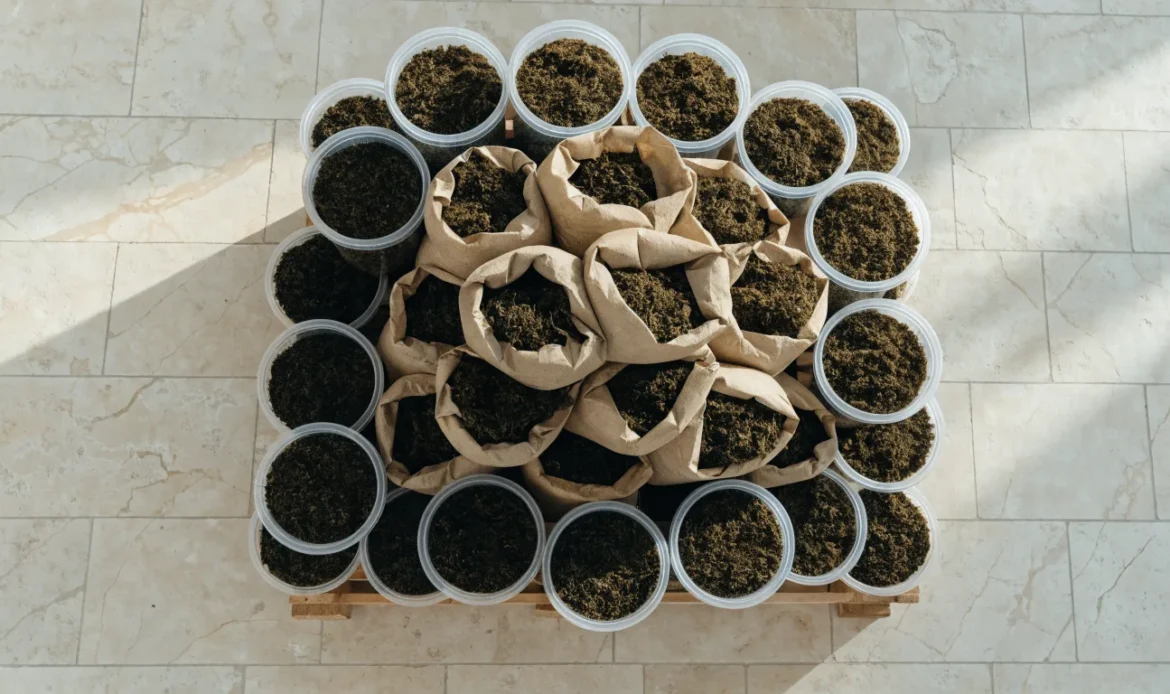
Short answer: A sea moss manufacturer buys, cleans, processes, tests, packages, and ships sea moss products in different formats (raw, gel, powder, capsules). They do not all work the same way. Good manufacturers share sourcing details, lab reports, and clear product labels so buyers can check safety and fit for use.
Why this matters: sea moss products vary a lot in makeup and handling. This guide helps you understand what a manufacturer does, what you can check, and which questions to ask next.
What is a sea moss manufacturer?
A sea moss manufacturer is a company that turns sea moss (a type of seaweed) into products people buy. These products can include dried sea moss, ready-to-eat gel, powders, capsules, and blends. A manufacturer may do one or many steps:
- Source or buy fresh sea moss from harvesters or farms.
- Clean and sort the raw material.
- Dry, grind, cook, or blend the sea moss into a final form.
- Test the product for contaminants, iodine, and microbes.
- Package the product for retail or wholesale sale.
- Ship the product to stores, distributors, or customers.
Manufacturers differ in scale. Some are small and handle every step by hand. Others use larger facilities and machines and sell to big retailers. Knowing the difference helps you pick the right partner or product.
Common sea moss product formats
Manufacturers typically produce several formats. Each format needs different manufacturing steps and storage rules.
- Raw dried sea moss: Sea moss that has been cleaned and air- or low-heat dried. Buyers often rehydrate and use it later.
- Ready-to-use gel: Sea moss soaked and blended with water into a gel. Gel typically needs cool storage and careful handling.
- Powder: Dried sea moss that is milled into a fine powder. Powder is shelf-stable if processed and packaged correctly.
- Capsules or tablets: Powders placed in capsule shells or pressed into tablets for supplement use.
- Blends and mixed products: Sea moss mixed with other ingredients like herbs, fruit powders, or minerals.
Each format affects cost, shelf handling, and testing needs. For example, gels are more perishable and may need refrigeration or preservatives. Powders and dried forms are easier to store at room temperature if moisture and contamination are controlled.
What a buyer should check when evaluating a manufacturer
Buyers should look for clear, verifiable information. Here is what you can ask for and check.
- Source details: Where and how is the sea moss harvested? Is it wild-harvested or farmed? Exact location names can help you follow up, but keep in mind that location alone does not guarantee safety or quality.
- Harvest date and batch ID: A recent harvest date and batch ID let you trace a lot about handling. A batch ID linked to records is useful for recalls or questions.
- Cleaning and processing steps: Ask how the manufacturer cleans the sea moss. Do they use fresh water rinses, multiple rinses, or other steps? How do they dry or process the sea moss?
- Certificates of Analysis (COAs) or lab reports: Ask for lab test results for heavy metals, microbes, and iodine when relevant. Look for tests done by independent labs, not just in-house checks.
- Microbial testing: Check for microbial test results (e.g., total aerobic count, yeast and mold, coliforms). For gels and minimally processed items, microbial testing is important.
- Heavy metals and contaminants: Ask for tests for common contaminants like lead, arsenic, cadmium, and mercury.
- Iodine content: Seaweeds can hold variable levels of iodine. Independent testing for iodine can help consumers avoid unexpectedly high iodine intake (see references) [1][2][5].
- Processing facility standards: Does the facility follow any food safety systems (for example, HACCP or similar)? A stated system is not proof of quality, but it can be a start to ask follow-up questions about practices.
- Packaging and storage: How is the product sealed, and what storage conditions are recommended?
- Shelf-life and storage instructions: For gels and fresh products, ask about refrigeration and recommended use-by timing. For dried or powdered products, ask about moisture control and best-by guidance.
- Traceability: Can the manufacturer show records that tie the finished product to source batches and lab tests?
What you can check directly: batch IDs, COAs, harvest dates, and processing descriptions. What a manufacturer’s documents cannot prove by themselves: whether the harvest zone was consistently free of contamination over time, or the exact conditions at each point in transport unless the company provides continuous records.
Citations: Seaweed composition and iodine variation are discussed by reputable sources, and iodine levels can be high and variable in seaweed products [1][2][5]. Operation Supplement Safety also describes sea moss in dietary supplements and the need for testing [4].
What lab reports can and cannot tell you
Lab reports are useful, but they have limits. Here is a clear view.
What lab reports can tell you:
- The test results for the specific sample tested. This can include levels of heavy metals, iodine, microbes, or other analytes.
- Whether a specific production batch met the lab’s passing criteria at the time of testing.
- The lab methods used and the detection limits.
What lab reports cannot prove:
- Future batches will match the same values unless the manufacturer tests them.
- That testing covered every possible contaminant of concern. Labs test for specific analytes, not everything.
- The full chain of custody unless the report includes batch IDs tied to traceability records.
- That the product will perform a certain way in a consumer (for example, causing or preventing health effects). Lab tests are about composition and contamination, not outcomes.
Practical note: Ask for a recent COA for the exact SKU and batch you plan to buy. If a supplier cannot produce a COA for the product batch, treat that as a red flag.
Regulatory and safety considerations
Rules vary by country and by product format. Some points to keep in mind:
- Products sold as foods are regulated differently than products sold as dietary supplements. Labeling rules, permitted claims, and testing expectations will differ.
- Iodine content is a known safety consideration with seaweeds. Excessive iodine intake can affect thyroid function in some people, so knowing iodine levels in a product matters [2][5].
- Some countries monitor iodine in food products and seaweeds; surveys and guidance on testing exist (for example, national food agencies) [3].
- If you plan to sell a product in a specific market, check the local food and supplement regulations. Manufacturers should be able to say which markets they have certified or registered products for, but you should confirm with regulatory bodies for final authority.
Sources: Health and regulatory literature on seaweed and iodine provides context for why testing is important [1][2][3][5]. Operation Supplement Safety discusses sea moss in the context of dietary supplements [4].
How to compare manufacturers: a practical decision checklist
Use this checklist when you contact a potential manufacturer or supplier. Mark each item as Yes/No/Ask.
| Item to check | Why it matters | Yes / No / Ask |
|---|---|---|
| Source location and method disclosed | Helps with traceability and environmental context | |
| Batch ID and harvest date available | Enables traceability and recall control | |
| Independent COA for heavy metals | Verifies contaminant levels for that batch | |
| Independent COA for iodine (when relevant) | Shows measured iodine levels for that batch | |
| Microbial testing for perishable formats (gel) | Critical for safety of ready-to-eat items | |
| Clear processing steps (cleaning, drying, blending) | Understand how product is handled and risks | |
| Facility food safety system described (HACCP or similar) | Gives insight into quality systems | |
| Packaging and storage instructions given | Needed for correct handling and shelf life | |
| Minimum order quantity and lead time clear | Affects buying and stocking plans | |
| References or customer examples (wholesale) | Indicates business experience (not quality proof) |
Use the checklist to compare two or more manufacturers side by side. If several key items are missing or marked “Ask”, get answers before you commit.
Questions to ask a sea moss manufacturer
When you talk to a supplier, here are practical questions to ask. Ask for documents when possible.
- What is the exact source location and harvest method?
- Can you provide the harvest date and batch ID for this product?
- Do you have COAs for heavy metals and microbial testing for this batch?
- Has the product been tested for iodine? If so, can I see the COA?
- What cleaning and drying methods do you use?
- For gels: what is the recommended storage and shelf life?
- For powders and capsules: what moisture controls do you use in packaging?
- Which independent lab did you use for testing? Can I contact them or see the lab certificate?
- What are your minimum order quantities and lead times for wholesale orders?
- Do you have a written recall or traceability plan?
Get answers in writing. If the supplier is reluctant to share COAs or batch information, that is a sign to push for more transparency or look elsewhere.
Comparing product formats: pros and cons
Here’s a brief, practical table to compare formats. This helps decide what format suits your needs.
| Format | Pros | Cons | Buyer tip |
|---|---|---|---|
| Raw dried sea moss | Long shelf life, lighter shipping | Needs rehydration and cleaning by buyer | Ask about moisture content and drying method |
| Gel | Ready to use | Perishable, needs cool chain and hygiene | Request microbial COAs and storage instructions |
| Powder | Easy to blend and store | May lose some texture properties of fresh gel | Confirm particle size and moisture control |
| Capsules | Convenient dosing and retail-ready | Processing cost higher, added excipients possible | Ask for ingredient list and capsule type |
| Blends | Value-added products with flavors | More ingredients mean more testing needs | Confirm COAs for each active ingredient |
Choose a format based on your supply chain capabilities, storage, and end user needs.
Wholesale vs retail sourcing
If you are buying wholesale to resell, consider these points:
- Minimum order quantities (MOQs): Wholesale buyers typically face MOQs and lead times. Ask before negotiating price.
- Packaging and labeling support: Some manufacturers offer private labeling or custom packaging. Ask about costs, design rules, and lead times.
- Storage and distribution: Think about where you will store perishable items like gels. If you cannot store them correctly, retail-ready dry or powdered formats may be easier.
- Shipping temperature control: Perishable items and gels may need refrigerated shipping. This raises costs and handling needs.
- Payment terms and sample policy: Ask if they provide product samples and what payment terms they accept for first-time orders.
If you are buying retail as a consumer, look for small batch details, COAs, clear labels, and easy-to-find contact info for the manufacturer.
Red flags to watch for
Watch for these warning signs when evaluating a manufacturer or product:
- No batch IDs or harvest dates available.
- Refusal to share independent lab reports for contaminants or microbes.
- Vague answers about source location (e.g., only a country name without region or harbor).
- Claims that sound like cures or guarantees of medical benefit. (Such claims are not appropriate and can be a regulatory red flag.)
- No traceability or unclear supply chain when asked for records.
A clear, transparent supplier will usually supply documents and answer specific questions.
Practical steps for buying safely
- Request a sample batch and its COA before you place a large order.
- Verify the lab name and test dates on COAs; reach out to the lab if you need confirmation.
- For perishable products, confirm shipping methods and expected transit times.
- Store products according to the manufacturer’s instructions. For perishable formats, follow refrigeration and use-by guidance.
- Start with a small order to confirm product consistency before scaling.
Next steps and useful guides
If you want to learn more about seaweed and safety, start with reputable sources that describe nutrient and safety issues for seaweed [1][2]. If you are ready to shop or inquire about wholesale options, contact the supplier directly.
Helpful links:
- Learn more about sea moss and products: Learn
- Browse retail product formats: Shop
- Inquire about bulk and wholesale orders: Wholesale
- Contact the team with specific questions: Contact
- Return to the homepage for general company info: Home
These links lead to practical next steps depending on whether you want more education, to buy a small amount, or to source wholesale.
Conclusion
A sea moss manufacturer is more than a brand name on a jar. They control many steps that affect quality and safety, from source to package. When you evaluate a manufacturer, ask for clear sourcing details, batch IDs, and independent lab reports for contaminants, microbes (for perishable items), and iodine. Use a checklist to compare options. Remember that lab reports apply to the tested sample only, and that good traceability helps you manage risk. Start with samples and COAs before placing larger orders. If you keep questions focused and require written evidence, you will make better buying decisions.
Frequently asked questions
How can I tell if a sea moss manufacturer is legitimate?
Ask for batch IDs, harvest dates, and independent COAs for contaminants and microbes. Check that the facility can describe its cleaning and processing steps. Legitimate manufacturers usually provide clear, written answers.
Do lab tests guarantee product safety?
Lab tests show results for the specific sample tested. They do not guarantee that other batches will match unless the manufacturer tests every batch and shares results.
Should I prefer farmed or wild-harvested sea moss?
Both can be good. Farming can allow more control over conditions. Wild harvests depend on the water quality and harvest practices. Ask the manufacturer for details about harvest methods and testing.
Are sea moss gels safe to ship?
Gels can be shipped safely if the manufacturer uses correct processing, preservatives if any are needed, and refrigerated shipping for long transit. Ask for microbial COAs and shipping guidelines.
What tests are most important for sea moss?
Tests for heavy metals, microbial contamination (especially for perishable products), and iodine are commonly requested. Ask your supplier which tests they run and for results.
Can I use sea moss in supplements?
Sea moss can be used in supplement formats, but the rules vary by market. If you plan to sell supplements, check local regulations and ask the manufacturer for ingredient lists, COAs, and any required registrations.
References
- Harvard T.H. Chan School of Public Health, “Seaweed.” https://nutritionsource.hsph.harvard.edu/seaweed/
- Smyth PPA. “Iodine, Seaweed, and the Thyroid.” European Thyroid Journal, 2021. https://pmc.ncbi.nlm.nih.gov/articles/PMC8077470/
- Food Standards Australia New Zealand, “Survey of iodine levels in seaweed and seaweed containing products,” updated 2025. https://www.foodstandards.gov.au/science-data/monitoring-safety/surveyofiodinelevels
- Operation Supplement Safety, “Sea Moss in Dietary Supplements.” https://www.opss.org/article/sea-moss-dietary-supplements
- Blikra MJ et al. “Consequences of acute and long-term excessive iodine intake: A literature review focusing on seaweed as a potential dietary iodine source.” 2024. https://doi.org/10.1111/1541-4337.70037