
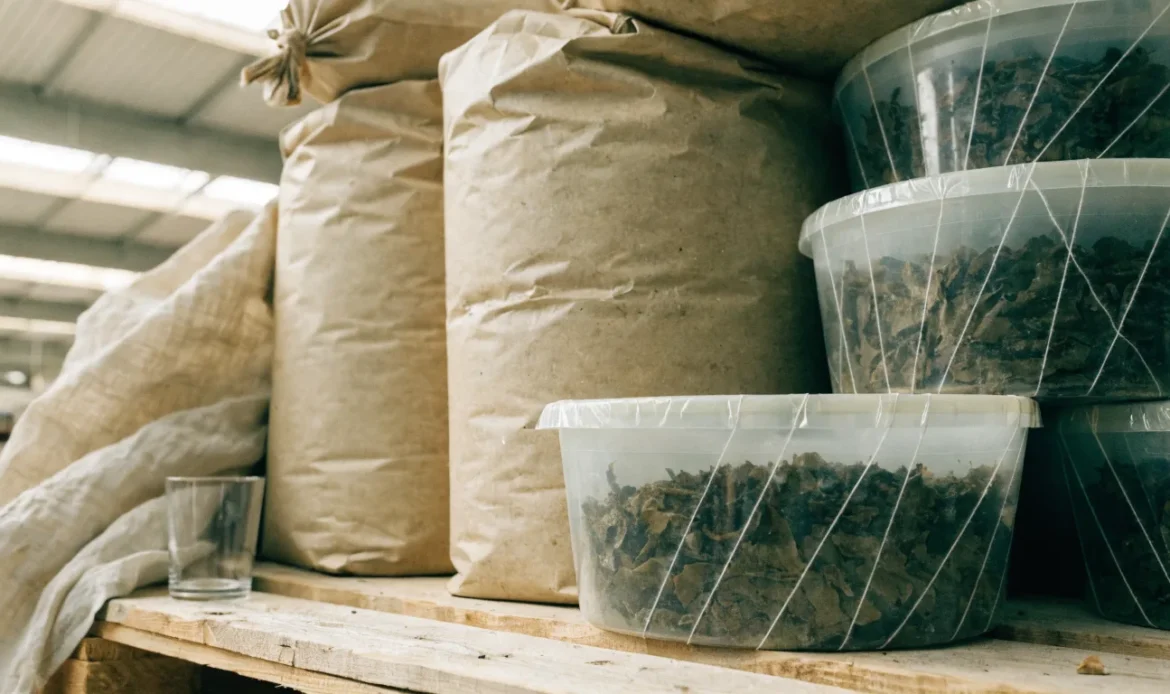
Short answer: To order sea moss, pick the form you want (raw, dried, gel, powder, or capsules). Check the seller’s product details, ask for testing or a certificate of analysis for the specific lot, request a sample if you can, confirm shipping and storage needs, and choose retail or wholesale terms before paying. Below are clear steps, safety checks, and a decision checklist to help you place a smarter order.
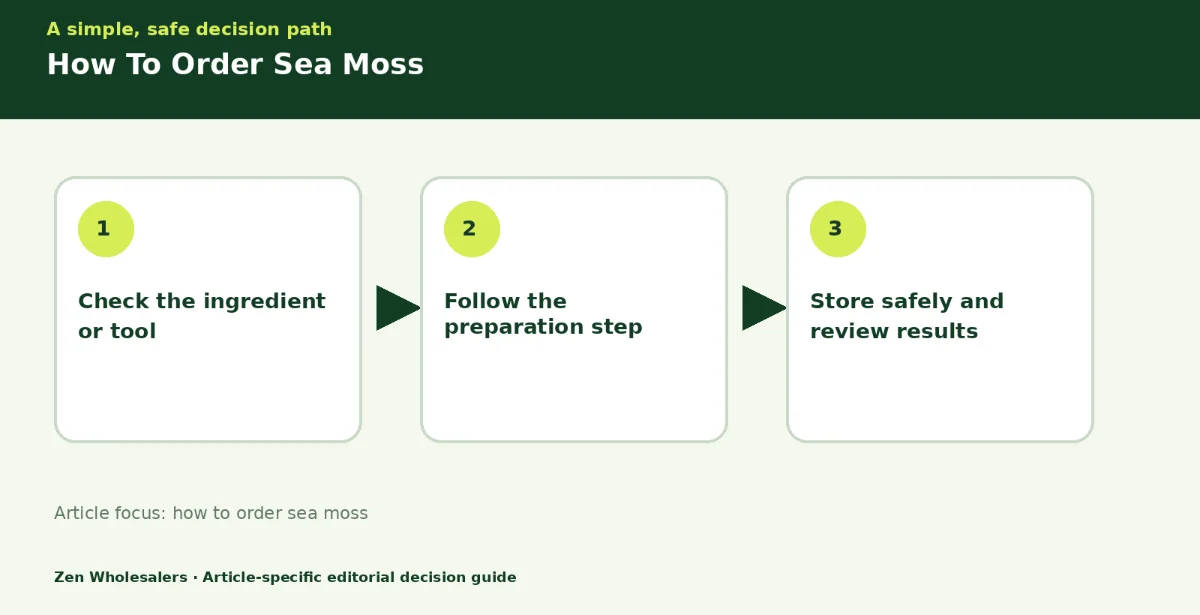
Why this first: many buyers want one clear path. Then they want help making the best choice. This guide gives both.
Step-by-step: how to order sea moss
These steps follow the typical buying path. Use them in order. Pause and ask the seller questions at any step.
- Decide how you will use sea moss
- Will you make gels or smoothies? Consider raw or dried pieces.
- Will you use it in capsules or as a powder? Choose processed or powdered forms.
- Will you resell or use in a business? That affects quantity and whether you need a supplier or wholesaler.
- Choose the form you want
- Raw or dried sea moss: usually whole pieces. Good if you want to make gel or cook.
- Gel: already hydrated and ready to use. Watch storage needs.
- Powder or capsules: convenient and measured. Often processed.
- Each form has trade-offs for shipping, storage, prep time, and shelf handling.
- Decide retail vs wholesale
- Retail orders are usually one-off and smaller.
- Wholesale orders come with minimum order amounts, different pricing, and different shipping rules.
- If you need bulk, ask suppliers about sample packs or small test runs first.
- Check where the product comes from
- Ask for the harvest region or source waters.
- Ask when it was harvested. Freshness and harvest date matter for flavor and handling.
- Know that a country label or a “wild-harvested” claim may need more detail. Ask how and where harvesting happened.
- Inspect product details the seller provides
- Look for the ingredient list and any added items (salt, preservatives, sweeteners).
- Check for storage instructions and recommended use.
- Look for batch or lot numbers. These help track testing or recalls.
- Ask about testing and safety
- Request a Certificate of Analysis (COA) or lab test for the specific lot you will buy.
- Common types of tests to ask for: heavy metals, microbial testing, and iodine content.
- A lab report for one lot is helpful. It does not prove every lot will match. Ask if they test regularly and how often.
- Check the seller’s policies
- Ask about returns or refunds for damaged or poor-quality lots.
- For wholesale, ask about minimum order quantities, lead times, and payment terms.
- Ask whether they will provide a sample or a small trial batch before a large order.
- Confirm shipping and packaging details
- Ask how the sea moss will be packed and whether the seller uses cold packs for gels.
- Check shipping time and carrier options.
- If you live far from the seller, ask how they handle delays.
- Place a small test order first
- Start with a small purchase or sample, if possible.
- Test the item for smell, color, texture, and how it performs in your recipe or product.
- If you plan to resell, test for shelf stability under your storage conditions.
- Inspect on arrival and follow safe prep
- Look for signs of damage, odd odors, or unexpected color. These can indicate problems.
- Rinse and prepare raw or dried sea moss as the seller or a trusted recipe advises.
- Store according to instructions right away.
Where can I order sea moss?
You have several places to look. Each has pros and cons.
- Direct from producers or harvesters
- Pros: clearer info about harvest and handling if the seller is open.
- Cons: may need to buy larger amounts.
- Retail brands and online stores
- Pros: easy checkout and samples available.
- Cons: product detail can be variable. Ask for lab reports if not posted.
- Marketplaces and general e-commerce websites
- Pros: many sellers in one place.
- Cons: quality and claims vary. Read seller reviews and ask questions.
- Local markets or Caribbean shops
- Pros: you can see and smell product before buying.
- Cons: testing info may be limited. Ask about how it was stored.
- Wholesalers
- Pros: better pricing for volume and tailored packing.
- Cons: usually require a minimum order. Ask about samples and COAs.
Whatever place you choose, the core checks remain the same: product form, origin, lot testing, shipping, and storage.
What to check on the product page or label
When you view a product online or in-store, look for:
- Form (raw, dried, gel, powder, capsule).
- Net weight and packaging type.
- Ingredient list: sea moss should be the main ingredient unless labeled as blended.
- Harvest date or lot number.
- Storage instructions and “use by” or “best before” if provided.
- Any lab reports or COAs linked on the page.
- Return policy and contact details.
If the page lacks some items, contact the seller. Sellers who answer clearly are easier to work with.
Safety and testing: what to ask and why
Seaweed can absorb minerals and elements from its environment. This includes iodine and sometimes heavy metals. That is why testing matters.
- Ask for COAs for the specific lot you will buy. A COA shows test values for that lot. It helps reduce uncertainty.
- Ask whether testing covers iodine, heavy metals, and microbes. Different tests check different risks.
- Ask when testing was done and which lab ran the tests.
- Remember a COA covers the tested lot only. It does not guarantee every future lot will match the same values.
Why this matters: iodine and other elements vary by species and region. Some consumers need to monitor iodine intake. Researchers and food-safety groups note variability in iodine levels in seaweed products. If iodine intake is a concern for you, ask the seller for lot-specific iodine data and consult a qualified professional for personal advice [2][3][5].
Sources and guidance:
- Seaweed carries nutrients and minerals, but the levels vary by species and place [1].
- Iodine in seaweed can be high and may be variable [2][5].
- Surveys of iodine in seaweed products show variation across samples [3].
- Regulators and safety groups highlight the need for careful sourcing and testing of seaweed supplements [4].
Questions that are useful to ask a seller
Make a short list and send it in an email or chat:
- Where was this sea moss harvested?
- What is the harvest date or lot number?
- Can you send the Certificate of Analysis for this lot?
- Does the product contain any additives?
- What are the storage and shelf instructions?
- Do you offer small samples or trial packs?
- What is your return or refund policy for damaged or unsatisfactory product?
- For wholesale: what are minimums, lead times, and payment terms?
Get answers in writing. That helps if you need to follow up.
How to store and handle sea moss (general food-safety tips)
Storage needs depend on form. Here are common-sense steps. These are not universal rules for every product.
- Dried sea moss: store in a cool, dry place in a sealed container. Label with the date you opened it.
- Raw/bulk sea moss: follow seller instructions. Some raw sea moss needs refrigeration.
- Gel: usually needs refrigeration and has a shorter usable window once opened. Check the seller’s storage directions.
- Powder and capsules: follow the label. Keep them sealed and dry.
Do not assume a one-size shelf-life. Ask the seller for storage life for the specific product and lot.
When preparing raw or dried sea moss:
- Rinse with fresh water before soaking or cooking.
- Use clean utensils and containers.
- Follow any seller prep advice.
Food-safety note: if you see signs of mold, strange odors, or unusual color change, do not use the product. Contact the seller.
Wholesale buying: extra steps
If you plan to buy sea moss wholesale, add these steps:
- Request sample lots before committing to a large order.
- Ask for pricing tiers, lead times, and bulk packaging options.
- Confirm whether the seller can include lot numbers on packing slips.
- Discuss shipping terms: who pays for freight, insurance, and customs if international.
- Ask about quality control procedures and testing frequency.
- Confirm minimum order quantities and whether they accept purchase orders or require upfront payment.
For a wholesale relationship, build a written agreement with clear terms on returns, testing, and responsibility for shipping damage.
Decision checklist before you click “Buy”
| Check item | Why it matters | Action to take |
|---|---|---|
| Form (raw, gel, powder, capsule) | Affects storage, prep, and use | Choose the form that fits your plan |
| Harvest origin & date | Affects flavor and potential exposure | Ask for region and harvest date |
| Lot number & COA availability | Shows testing for that batch | Request COA for iodine, metals, microbes |
| Ingredient list | Shows additives or blends | Verify “sea moss” is main ingredient |
| Sample availability | Lets you test before bulk buy | Request a sample or trial pack |
| Shipping & packaging | Affects product condition at arrival | Confirm packing and carrier |
| Storage instructions | Need to store correctly on arrival | Follow seller guidance and plan storage |
| Return policy | Important for damaged or bad lots | Read return/ refund policy |
| Wholesale terms (if applicable) | Price, MOQ, lead time | Request written quote and terms |
| Seller contact & responsiveness | Easier to solve issues | Prefer sellers who answer quickly |
Use this checklist as a printed or digital quick guide when you evaluate sellers.
Next guides and useful pages
If you want more detail after ordering:
- Learn more about sea moss and safe use on our learn hub: Sea moss learning resources.
- Ready to buy? Browse product options here: Shop sea moss products.
- Looking to buy in bulk? See wholesale info: Wholesale sea moss.
- Have a specific question or need a custom quote? Contact our team.
- Return to our home page for top navigation: Zen Wholesalers home.
What sellers’ information cannot prove
- A label or photo does not prove the product’s lot testing or consistent quality over time.
- A COA proves test results for one tested lot. It does not prove future lots will have identical results.
- Country of origin or “wild-harvested” claims may lack detail. Ask for harvest location, method, and date for clarity.
- Absence of a COA does not mean the product is unsafe. It does mean there is more uncertainty. Ask the seller to share testing practices.
A smart buyer asks for specific, verifiable details and keeps records of the seller’s responses.
Conclusion
Ordering sea moss is a straightforward process when you follow clear steps. Pick the form you need. Ask for lot-level testing and a COA. Request a sample before buying large amounts. Confirm shipping, storage, and return terms. Keep records and inspect the product on arrival. These steps reduce surprises and help you choose a product that fits your use and safety needs.
For more help, visit our learning hub Sea moss learning resources (/learn/) or see current product options on our shop Browse sea moss products (/shop/). If you need a wholesale quote, check Wholesale sea moss (/wholesale/) or Contact our team (/contact/) for questions.
Frequently asked questions
Where can I order sea moss?
You can order from producers, online retailers, marketplaces, local shops, or wholesalers. Use the checklist above to compare options and ask for lot-specific testing if you are concerned about safety or content.
How can I tell a seller’s product is tested?
A seller who provides a Certificate of Analysis (COA) for the specific lot shows tests were done. Look for lab name, test date, and tested items (iodine, heavy metals, microbes). A COA helps, but it applies to that lot only.
How long will sea moss last?
Shelf life varies by form and processing. Follow storage instructions on the label. Do not rely on generic shelf-life claims. If in doubt, ask the seller for the storage life for that lot.
Should I be worried about iodine or heavy metals?
Seaweed can contain iodine and trace elements. Levels vary widely by species and source. Ask the seller for lot-specific iodine and heavy-metal test results if you have dietary concerns. For general information on seaweed and nutrient variability see expert sources [1][2][3][5].
Can I get a sample before buying a large amount?
Many sellers offer samples or small test quantities. For wholesale orders, ask for a sample lot and a COA before full buy. Never assume the quality of large batches without testing.
What if my order arrives damaged or spoiled?
Contact the seller right away. Keep photos of the package and product. Check the seller’s return policy before ordering so you know the steps to get a refund or replacement.
References
- Harvard T.H. Chan School of Public Health, “Seaweed.” https://nutritionsource.hsph.harvard.edu/seaweed/
- Smyth PPA. “Iodine, Seaweed, and the Thyroid.” European Thyroid Journal, 2021. https://pmc.ncbi.nlm.nih.gov/articles/PMC8077470/
- Food Standards Australia New Zealand, “Survey of iodine levels in seaweed and seaweed containing products,” updated 2025. https://www.foodstandards.gov.au/science-data/monitoring-safety/surveyofiodinelevels
- Operation Supplement Safety, “Sea Moss in Dietary Supplements.” https://www.opss.org/article/sea-moss-dietary-supplements
- Blikra MJ et al. “Consequences of acute and long-term excessive iodine intake: A literature review focusing on seaweed as a potential dietary iodine source.” 2024. https://doi.org/10.1111/1541-4337.70037