
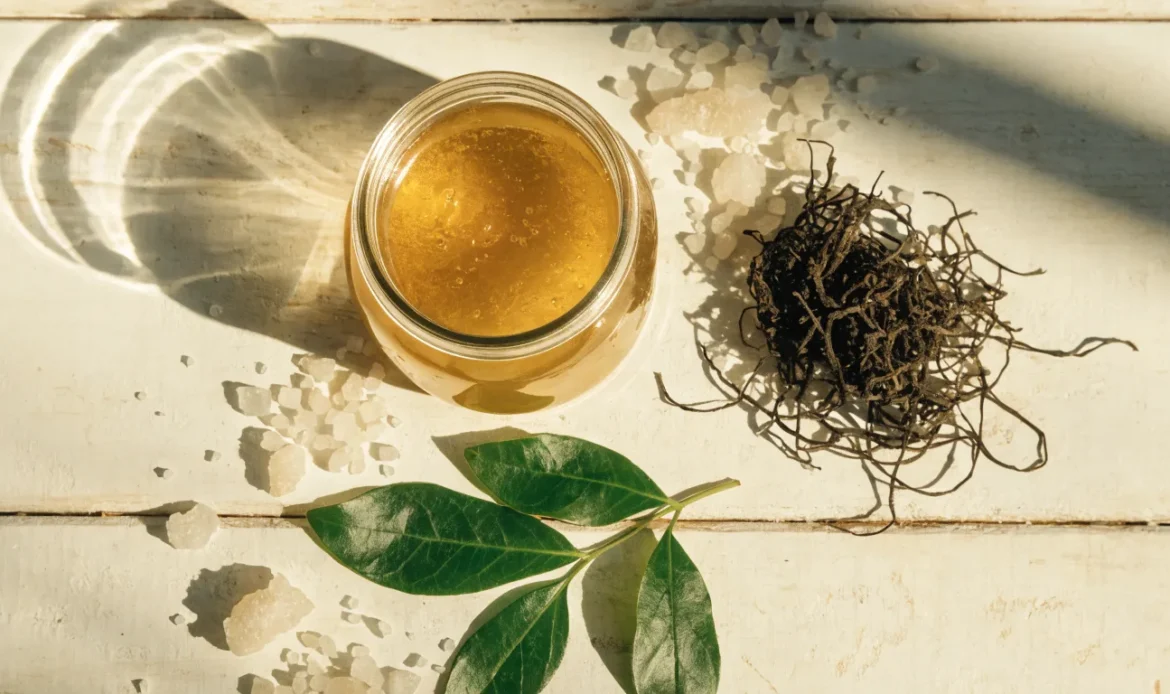
Short answer: “Sea moss paradise” is a phrase people use to describe an ideal sea moss product, a shop that sells many sea moss items, or a place where sea moss grows well. It is not a formal term. Use clear checks to tell a safe, honest product or seller from a vague label.
This guide gives a quick answer first. Then it shows how to check labels, compare formats, and make a practical decision. It also points you to the best next steps.
What “Sea Moss Paradise” can mean
People use the words in different ways. Here are common meanings:
- A catchy product name. Some vendors call a product “Sea Moss Paradise”. That name does not prove quality. Ask for facts behind the name.
- A shop or marketplace that focuses on sea moss. It can be an online store, a local vendor, or a wholesale supplier.
- An idea of an ideal sea moss source or product. This is personal. One buyer’s “paradise” may not be another’s.
Because the phrase is open, always check facts. Look for clear product details. Ask for test results. Check who you buy from.
If you want a quick next step, use this checklist below to check a product label or a seller page.
How to evaluate a “sea moss paradise” product or seller
When you see the phrase, run a small checklist. These checks tell you what the seller shares and what remains unknown. Sharing clear data is a good sign. Vague words and emotional claims are not.
Key things to check:
- Product format: dried, raw, gel, powder, capsule. Each has different handling and shelf needs.
- Species name: the scientific name or a clear common name. It helps if the seller knows the species.
- Harvest or sourcing notes: where and how it was harvested. Look for details, not only country names.
- Lab testing: third-party lab tests for iodine, heavy metals, or microbe counts. Ask for batch or certificate numbers.
- Label details: processing date, best-use guidance, storage, and a list of ingredients.
- Seller contact: a real phone, email, or address. A visible policy on returns or refunds is helpful.
- Transparency on claims: avoid sellers that promise health cures or guaranteed medical effects.
The checklist table below expands these checks. Use it when evaluating product pages or when you contact a seller.
Decision checklist: How to judge a sea moss product or seller
| What to check | Why it matters | How to verify | Red flags |
|---|---|---|---|
| Product format (dried, gel, powder, capsule) | Different formats store and use differently | Look at product photos and label; ask how to store | No format listed or only photos |
| Species name (e.g., Chondrus crispus, Gracilaria) | Helps determine texture and common uses | Seller label or product page | Vague descriptions only |
| Source description (harvest area, wild vs. farmed) | Source affects supply chain and possible contaminants | Detailed origin info on page or ask seller | Only marketing words like “pure” without location |
| Third-party lab testing | Shows measured iodine, contaminants, or other tests | Ask for a COA (certificate of analysis) with batch number | No lab results or internal-only tests |
| Iodine info or warning | Seaweeds can have variable iodine, which matters for intake | Look for iodine range or safe-use guidance; ask for test data | No iodine info at all for edible seaweed |
| Processing and preservative info | Processing affects shelf life and usability | Ingredient list and processing notes | Missing ingredient or processing info |
| Storage instructions | Some formats need refrigeration or freezing | Label and product page should say how to store | No storage or shelf guidance |
| Packaging dates and lot numbers | Helps trace batches if issues arise | Visible on label or available on request | No batch or date info |
| Clear contact and return policy | Shows seller supports buyers | Contact options and return policy on site | No contact method or hidden terms |
| No medical claims | Sea moss is not a guaranteed cure | Look for neutral language | Promises of cures, weight loss, fertility fixes, or detox |
Use this table to score a product. If many red flags appear, step back. Ask the seller for answers. A trustworthy seller answers clearly and quickly.
Common sea moss formats and how to choose
Knowing formats helps you match the product to your needs.
Dried sea moss
- What it is: Sea moss cleaned and dried. Often sold in loose pieces.
- Good for: Long storage and DIY use.
- Check: How it was dried (sun, shade, or machine), storage advice, and any cleaning steps you must do before use.
- Watch out: Little or no information on drying method or origin.
Raw or fresh sea moss
- What it is: Wet or recently harvested, often sold refrigerated.
- Good for: People who want minimal processing.
- Check: Cold chain (how it was kept cold), harvest date, and how fast it must be used.
- Watch out: No cold-chain explanation or no clear use-by date.
Sea moss gel
- What it is: Rehydrated sea moss blended with water into a gel.
- Good for: Easy use in foods and drinks.
- Check: Ingredients list (should be sea moss + water unless other ingredients are listed), storage (refrigerate), and preservative info.
- Watch out: Claims of long unrefrigerated storage or hidden additives.
Powder
- What it is: Dried sea moss ground to a powder.
- Good for: Adding to dry mixes or shakes.
- Check: How the powder was made and stored; particle size can vary.
- Watch out: No info on milling or moisture control.
Capsules or tablets
- What it is: Powdered sea moss or extract in pills.
- Good for: Convenience.
- Check: Supplement facts panel, serving size, and third-party testing. Be aware that supplement regulation varies.
- Watch out: No COA or unclear supplement facts.
For each format, ask how to store, how long it lasts, and whether any additives are present. If you do not get clear answers, choose another seller.
Safety notes: what the science says
Seaweeds vary in their makeup. That includes iodine. Iodine in seaweed can be much higher than in land foods. High iodine can affect the thyroid in some people. The level is not the same in all seaweeds or all batches. That is why testing matters. (See references [1], [2], and [5].)
What the sources say in plain words:
- Seaweeds are a normal food group in many diets. They have useful minerals and fiber. But their mineral content varies with species and place. (Harvard source [1].)
- Iodine levels in seaweed are variable and sometimes high. Excessive iodine intake can cause thyroid changes in some people. This is documented in reviews of iodine and seaweed. (See [2] and [5].)
- Public surveys of seaweed products find wide ranges of iodine. Some national food-safety agencies publish monitoring results. This shows the real-world variability of iodine levels. (See [3].)
- Sea moss sold as a dietary supplement shares the concerns common to supplements. Regulations differ by country. Third-party testing is a useful tool. Organizations that track supplements recommend care with dosage and product sourcing. (See [4].)
What you can check that science cannot prove from a label:
- A label cannot prove that a single serving will be safe for every person. People vary in iodine needs and thyroid health.
- A product page cannot guarantee consistent iodine levels across every batch unless it offers batch test results.
- Labels do not prove that a seller used safe harvest methods unless independent testing or audits are shown.
What to do:
- Ask for a current Certificate of Analysis (COA) for the lot you will buy.
- If you have a health condition or are on thyroid medication, ask your clinician before changing iodine intake. This is not medical advice. It is a basic safety step.
- Favor sellers who share lab tests and lot IDs. That helps you trace and check results.
How to read lab reports and test claims
If a seller provides a lab report, here are simple checks:
- Is the lab third-party and accredited? Accredited labs follow standard methods.
- Does the COA have a batch or lot number that matches the product?
- Are the tests relevant? For sea moss, iodine and basic heavy metal screens are common.
- Does the report show units and limits? The report should clearly show what was measured and the units used.
If the seller cannot share any tests, be cautious. A lack of testing does not always mean a product is unsafe. It does mean there is more uncertainty.
Practical buying steps and a short decision flow
Follow these steps when you see a product called “Sea Moss Paradise” or similar.
- Scan the product page for basic facts: format, species, origin, processing, and storage.
- Look for lab results or a COA link. If missing, ask the seller for one.
- Check the label or product text for batch numbers and dates.
- Review customer service details: phone, email, and returns.
- Compare formats and choose the one that fits your use (dried for DIY, gel for ready use, capsules for convenience).
- If you have thyroid issues or take iodine-sensitive medication, consult a clinician before use.
- If you plan to buy in bulk for resale, ask about wholesale terms and testing for each lot.
If you want help finding a starting guide, our learning pages explain formats and uses in simple steps. See our Learn section: Learn with Zen Wholesalers (/learn/). To browse formats and buy, visit our shop: Shop our sea moss (/shop/). For bulk orders or trade pricing, see our wholesale page: Wholesale (/wholesale/). If you want to ask a direct question, contact us: Contact us (/contact/). You can always return to our home page: Home (/).
Quick comparison: format pros and cons
| Format | Pros | Cons | Best for |
|---|---|---|---|
| Dried | Long storage, lowest processing | Need cleaning and rehydration | DIY and long-term storage |
| Gel | Ready to use, easy to blend | Shorter fridge life | Smoothies and cooking |
| Powder | Easy to add to mixes | May clump; moisture sensitive | Baking or dry mixes |
| Capsule | Convenient dosing | Less flexible for recipes | Quick supplementation |
This table is a simple guide. It does not replace reading each product’s label.
What sellers should tell you (and what they often don’t)
Good sellers will share:
- Species name and clear photos.
- Origin or harvest region and whether it is wild or farmed.
- How product was processed.
- Storage advice and use-by guidance.
- Third-party lab reports for contaminants and iodine, with batch numbers.
Sellers often do not share:
- Complete nutrient profiles for every batch.
- Ongoing monitoring results unless asked.
- Clinical claims or medical guidance (and they should not make them).
If a seller makes medical promises, step back. Those promises are not scientific evidence.
Conclusion
“Sea Moss Paradise” is a flexible phrase. It might mean a product, a vendor, or an idealized source. Because the phrase alone tells you little, use a short checklist each time. Look for clear format information, species name, origin, storage guidance, batch numbers, and third-party lab tests. Pay special attention to iodine information. If a seller shares tests and clear labeling, you reduce uncertainty. If not, ask questions or choose a different product.
Want to learn more or compare formats? Start at our learning hub: Learn with Zen Wholesalers (/learn/). Ready to shop? Visit our store: Shop our sea moss (/shop/). Looking to buy in bulk? See our Wholesale (/wholesale/) options. For questions, please contact us (/contact/). Back to Home (/).
Frequently asked questions
Is “Sea Moss Paradise” a specific product name?
It can be. The phrase is often used as a marketing or product name. The name alone does not prove quality or testing. Check the product details and ask the seller for test data.
How can I tell if sea moss contains too much iodine?
You cannot tell by sight or smell. Ask for a recent, third-party lab test that reports iodine for the batch. If the seller cannot provide one, consider a different product or consult a clinician about safe intake.
Are gel and dried sea moss the same in nutrition?
They come from the same raw material but differ in water content and processing. Processing can change texture and shelf life. Lab tests on the finished product are the best way to compare.
Do supplements with sea moss need special rules?
Dietary supplements are regulated differently from foods. Regulations depend on your country. Third-party testing and clear labels are important when the product is sold as a supplement. See Operation Supplement Safety for general guidance on supplement safety. (Reference [4].)
Can I grow my own sea moss to avoid issues?
Small-scale seaweed culture is possible in some regions, but it requires knowledge of species, water quality, and local rules. Even locally grown seaweed can accumulate minerals and should be tested if used regularly.
What should I do if a product label makes strong health claims?
Be cautious. Health or medical claims about curing or preventing disease are not evidence. Ask the seller for scientific support and lab tests. If the seller cannot supply reliable data, choose another product.
References
- Harvard T.H. Chan School of Public Health, “Seaweed.” https://nutritionsource.hsph.harvard.edu/seaweed/
- Smyth PPA. “Iodine, Seaweed, and the Thyroid.” European Thyroid Journal, 2021. https://pmc.ncbi.nlm.nih.gov/articles/PMC8077470/
- Food Standards Australia New Zealand, “Survey of iodine levels in seaweed and seaweed containing products,” updated 2025. https://www.foodstandards.gov.au/science-data/monitoring-safety/surveyofiodinelevels
- Operation Supplement Safety, “Sea Moss in Dietary Supplements.” https://www.opss.org/article/sea-moss-dietary-supplements
- Blikra MJ et al. “Consequences of acute and long-term excessive iodine intake: A literature review focusing on seaweed as a potential dietary iodine source.” 2024. https://doi.org/10.1111/1541-4337.70037