
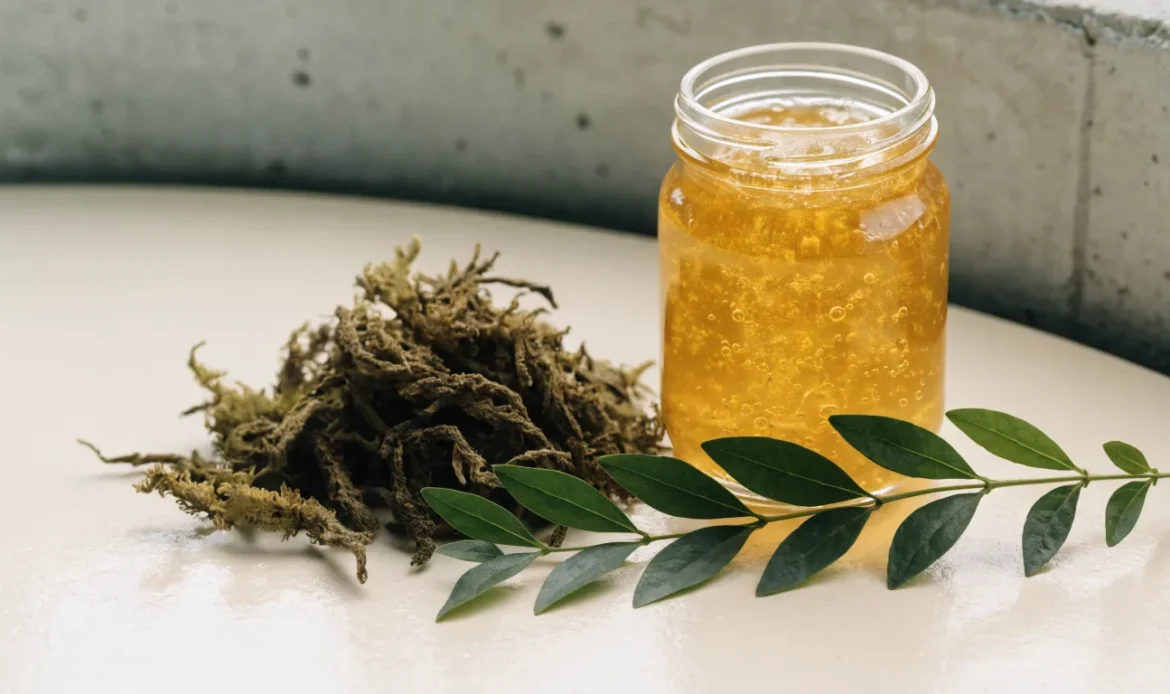
Short answer first: Yes — most people can take sea moss at night. But the best choice depends on the product form, your medicines, and how your body reacts. Read on for clear steps to decide if nighttime use fits you.
What sea moss is, in plain words
Sea moss is a common name for several types of edible seaweed. It is sold as raw seaweed, dried seaweed, gel, powders, and capsules. Each form is handled and used a little differently. Seaweed contains vitamins and minerals. The amount of each nutrient varies a lot by species, where it grew, and how it was processed [1].
Seaweed can be a source of iodine. Iodine levels can be low in some samples and very high in others. That variation matters for people who need to watch iodine in their diet [2][3][5].
Why people take sea moss at night
People choose to take sea moss at night for a few reasons:
- It fits their routine. Nighttime is a calm moment to take a supplement.
- They want to take it with an evening meal.
- They find that certain forms (like gel mixed into yogurt) are easy to eat before bed.
These reasons are practical, not medical. Sea moss is not a sleep drug. There is no reliable evidence that sea moss itself will make you sleep better or worse for most people.
Forms matter: gel, powder, capsule, and raw
How you take sea moss changes how it feels in your body.
- Gel: Often mixed with drinks or food. It is soft and may sit on the stomach for a while.
- Powder: Easy to mix into smoothies or drinks. It dissolves more than raw.
- Capsule/tablet: Measured dose. Takes effect like other pills.
- Raw/dried: Needs soaking or cooking before use.
If you plan to take sea moss at night, pick the form that you sleep best with. For example, if a heavy evening snack upsets your stomach, a capsule may be less bothersome than a full gel serving.
Safety points to check before you take sea moss at night
There are a few safety checks to run first. These are simple and useful.
- Iodine content: Seaweed iodine varies a lot. High iodine can affect the thyroid. If you have thyroid disease or take thyroid medicine, talk to your clinician before taking sea moss. Studies show seaweed can be a strong iodine source for some products [2][5]. Surveys also find wide variation in iodine levels across seaweed products [3].
- Product testing: Ask the seller for lab results if you can. Reputable sellers can often share testing for heavy metals or iodine. Supplements are not all tested the same way [4].
- Other medicines: If you take regular medicine, check with a provider or pharmacist about possible interactions. Seaweed can carry minerals that interfere with certain drugs. If you are on prescription medicines, get specific guidance.
- Pregnancy and children: Special care is advised. Talk with a health provider before giving sea moss to a child or using it while pregnant or breastfeeding.
- Allergies: If you have a seafood or iodine sensitivity, avoid sea moss until you know it is safe for you.
These checks help you decide whether night use is safe for you.
How timing can matter
Here are common timing considerations.
- With food: Many people take sea moss with a meal. This can make it gentler on the stomach.
- With medicines: Some medicines are taken on an empty stomach. Others must be separated from supplements. Ask your prescriber how to time sea moss with your meds.
- Digestion: If you notice stomach upset after sea moss, try a smaller amount or a different form. Some people do better when they take it earlier in the day.
- Sleep: There is no strong evidence that sea moss causes insomnia. If you feel more awake after taking sea moss, try a smaller dose or take it earlier and see if that changes how you sleep.
If you try sea moss at night, do a short test: pick one form, one small serving, and watch for effects over several days.
Practical checklist: Should you take sea moss at night?
Use this checklist to decide. Answer yes or no to each, then follow the guidance.
- Do you take thyroid medicine or have thyroid disease?
- If yes → Talk to your clinician before nighttime use.
- Can you easily find the product’s iodine or lab report?
- If no → Ask the seller. Consider a tested product.
- Does a heavy snack upset your stomach before bed?
- If yes → Choose capsules or small amounts, not large gel servings.
- Do you take medicines that must be taken on an empty stomach?
- If yes → Ask your prescriber whether sea moss can be taken at the same time.
- Are you pregnant, breastfeeding, or giving to a child?
- If yes → Seek advice from a healthcare provider.
- Do you notice any adverse effects (stomach pain, rash, change in sleep) after taking sea moss?
- If yes → Stop and check with a provider.
Decision guide:
- If you answered “yes” to any of the medical caution items (thyroid medicine, pregnancy, child, unknown iodine) — pause and consult a professional before regular night use.
- If your product has test results and you have no medical risks — a small night dose is usually acceptable. Try a trial of a few days and watch for changes.
- If you get stomach upset at night — switch to a different form or take sea moss earlier in the day.
How to start a nighttime routine safely
- Start small. Use a small serving the first night.
- Pick a simple form. Capsules are easiest to measure. Powders or small gel amounts work too.
- Take it with food if you worry about stomach upset.
- Keep a short log. Note time taken, form, and any reactions. Check the log after a week.
- If you notice any unusual symptoms, stop and ask a clinician.
Do not assume that “natural” equals “always safe.” Seaweed nutrients vary. So do contaminants. Good labels and testing help you decide.
Choosing a product to take at night
Ask the seller these plain questions:
- What form is it (gel, powder, capsule, raw)?
- Do you have a lab test for iodine or heavy metals?
- What is the recommended serving and how should it be taken?
- How should the product be stored?
Look for clear answers. If a seller cannot or will not answer basic questions, consider a different source. Operation Supplement Safety notes that sea moss products are sold in many formats and that consumers should check labels and testing where possible [4].
Storage and preparation basics
- Raw or gel forms often need refrigeration. Check the label.
- Powders and capsules usually keep at room temperature if sealed and dry.
- Follow package directions. If you prepare gel at home, keep it refrigerated and follow safe food practices.
Do not leave prepared seaweed gel out for long periods. Treat it like a perishable food.
What the science says (short)
- Seaweed can provide minerals, including iodine, but levels vary greatly by product and species [1][2].
- High iodine intake can cause thyroid changes in some people. This is why iodine content matters [2][5].
- Surveys find that iodine levels across products vary a lot, which makes testing or clear labeling important [3].
- Supplement safety groups recommend checking labels and lab reports when possible [4].
These findings explain why checking iodine and product testing is a good step, especially if you have thyroid concerns.
Common night-use scenarios and practical tips
- If you take sea moss in a drink before bed: use a small amount. Some gels are thick and feel heavy on the stomach.
- If you take a capsule at night: this is simple and tidy. It may be a better choice if you do not want to eat before bed.
- If your schedule includes many medicines at night: create a pill chart and ask your pharmacist where sea moss fits.
- If you are trying it for the first time: do not combine with many other new supplements on the same night. Try one change at a time.
Useful next guides and links
- Learn more about sea moss basics on our learning hub: /learn/
- See the sea moss formats we offer: /shop/
- Interested in bulk or resale? Visit our wholesale info: /wholesale/
- If you have a specific product question, contact us: /contact/
- Back to our home page for general info: /
Conclusion
Yes, you can usually take sea moss at night. The main questions are what form you use, whether the product is tested, and whether you have personal health issues like thyroid disease or medicine interactions. Start small. Check labels and ask sellers for lab results if you can. If in doubt, get advice from a clinician. These steps will help you decide if nighttime sea moss fits your routine.
Continue reading
Frequently asked questions
Can sea moss keep me awake if I take it at night?
Most people do not report waking up from sea moss. There is no strong evidence that sea moss is a stimulant. If you feel more awake after taking it, try a smaller amount or take it earlier.
Will sea moss upset my stomach before bed?
It can, for some people. Gels can feel heavy. If you have stomach sensitivity, try a capsule or a smaller serving. Taking sea moss with food can help.
Should I avoid sea moss if I have thyroid problems?
Not automatically, but be cautious. Seaweed can contain high iodine in some products, and iodine can affect the thyroid. Talk to your clinician and check product iodine information [2][5].
Is there a best form of sea moss for nighttime?
No single best form fits everyone. Capsules are easy and tidy. Powders mix well into drinks. Gels can feel heavy. Choose what fits your stomach and habits.
How can I check iodine and safety for a product?
Ask the seller for lab results or a certificate of analysis that lists iodine and tests for contaminants. If a seller cannot provide clear information, consider another product [4][3].
Can children take sea moss at night?
Consult a pediatrician first. Children have different nutritional needs and may be more sensitive to iodine levels.
References
- [1] Harvard T.H. Chan School of Public Health, “Seaweed.” https://nutritionsource.hsph.harvard.edu/seaweed/
- [2] Smyth PPA. “Iodine, Seaweed, and the Thyroid.” European Thyroid Journal, 2021. https://pmc.ncbi.nlm.nih.gov/articles/PMC8077470/
- [3] Food Standards Australia New Zealand, “Survey of iodine levels in seaweed and seaweed containing products,” updated 2025. https://www.foodstandards.gov.au/science-data/monitoring-safety/surveyofiodinelevels
- [4] Operation Supplement Safety, “Sea Moss in Dietary Supplements.” https://www.opss.org/article/sea-moss-dietary-supplements
- [5] Blikra MJ et al. “Consequences of acute and long-term excessive iodine intake: A literature review focusing on seaweed as a potential dietary iodine source.” 2024. https://doi.org/10.1111/1541-4337.70037