
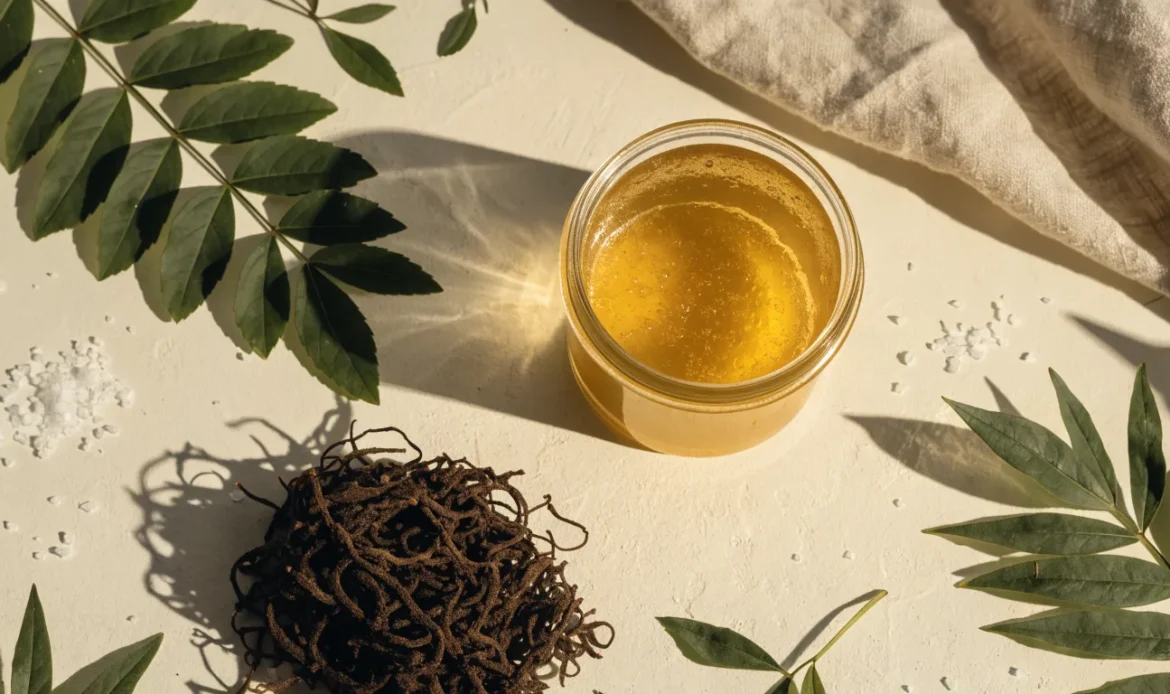
Short answer: The best way to take sea moss depends on what you want and what risks you accept. Common, practical options are sea moss gel for smoothies and cooking, dried sea moss you soak and blend, or capsules/powder for convenience. Before you decide, check the product’s testing, ask about iodine, and talk with a clinician if you take thyroid medicine.
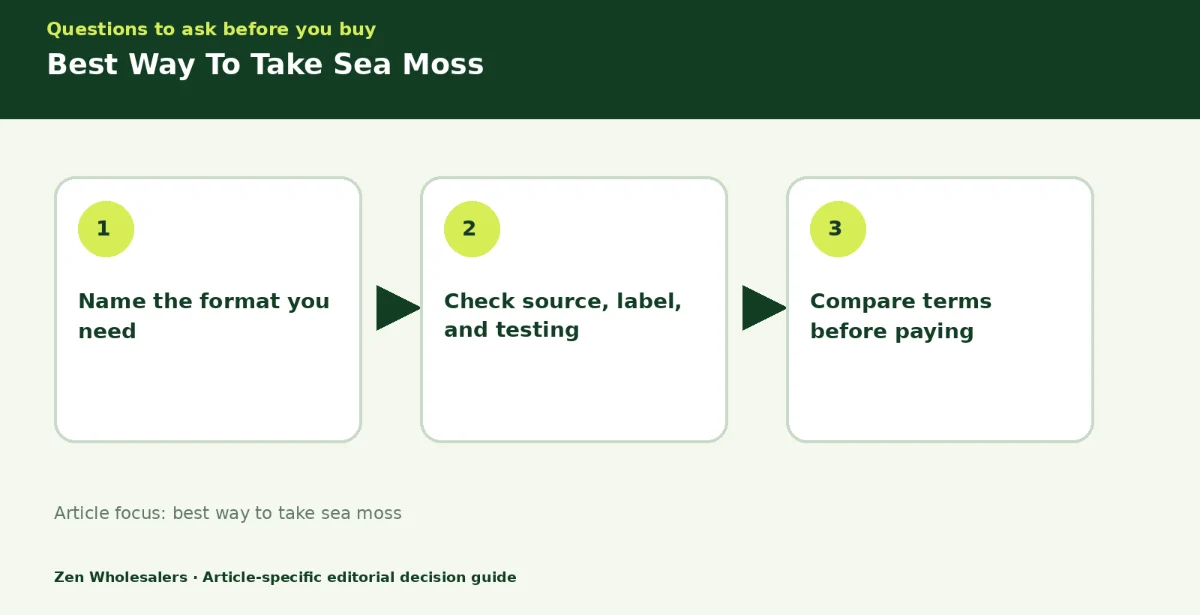
This article gives a clear first answer, then step-by-step choices, a checklist to shop safely, and next steps so you can pick the right form.
Why “best” depends on you
Sea moss comes in several forms. Each form fits different goals:
- If you want to cook with it or add it to drinks, gel or rehydrated dried sea moss usually works well.
- If you want quick convenience or no taste, capsules or powders fit better.
- If you buy a lot for resale or a business, ask for lab documents and bulk handling details.
Which form is “best” also depends on safety checks. Seaweed products can vary a lot in iodine and other minerals. That means one product may be safe for some people and not for others. Sources and processing matter. Reliable testing helps reduce risk. (See References [1], [2], [3], [4], [5].)
Common sea moss forms and how people use them
Here are the main product types. Each entry explains what it is, simple use, pros, cons, and safety notes.
Sea moss gel (ready-to-use)
- What it is: Rehydrated sea moss blended with water into a thick gel.
- How people use it: Stir into smoothies, soups, or sauces. Some use small amounts in recipes.
- Pros: Easy to add to drinks and recipes. No blending needed at point of use.
- Cons: Fresh gels may need refrigeration and careful handling. Quality and added ingredients vary.
- Safety notes: Ask the seller for testing or processing details. If labels list added sugars or other ingredients, note them.
Dried sea moss (raw, to soak and blend)
- What it is: Whole or broken dried sea moss pieces sold in bags.
- How people use it: Rinse, soak in water to rehydrate, then blend into a gel if desired.
- Pros: Long storage before opening. You control the prep and water used.
- Cons: Requires cleaning and soaking. Prep time is longer than just using a gel or capsule.
- Safety notes: Rinse and inspect visually. Ask where and how it was harvested and processed.
Powdered sea moss (dehydrated, ground)
- What it is: Dried sea moss milled into a powder.
- How people use it: Mix into drinks, baking, or capsules.
- Pros: Easy to measure. Good for adding to recipes without changing texture much.
- Cons: Processing can concentrate minerals. Check for testing on iodine and heavy metals.
- Safety notes: Ask for lab results for iodine and contaminants.
Capsules and tablets
- What it is: Powdered sea moss packed into pills.
- How people use it: Swallowed like other supplements.
- Pros: Convenient and taste-free.
- Cons: Less control over dose and ingredient purity. You rely on the maker for testing and label accuracy.
- Safety notes: Prefer brands that share third-party testing or certificates of analysis (COA).
Blended or combined supplements
- What it is: Sea moss added to other herbs or nutrients.
- How people use it: Taken as a multi-ingredient product.
- Pros: May be convenient if you want multiple ingredients.
- Cons: Harder to know how much sea moss you get. Interactions between ingredients are possible.
- Safety notes: Check the full ingredient list and request testing for the final product.
How to make simple sea moss gel (practical steps)
This is a common household method. It explains the basic process. Do not assume shelf-life; follow vendor guidance and store products cold when instructed.
- Inspect dried sea moss for debris, strong off smells, or mold. If you see mold or a bad odor, discard it.
- Rinse under clean water to remove sand, small particles, or salt.
- Soak in fresh, cool water until rehydrated and softened. Change the soak water if it gets cloudy.
- Drain and rinse again.
- Blend the rehydrated sea moss with clean water. Blend until smooth. Adjust water for a thicker or thinner gel.
- Place the gel in a clean container. Refrigerate if the maker recommends it.
- If you notice a sour smell, mold, or an odd texture, discard the batch.
This method keeps you in control of the preparation. It does not remove the need to check for contaminants in the original dried sea moss.
Safety checks before you take sea moss
Use this checklist before you buy or consume any sea moss product.
- Check for documented testing. Prefer sellers who provide a Certificate of Analysis (COA) or lab reports for heavy metals, microbes, and iodine.
- Ask specifically about iodine testing. Iodine in seaweed can vary widely and affect thyroid function. References explain iodine variability and potential effects. [1] [2] [3] [5]
- Verify harvest and processing details. Where and how seaweed was harvested, dried, and processed affects risk.
- Look for clear ingredient lists. Watch for added sugars, fillers, or other herbs.
- Consider your medications and health conditions. If you take thyroid medication or have thyroid disease, talk with your clinician before using sea moss. Medical advice should come from a health professional. [2] [4]
- Start small. If you try a new product, use a small amount at first and watch for reactions.
- Check for allergens. Seaweed and any added ingredients could cause an allergic response in some people.
- Prefer third-party testing or testing by independent labs. In-house tests alone may be less transparent.
- Ask how the product is stored and shipped. Improper storage can affect safety.
These checks reduce risk but do not guarantee safety. Testing only represents the samples tested. Results can differ between harvests and batches.
Decision guide: Which form to pick?
Use this quick guide to match your goal with a product form. This is practical, not medical advice.
| Your goal | Recommended form | Why | Key checks |
|---|---|---|---|
| Add to smoothies or soups daily | Sea moss gel or homemade gel from dried | Easy to mix and control texture | Ask about processing; check for added ingredients |
| Minimal prep, travel-friendly | Capsules or tablets | Convenient, no prep | Check COA, label for fillers, and iodine testing |
| Bake or cook with consistent dry weight | Powder | Easy to measure into recipes | Ask about concentration and tests |
| Bulk buying for resale or food service | Dried bulk or bulk gel with COAs | Easier storage and control | Request batch testing, COAs, and handling docs |
| Want to try small amount first | Single-serve gel or small capsule bottle | Low cost to sample | Check return policy and batch testing |
This table helps you weigh convenience against control and safety.
How to read product claims and labels
Labels can include helpful facts, but they can also omit important details.
- “Wild-harvested” or similar terms say little about safety on their own. Ask for testing.
- “Organic” relates to agricultural standards and may not cover marine testing. If a seller uses “organic,” ask which authority issued the certification and which parts of the process it covers.
- “Natural” is not a safety guarantee. It is not a substitute for lab testing.
- If a label lists iodine or mineral content, ask whether that number is the average, a maximum, or based on a single test run.
- If a seller provides a lab report, look for test date, sample identification, and the lab name. If a report lacks these, ask for clearer documentation.
Remember: Labels and marketing can help, but lab tests are the clearer proof of what’s in the product.
What we know and what we can’t prove from a label
What you can check:
- Whether the product has been tested for heavy metals, microbes, and iodine.
- If the seller provides a COA or lab report and the report date.
- Ingredient lists and obvious additives.
What labels often cannot prove:
- That every batch has the same iodine level or contaminant levels. Iodine and other minerals can vary by harvest and season. [1] [2] [3] [5]
- That a product is free of contaminants unless recent, batch-specific tests are shown.
- Long-term safety for an individual. Health effects depend on a person’s medicines, health conditions, and total iodine from all foods and supplements.
As a buyer, the next useful question is: “Can you share a recent Certificate of Analysis for the exact batch I will receive?” A batch-specific COA is the most helpful document a vendor can give.
Practical tips for buying and storing
Buying:
- Ask the seller for test reports and batch details before buying in bulk.
- If you plan to use sea moss with clients or for food service, request food-safety records and handling instructions.
- If you see vague or missing testing information, ask direct questions or consider another seller.
Storing:
- Follow vendor guidance for storage.
- If making gel at home, use clean equipment and clean hands or utensils.
- Discard products or homemade batches that show visible spoilage or odd odors.
How to start if you are new to sea moss
- Choose a small amount or sample product.
- Confirm the seller provides test information or clear sourcing and processing details.
- Prepare the product as instructed or follow the simple gel steps above.
- Use a small serving the first few times.
- Watch for any allergic reactions or digestive changes.
- If you take thyroid medicine or have thyroid disease, speak with your clinician first. [2] [4]
Next steps and useful links
If you want to learn more about seaweed safety and nutrition, see our learning hub: Learn more (/learn/).
If you’re ready to view product options, visit our store: Shop sea moss (/shop/).
If you plan to buy in larger quantities, see wholesale information and requirements: Wholesale (/wholesale/).
For direct questions about testing, sourcing, or bulk orders, contact our team: Contact us (/contact/).
Return to our homepage for general info: Zen Wholesalers (/).
Conclusion
The best way to take sea moss depends on your goals, your need for convenience, and how much risk you are willing to accept. Sea moss gel, dried sea moss you rehydrate, powders, and capsules each have trade-offs. The most important step is to check for testing—especially for iodine—and to consult a clinician if you have thyroid issues or other health concerns. Ask sellers for batch-specific lab results and clear processing details. With the right checks, you can choose a form that fits your routine and gives you the control you want.
Frequently asked questions
Is sea moss safe for people with thyroid conditions?
Seaweed can contain variable iodine. That can affect thyroid function in some people. If you have thyroid disease or take thyroid medicine, speak with your clinician before using sea moss. Ask the seller for iodine testing for the batch you plan to use. [2] [5]
Can I make sea moss gel at home?
Yes. Rinse and soak dried sea moss, then blend with clean water. Store homemade gel according to safe food-handling practices and follow your seller’s guidance. Discard if it shows signs of spoilage.
Are capsules as good as fresh gel?
Capsules are more convenient but give you less control over dose and ingredient quality. With capsules, you rely on the maker’s testing and labeling. Ask for COAs and batch test details.
How do I check a seller’s test reports?
Look for lab name, test date, sample ID, and results for heavy metals, microbes, and iodine. If the report lacks these, ask the seller for clearer documentation.
Can children or pregnant people take sea moss?
Because iodine and minerals vary in seaweed, people who are pregnant, breastfeeding, or caring for children should consult a clinician before using sea moss. A clinician can review total iodine intake and offer personalized guidance. [1] [2]
What does a Certificate of Analysis (COA) show?
A COA lists lab tests run on a sample. Useful COAs show test dates, the lab name, and measured levels for things like heavy metals and iodine. Batch-specific COAs are more useful than generic statements.
References
- Harvard T.H. Chan School of Public Health, “Seaweed.” https://nutritionsource.hsph.harvard.edu/seaweed/
- Smyth PPA. “Iodine, Seaweed, and the Thyroid.” European Thyroid Journal, 2021. https://pmc.ncbi.nlm.nih.gov/articles/PMC8077470/
- Food Standards Australia New Zealand, “Survey of iodine levels in seaweed and seaweed containing products,” updated 2025. https://www.foodstandards.gov.au/science-data/monitoring-safety/surveyofiodinelevels
- Operation Supplement Safety, “Sea Moss in Dietary Supplements.” https://www.opss.org/article/sea-moss-dietary-supplements
- Blikra MJ et al. “Consequences of acute and long-term excessive iodine intake: A literature review focusing on seaweed as a potential dietary iodine source.” 2024. https://doi.org/10.1111/1541-4337.70037