
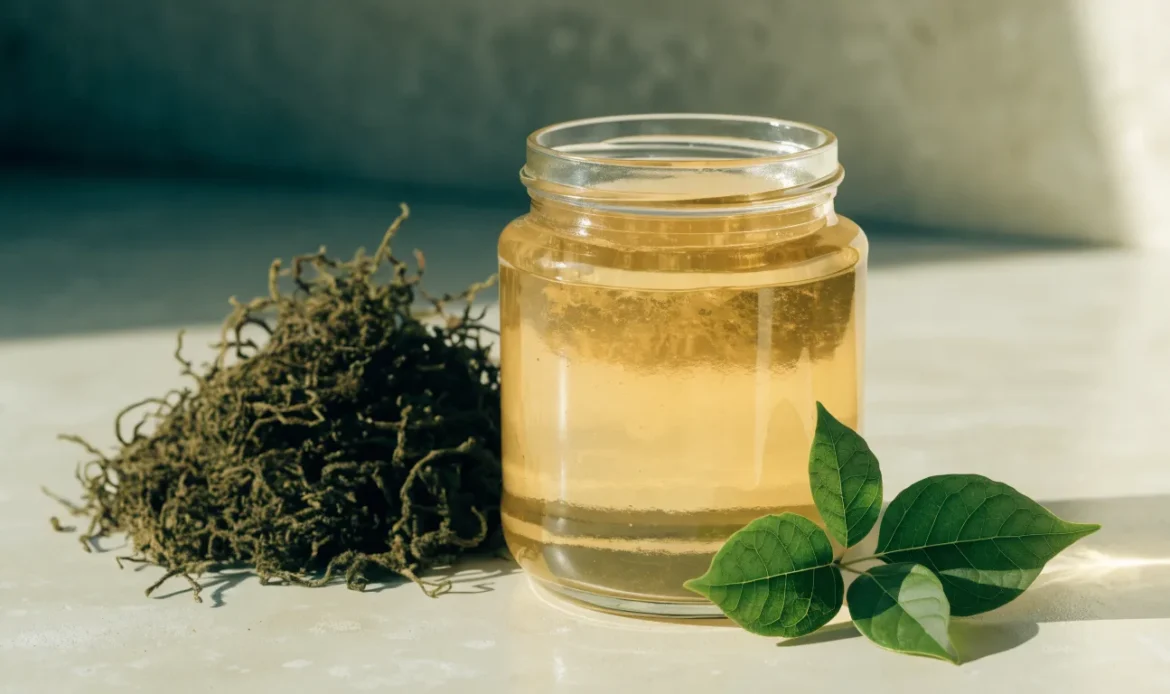
Short answer: It depends. Some people notice small changes in days. Other changes take weeks or months. Which changes appear, and how fast, depends on the sea moss form you use, your diet, your health, and product quality. Scientific studies on timing are limited. Below is a clear guide to what “working” can mean, what affects timing, and how to choose and check products.
What “start working” can mean
People use “working” in different ways. Be clear about what you expect.
- Feeling different day-to-day. Some people say they feel more energy, less bloating, or small skin changes. These reports are mostly personal experiences. They do not prove cause and effect.
- Short-term digestion changes. Seaweed contains fibers and polysaccharides that can change digestion. That may show up in hours to days.
- Changes in lab measures or nutrient status. If you are tracking a mineral like iodine, a lab test is needed. That usually takes weeks or months to change.
- No change. Many people notice no clear effect at all.
Seaweed is a source of minerals and fiber. It is not a drug. Scientific evidence on seaweed and health is still growing [1]. That means we cannot say exactly when specific benefits will appear for any person.
How sea moss might interact with the body (simple view)
Sea moss is a form of seaweed. Seaweed contains minerals and fibers that the body can use. Here are key points:
- Minerals and iodine: Seaweed can supply minerals, including iodine. Iodine affects the thyroid. People with thyroid conditions should be careful and talk to a clinician [2,5].
- Fibers and polysaccharides: These compounds can change how your gut feels. They may affect stool consistency and digestion. Different fibers act in different ways [1].
- Product variability: Sea moss products vary a lot. Some are whole dried seaweed. Others are made into gel, powders, or capsules. Nutrient content can differ by product and source. Tests show iodine and other mineral levels vary across seaweed products [3,5].
- Supplements and regulation: Sea moss sold as a dietary supplement may have variable content and labeling. Check whether a product shows testing, batch info, or a certificate of analysis [4].
These points show why timing will vary. How fast you feel a change depends on which body process is affected and how concentrated the product is.
Key factors that change how fast sea moss may affect you
Below are the main things that speed up or slow down effects.
Form of the product
- Dried seaweed, raw, gel, capsule, or powder each behave differently.
- A gel is pre-hydrated and may act differently in the gut than dried flakes.
- Capsules may be concentrated but can vary in how much actual sea moss they contain. Check labels and third-party testing where available [4].
Dose and concentration
- Higher intake of a product can mean faster change. But higher is not always safer. Do not increase dose without care.
- Supplements do not always list exact amounts of active components. Look for clear labels and test results [4].
Baseline nutrient status
- If you are low in a mineral that sea moss provides, you might notice a change sooner.
- If your levels are already adequate, added sea moss may not show a clear effect.
Diet and gut microbiome
- Your regular diet and gut bacteria influence how seaweed compounds are broken down.
- Foods rich in fiber and fermented foods can change how you respond.
Health status and medication
- Thyroid disease, pregnancy, breastfeeding, and some medicines change how the body reacts to iodine or minerals. Talk to a clinician first [2,5].
Product quality and testing
- Iodine and other minerals can vary greatly between products and batches [3].
- Products tested for contaminants and labeled clearly give you more to judge.
Age, metabolism, and sleep
- Age and general health change how fast nutrients act. Better sleep and hydration help your body process foods and supplements.
Because of these factors, two people using the same jar of sea moss can report very different timelines.
A careful look at typical timelines (what people report, with caution)
There are no firm scientific timelines that apply to everyone. Still, people tend to describe a few rough patterns. Use these only as a general map.
- Immediate to a few days
- Taste and texture changes. You will notice these right away.
- Mild digestive changes. Some people notice changes in digestion within a day or two.
- Skin feel or hydration claims are anecdotal and vary.
- A few weeks
- Small changes in energy or routine symptoms might emerge in a few weeks.
- If a seaweed product affects iodine intake, a clinician might measure lab changes after a few weeks to months. Discuss testing with your provider first [2,5].
- Months
- Meaningful shifts in nutrient status, lab values, or long-term thyroid function are measured over months.
- Long-term patterns of use and diet matter most for lasting changes.
These ranges are broad. They are not promises. They are not a substitute for medical testing.
How long is sea moss good for?
“How long is sea moss good for” depends on the product and how you store it. There is no single rule that covers all forms and brands.
- Dried seaweed tends to keep longer than hydrated gel, but exact times vary by processing and packaging.
- Sea moss gel is hydrated. It usually needs refrigeration. How long it remains usable depends on how it was made and stored.
- Powder and capsules can behave differently based on fillers and sealing.
Always follow the product label and vendor instructions. If the product smells off, shows mold, or looks very different in color or texture, do not use it. For safety questions, ask the seller or a food safety expert.
Practical checklist before you start sea moss
Use this checklist to make a better start. Check each item before use.
- Know your goal: Are you aiming for a dietary source of minerals, a cooking ingredient, or a supplement?
- Check the product label: Look for clear ingredient lists and batch or test information.
- Ask about testing: If you are worried about iodine or contaminants, ask the seller for test results or a certificate of analysis.
- Review health conditions: If you have thyroid disease, are pregnant, breastfeeding, or on medication, consult your clinician first [2,5].
- Start low and observe: Try a small amount and watch for changes or side effects.
- Keep a log: Record what you took, how much, and any changes in symptoms or digestion.
- Consider lab tests: For concerns about iodine or thyroid function, ask a clinician about testing before and after adding seaweed to your diet.
- Store as directed: Follow the product storage instructions on the label.
- Stop if you have adverse effects: If you have new symptoms, stop use and contact a clinician.
This checklist is practical. It does not make health promises. It helps you collect the facts you need.
Decision guide: Which form of sea moss might match your goal
Below is a simple decision guide. It helps you pick a form based on what you want to do. This guide points you to what to check. It does not claim one form is always better.
- Goal: Cooking or adding to recipes
- Form: Dried seaweed or whole pieces
- What to check: Instructions for rehydration, salt or additives
- Goal: Convenience and daily routine
- Form: Powder or capsules
- What to check: Ingredient list, serving size, lab testing info
- Goal: Versatile kitchen use (smoothies, creams)
- Form: Sea moss gel
- What to check: Freshness, storage instructions, batch date
- Goal: Precise nutrient intake or medical monitoring
- Form: Look for products with verified lab data
- What to check: Certificate of analysis, iodine content if relevant, consult clinician
- Goal: Buying for business or large use
- Form: Bulk dried or wholesale gel
- What to check: Supplier testing, shipping conditions, storage plan
Use the guide to decide what questions to ask the seller. Always ask for a product label and any testing data the supplier can provide.
Safety notes and special cautions
Sea moss can be a food ingredient. But it also carries some special points to watch.
- Iodine and thyroid: Seaweed can contain iodine. For people with thyroid disease or on thyroid medicine, adding iodine can change your medication needs. Talk with a clinician about testing and monitoring [2,5].
- Variability and contaminants: Mineral and iodine levels are not the same across all seaweed. Testing and quality control vary by product [3,5]. Ask sellers for testing when you need it.
- Supplements are variable: Products marketed as supplements may not match label claims. Look for trusted testing or third-party checks [4].
- Pregnancy and breastfeeding: Because iodine affects the thyroid, speak with your clinician if you are pregnant or breastfeeding [2].
- Allergies and reactions: As with any food, watch for allergic reactions. Stop use and get help if you have hives, swelling, or difficulty breathing.
- Drug interactions: If you take medicine, ask a clinician about interactions. This is especially important for thyroid medicines.
These notes help you decide whether to add sea moss and how to monitor use.
How to tell if a product is well-made
Here are things to look for when you shop.
- Clear label with ingredient list.
- Batch or lot numbers and a date.
- Information about source and processing (but remember source claims can be vague).
- Third-party test results or a certificate of analysis for minerals and contaminants.
- Storage and preparation instructions.
- A seller who answers questions and provides testing on request.
No single item guarantees quality. But putting these checks together reduces uncertainty.
Next steps and links
If you want to learn more or shop with clear questions, these pages can help:
- Learn more about sea moss basics: /learn/
- Explore product options and check labels: /shop/
- For bulk or wholesale purchases: /wholesale/
- Contact our team to ask about testing or storage: /contact/
- Return to our home page for general info: /
Conclusion
There is no single answer to “how long does it take for sea moss to start working in your body.” Timing depends on the effect you expect, the form you use, your own health, and product quality. Some changes may appear in days. Nutrient and lab changes usually take weeks or months. Use the practical checklist above before you start. If you have thyroid issues, are pregnant, or take medicine, ask a clinician and consider testing. For more information on product types and shopping questions, visit our learning hub at /learn/ or browse options at /shop/. For bulk needs, see /wholesale/ or reach out at /contact/.
Continue reading
Frequently asked questions
How soon will I feel effects from sea moss?
That depends on what “effects” you mean. Some people notice small digestion or taste changes in days. Nutrient or lab changes usually take weeks or months. Scientific evidence on timing is limited.
Can sea moss affect my thyroid?
Seaweed can contain iodine, which affects the thyroid. If you have thyroid disease, are on thyroid medicine, pregnant, or breastfeeding, talk to your clinician before using seaweed products [2,5].
Is sea moss gel the same as dried seaweed?
They are different forms. Gel is hydrated and ready to use. Dried seaweed must be rehydrated or cooked. Nutrient content and how your body responds may differ by form. Check the product label and any testing information [4].
How long does sea moss gel last?
Shelf life varies by how the gel was made and stored. Follow the product label and vendor instructions. If a product looks or smells off, do not use it.
Should I get lab tests before taking sea moss?
If you have thyroid concerns or other conditions that could be affected by iodine or minerals, ask your clinician about testing. They can advise whether baseline tests or follow-up checks make sense [2,5].
Can I take sea moss every day?
Many people do use seaweed forms daily as a food. But daily use may change mineral intake, including iodine. Talk to your clinician if you have health questions or take medicines [2,5].
References
- [1] Harvard T.H. Chan School of Public Health, “Seaweed.” https://nutritionsource.hsph.harvard.edu/seaweed/
- [2] Smyth PPA. “Iodine, Seaweed, and the Thyroid.” European Thyroid Journal, 2021. https://pmc.ncbi.nlm.nih.gov/articles/PMC8077470/
- [3] Food Standards Australia New Zealand, “Survey of iodine levels in seaweed and seaweed containing products,” updated 2025. https://www.foodstandards.gov.au/science-data/monitoring-safety/surveyofiodinelevels
- [4] Operation Supplement Safety, “Sea Moss in Dietary Supplements.” https://www.opss.org/article/sea-moss-dietary-supplements
- [5] Blikra MJ et al. “Consequences of acute and long-term excessive iodine intake: A literature review focusing on seaweed as a potential dietary iodine source.” 2024. https://doi.org/10.1111/1541-4337.70037