
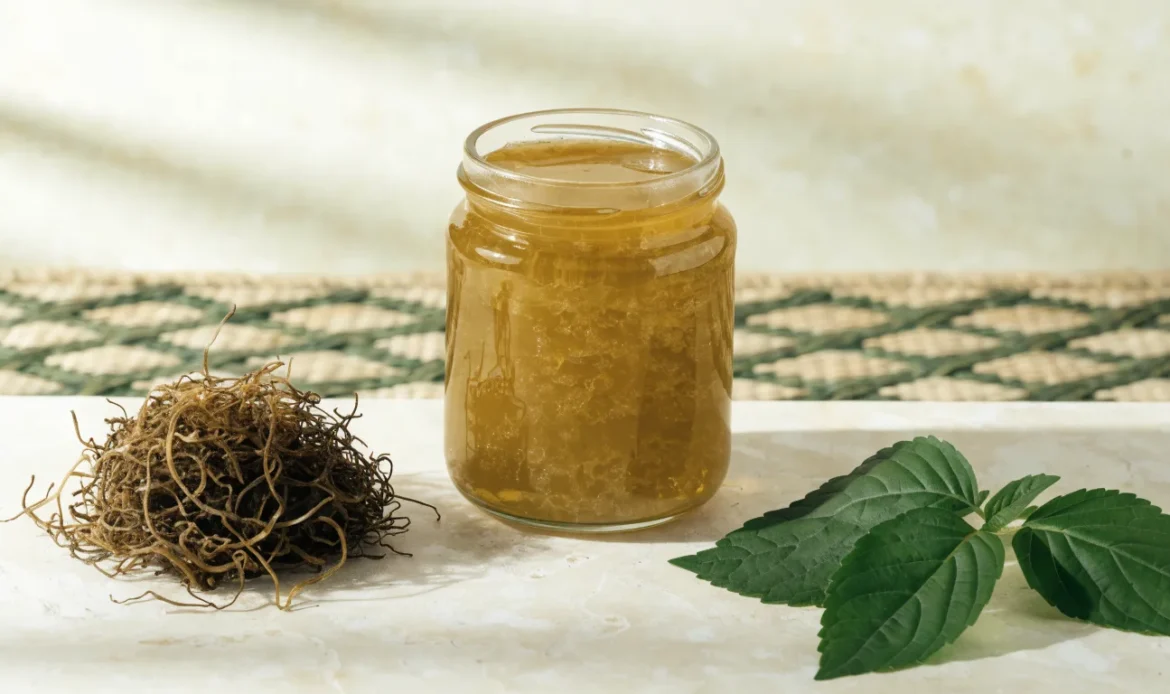
Short answer: There is no single rule. Many people take sea moss daily, a few times per week, or only occasionally. How often you should take sea moss depends on the product form, how much iodine it might contain, your health status, and why you want to use it. Read the safety checks and decision guide below before you pick a routine.
What sea moss is and the common forms people use
Sea moss is a name used for several types of edible seaweed. It is sold in forms such as dried sheets or pieces, rehydrated gel, powders, and capsules. Sellers may call these Irish moss, Chondrus crispus, or by other names depending on the species and where it was gathered.
Each form is used in a different way:
- Dried sea moss needs rinsing and soaking before use.
- Gel is often made by blending soaked sea moss with water.
- Powders and capsules are made by drying and grinding the seaweed, and sometimes adding other ingredients.
How a product is processed matters. Processing changes texture and how you dose it. It can also change how long the product lasts in your fridge or pantry.
Expanded short answer — common use patterns and why they vary
“How often should i take sea moss?” is a common question. People choose different schedules for different reasons:
- Daily: Some people add a small spoon of gel or one capsule to a daily drink or smoothie. This is a common habit approach.
- A few times per week: Others use sea moss on alternate days or several days a week.
- Occasional culinary use: A smaller group uses sea moss only in recipes, like thickening soups or desserts.
Which schedule fits you depends on a few things:
- The form and concentration of the product you buy.
- Whether the product’s label or lab report lists iodine or other mineral levels.
- Your health, especially if you have thyroid issues, are pregnant, or take certain medicines.
- How you feel when you use sea moss. If you notice side effects, you may need to stop or reduce frequency.
There is no single medically required frequency for everyone. That is why the rest of this guide focuses on the checks you can do to make a safe choice.
Safety considerations you should check first
Seaweed can contain iodine. Iodine levels in seaweed vary a lot. Reviews and papers show that iodine content depends on species, location, and processing. High intakes of iodine can affect the thyroid in some people [2][5]. Public health sources also note that seaweed is a variable iodine source and should be used with care [1][3].
Other safety points:
- Heavy metals and contaminants: Seaweed can absorb elements from seawater. Reliable sellers will test batches or use third-party lab reports. Operation Supplement Safety recommends care with sea moss products sold as supplements and looking for testing info [4].
- Interactions with medicines: If you take thyroid medicine or other prescription drugs, check with your clinician before using sea moss regularly. Seaweed’s iodine and other components can affect thyroid function in susceptible people [2][5].
- Pregnancy and breastfeeding: Because iodine needs change during pregnancy and because high iodine can affect the thyroid, talk with a health professional before regular use.
- Allergies and digestive response: Some people may react to seaweed or to additives in prepared products.
What you cannot prove from a package alone:
- Exact iodine level unless a lab report is shown.
- Absence of trace contaminants unless tested and reported.
- Long-term safety for your individual health without a clinician’s check.
Use these safety points to decide how often to take it and to choose a seller.
How to decide how often to take sea moss — a practical checklist
Use this checklist to pick a routine. Work through each item and mark your answers. The decision suggestions are general and not medical advice.
Decision checklist
- What form did you buy?
- Dried pieces/sheets: Need soaking and blending. Consider using 1–3 times per week for cooking or to make gel.
- Gel: Often used daily in small amounts. Check storage instructions.
- Powder/capsule: Easier to dose. Many people use daily or every other day.
Suggestion: Start with fewer uses per week if you are unsure.
- Does the product show iodine, mineral, or lab testing?
- Yes: Use that information to guide frequency. If iodine is high, use less often and talk with your provider.
- No: Be cautious. Consider using one small serving a few times a week at most until you know more.
Suggestion: Favor products with third-party tests for iodine and contaminants.
- Do you have thyroid disease, are pregnant, or taking thyroid medicine?
- Yes: Talk to a healthcare provider before any regular use.
- No: You may still want to start small and monitor how you feel.
- Are you using sea moss for a specific reason (culinary use, texture, habit)?
- Culinary: Use it as a recipe ingredient when needed.
- Daily habit: Use a small, consistent serving. Keep a log of what you take.
Suggestion: Be clear about why you use it — that helps set a safe frequency.
- How do you plan to store it?
- Refrigerated gel: Shorter shelf life; use within seller guidance.
- Dried: Long shelf life if kept dry.
- Powders/capsules: Check sealed storage advice.
Suggestion: Only make or open amounts you can use within recommended storage windows.
- Do you notice any new symptoms after starting sea moss?
- Yes: Stop and check with a healthcare provider.
- No: You may continue but still re-check product testing and your health status over time.
After the checklist, the next question to ask is: “Does my product show lab testing for iodine and contaminants?” If not, ask the seller or choose a product with testing.
How to take sea moss by format — practical notes
Different forms change how often people take sea moss and how they use it.
Dried sea moss
- How people use it: Soak, rinse, then cook or blend into gel.
- Frequency: Often used as needed in recipes. Some users make gel in a batch and use it daily until the gel is gone.
- Notes: Make sure to rinse thoroughly and follow soaking instructions.
Sea moss gel
- How people use it: A spoonful added to smoothies, coffee substitutes, or recipes.
- Frequency: Commonly used daily in small amounts. Gel usually needs refrigeration and has a limited home-use window once made.
- Notes: Follow safe storage and discard dates. If it smells off or shows mold, do not use.
Powder and capsules
- How people use it: Capsules are a measured supplement dose. Powders mix into drinks or food.
- Frequency: Often easier to use consistently, so some people take these daily. But dosing instructions vary by product.
- Notes: Check whether other ingredients are added to the capsule or powder.
Prepared blends
- How people use it: Sea moss blended with other herbs or ingredients.
- Frequency: Depends on the blend’s labeling and the other components.
- Notes: Each ingredient may change safety and recommended frequency.
Practical routine examples (illustrative only)
These are sample patterns people use. They are not medical advice.
- Example A — “Daily habit” (used by some): One small spoon of gel mixed into a morning smoothie or tea, five to seven days a week. Monitor for any changes in well-being.
- Example B — “Moderate use” (used by some): A capsule or a spoonful of powder every other day or three times a week.
- Example C — “Culinary use” (used by some): Use dried sea moss pieces when cooking specific recipes. No regular daily use.
- Example D — “Test and adjust” (recommended for new users): Start with one small serving twice in the first week. If no issues, increase to three times a week. Continue to check product testing and consult a provider if needed.
If you experience unusual symptoms, stop and contact a healthcare professional.
What to check on the label and what to ask the seller
Look for:
- Product form and clear use instructions.
- Storage guidance (refrigeration, keep dry, discard after X days).
- Contact information for the seller or manufacturer.
- Batch or lot number and any available test reports.
- Ingredient list and any added ingredients.
Ask the seller:
- Do you have a certificate of analysis (COA) or third-party lab test for iodine and contaminants?
- Where and how was the seaweed sourced and processed?
- What are the recommended serving sizes and storage life for opened product?
- Can I get more details on processing or added ingredients?
If the seller cannot provide reasonable answers, consider a different source.
How to monitor your response
Keep a simple log:
- Date and product used.
- Form and amount.
- Any new symptoms (digestive, skin, energy, or other).
- Changes in other medicines or diet.
Share this log with your healthcare provider if you have concerns or if you take medicines that interact with iodine or minerals.
Links to helpful pages
- Learn more about sea moss basics on our main Learn page: /learn/
- Browse product forms and store info: /shop/
- Interested in buying in bulk? Check /wholesale/
- If you have questions about a specific product, contact us: /contact/
- Return to Zen Wholesalers home: /
Conclusion
“How often should you take sea moss?” does not have a single correct answer. The right schedule depends on the product form, available testing for iodine and contaminants, your health status, and how you plan to use it. Start with small amounts. Choose products that share lab reports or clear labeling. If you have a thyroid condition, take medications, or are pregnant, speak with a health professional before using sea moss regularly. Use the checklist above to make a careful choice and to set a routine you can monitor.
Continue reading
Frequently asked questions
Can I take sea moss every day?
Some people do. Daily use is common with small servings. But you should check product testing (iodine and contaminants) and talk to a healthcare provider if you have thyroid disease, take thyroid medicine, are pregnant, or have other concerns.
How long should sea moss gel last in the fridge?
Follow seller instructions. Prepared gel often has a limited home-use window. Discard if it smells odd or shows any signs of mold. If no guidance is given on the label, ask the seller before use.
Will sea moss affect my thyroid?
Seaweeds can contain variable amounts of iodine. Too much iodine can affect thyroid function in some people. If you have thyroid issues or take thyroid medicine, consult your clinician before regular use [2][5].
Are capsules safer than raw sea moss?
Capsules may be easier to dose, but safety depends on how the product was tested and processed. Look for third-party lab testing for iodine and contaminants regardless of format [4].
Can I use sea moss if I’m pregnant or breastfeeding?
Talk with your healthcare provider. Pregnancy and breastfeeding change iodine needs and affect safety decisions. Do not start regular use without professional guidance.
How do I know if the product has too much iodine?
The only reliable way is a lab test or certificate of analysis that lists iodine content. If that information is missing, assume iodine may be variable and use a lower frequency until you can verify levels.
References
- Harvard T.H. Chan School of Public Health, “Seaweed.” https://nutritionsource.hsph.harvard.edu/seaweed/
- Smyth PPA. “Iodine, Seaweed, and the Thyroid.” European Thyroid Journal, 2021. https://pmc.ncbi.nlm.nih.gov/articles/PMC8077470/
- Food Standards Australia New Zealand, “Survey of iodine levels in seaweed and seaweed containing products,” updated 2025. https://www.foodstandards.gov.au/science-data/monitoring-safety/surveyofiodinelevels
- Operation Supplement Safety, “Sea Moss in Dietary Supplements.” https://www.opss.org/article/sea-moss-dietary-supplements
- Blikra MJ et al. “Consequences of acute and long-term excessive iodine intake: A literature review focusing on seaweed as a potential dietary iodine source.” 2024. https://doi.org/10.1111/1541-4337.70037