
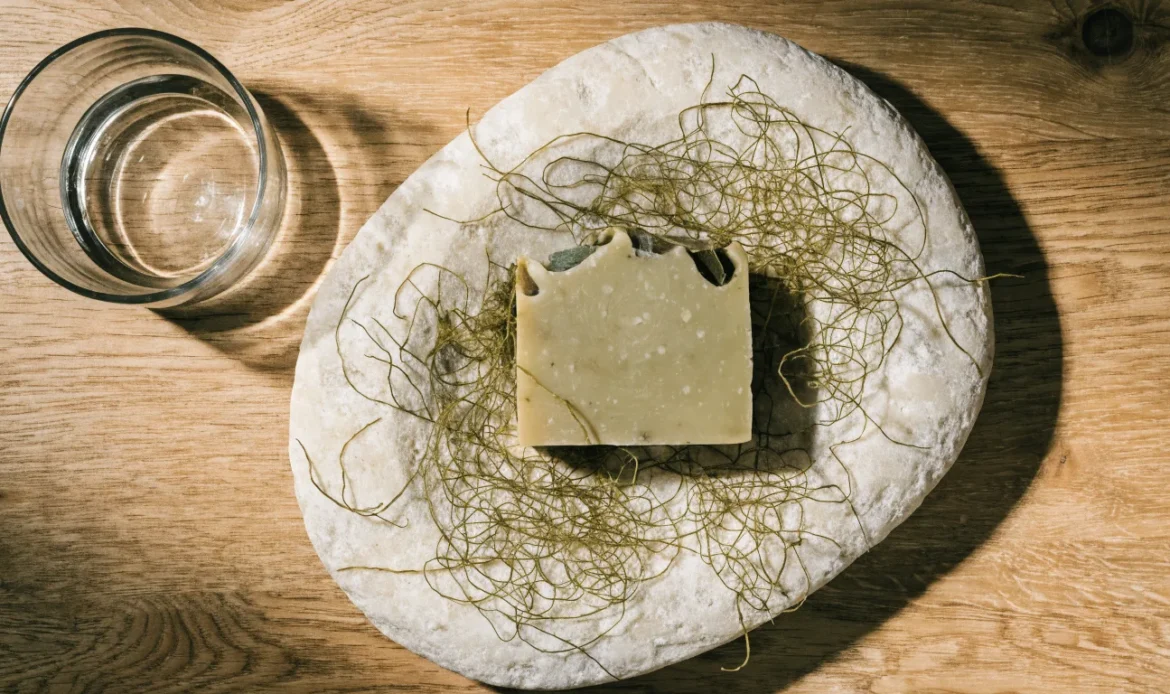
Short answer: Sea moss soap is a soap product that contains sea moss (a type of seaweed) in some form. It can be a sea moss soap bar, a liquid soap, or a melt-and-pour product. The sea moss is usually added for its texture, color, and marketing appeal—not as a guaranteed treatment. Use the checklist below to decide which format fits you best.
What is sea moss soap?
Sea moss soap is simply soap that includes sea moss or a sea moss-derived ingredient. The sea moss may be added as:
- dried sea moss powder,
- an extract or concentrate,
- a gel made from soaked and blended sea moss,
- or as an infusion in an oil that then goes into soap.
Seaweeds contain minerals and complex carbohydrates. Sea moss is one of many seaweeds people use in food and personal care. Scientific summaries describe seaweed chemistry and show it varies by species and place collected [1]. For soap, makers focus on how sea moss affects the soap’s feel, look, and label.
Note: a “sea moss soap bar” refers to a solid bar-shaped product with sea moss included. The same word “bar” helps you identify format and storage needs when shopping.
Forms of sea moss soap and how they differ
H3: Common soap-making methods that include sea moss
- Melt-and-pour (glycerin or clear soap base): Makers melt a pre-made soap block, stir in sea moss powder or gel, add scent or color, then pour into molds. This is easy for small-batch makers and hobbyists.
- Cold-process bar soap: Makers mix lye and oils to create soap and add sea moss (often as powder, gel, or infused oil) near the end of saponification. Cold-process bars cure over weeks. This method demands soap-making knowledge and safety with lye.
- Hot-process soap: Similar to cold-process, but the soap is cooked to speed saponification. Sea moss may be added after heat is lowered.
- Liquid soap: Sea moss can be dissolved or dispersed in a liquid soap base. Liquid formulations and preservation differ from bars.
H3: Sea moss ingredient forms
- Whole or chopped sea moss (rare in soap): Can create texture and visible flecks.
- Powdered sea moss: Easy to mix, less moisture added.
- Sea moss gel (made by soaking and blending): Adds moisture and texture.
- Extracts: Concentrated components of seaweed sold to cosmetic makers.
Each form changes mixing ease, clarity, and shelf behavior. Labels may not always say the exact form used.
Why makers add sea moss to soap
- Texture and suspension: Powder or flakes can give a bar a slightly different feel or mild exfoliation.
- Visual appeal: Natural flecks, colors, or a marketing-friendly ingredient list.
- Foam and viscosity: Some seaweed polysaccharides can change how a soap lathers or feels, depending on concentration and soap base.
- Natural/clean-label marketing: Sea moss is a recognizable ocean-derived name consumers ask for.
These are practical reasons a maker might include sea moss. Labels and marketing can emphasize tradition and nature. But marketing cannot prove specific effects on skin or health.
What a sea moss soap bar label can and cannot prove
H3: What the label can show
- The form of sea moss listed (e.g., “Chondrus crispus powder” or “sea moss gel”).
- Other ingredients and fragrance names.
- Whether the bar is cold-processed, melt-and-pour, or handcrafted (if the maker states it).
- Manufacturer contact or batch code, which helps with traceability.
H3: What a label cannot prove on its own
- Exact mineral levels or iodine content in the bar.
- Presence or absence of contaminants such as heavy metals or bacteria.
- How much of the soap’s effect—if any—comes from sea moss versus other ingredients.
- Safety for a specific person’s skin or systemic exposure.
To know more, ask the maker about testing or third-party reports. For example, seaweeds can have highly variable iodine and mineral content depending on species and origin [2][3][5]. Labels rarely include lab results.
Safety notes and testing
- Seaweed composition varies. Researchers note that iodine content and other minerals in seaweed can be variable and sometimes high [2][5]. Surveys have found a wide range of iodine in seaweed products [3]. This matters most for edible uses. For topical soap, the exposure route differs, and absorption depends on formulation and use.
- Third-party testing: If you want confirmation, look for independent test results or ask the maker for a certificate of analysis (CoA). For dietary supplements, organizations warn that sea moss products can vary in content and quality [4]. Those same principles apply: product testing is the best way to confirm claims.
- Allergy and sensitivity: If you have known seaweed allergies, fragrance sensitivities, or iodine sensitivity, check ingredient lists and do a small patch test. Labels may not reveal all risks.
- Manufacturing hygiene: Soap is generally made with low moisture when cured, but any added fresh or gelled sea moss brings extra water. That can affect shelf life and preservation. A trustworthy maker will state storage guidance.
- If you are pregnant, nursing, or have thyroid issues and are concerned about seaweed exposure, consult a health professional. Seaweed iodine can affect thyroid function when ingested; topical exposure is different, but a clinician can advise for your case using current evidence [2][5].
Citations: general seaweed composition and iodine variability are discussed in Harvard’s seaweed overview and thyroid literature [1][2][5]. Surveys of iodine levels in products are available from regulatory bodies [3]. Guidance on sea moss products for consumers is noted by supplement safety organizations [4].
Buying checklist: How to choose a sea moss soap bar
Use this checklist when you compare sea moss soap bars. It lists what to look for and why it matters.
Decision checklist
- Ingredient list: Is “sea moss” specified clearly (powder, gel, extract)? Clear wording helps you compare.
- Sea moss source description: Does the label say species or region? This is useful but not proof of quality by itself.
- Form of soap: Is it a soap bar, melt-and-pour, or liquid? The bar format affects storage and use.
- Additives and fragrance: Check for essential oils, synthetic fragrances, colorants, or skin allergens.
- Preservation and moisture: Does the maker state a storage method or shelf guidance? Higher-moisture bars may need quicker use.
- Testing: Does the maker provide third-party testing or a CoA for contaminants or for the seaweed extract? If not, ask.
- Batch code or date: A batch number or date helps with traceability and any safety questions.
- Return policy and contact: Can you contact the maker easily if you have a problem?
- Intended use and instructions: Are there directions for use and cautions?
- Price and quantity: Compare price per bar and ingredient clarity; avoid judging quality by price alone.
Quick buyer guide (choose one):
| Your priority | Recommended soap format |
|---|---|
| Easy shelf storage, long use | Sea moss soap bar (cured cold-process or melt-and-pour) |
| Transparent ingredient control | Melt-and-pour with sea moss powder added |
| Handcrafted, small-batch feel | Cold-process sea moss soap bar |
| Liquid dispenser needed | Sea moss liquid soap or body wash |
Note: the table helps match format to need. It does not evaluate specific brands.
Questions to ask the maker or brand
If label information is limited, ask the brand:
- Which species of sea moss is used?
- Is it wild-harvested or farmed? (If they answer, ask what that means for traceability.)
- What form is used (powder, gel, extract)?
- How much sea moss is in the bar (weight or percent)?
- Are there lab reports for contaminants (heavy metals, microbes) or for specific compounds?
- How should the bar be stored and how long does it last unopened/once opened?
- Was any preservative used when adding wet sea moss?
- Are fragrance ingredients listed (IFRA or full disclosure of fragrance blend)?
- Do you offer samples, patch-test advice, or refunds for reactions?
Answers can help you judge transparency. Lack of testing does not prove unsafe, but testing increases confidence.
Making sea moss soap at home — practical things to know
If you want to try a sea moss soap bar at home, keep these practical points in mind:
- Learn basic soap-making safety first. Soap-making with lye requires protective gear and tested recipes. If you are new, start with melt-and-pour blocks.
- Choose the sea moss form you want: powder mixes easily; gel adds moisture and texture.
- Add sea moss near the end of mixing for cold-process soaps. Heavy heat can change some ingredients.
- Keep water content under control. Wet sea moss or gel adds moisture and can affect cure time or encourage spoilage if not balanced.
- Label your product with the sea moss form and any preservatives you used.
- Test each new recipe on a small batch before scaling it up.
- Patch-test your finished bar on a small skin area before full use.
Do not share or distribute soap made at home commercially without following local rules for cosmetics or personal-care products. Regulations vary by place.
How to compare a sea moss soap bar to other seaweed soaps
Sea moss is one of many seaweeds used in cosmetics. When you compare:
- Look for species names. Different species have different textures and soluble components.
- Compare how the seaweed is used: visible pieces, powder, or extract. Visible pieces tend to be used for texture, extracts for color or stability.
- Note the soap base: glycerin bases behave differently from olive oil or coconut oil bars.
A label that is transparently specific will be easier to compare.
Conclusion
Sea moss soap is any soap that includes sea moss in some form. Many makers use it for texture and marketing clarity. A sea moss soap bar is a convenient, solid format, but label details matter. Check the form of sea moss used, ask about testing, and follow storage instructions. If you want more on sea moss as an ingredient, or if you plan to buy in small or large amounts, these next pages can help:
- Start at our home page.
- Read more on ingredient guides at Learn.
- Browse available formats in our shop.
- Contact our wholesale team for bulk questions at Wholesale.
- Reach out directly with any product questions via Contact us.
Frequently asked questions
Is sea moss soap the same as seaweed soap?
Sea moss soap is a type of seaweed soap that uses sea moss (a specific group of seaweed). “Seaweed soap” is broader and can include other seaweeds.
Will a sea moss soap bar give me the same minerals I’d get from eating sea moss?
No. Eating seaweed and using it in soap are different uses. Eating introduces nutrients into your diet. Topical use does not guarantee the same intake. Labels and packaging do not prove mineral delivery. For questions about dietary intake, consult a healthcare professional and reliable dietary guidance [1][2].
Can sea moss soap cause a reaction in people with iodine or seaweed sensitivity?
People with known seaweed or iodine-related conditions should be cautious. Some people react to seaweed ingredients or to fragrances and preservatives. Ask the maker about ingredients and do a patch test. If you have a serious health condition, consult a clinician [2][5].
How long does a sea moss soap bar last?
Shelf life depends on formulation, moisture content, and storage. Bars with added wet gel or fresh ingredients may have shorter shelf stability than fully cured dry bars. If storage instructions are not on the label, ask the maker.
Are testing results common for sea moss soaps?
Small makers may not test every batch. Larger brands or sellers who emphasize safety might offer third-party test results. For contaminants or specific compound levels, ask for a certificate of analysis.
Can I make a sea moss soap bar if I am new to soap-making?
Yes, with caution. Start with melt-and-pour soap bases and powdered sea moss. Learn soap safety for lye if you plan to cold-process. Use small batches and test on yourself only after proper patch testing.
References
- Harvard T.H. Chan School of Public Health, “Seaweed.” https://nutritionsource.hsph.harvard.edu/seaweed/
- Smyth PPA. “Iodine, Seaweed, and the Thyroid.” European Thyroid Journal, 2021. https://pmc.ncbi.nlm.nih.gov/articles/PMC8077470/
- Food Standards Australia New Zealand, “Survey of iodine levels in seaweed and seaweed containing products,” updated 2025. https://www.foodstandards.gov.au/science-data/monitoring-safety/surveyofiodinelevels
- Operation Supplement Safety, “Sea Moss in Dietary Supplements.” https://www.opss.org/article/sea-moss-dietary-supplements
- Blikra MJ et al. “Consequences of acute and long-term excessive iodine intake: A literature review focusing on seaweed as a potential dietary iodine source.” 2024. https://doi.org/10.1111/1541-4337.70037