
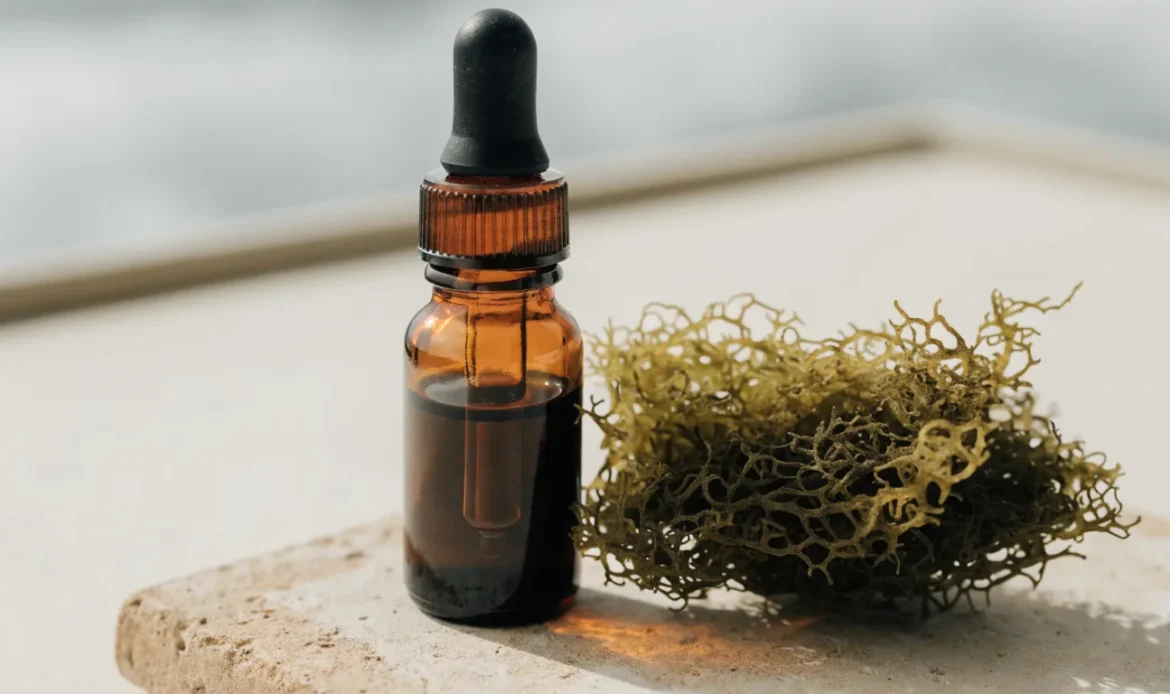
Short answer: Sea moss drops are a liquid form of processed seaweed. They come as tinctures, concentrates, or infusions. They are used like a liquid supplement or flavoring. Labels and testing matter most. Read the rest to learn how they are made, what to check, and how to pick a safe product.
What are sea moss drops?
Sea moss drops are a way to present seaweed in liquid form. Makers extract compounds from sea moss into a solvent. The solvent can be water, alcohol, glycerin, or oil. The final product is a small bottle of liquid with dropper packaging. People use drops to add seaweed flavor or to get convenience from a liquid format.
Drops are not a single, defined product. Different makers use different seaweeds, different solvents, and different processing steps. Because of that, one bottle can be very different from another. Labels are the best place to start when you compare products.
How sea moss drops are commonly made
Below are the steps many makers follow. Not every product uses all steps.
- Raw sea moss is cleaned. Good cleaning removes visible dirt, sand, and sea life.
- The sea moss may be dried or used fresh.
- It is soaked or simmered in a solvent. The solvent pulls soluble compounds out of the seaweed.
- The liquid is strained and may be filtered.
- Some makers add other ingredients. These can be herbs, sweeteners, or oils.
- The mix is bottled in dark glass or plastic with a dropper.
Words like “extract,” “tincture,” and “infusion” appear on labels. They describe the solvent and how strong the liquid is. A tincture traditionally uses alcohol. A glycerin extract uses glycerin. Water extracts are common for simple infusions. None of these words prove how much of each nutrient is in the bottle.
How sea moss drops differ from other sea moss formats
- Gel: Sea moss gel is a water-based, thicker form. It is often used in smoothies or recipes. Gel is usually the whole seaweed rehydrated and blended.
- Powder: Dried sea moss ground into powder. Powder mixes into drinks and recipes.
- Capsules/tablets: Powder or extract put into pill form.
- Drops: Concentrated liquid. Easy to dose with a dropper. Often more shelf-stable than gel when made with alcohol or preservatives.
Each format has trade-offs. Drops are easy to add to drinks. Gels are whole-food style. Powders are lightweight for travel. The format alone does not tell you about safety or composition.
What labels and tests can and cannot tell you
What you can check on a product label:
- Ingredient list. This shows the solvent and any added ingredients.
- Net content. Tells you volume in the bottle.
- Direction for use. Tells how maker suggests taking the drops.
- Lot or batch number and expiration date. These support traceability.
What labels cannot prove:
- Exact nutrient amounts unless a certificate or lab test backs them up.
- Absence of heavy metals, microbes, or contaminants unless test results are provided.
- Sourcing claims (wild-harvested, farmed, country of origin) unless verified by documents.
Independent test reports or third-party lab certificates say more than marketing text. If a seller posts lab tests, read the test details. Look for testing date, lab name, and which batch was tested.
Safety topics to check before buying
Seaweed can contain iodine and other elements that matter for safety. Iodine levels in seaweed vary by species and where it grows. Excessive iodine can affect the thyroid for some people. Peer-reviewed reviews and public health sources discuss iodine variability and the potential for high iodine in seaweed products [2][5]. Public surveys have also found high iodine in some seaweed products on the market [3].
Other safety areas to consider:
- Heavy metals and environmental contaminants. These can be present in marine plants depending on water quality.
- Microbial contamination. Improper processing or storage can allow bacteria or molds to grow.
- Solvent residues. If alcohol or other solvents are used, residues should meet safety standards.
- Allergens and added ingredients. Look for common allergens and for any additives that you may wish to avoid.
For general context about seaweed as a food and source of nutrients, see an overview by a major public health school [1]. For regulatory and supplement safety discussion specific to sea moss, see a review by a supplement safety organization [4].
What to look for in test results or certificates
If a seller provides lab results, check for:
- The name of the independent lab.
- The test date and the lot number matching the bottle.
- Tests for heavy metals (lead, cadmium, mercury), iodine, and microbes.
- A clear interpretation of the numbers or a reference range.
If a seller only posts generic claims without a lab name or sample ID, treat those claims as marketing. Independent third-party testing is the most useful evidence you can ask for.
Practical decision checklist
Use this short checklist when you evaluate sea moss drops. Check each item before you buy.
- Ingredient list is clear. Why it matters: Tells you solvent and additives. Red flag: Vague terms like “proprietary blend” without listing components.
- Bottled volume and suggested use are listed. Why: Helps you know how long the bottle might last. Red flag: No directions at all.
- Lot or batch number and expiry date present. Why: Supports traceability. Red flag: No batch info.
- Third-party lab report is available and recent. Why: Shows testing for contaminants and iodine. Red flag: No lab name or sample ID.
- Seller describes cleaning and processing steps. Why: Processing affects safety. Red flag: No info on how the seaweed was handled.
- Contact information and refund policy clear. Why: You may need to ask more questions or return product. Red flag: No phone, email, or clear policy.
If most of these boxes are unchecked, consider a different product or ask the seller for more details.
Quick comparison table: common drop formats and what to expect
| Drop type listed on label | Typical solvent | What to check |
|---|---|---|
| Tincture | Alcohol | Alcohol content, suitability if you avoid alcohol |
| Glycerin extract | Glycerin | Sweetness, sugar content, and shelf life |
| Water extract | Water | Microbial testing and refrigeration needs |
| Oil-soluble extract | Oil | Type of oil and stability |
This table shows what to focus on in the label. It does not say which is best. Your needs and safety checks determine the choice.
How to use sea moss drops safely
- Read the label and follow maker directions.
- Start with a small amount. Watch how the product tastes and how you feel.
- Mix drops into food or drink as directed. Some drops are concentrated and strong tasting.
- Check storage instructions. Some liquids keep at room temperature, others may need refrigeration.
- If you have a medical condition or take medicine, check with your clinician before trying new products. Seaweed can interact with certain health situations because of mineral content such as iodine [2][5].
Do not assume a product is safe because it is labeled “natural.” Natural sources can still contain high amounts of certain minerals or environmental contaminants.
Questions to ask the seller before buying
Use these questions when you contact a seller or vendor:
- What species of seaweed is in the drops?
- Where was the seaweed harvested or grown?
- How is the seaweed cleaned and processed?
- Is there a batch-specific lab report I can see? What does it test for?
- What solvent is used and are there solvent residue tests?
- What is the shelf life and how should I store the bottle?
Good vendors will answer directly and point to documents. If answers are vague, that is a sign to be cautious.
Regulatory and safety context
Dietary supplements and natural products are regulated differently from foods or medicines. Labels can vary in what they must show. Some regulatory agencies publish surveys and guidance about seaweed because of iodine and contaminant concerns [3]. Safety organizations also provide advice on supplement use and testing [4].
Keep in mind: a product on the market is not the same as being tested for every safety risk. Asking for lab reports and clear sourcing is the best way to reduce unknowns.
How to store and handle drops
- Follow the label. If it says refrigerate after opening, do so.
- Keep the dropper clean. Avoid touching the dropper tip to food.
- Store away from heat and direct light, which can degrade some extracts.
- Consider the bottle material. Dark glass helps protect light-sensitive compounds.
If a product develops off smells, cloudiness when the label doesn’t say it should, or visible mold, stop using it and ask the seller about returns.
When to avoid sea moss drops
- If you are allergic to seaweed or shellfish, avoid unless you have a clear allergy test and seller confirmation.
- If you need to limit iodine for medical reasons, get specific iodine testing for the product before use [2][5].
- If no ingredient transparency or testing is available, consider other formats or brands.
Useful next steps
- Ask the seller for a recent lab report linked to the lot you would buy.
- Compare formats and solvents to match your taste and storage preferences.
- Read general guides about seaweed as food to understand broad nutritional context [1].
- If you plan to buy in bulk for resale, review wholesale policies and testing requirements for your market. For wholesale options, visit our wholesale page.
Helpful internal links:
- Learn more about sea moss and formats at our Learn hub.
- If you want to browse products, see the Shop page.
- For business inquiries, visit Wholesale.
- Contact us with questions at Contact.
- Back to home: [/].
Conclusion
Sea moss drops are a flexible liquid format of seaweed. They can work well for people who want a concentrated, easy-to-dose seaweed product. Because seaweed can vary in iodine and other content, transparency matters. Check the label, ask for batch-specific lab reports, and use the checklist above to compare products. If you want to learn more about other sea moss forms or shop options, visit our Learn hub (/learn/), browse the Shop (/shop/), or contact us at Contact (/contact/). Businesses can see wholesale options at Wholesale (/wholesale/).
Frequently asked questions
Are sea moss drops the same as sea moss gel?
No. Drops are liquid extracts or tinctures. Gel is a thicker, whole-seaweed product. Drops are more concentrated and may use alcohol, glycerin, oil, or water as the solvent.
Do drops contain iodine?
Seaweed can contain iodine. The level in drops depends on the seaweed species, the source, and how the drops were made. If iodine is a concern, ask for a lab test that measures iodine for the specific batch [2][3][5].
Can I mix sea moss drops into any food or drink?
Many people add drops to drinks or food. Follow the product label. Some drops have strong flavor or alcohol, so choose foods or drinks that mask taste if needed.
What testing should I expect from a trustworthy seller?
Look for independent lab reports that list the lab name and the batch tested. Key tests include iodine, heavy metals, and microbial safety. Check that the test date matches the batch you plan to buy.
Are there rules for selling sea moss drops?
Regulations differ by country and by whether the product is sold as a food, supplement, or cosmetic. Sellers must follow local rules for labeling and safety. Safety organizations also offer guidance on supplement testing [4].
How long do sea moss drops last?
Shelf life depends on solvent, preservatives, and storage. The bottle should have an expiration or best-by date. Follow storage instructions on the label.
References
- [1] Harvard T.H. Chan School of Public Health, “Seaweed.” https://nutritionsource.hsph.harvard.edu/seaweed/
- [2] Smyth PPA. “Iodine, Seaweed, and the Thyroid.” European Thyroid Journal, 2021. https://pmc.ncbi.nlm.nih.gov/articles/PMC8077470/
- [3] Food Standards Australia New Zealand, “Survey of iodine levels in seaweed and seaweed containing products,” updated 2025. https://www.foodstandards.gov.au/science-data/monitoring-safety/surveyofiodinelevels
- [4] Operation Supplement Safety, “Sea Moss in Dietary Supplements.” https://www.opss.org/article/sea-moss-dietary-supplements
- [5] Blikra MJ et al. “Consequences of acute and long-term excessive iodine intake: A literature review focusing on seaweed as a potential dietary iodine source.” 2024. https://doi.org/10.1111/1541-4337.70037