
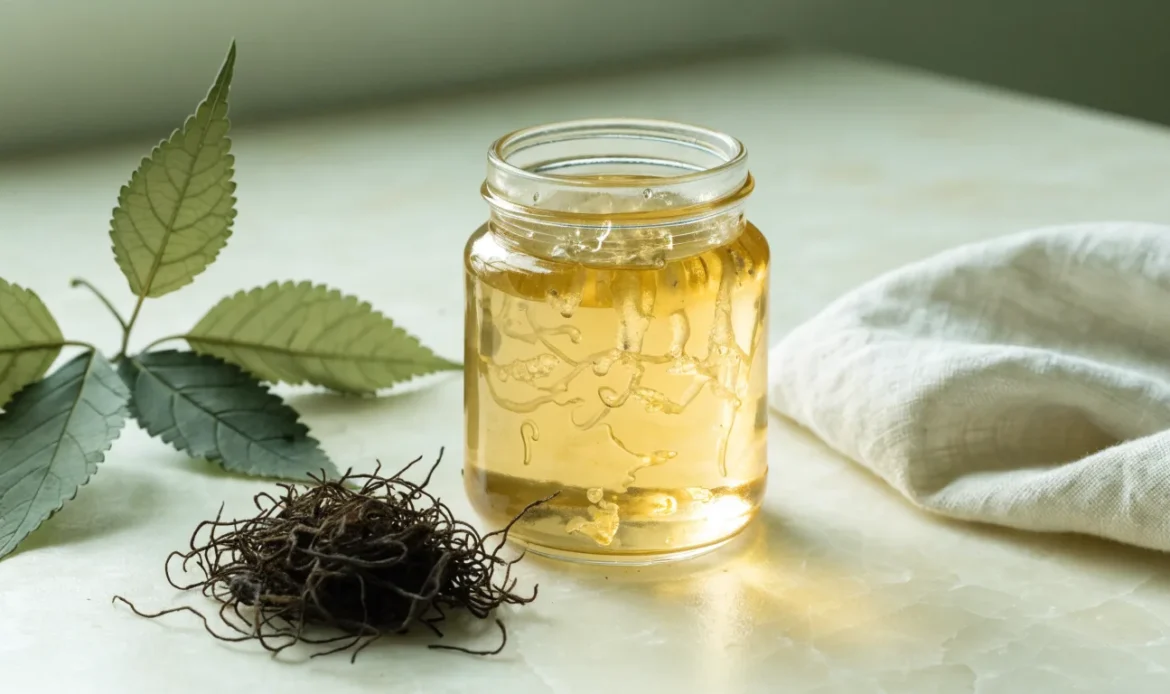
Short answer: Organic Irish sea moss is seaweed sold with an organic claim. It can be dried, powdered, gelled, or sold as a supplement. If you want organic certified sea moss, check who certified it, what was tested, and ask for a batch Certificate of Analysis (COA). Seaweed can vary a lot in minerals such as iodine and in contaminants. You should verify testing and handling before buying.
What people mean by “organic Irish sea moss”
“Organic Irish sea moss” usually blends three ideas:
- “Irish sea moss” refers to a red seaweed commonly called Irish moss. It is used as a food ingredient and traditional thickener.
- “Organic” is a label that aims to show the product meets standards set by a certifier or program. For seaweed, that can cover how it was harvested, where, and how it was processed.
- Sellers may use different formats: whole dried seaweed, powder, pre-made gel, or capsules.
These three things are not the same. A product can be a named seaweed, and it may carry an organic label, and it may come in one of several formats. Each part has its own checks and limits.
Why verification matters
Seaweed naturally contains minerals like iodine. The amount can vary greatly by species and location. It can also absorb heavy metals and other elements from water. Testing and transparency let you know what is actually in a batch of seaweed. Public health reviews and food-safety surveys show this variability and the need for caution and testing [1][2][3][5].
Sellers’ labels and marketing give useful clues. But labels do not prove the full story. A reliable COA from a third-party lab is the best way to see measured levels for iodine, heavy metals, and microbial tests. Even with a COA, results apply only to that batch and lab method. Ask for batch-specific results.
References that discuss these points include government and academic reviews of seaweed and iodine, and industry guidance on supplements. These sources explain why testing matters and why iodine can be a concern for people with thyroid issues [1][2][3][4][5].
How “organic” applies to seaweed and what it does—and does not—guarantee
What “organic” can mean:
- A certifier verifies certain practices. This may include limits on additives, approved processing steps, and rules for chemical use.
- For seaweed, organic rules often focus on what is done after harvest (processing and handling). Wild seaweed grows in the open ocean, so some organic programs handle wild harvests differently than field crops.
What “organic” cannot prove by itself:
- That the seaweed has low iodine, zero heavy metals, or any specific mineral level.
- That the water where it grew was free from local pollution. Certification processes vary in scope.
- That the product is free of all contaminants unless specific testing shows that.
Ask the seller for the name of the certifier and what the certificate covers. Certification bodies differ in what they inspect and test. A certificate is a start. A batch COA with test results is better for details on contaminants and minerals.
Common forms and formats, with pros and cons
Below are common forms of sea moss you may see. The words are simple so you can compare formats.
- Whole dried seaweed
- Pros: Least processed. You can rehydrate and use it in cooking.
- Cons: Needs cleaning and soaking. Quality depends on the original clean-up.
- Powdered seaweed
- Pros: Easy to mix into food or drinks.
- Cons: Processing can concentrate minerals. Ask for a COA.
- Sea moss gel (made by soaking and blending)
- Pros: Ready to use in smoothies or recipes.
- Cons: Shorter fridge life. Homemade gel depends on how it was handled.
- Capsules or tablets
- Pros: Convenient for measured dosing.
- Cons: Labeled amounts do not always match batch testing. Look for COAs and product testing [4].
Each format may include wild-harvested or farmed seaweed. Farming and harvesting methods affect environmental impact and sometimes contaminant risk. Ask how the seaweed was harvested and processed.
Safety and testing: what to check and why
- Certificate of Analysis (COA)
- Ask for a batch COA from a recognized third-party lab.
- Important tests: iodine content, heavy metals (e.g., lead, cadmium, mercury), microbiological limits, and any solvent residues used in processing.
- A COA covers the specific batch tested. A different batch may have different results.
- Species identification
- Different seaweed species have different mineral profiles.
- Labels should show the species name or common name. If species is missing, ask for clarification.
- Harvest area and date
- Ask where and when the seaweed was harvested. Sea conditions vary by place and season.
- Harvest and processing methods
- Wild-harvested vs farmed: each has trade-offs. Farming can control inputs; wild harvest depends on the local environment.
- Drying and cleaning steps affect safety. Proper drying reduces microbial risk.
- Organic certifier name
- If a product claims “organic,” ask which certifier granted the certificate and what the scope was.
- Traceability
- Batch numbers, lot codes, or harvest identifiers help track test results and recalls.
Why iodine testing matters
- Iodine levels in seaweed can be high and vary widely by species and location. High iodine intake can affect people with thyroid conditions. Published reviews and surveys note this variability and advise caution [2][3][5].
Why heavy-metal testing matters
- Seaweed can absorb metals from water. Testing shows whether levels are within safe ranges for food or supplements in the market where you live.
Industry guidance and safety groups recommend testing and clear labeling for consumer protection [1][4].
How to read labels and seller claims
Look for:
- Species name and common name.
- Harvest location and date.
- Format (dried, powder, gel, capsules).
- Organic certifier name and certificate link or number.
- Batch number or lot code.
- A link or copy of the COA for that batch.
What labels may not prove:
- Labels cannot prove actual mineral levels unless you see the COA.
- “Wild” or “hand-harvested” claims are descriptive but do not replace testing.
- “Natural” is not a regulated safety term.
If the seller cannot provide a batch COA, you may want to ask why. Some small producers test less often. Testing costs money. Many reputable sellers will share a COA when asked.
Practical decision checklist: Buying organic Irish sea moss
| Question to ask | Why it matters | Good answer to expect |
|---|---|---|
| What species is this? | Species affects mineral content and use. | Clear species name (common or scientific). |
| Do you have a batch COA? | Shows measured iodine, metals, microbes. | COA from a third-party lab for the specific batch. |
| Who certified “organic” and what does the certificate cover? | Certifier scope varies. | Name of certifier and link or certificate number. |
| Where and when was it harvested? | Location and season affect content. | Clear harvest location and date or season. |
| Was it wild-harvested or farmed? | Helps you understand potential risks and controls. | Honest description and basic method details. |
| How was it processed and stored? | Processing affects safety and shelf life. | Brief summary of cleaning, drying, and storage steps. |
| Is there a lot or batch number on the package? | For traceability and COA matching. | Visible batch or lot number that matches COA. |
| What is the recommended storage and use? | Proper storage prevents spoilage. | Simple guidance: cool/dry storage, refrigeration for gels. |
Use this checklist when you contact a seller or review a product page. Keep a copy of the COA with your purchase record.
How to prepare and use organic Irish sea moss safely
Simple steps for whole dried seaweed:
- Rinse the dried seaweed well under running water to remove sand and debris.
- Soak it in cool water until it softens. Change the water if it looks cloudy.
- Inspect for shells, grit, or dark spots. Remove anything that seems off.
- Cook or blend according to your recipe. Heating helps reduce some microbes. Proper cooking times will vary by recipe.
For powdered seaweed:
- Mix into foods or drinks. Ask the seller for recommended serving sizes and any safety notes.
For gel:
- Keep gel refrigerated and use within the time recommended by the seller. Homemade gels have different storage needs than commercial gels.
For capsules or supplements:
- Follow label directions. If you have thyroid issues or take iodine-containing medications, consult a health professional before use.
Do not rely on seaweed labels as a substitute for medical advice. If you have a thyroid condition or are pregnant, ask a healthcare professional about iodine intake before adding seaweed products to your diet [2][5].
What information cannot be proven from a single product page
- That all future batches will match the current batch COA.
- That wild-harvested seaweed is always free of local pollutants.
- That a product is safe for people with specific medical conditions without professional advice.
A product page and label are parts of the story. COAs, harvest records, and certifier details fill in the rest. If you need something tested beyond a seller’s COA, an independent lab can test a sample you supply.
Buying tips and next steps
- Ask for the COA before you buy, especially for powdered or concentrated formats.
- Compare COAs if you can. Look at iodine and heavy-metal results.
- If you want larger quantities or to use seaweed in food production, ask about regular testing and batch control. For wholesale questions, contact sellers with traceability details and testing schedules.
- If a product carries an organic label, note the certifier name and ask what that certifier inspects for seaweed.
If you want to learn more about seaweed basics, visit our learning section: Learn (/learn/). To browse formats and purchase options, see our shop: Shop (/shop/). For bulk or wholesale inquiries, use: Wholesale (/wholesale/). For general questions, reach out: Contact (/contact/). If you want a quick return to the site home page, go to: Home (/).
Conclusion
“Organic Irish sea moss” is a label that combines a seaweed type, a production claim, and a format choice. To make a smart purchase, ask for a batch Certificate of Analysis, the certifier’s name, harvest details, and the species. These checks help you see what testing was done and what remains unknown. If you need help choosing a format or ordering larger amounts, use our learning pages, shop options, or wholesale contact links to gather more details: Learn (/learn/), Shop (/shop/), Wholesale (/wholesale/), or Contact (/contact/). Always consult a healthcare professional for personal medical advice.
Frequently asked questions
Is organic Irish sea moss always safe to eat?
“Organic” tells you about certification, not about all risks. Seaweed can have variable iodine and metal levels. Ask for a batch COA to see measured results. If you have a health condition, consult a clinician [1][2][5].
How much iodine is in Irish sea moss?
Iodine content varies widely by species, location, and batch. Only a lab test can show the amount in a specific product. Reviews and surveys show this variability, which is why testing is important [1][2][3].
Can I trust labels that say “wild” or “hand-harvested”?
Those labels describe harvesting style. They do not replace testing. Ask for COAs and harvest details to learn more about safety and traceability.
Are supplements and capsules safer than whole seaweed?
Capsules are more convenient but can concentrate minerals. Safety depends on testing and the quality of processing. Look for batch COAs and third-party testing information [4].
How should I store sea moss?
Store dried seaweed in a cool, dry place. Keep powders sealed and dry. Refrigerate sea moss gel and follow the seller’s recommended use-by date. For shelf-life and storage specifics, follow product guidance from the seller.
Can I use organic Irish sea moss if I have thyroid issues?
If you have a thyroid condition, talk with your healthcare provider before adding seaweed to your diet. Seaweed can contain higher levels of iodine, which can affect thyroid function. A COA can tell you the iodine amount for a batch [2][5].
References
- [1] Harvard T.H. Chan School of Public Health, “Seaweed.” https://nutritionsource.hsph.harvard.edu/seaweed/
- [2] Smyth PPA. “Iodine, Seaweed, and the Thyroid.” European Thyroid Journal, 2021. https://pmc.ncbi.nlm.nih.gov/articles/PMC8077470/
- [3] Food Standards Australia New Zealand, “Survey of iodine levels in seaweed and seaweed containing products,” updated 2025. https://www.foodstandards.gov.au/science-data/monitoring-safety/surveyofiodinelevels
- [4] Operation Supplement Safety, “Sea Moss in Dietary Supplements.” https://www.opss.org/article/sea-moss-dietary-supplements
- [5] Blikra MJ et al. “Consequences of acute and long-term excessive iodine intake: A literature review focusing on seaweed as a potential dietary iodine source.” 2024. https://doi.org/10.1111/1541-4337.70037