
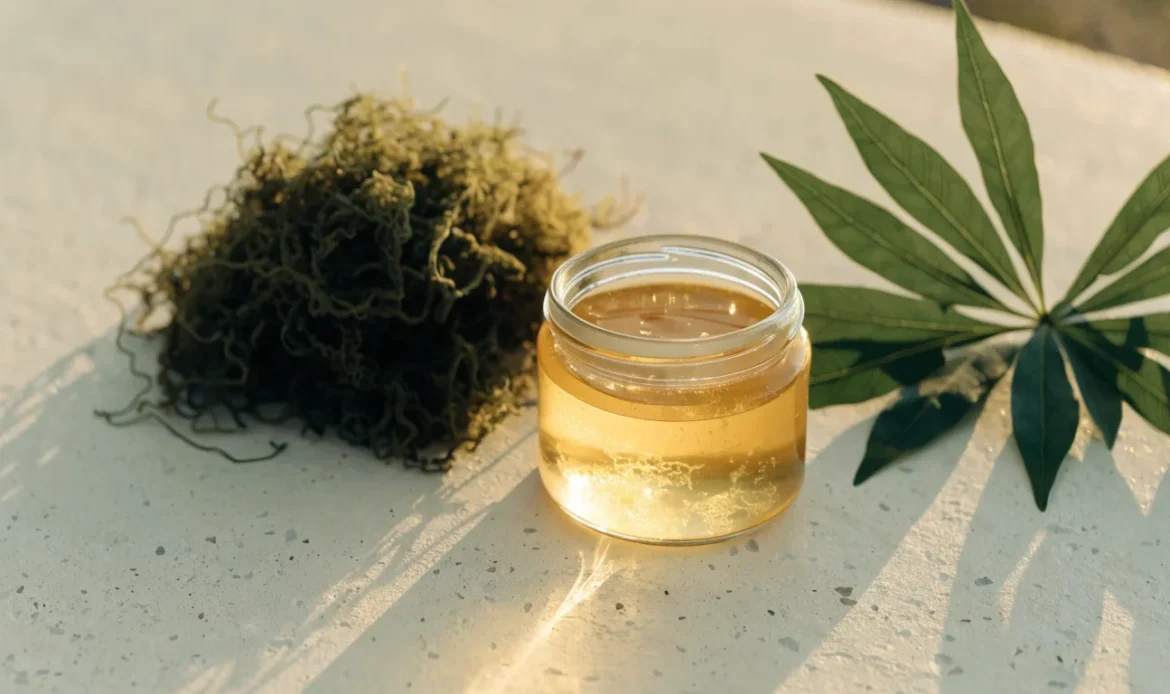
Short answer (first): Eating sea moss can add minerals, fiber, and moisture to your diet. People use it as a food ingredient and for traditional reasons. Scientific proof for specific health changes is limited. Read the rest to learn what is supported, what is uncertain, and how to decide if sea moss fits your diet.
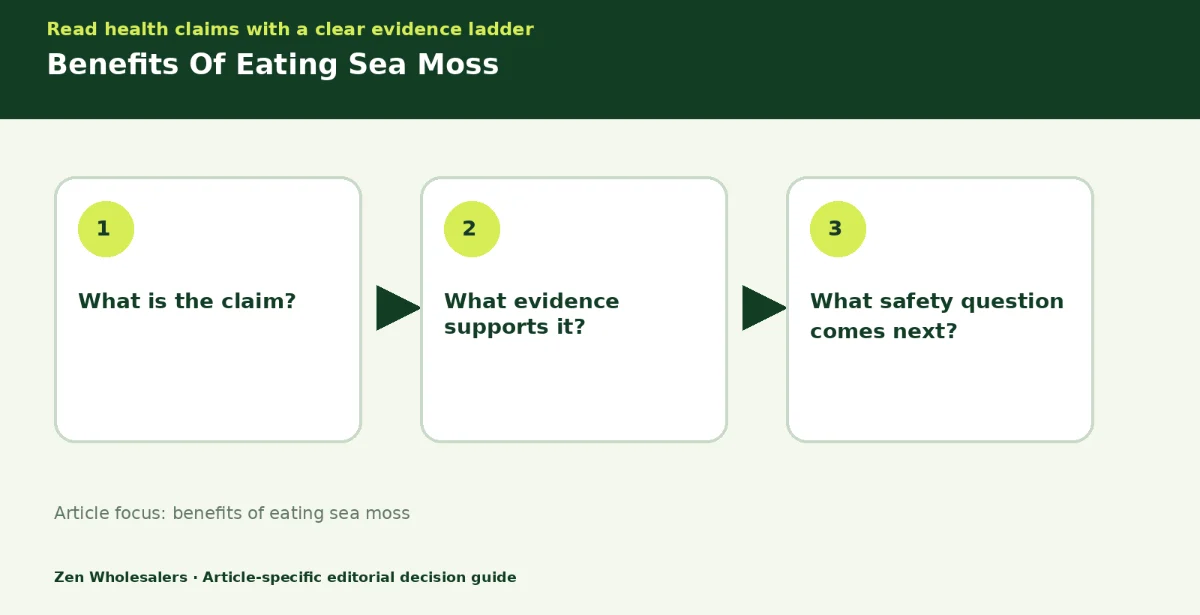
What is sea moss?
Sea moss is a common name for several species of red algae. It grows along rocky coasts in many parts of the world, including the Caribbean. People eat sea moss as fresh or dried seaweed, or as a gel and ingredient in foods. It is a food, not a medicine.
Quick list: what people expect from eating sea moss
- A source of certain minerals and trace elements. [1]
- A way to add texture or thickness to foods (as gel or cooked).
- A traditional food in many coastal cultures.
- Possible small supports to nutrition if your diet lacks certain minerals. Research is limited on specific health claims.
What nutrients does sea moss contain?
Seaweed in general, which includes sea moss, is a food rich in minerals and some vitamins. It commonly contains iodine, iron, calcium, magnesium, potassium, and small amounts of B vitamins and vitamin K. It also has dietary fiber and polysaccharides that affect texture. These facts come from food science summaries on seaweed composition. [1]
Iodine is one of the most notable nutrients in seaweed. The amount of iodine varies widely by species, location, and processing. That means a serving of sea moss can have low, moderate, or very high iodine compared with daily needs. [1][3]
Note: nutrient content can change a lot by species and by how the product was harvested and stored. Food labels do not always give the full picture.
How solid is the scientific evidence?
Separate four things clearly:
- Food composition. Scientists measure minerals and other compounds in seaweed. These measurements show seaweed can be a meaningful source of iodine and other minerals. [1][3]
- Traditional use. Coastal communities have eaten sea moss and other seaweeds for decades or longer. Traditional use is useful to know. It does not prove a specific health effect.
- Early research. Some lab and small human studies look at compounds in seaweed. They explore how those compounds work in cells or in small groups of people. These studies can point to possibilities. They do not prove clear benefits for most health outcomes.
- Clinical proof. Large, controlled human trials are limited. For many claimed benefits, there is not enough clinical evidence to say the effect is real, reliable, and safe for everyone.
Because the evidence ranges from composition data and small studies to little clinical proof, we must be cautious about strong claims.
What benefits are reported and what the evidence actually shows
Below are common benefit claims and the realistic view of what the evidence supports.
- Source of minerals and iodine: Sea moss can provide minerals, especially iodine. This is a factual food-composition point. The exact amount varies by product. [1][3]
- Adds fiber and texture: Sea moss contains soluble fiber and gel-forming compounds. This can thicken foods and slightly increase dietary fiber when eaten. [1]
- Traditional and cultural uses: Many people use sea moss in traditional recipes and for general wellbeing. This is a cultural pattern, not a clinical proof.
- Early lab findings: Some lab studies show seaweed compounds can interact with body systems in cells or animal models. These findings point to possible mechanisms. They do not guarantee the same effects in humans.
What evidence cannot prove: That eating sea moss will treat, cure, prevent, or reliably improve specific diseases or medical conditions. It cannot prove consistent weight loss, detoxification, fertility improvements, or guaranteed thyroid health outcomes for any person.
Sea moss benefits before and after: what to expect
When people say “before and after” they usually mean subjective changes they noticed after adding sea moss to meals. Typical, realistic effects include:
- Before: low intake of iodine or minerals; After: small increase in those nutrients (if the sea moss contains them). [1][3]
- Before: recipes without a thickener; After: thicker smoothies or puddings when sea moss gel is used.
- Before: no change or mixed symptoms; After: some people report feeling different energy or digestion. These reports are subjective and not proof. Early studies do not reliably link sea moss to specific health outcomes.
If you try sea moss, watch for changes and talk to a clinician about anything new that concerns you.
How people eat sea moss (sea moss eating): common forms
- Fresh or raw sea moss: Washed and used in recipes. Fresh versions must be cleaned carefully.
- Dried sea moss: Dried pieces rehydrated before use. Drying concentrates some nutrients.
- Sea moss gel: Rehydrated and blended into a gel. Popular for smoothies and thickness.
- Processed supplements and capsules: Marketed as extracts or powders. These products vary in content and quality. [4]
Each form has pros and cons. For example, gel is easy to add to food. Dried sea moss stores longer. Supplements may simplify dosing but can hide variable iodine content and other ingredients. [4]
How to pick a sea moss product or supplier: practical decision checklist
Use this checklist before buying or eating sea moss. It helps you decide what matters for safety and usefulness.
Sea Moss Decision Checklist
- Why am I using it? (food texture, nutrition, cultural recipe, curiosity)
- Form I want: fresh, dried, gel, or supplement? (gels are easy; dried stores well)
- Source transparency: Does the seller say where it was harvested? Look for clear origin.
- Processing and cleaning: Is the product cleaned and processed in a way that fits food safety?
- Labels and tests: Does the product list nutrient info and any lab testing for contaminants? If not, treat iodine and contaminants as unknown. [3][4]
- Iodine concern: Do I have a thyroid condition or take thyroid medicine? High iodine can affect thyroid function. Ask a clinician. [2][5]
- Pregnancy or breastfeeding: Ask a clinician before using.
- Allergies or seaweed sensitivity: Start with a small amount and watch for reactions.
- Children: Ask a clinician before giving seaweed products to young children.
- Cost and shelf life: Compare price per usable serving and storage needs.
- If buying wholesale: Check sample quality and safety testing before large orders. See our wholesale page for steps to ask suppliers.
This checklist focuses on choices you can check yourself. It does not replace medical advice.
Practical ways to add sea moss to food (simple, safe steps)
- Use small amounts at first. Monitor how your body reacts.
- If using dried sea moss, soak it with clean water and rinse several times before use.
- If using gel in smoothies, add it as a thickener rather than the main ingredient.
- Avoid mixing sea moss supplements with other iodine-rich supplements unless a clinician approves.
- When in doubt about a product’s safety or label accuracy, choose a different product or skip it.
Safety and when to ask a clinician
Sea moss is a food, but it can carry safety concerns that matter for some people.
- Iodine variability: Seaweed’s iodine levels are very variable. Too much iodine can affect the thyroid. People with thyroid disease, those taking thyroid drugs, and pregnant or breastfeeding people should ask a clinician before using seaweed products. [2][3][5]
- Risk of excessive iodine: Acute or long-term excess iodine intake can lead to thyroid dysfunction in some people. The risk increases if a product has high iodine content that is not clear on the label. [5]
- Contaminants and heavy metals: Seaweed can contain environmental contaminants depending on where it grows. Testing and clear sourcing reduce, but do not eliminate, this uncertainty. [1][3]
- Supplements and unknown ingredients: Sea moss dietary supplements can vary widely in what they contain. Some products may add other ingredients or have inconsistent seaweed content. Check labels and prefer suppliers that offer lab results. [4]
- Allergies and digestive reactions: Some people may have allergic or sensitive reactions to seaweed. Stop use and seek care if you have severe symptoms.
Ask a clinician before using sea moss if you:
- Have thyroid disease or take thyroid medication. [2][5]
- Are pregnant, planning pregnancy, or breastfeeding.
- Are giving seaweed to infants or young children.
- Take many supplements or prescription drugs.
- Have a compromised immune system or other serious health conditions.
Evidence-strength ladder (how to read claims)
Use this ladder to weigh any claim you read about sea moss.
- High strength: Measured nutrient content in lab analyses (we know seaweed can contain iodine, minerals, fiber). [1]
- Medium strength: Reproducible small human studies or consistent traditional use pointing to a plausible effect.
- Low strength: Single small studies, cell or animal studies that have not been repeated in humans.
- Unsupported: Broad claims that sea moss cures, prevents, or treats specific diseases without controlled human trials.
When you see a claim, ask: Is it based on measured food content, a small study, or a strong human trial?
Common questions about buying and storing sea moss
- Where to buy? Look for sellers who disclose harvest locations and processing steps. Our shop page lists product types and descriptions.
- Wholesale buying? Ask for samples and lab tests before ordering in bulk. See our wholesale page for questions to ask suppliers.
- Storage: Dried sea moss stores longest. Gel usually needs refrigeration and has limited shelf life. Follow the seller’s storage instructions.
- Label checks: Look for ingredient lists, batch numbers, and any third-party testing information.
If you want help or have questions, contact our team through contact (/contact/).
What to check if you read a “before and after” story
Many online before-and-after posts are personal accounts. They are not controlled studies. When you read one:
- Check if the person changed other things (diet, sleep, exercise).
- Look for product details: species, harvest area, processing.
- Check for objective measures. A photo alone does not show internal changes.
- Consider whether the same effect would apply to you.
Suggested next guides and pages
- If you want a deeper read on how to use sea moss safely, go to our learn hub.
- If you are ready to shop or compare forms, visit our shop.
- For bulk buyers, our wholesale page has a checklist for suppliers.
- If you still have a question, contact us or speak with a clinician.
Conclusion
Eating sea moss can add minerals, fiber, and new textures to your meals. Measured nutrient data show it often contains iodine and other minerals. [1][3] But the scientific evidence for specific health effects is limited. Early research and traditional use suggest possibilities. They do not prove consistent medical outcomes. If you want to try sea moss, use the decision checklist, choose products with clear sourcing, and talk to a clinician if you have thyroid disease, are pregnant, or have other health concerns. For more background and buying options, visit our learn (/learn/), shop (/shop/), and wholesale (/wholesale/) pages, or contact (/contact/) us for questions.
Frequently asked questions
Is sea moss safe to eat every day?
Safety depends on the product and your health. Sea moss can contain variable iodine. Daily use may be fine for some people and risky for others. People with thyroid conditions, pregnant people, and children should talk to a clinician first. [2][3][5]
Can sea moss replace other minerals or supplements?
Sea moss is a food source of some minerals. It is not a guaranteed replacement for prescribed supplements. If you need a specific nutrient for health reasons, discuss options with a clinician or dietitian.
Are sea moss supplements the same as whole sea moss?
Not always. Supplements may be extracts, powders, or capsules and can vary in concentration and added ingredients. Labels and third-party testing help, but variability remains. [4]
How do I know if a sea moss product has high iodine?
Many products do not list iodine. Look for lab testing or nutrient analysis on the label. If that information is missing, treat iodine content as unknown. [3][4]
Can children eat sea moss?
Children can sometimes eat small amounts of seaweed in food. However, because iodine and contaminants can be high and because children’s iodine needs differ, ask a clinician before giving seaweed products to young children. [2][3]
What should I do if I have a reaction after eating sea moss?
Stop eating it and seek medical attention for severe symptoms. For milder reactions, contact a clinician to discuss next steps. Keep the product package so clinicians can see the label.
References
- Harvard T.H. Chan School of Public Health, “Seaweed.” https://nutritionsource.hsph.harvard.edu/seaweed/
- Smyth PPA. “Iodine, Seaweed, and the Thyroid.” European Thyroid Journal, 2021. https://pmc.ncbi.nlm.nih.gov/articles/PMC8077470/
- Food Standards Australia New Zealand, “Survey of iodine levels in seaweed and seaweed containing products,” updated 2025. https://www.foodstandards.gov.au/science-data/monitoring-safety/surveyofiodinelevels
- Operation Supplement Safety, “Sea Moss in Dietary Supplements.” https://www.opss.org/article/sea-moss-dietary-supplements
- Blikra MJ et al. “Consequences of acute and long-term excessive iodine intake: A literature review focusing on seaweed as a potential dietary iodine source.” 2024. https://doi.org/10.1111/1541-4337.70037