
Short answer up front:
Sea moss capsules are a convenient form of seaweed supplement. They contain dried, powdered sea moss or a sea moss blend inside a capsule shell. They can be easier to store and dose than gels or fresh seaweed. What matters most is the ingredient list, how the product was tested, and whether the iodine content and sourcing are clear.
Why this matters:
Capsules hide a lot of information in a small package. You can learn the most useful facts quickly. Then you can make a safe, informed choice or decide to try a different format like gel or powder.
What are sea moss capsules?
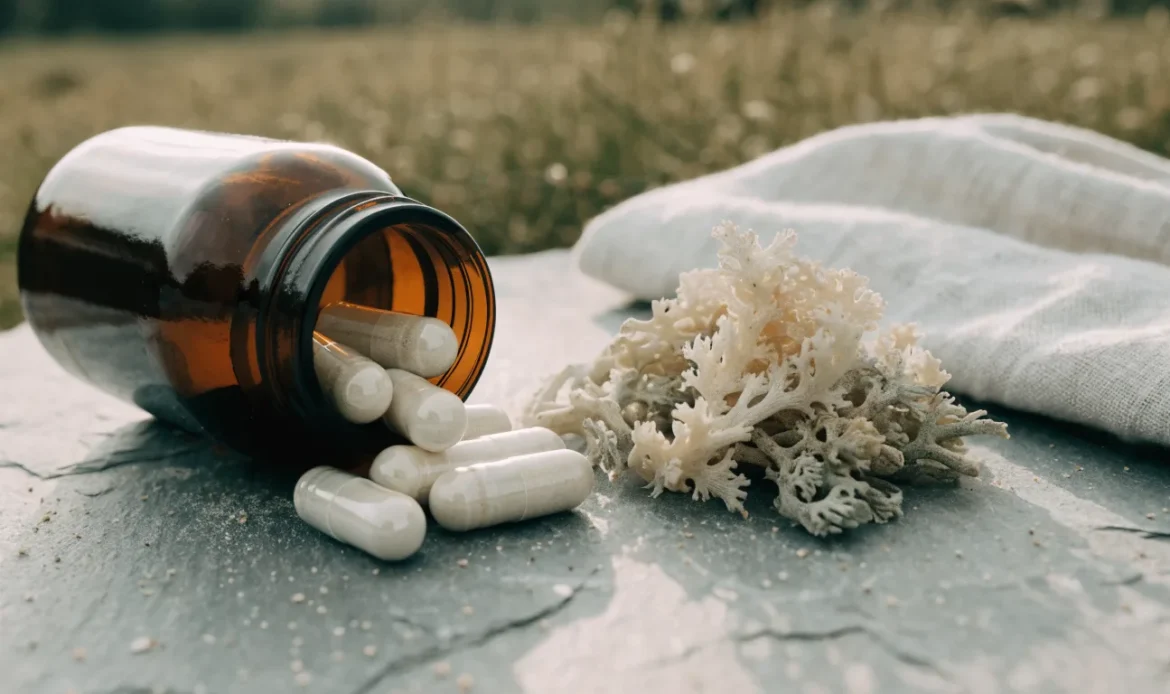
Sea moss capsules are dietary supplements. Each capsule holds a measured amount of dried sea moss powder. The powder may come from a single seaweed type or a blend with other algae or herbs. Capsule shells are often made from gelatin or a plant-based material.
Capsules aim to offer:
- A simple way to take sea moss without mixing or cooking.
- A stable, lightweight product for travel or storage.
- Pre-measured servings so you can track intake.
Capsules differ from:
- Sea moss gel (fresh or refrigerated, often made by soaking and blending).
- Sea moss powder (sold in jars, used in smoothies).
- Raw seaweed (whole, dried or fresh).
If you want a quick supplement with minimal prep, capsules can be a good choice. But capsules also limit how much you can learn at a glance about what’s inside. That makes label checks and testing information important.
Common labels and terms you will see
- Sea moss, Irish sea moss: A common name for red seaweed used in supplements. Sometimes labeled “Irish sea moss capsules.”
- Powdered seaweed or seaweed powder: General terms that may include several seaweed species.
- Proprietary blend: A mix where the maker lists total weight but not exact amounts of each ingredient.
- Capsule count and serving size: Shows how many capsules equal one serving.
- Other ingredients: Fillers, flow agents, or capsule materials (e.g., rice flour, magnesium stearate, gelatin, HPMC).
Read labels closely. A clear label helps you compare products. If a label uses vague words like “seaweed extract” without more detail, you may want to ask the seller for lab results or more info.
How sea moss capsules are made (basic process)
- Harvesting or sourcing raw seaweed. The source may be fresh, dried, or farmed.
- Cleaning and drying. Seaweed is rinsed and dehydrated to remove water.
- Milling into a powder. Dried seaweed is ground to a fine powder.
- Blending. Some makers add other ingredients or herbs now.
- Encapsulation. The powder is filled into capsules using machines.
- Packaging. Capsules are bottled or placed in blister packs.
Each step affects the final product. Drying method, blending, and storage can change the nutrient profile and shelf stability. Those details are rarely printed on retail labels, so testing and transparency matter.
What might be inside a capsule?
Sea moss capsules can contain:
- Pure sea moss powder.
- Blends of sea moss and other seaweeds.
- Additives like fillers or anti-caking agents.
- Other botanical ingredients, vitamins, or minerals.
- Capsule shell material (gelatin or plant-based).
What labels cannot prove:
- Exact mineral amounts for every batch. Minerals in seaweed vary by location and harvest time.
- Absence of contaminants unless third-party tests show they were checked.
- How much iodine is in a serving unless the product tests and lists it.
Important: Iodine varies widely across seaweeds. Some seaweed products can have high or variable iodine. This makes testing and clear labeling especially important for people who need to manage iodine intake [2][3][5].
Safety considerations to check
Capsules can be safe if made and tested well. But there are a few risks to watch for.
Iodine variability
- Seaweed naturally contains iodine. Levels vary by species, sea zone, and harvest. Some seaweed products have high iodine. Others have low levels. Neither the label nor the capsule form alone can tell you the iodine content unless the maker reports a tested value [2][3][5].
Contaminants and heavy metals
- Seaweed can absorb minerals from seawater. That includes beneficial minerals and sometimes undesirable ones. Manufacturers should test for heavy metals and publish results or make them available on request [4].
Allergens and additives
- Capsules can include fillers or shell ingredients that matter for people with allergies or dietary rules. Check for common allergens and whether the capsule is vegetarian or animal-based.
Dose and serving clarity
- Some products use a proprietary blend or small serving sizes that make it hard to know how much sea moss you will actually take. Check the serving size in capsules and the weight per serving.
Regulation and testing
- Dietary supplements are regulated differently than medicines. Third-party testing and certificates of analysis (COAs) provide useful proof of content and safety. If a product has no testing information, ask the seller for test results or choose a product that publishes them [4].
Who should be cautious
- People with thyroid conditions should be cautious about adding large or uncertain iodine sources. Consult a healthcare professional before starting a seaweed supplement [2].
- Pregnant or breastfeeding people should check with a clinician before taking seaweed supplements.
- People taking thyroid medication or other prescription drugs should consult a clinician about interactions.
How to read labels and verify product claims
Ask these questions when you examine a bottle or product page:
- What is the ingredient list? Is it pure sea moss powder or a blend?
- Does the label show the weight per serving (e.g., mg per serving)? How many capsules per serving?
- Is the seaweed species or origin described? (If not, ask.)
- Are there other ingredients or fillers? Are capsule materials listed?
- Does the maker publish third-party test results or a Certificate of Analysis (COA) showing heavy metal and iodine testing?
- Does the product show a manufacturer date or expiration date?
- Are storage and use instructions given?
If key items are missing, you can message the seller or look for a product with clearer information. Transparency is an important sign of careful manufacturing.
Decision checklist — How to choose sea moss capsules
Use this checklist when you compare different products. Tick each item you can confirm before you buy.
| Checklist item | Why it matters |
|---|---|
| Clear ingredient list (no vague terms) | You know what you are taking. |
| Serving size & capsules per serving shown | You can dose reliably. |
| Manufacturer or brand contact info | You can ask questions. |
| Capsule type listed (vegetarian or gelatin) | Matches dietary needs. |
| Certificate of Analysis (COA) available | Shows testing for contaminants and sometimes iodine. |
| Heavy metals tested | Reduces contamination risk. |
| Iodine content measured or tested | Important for thyroid safety. |
| Source or harvest region described | Helps with traceability (but not a health guarantee). |
| No undisclosed proprietary blend | You can see ingredient amounts. |
| Clear storage/expiration info | Ensures freshness and stability. |
| Allergen statements | Avoids allergic reactions. |
If a product fails many checks, consider a different product or format.
Choosing between capsules, gels, and powders
Below is a quick guide to formats and when each might fit your needs.
- Capsules
- Pros: Convenient, portable, pre-measured, easy to store.
- Cons: Harder to test taste, may mask iodine content, can include fillers.
- Powder
- Pros: Versatile—mix into drinks or recipes; may show a fuller ingredient list.
- Cons: Requires measuring; can clump; storage matters.
- Gel
- Pros: Closer to a prepared food form; some people prefer texture and how it mixes.
- Cons: Shorter shelf life; needs refrigeration; harder to travel with.
- Raw dried seaweed or whole pieces
- Pros: Least processed; useful for cooking and full control.
- Cons: Requires more prep, may need different culinary knowledge.
Which is “best” depends on your priorities: convenience, transparency, or culinary use. No format is inherently safer than another. The testing and disclosure behind the product matter more.
Storage and use tips
- Follow the product’s storage instructions.
- Keep capsules in a cool, dry place away from direct sunlight.
- Check expiration or best-by dates if provided.
- Keep capsules away from small children.
- Start with the label-recommended serving. If you want to change your intake, consult a clinician, especially if you have thyroid concerns.
Practical next steps before you buy
- Read the label. Look for the checklist items above.
- Look for a COA or third-party test results.
- Contact the seller if you have specific concerns (iodine testing, sourcing, allergens).
- Compare serving sizes across products to know how many capsules you will take daily.
- If you have a thyroid condition, are pregnant, or take medication, talk with a healthcare professional before starting.
If you want longer guidance on other sea moss formats, our learning hub covers gels, powders, and raw seaweed. Visit our Learn section to read more: /learn/.
Conclusion
Sea moss capsules can be a simple and portable way to use seaweed as a supplement. They are convenient, but the capsule form does not guarantee safety or a specific nutrient profile. Check labels carefully. Ask for lab testing or a COA if you are concerned about iodine or contaminants. If you have a thyroid condition, are pregnant, or take medicines, speak to a healthcare professional before starting a seaweed supplement.
To learn more about sea moss formats and how they compare, visit our learning hub: /learn/. If you want to shop or ask about bulk options, see our store and wholesale pages: /shop/ and /wholesale/. For general questions, contact us at /contact/ or visit our homepage: /.
Continue reading
Frequently asked questions
Are sea moss capsules the same as Irish sea moss capsules?
Often yes. “Irish sea moss” is a common name used for certain red seaweeds in supplements. Many products label themselves as Irish sea moss capsules. Always check the ingredient list to see whether the product uses just one type of seaweed or a blend.
Do sea moss capsules contain iodine?
Seaweed naturally contains iodine. The amount can vary widely. A product label alone cannot tell you the iodine content unless the maker tests and lists it. If iodine matters to you, choose a product with a tested iodine value or ask the seller for a COA [2][3][5].
How many capsules should I take each day?
Follow the serving size on the product label. Supplements do not have a one-size-fits-all dose. If you are unsure, consult a healthcare professional, especially if you have thyroid concerns or take medications.
Should I worry about heavy metals in sea moss capsules?
Seaweed can absorb minerals from seawater, including unwanted ones in some cases. Look for products that publish heavy metal testing or third-party lab results to reduce this risk [4].
Are capsule shells vegetarian?
Some capsules use gelatin (animal-based) and others use plant-based materials like HPMC. The label should state the capsule type. If it does not, ask the seller.
How can I verify a product’s safety claims?
Ask for a Certificate of Analysis (COA) from the manufacturer. A COA shows lab results for contaminants, and sometimes for nutrient values like iodine. Independent third-party testing is a stronger sign of transparency than unverified claims [4].
References
- Harvard T.H. Chan School of Public Health. “Seaweed.” https://nutritionsource.hsph.harvard.edu/seaweed/
- Smyth PPA. “Iodine, Seaweed, and the Thyroid.” European Thyroid Journal, 2021. https://pmc.ncbi.nlm.nih.gov/articles/PMC8077470/
- Food Standards Australia New Zealand. “Survey of iodine levels in seaweed and seaweed containing products,” updated 2025. https://www.foodstandards.gov.au/science-data/monitoring-safety/surveyofiodinelevels
- Operation Supplement Safety. “Sea Moss in Dietary Supplements.” https://www.opss.org/article/sea-moss-dietary-supplements
- Blikra MJ et al. “Consequences of acute and long-term excessive iodine intake: A literature review focusing on seaweed as a potential dietary iodine source.” 2024. https://doi.org/10.1111/1541-4337.70037