
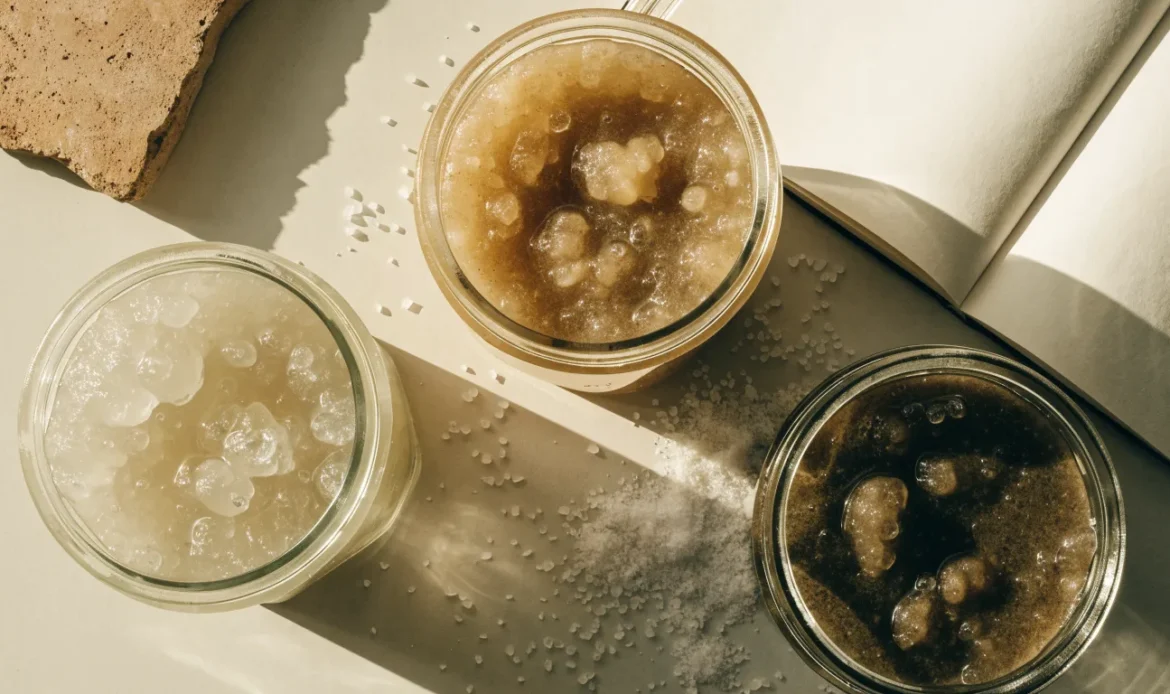
Short answer: A St Lucian sea moss company is a business that harvests, processes, or sells sea moss that is said to come from Saint Lucia. If you want to know where the sea moss really comes from and how it was handled, ask clear questions, look for test results, and check traceability. This guide explains what to check, what information can prove, and what still requires trust or extra testing.
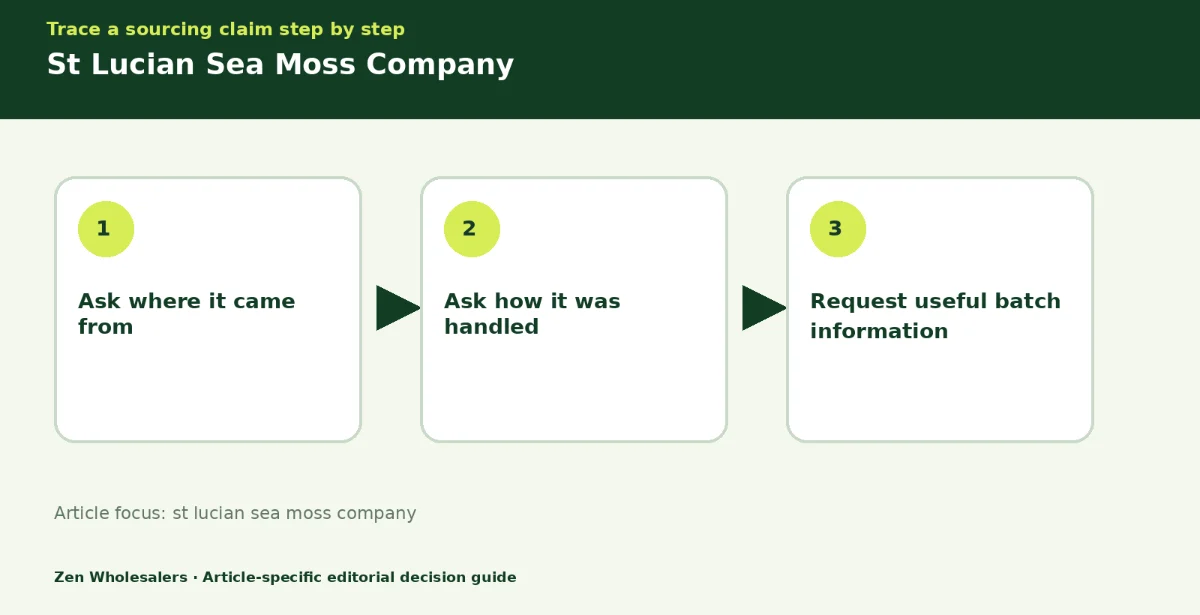
Why read this: sourcing matters for quality and safety. This article helps you evaluate origin claims, request useful documents, and make a clear next decision.
What “St Lucian” can mean
When a seller says “St Lucian” or “from Saint Lucia,” it can mean different things:
- The sea moss was wild-harvested in waters near Saint Lucia.
- The sea moss was harvested elsewhere and processed, packaged, or sold in Saint Lucia.
- The company is based in Saint Lucia but sources sea moss from other places.
None of these meanings are always obvious from labels alone. Ask the seller to describe each step: harvest location, processing site, and final packaging location.
What a clear answer should include:
- A named harvest area (not just a country name).
- Dates or seasons of harvest.
- Where washing, drying, and packing happened.
- Whether the product is mixed with sea moss from other sources.
If a seller can’t describe these steps, the “St Lucian” label is weak evidence of origin.
Why traceability matters
Traceability means you can follow the product back through each major step. It matters because:
- Sea moss chemical makeup varies by place and season.
- Some contaminants in seaweed are more likely in certain waters.
- Testing is only useful if you know what sample was tested.
Traceability can be shown with harvest logs, batch numbers, or pictures from the harvest and processing steps. A batch number tied to a test report is strong evidence. But paperwork alone can be copied, so prefer documents with dates and a way to confirm them with the company.
Sources like food-safety groups note that seaweed products can vary in iodine and other compounds depending on where they were grown. This is why testing and clear origin information are useful for buyers [1][2].
Key safety topics to understand
Keep these points in mind. They are supported by public sources about seaweed and supplements.
- Iodine content varies. Seaweed can contain different levels of iodine depending on species and location. High iodine intake can affect the thyroid for some people [2][5]. Testing helps you know what’s in a batch.
- Contaminants can vary. Seaweed may pick up environmental contaminants. Testing for heavy metals and other pollutants is a part of good quality control [1][4].
- Labels do not replace testing. A label claiming “wild-harvested” or “natural” does not prove safety or content. Independent testing is the reliable way to know chemical composition and contaminant levels [4].
For these reasons, reputable sellers provide or can obtain lab reports for specific batches on request.
What you can check as a buyer
Here is a short checklist to use when you contact a St Lucian sea moss company. Use it in emails or calls.
Sourcing Checklist: Questions to ask a seller
- Where exactly was this batch harvested? (name of bay, coordinates, or region)
- What is the harvest date or harvest season?
- What species of seaweed is this (common and scientific name) or how is it identified?
- Where was the sea moss washed and dried? (facility name and location)
- Do you have a batch number or lot ID for this product?
- Can you share a third-party lab report for this batch? Which lab performed the test?
- What tests were run? (e.g., iodine, heavy metals, microbiology)
- Do you have photos or video from the harvest and processing?
- Do you blend sea moss from different locations for this product?
- What storage and shipping steps were used after processing?
What to do with answers:
- If the seller shares batch-level lab results, confirm the lab name and date.
- If answers are vague (e.g., “harvested in the Caribbean”), ask for more specifics.
- If the seller refuses to provide basic traceability or testing info, treat that as a red flag.
What documents and evidence are most useful
Not all documents are equally useful. Here is what carries more weight.
Most useful
- Batch-specific third-party lab reports with lab name and date.
- Harvest log with date, location, and harvester name.
- Photos or video showing harvest methods and processing facility.
- Batch numbers that match packaging and test reports.
Less useful
- Generic company quality statements without batch ties.
- Labels that only say “wild-caught” or “natural” with no supporting paperwork.
- Test summaries without lab accreditation or contact information.
Even with documents, you may want to verify the lab. Reputable labs list accreditations and will answer basic questions about methods. Operation Supplement Safety recommends caution and testing for supplements containing sea moss and notes that not all products are tested consistently [4].
How to read a lab report
If a seller provides a lab report, look at these items:
- Sample ID or batch number: Does it match the product you will receive?
- Collection date: Was the sample taken near the harvest date?
- Tests performed: Look for iodine, heavy metals (lead, cadmium, mercury), and microbiology if the product is raw or minimally processed.
- Limits of detection and units: The report should list units and detection limits. If units are missing, ask for clarification.
- Lab name and contact: Can you contact the lab to confirm the report?
- Signature or analyst name: Many formal reports show who ran the test.
If you do not understand a report, ask the seller to explain or to provide a plain-language summary. A lab or a quality-control professional can also help interpret results.
What origin claims cannot prove
Even when a seller provides information, some limits remain.
- Documents cannot fully prove the exact harvest spot unless there is GPS-based evidence or continuous chain-of-custody.
- A single lab report cannot guarantee future batches will match the same profile. Seaweed composition changes with time and place.
- Photos can be staged. They provide context but not definitive proof.
- A registered address in Saint Lucia does not prove that the material was harvested there.
Use documents as pieces of evidence. Combine them: a harvest log + batch lab report + consistent photos give stronger assurance than any single item.
Decision guide: Should you buy from this company?
Use this simple table to decide. It helps weigh evidence and limits.
| What to check | If answer is “Yes” — what that suggests | If answer is “No” — what that means |
|---|---|---|
| Can the seller name the harvest area and date? | Likely clearer origin; easier to verify. | Origin claim is weak; hard to trace back. |
| Is there a batch number on the package that matches a lab report? | You can tie lab results to the product you buy. | Lab results may not apply to what you receive. |
| Is there a third-party lab report for that batch? | Shows that testing was done for that source. | No batch-level testing; unknown composition. |
| Are harvest and processing steps described in detail? | Better sense of handling and risk points. | Unknown handling; hygiene and drying steps unclear. |
| Does the seller allow contact with the testing lab? | You can verify the report’s authenticity. | Report may be difficult to confirm. |
| Does the seller show multiple recent batches with consistent info? | Suggests ongoing traceability and routine testing. | Single or no batch info; inconsistency risk. |
Use this guide with your own tolerance for uncertainty. If several answers are “No,” consider asking for more info or choosing another supplier.
How harvesting and processing methods affect product handling
Harvest method and processing change how the sea moss should be handled and stored.
- Hand-harvested and sun-dried samples may be exposed to environmental dust and microbes unless handled carefully.
- Washed and mechanically dried sea moss usually needs controlled drying to lower moisture and reduce spoilage risk.
- Processing facilities with cleanliness protocols and documented steps are preferable for buyers who want more control.
Ask sellers to describe washing water source and drying method. These steps affect shelf handling and are part of traceability.
Shipping and storage questions
Sea moss is a plant product that can lose quality without proper storage.
Ask:
- How is the product packaged? (vacuum, sealed bag, etc.)
- Were products shipped in a way that avoided prolonged heat or moisture?
- What is the recommended storage once you receive it?
If a seller cannot provide clear storage instruction, treat that as a sign their quality control might be informal.
Checklist to use before purchasing
Use this short checklist to confirm basic due diligence.
Buying checklist
- [ ] Harvest location and date provided
- [ ] Batch number matches package
- [ ] Third-party lab report for that batch
- [ ] Processing site and method described
- [ ] Photos or documentation of harvest and processing
- [ ] Clear storage and handling instructions
- [ ] Willingness to answer follow-up questions
If you check most boxes, you have stronger evidence about origin and handling. If not, ask for missing items or look elsewhere.
Practical steps if you already bought a product with limited info
- Contact the seller and request batch-level lab reports and harvest details.
- If you used the product and have concerns, stop using it and ask the seller for testing details.
- Keep packaging and any lot numbers. These help connect your purchase to specific batches.
- For future purchases, ask for the checklist items before you buy.
Useful next steps
- Prepare your questions using the checklist above.
- Ask for batch-specific lab reports and confirm the lab.
- If you are buying for resale, ask about consistent batch info and traceability for each shipment.
- If you are a store or buyer needing larger amounts, request written supply agreements that include testing and traceability steps.
If you want, you can start at our learning hub to read more about sea moss sourcing and safe buying: /learn/. To see sample products and how some sellers present batch info, visit our shop: /shop/. For wholesale inquiries and supply questions, see /wholesale/. To contact us with questions, use /contact/ or return to our home page: /.
Conclusion
A “St Lucian sea moss company” label is a starting point, not a guarantee. The best way to learn origin and safety is to ask for specific harvest and processing details, batch numbers, and third-party lab reports tied to the batch you will receive. Documents and photos strengthen a claim but have limits. Use the checklist and decision table in this guide to make a practical choice. If a seller cannot provide clear traceability or testing, you will need to decide if you accept that uncertainty or choose another supplier.
Continue reading
Frequently asked questions
How can I verify a company is actually based in Saint Lucia?
Ask for a business address, local contact number, and public business registration. These items show a presence in Saint Lucia, but they do not prove that the sea moss was harvested there. Combine this with harvest details for stronger origin evidence.
Do labels like “wild-harvested” prove where the sea moss came from?
No. Labels describe a method but not the location. Ask for harvest location, dates, and batch testing to verify origin and content.
Should I trust lab reports the seller provides?
Lab reports are useful, but you should confirm the lab name, date, and sample ID. If possible, contact the lab and ask if they recognize the report. Third-party, accredited labs offer more confidence than internal testing alone [4].
What health risks should I worry about?
Seaweed can vary in iodine and may contain environmental contaminants. These issues are reasons to request testing. The exact health effects of any product depend on its composition and your individual health. For background on seaweed composition and iodine, see public health resources [1][2][5].
Can I trust photos of harvests?
Photos provide context, but they can be staged. Use photos alongside harvest logs, batch numbers, and lab reports. Ask for multiple photos with dates and different angles if you need stronger proof.
What does a buyer do if the company refuses to provide testing or traceability?
Consider this a red flag. You can request a refund, choose a different seller, or ask for a specific test before completing another purchase.
References
- Harvard T.H. Chan School of Public Health, “Seaweed.” https://nutritionsource.hsph.harvard.edu/seaweed/
- Smyth PPA. “Iodine, Seaweed, and the Thyroid.” European Thyroid Journal, 2021. https://pmc.ncbi.nlm.nih.gov/articles/PMC8077470/
- Food Standards Australia New Zealand, “Survey of iodine levels in seaweed and seaweed containing products,” updated 2025. https://www.foodstandards.gov.au/science-data/monitoring-safety/surveyofiodinelevels
- Operation Supplement Safety, “Sea Moss in Dietary Supplements.” https://www.opss.org/article/sea-moss-dietary-supplements
- Blikra MJ et al. “Consequences of acute and long-term excessive iodine intake: A literature review focusing on seaweed as a potential dietary iodine source.” 2024. https://doi.org/10.1111/1541-4337.70037