
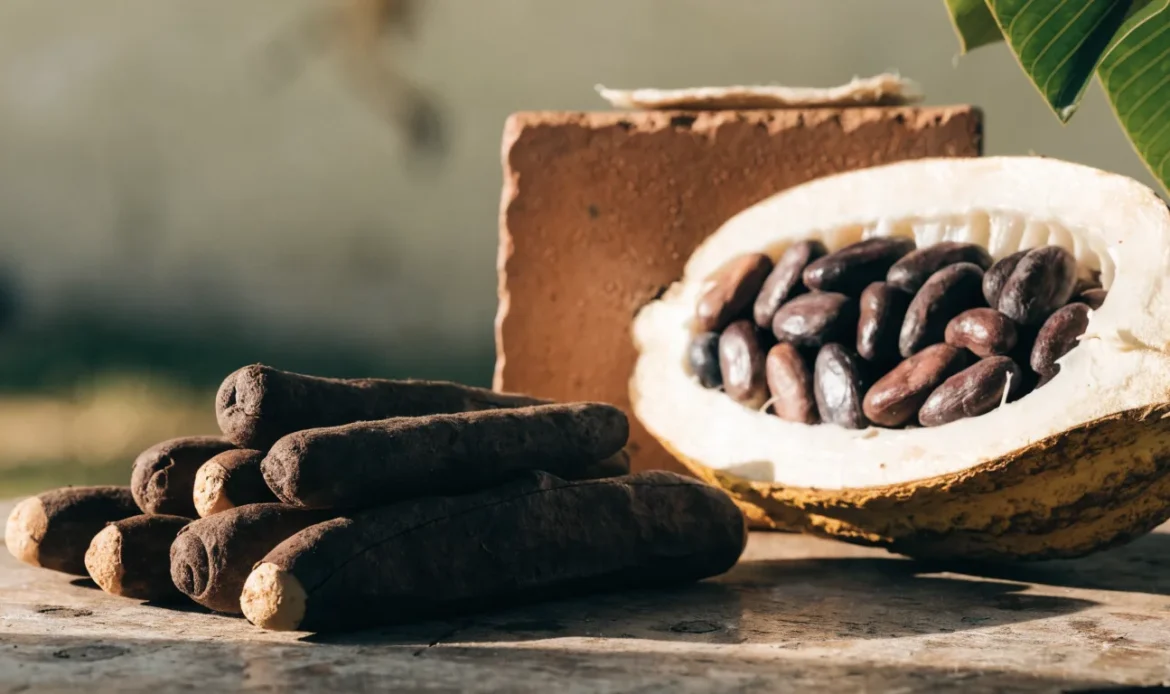
Short answer: Cocoa bola are small Caribbean cocoa or chocolate confections. They come in many homemade and store-made forms. Recipes and names vary by island and by maker. Cocoa bola are not the same as sea moss, though some products may list added botanicals. This guide explains what to look for on a label, how they are made, and how to choose or make them safely.
What is a cocoa bola?
Cocoa bola is a loose term for a small ball-shaped sweet made with cocoa or chocolate as a main flavor. People make them at home and sell them in markets. They can be dry and crumbly, dense and fudge-like, or moist and sticky. The exact recipe changes with local taste and household practice.
Common forms you might see:
- A dry bite rolled in coconut flakes.
- A fudgy ball made with condensed milk or butter.
- A crumbly mix of cocoa, crushed biscuits, and sweetener.
Names and recipes vary across the Caribbean. If you buy a packaged product, check the label to see exactly what’s inside.
Ingredients and common variations
Ingredients change a lot from one maker to another. You will often find some mix of:
- Cocoa powder, cacao nibs, or chocolate.
- A sweetener such as sugar, condensed milk, or molasses.
- A fat: butter, margarine, or coconut oil.
- Fillers or binders: ground biscuits, oats, or crushed crackers.
- Coatings: shredded coconut, cocoa powder, or sprinkles.
- Spices: cinnamon or nutmeg in small amounts.
Some makers add other botanicals or flavors. If a product lists “sea moss,” “Irish moss,” or another seaweed, that is an added ingredient. Cocoa bola is primarily a cocoa confection; sea moss is a separate ingredient that changes texture and is not part of a standard cocoa bola recipe.
Cultural and culinary context
Cocoa-based sweets have a long history in the Caribbean. Cocoa was once a local crop in many islands, and cocoa treats became part of home cooking and street food. Families pass recipes down through generations. Sellers may offer cocoa bola at markets, fairs, or as homemade gifts.
Because recipes vary, the taste and texture of cocoa bola reflect local ingredients and family preference. When you taste a cocoa bola, you are often tasting regional history as well as cocoa.
Cocoa bola vs. sea moss — what to check
Cocoa bola is a cocoa product. Sea moss is a type of seaweed. They are different botanically and culinarily.
If a packaged cocoa bola lists sea moss, treat it as a combined product. Seaweed can contain iodine and other minerals. That matters for some people. Reliable resources explain that seaweed’s iodine can vary widely and that people should check amounts when seaweeds are used in foods or supplements (see [1], [2], [5]). Operation Supplement Safety also notes that sea moss in supplements raises labeling and safety questions [4].
What to do when you see sea moss or seaweed in the ingredient list:
- Read the ingredient list and the Nutrition Facts panel carefully.
- Look for a clear amount or a warning about iodine. Many products do not list iodine amount, so you may need to ask the seller.
- If you have thyroid issues or are on iodine-sensitive medication, talk with a healthcare provider before consuming products that contain seaweed. This article does not give medical advice.
How to read a cocoa bola label — checklist
Here is a simple checklist you can use when choosing a packaged cocoa bola.
| Label item to check | Why it matters | Action |
|---|---|---|
| Full ingredient list | Shows what’s inside and what to avoid (allergens, seaweed) | If you have allergies or dietary limits, skip if unclear |
| Order of ingredients | Ingredients listed by weight (most to least) | If sugar is first, product is sugar-forward |
| “Contains” allergen statement | Tells if milk, nuts, soy, gluten are present | Avoid if you are allergic and it lists the allergen |
| Nutrition Facts panel | Gives calories, sugar, fat per serving | Compare similar products; portion size matters |
| Presence of seaweed/sea moss | Seaweed may supply iodine | Ask seller for details or avoid if unsure |
| Preservatives or artificial flavors | May affect taste and storage | Choose if you prefer fewer additives |
| Manufacturer or origin | Helps with questions about sourcing | Contact maker or seller for more info |
| Storage instructions | Some need refrigeration | Follow the label after buying |
| Best-by or lot code | Helps with freshness tracking | Ask seller if not present |
This checklist helps you spot when a cocoa bola is just a cocoa sweet vs when it includes other botanicals like sea moss.
Buy pre-made or make your own? A quick decision guide
- Want convenience and consistent packaging? Buy a labeled product from a trusted seller. Use the label checklist above.
- Want control over ingredients and lower sugar? Make cocoa bola at home.
- Need large amounts for a party or sale? Contact sellers for bulk buying or check a wholesale source. Visit our wholesale page for business inquiries: /wholesale/.
- Want to learn more about Caribbean botanicals and product types? See our Caribbean botanicals collection: /shop/caribbean-botanicals/.
Simple homemade cocoa bola (sample recipe)
This is a basic sample recipe to try at home. It’s a guide, not a product claim. Adjust to taste.
Ingredients:
- 1 cup cocoa powder
- 1 cup finely crushed biscuits or oats
- 1/2 cup sweetened condensed milk or 1/2–3/4 cup sugar mixed with 2–3 tbsp butter
- 1/4 cup melted coconut oil or butter
- Optional: shredded coconut for rolling, pinch of cinnamon
Method:
- Mix dry ingredients in a bowl.
- Add condensed milk or sweetener + fat. Stir until the mixture binds.
- Roll into small balls with clean hands.
- Roll in shredded coconut, cocoa, or chill on a tray.
- Store in a covered container. Refrigerate if you used dairy.
Notes:
- This is a flexible home recipe. Texture and sweetness will change with different ingredients.
- If you add sea moss, use a tested, food-safe preparation and note that sea moss changes texture and may affect shelf behavior.
Storage and safety tips
- Follow label instructions. Packaged goods should have storage guidance.
- If a cocoa bola contains dairy, keep it cool or refrigerate.
- If the product looks or smells off, do not eat it.
- Ask the maker about shelf life for homemade or market-bought items.
- If seaweed is present, consult reliable sources about iodine and seaweed variability (see [1], [2], [5]).
What this article can and cannot prove
This guide shows how to tell what a cocoa bola is and what to check when buying. It cannot prove ingredient amounts, lab safety, or medical effects for any product you find or buy. If a seller claims a product has a specific nutrient amount, ask for lab documentation. If you have health questions about iodine or seaweed, consult a healthcare professional. Reliable general information on seaweed and iodine is available in the references below (see [1], [2], [5]).
Next steps
- If you want to browse products, visit our Caribbean botanicals page: /shop/caribbean-botanicals/.
- To shop for related items, see /shop/.
- If you want background reading on ingredients and safety, check our learn section: /learn/.
- For bulk buying or business questions, contact /wholesale/ or reach out at /contact/.
- Return to the homepage for more categories: /.
Conclusion
Cocoa bola are a family of small Caribbean cocoa confections. Recipes vary. Some are simple bites of cocoa and sugar. Others include dairy, coconut, or even added botanicals like sea moss. Read labels, check for allergens, and ask sellers about any seaweed or unusual ingredients. If you make them at home, use clean methods and store them safely. This guide gives the tools to decide what kind of cocoa bola you want and how to check a product before buying.
Continue reading
Frequently asked questions
Is cocoa bola the same as sea moss?
No. Cocoa bola is a cocoa-based sweet. Sea moss is a seaweed. Some cocoa bola products may list sea moss as an added ingredient. Read the label to be sure.
Can cocoa bola contain allergens?
Yes. Cocoa bola can contain milk, nuts, soy, or gluten depending on recipe and maker. Check the ingredient list and any “contains” statements.
How can I tell if a cocoa bola product contains sea moss?
Look at the full ingredient list. If you see “sea moss,” “Irish moss,” “seaweed,” or similar terms, then it includes seaweed. If the label is unclear, ask the seller for details.
Are there storage rules for cocoa bola?
Follow the product label. If the product contains dairy or other perishable ingredients, refrigeration is common. If there are no instructions, ask the seller.
Where can I buy cocoa bola in bulk?
For business or bulk inquiries, contact wholesale suppliers or visit /wholesale/. We also list some products in /shop/ and our Caribbean botanicals collection at /shop/caribbean-botanicals/.
Where can I learn more about seaweed safety?
Trusted sources like university nutrition pages and food safety agencies discuss seaweed and iodine. See references at the end of this article for starting points.
References
- Harvard T.H. Chan School of Public Health, “Seaweed.” https://nutritionsource.hsph.harvard.edu/seaweed/
- Smyth PPA. “Iodine, Seaweed, and the Thyroid.” European Thyroid Journal, 2021. https://pmc.ncbi.nlm.nih.gov/articles/PMC8077470/
- Operation Supplement Safety, “Sea Moss in Dietary Supplements.” https://www.opss.org/article/sea-moss-dietary-supplements
- Blikra MJ et al. “Consequences of acute and long-term excessive iodine intake: A literature review focusing on seaweed as a potential dietary iodine source.” 2024. https://doi.org/10.1111/1541-4337.70037