
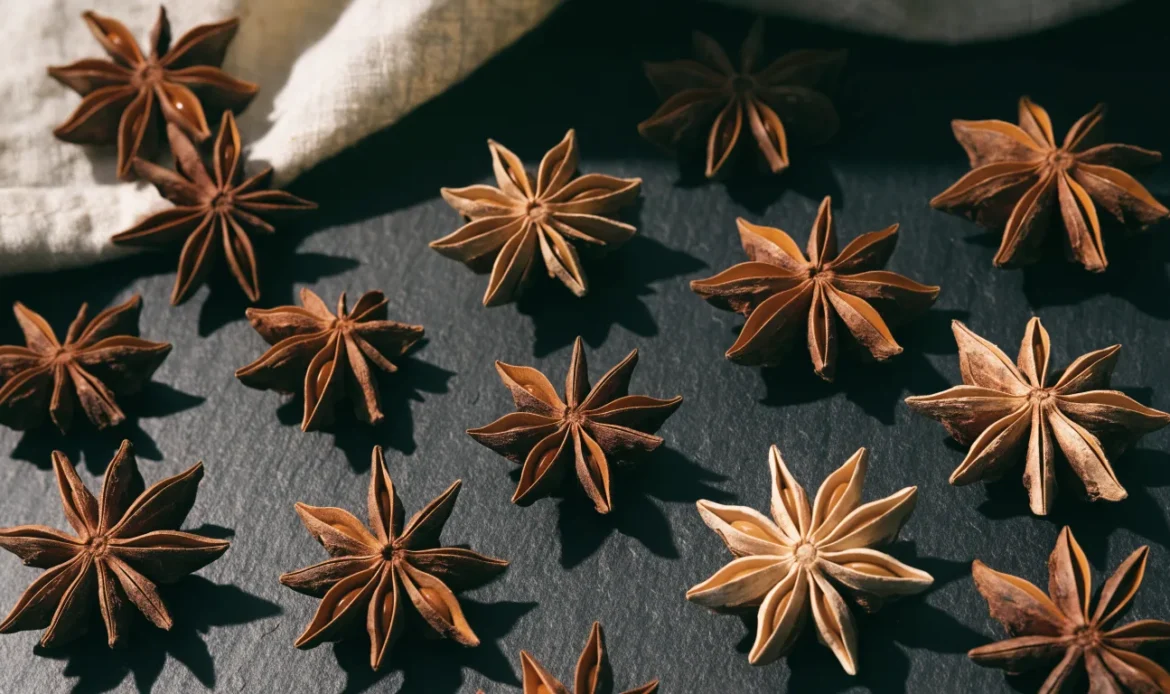
Short answer: A pod of star anise is the dried, star-shaped fruit of an Illicium tree used as a spice. Each “arm” of the star holds one glossy seed. The pods are used whole or ground for flavor in cooking, baking, and some spice blends.
Why this matters: If you are shopping for spices or exploring Caribbean botanicals, knowing what a pod looks like and how to use it helps you pick the right form for a recipe. It also helps you avoid non-food look-alikes and understand how star anise is not connected to sea moss or other marine plants.
What a pod of star anise is (basic definition)
- A pod of star anise is the dried fruit of an aromatic tree in the Illicium genus.
- The fruit dries into a rigid, star-shaped structure. Each point of the star is a seed capsule.
- Inside each capsule sits a single brown seed. The seed and the outer pod both hold the spice’s aroma.
- People use pods whole, crushed, or ground. Whole pods are often removed after cooking. Ground star anise is used in blends and baked goods.
Botanical background: where the pod comes from
- Edible star anise most commonly comes from Illicium verum. This tree is grown in parts of Asia and in warm climates. It produces the distinctive star-shaped fruits.
- The plant is not related to anise (Pimpinella anisum), which is an annual herb. They taste similar but are different plants.
- Some Illicium species are not safe to eat. They are used for ornamental or ritual purposes and can cause harm if consumed. Always confirm you have food-grade Illicium verum when you buy star anise as a spice.
What you can check
- Look for the botanical name (Illicium verum) on a package. That name indicates the edible species.
- If a source does not list a botanical name, ask the seller or check their product page before using the product in food.
What the available information cannot prove
- Pack labels or photos alone cannot prove how or where a pod was grown, dried, or handled. If you need that level of traceability, ask the seller for sourcing or testing details.
Appearance and anatomy of a pod
- Shape: Typically 6–8 pointed star. Some pods have 4–12 points, but 8-point stars are common.
- Size: Each arm or ray is the length of a small bean. The pod is rigid and woody when dry.
- Color: Dried pods are medium to dark brown. Seeds are shinier and slightly darker.
- Texture: The pods are hard and brittle. Seeds are smooth and can be whole or broken in ground products.
How to inspect a pod
- Hold a pod up to the light. You should see seed cavities in each arm.
- Shake gently. If seeds rattle, they may be loose but still present.
- Split one arm to check the seed inside. A glossy seed is typical for edible star anise.
Culinary uses and how chefs use a pod
Common uses
- Simmered in soups, broths, and stews to add a warm, licorice-like note.
- Used in spice blends such as Chinese five-spice and some Caribbean blends.
- Infused into syrups, poaching liquids, and slow-simmered sauces.
- Ground and used in baked goods and spice rubs.
Practical use tips
- Whole pods release flavor slowly. Add them early in a long simmer and remove before serving.
- Break or crush a pod if you need a faster release of flavor.
- Use ground star anise when you want even distribution, such as in doughs or dry rubs.
- One whole pod is potent. Start with less than a recipe calls for and add more if needed.
Flavor pairing
- Pairs well with cinnamon, cloves, citrus peel, ginger, fennel, and warm sweet spices.
- Works with meats, poultry, root vegetables, and fruit-based desserts.
What you can check
- If you need a mild note, use one small piece or a half pod per pot of stew.
- If making a dry blend, grind only small amounts at a time. Ground star anise loses aroma faster than whole pods.
Whole pods vs ground star anise: when to choose which
Decision guide (quick)
- Whole pods: Best for long simmering liquids, pickling, and infusions where you plan to remove the spice.
- Crushed pods: Good when you want more immediate flavor but still want to filter out solids later.
- Ground star anise: Best for baking, spice blends, or when you want the spice fully integrated.
Table: Whole vs Ground star anise
| Use case | Whole pod | Crushed pod | Ground star anise |
|---|---|---|---|
| Long simmer / broth | Excellent | Good | Not ideal |
| Baking / dough | Not ideal (texture) | Possible (discard shards) | Excellent |
| Spice blends | Split and grind as needed | Good | Excellent |
| Quick infusion | Less effective | Effective | Very effective |
| Storage life | Long | Medium | Shorter (loss of aroma) |
How a pod is harvested and dried (simple overview)
- The tree flowers and forms small fruits.
- Fruits mature and are harvested when they turn from green to brownish and begin to dry naturally on the tree.
- Harvested fruits are then dried further, either in the sun or in controlled drying rooms, until they are hard.
- Drying concentrates the aroma and makes the pod brittle and shelf-stable.
What you can check
- Reasonable sellers will describe whether their pods are sun-dried or oven-dried. That can affect aroma but not the basic identity of the spice.
- If you want organic or specific handling, look for those terms or ask the supplier.
What the available information cannot prove
- A drying method listed on a product page does not guarantee consistent quality for every batch. Short of lab testing, you rely on supplier transparency.
Safety and identification: edible vs non-edible look-alikes
- Edible star anise (Illicium verum) is used in food. Some other Illicium species are not edible. They contain strong compounds that can be toxic.
- Historical reports have linked food illness to confusion between edible and inedible Illicium species when improper material was used.
- To reduce risk:
- Buy star anise from reputable food suppliers.
- Look for the botanical name Illicium verum on labels.
- Avoid using parts of potted Illicium plants at home as a food source unless they are sold as food-grade.
What you can check
- Confirm the product is sold as a culinary spice. Packaging for non-food uses (incense, ornamental) is not a food product.
- If you see a star anise product labeled for ornamental or incense use, do not consume it.
What the available information cannot prove
- A photo of a pod cannot always prove the species. Two species can look similar to the eye. Formal botanical identification or supplier certainty is the main way to be confident.
Buying and storing: practical checklist
Checklist: How to choose and store star anise pods
- Look for the botanical name Illicium verum on the label.
- Inspect the pods visually: uniform color, intact arms, and shiny seeds.
- Prefer whole pods for longer storage. Ground spice loses aroma faster.
- Check packaging: airtight containers protect aroma. Clear windows let you inspect pods.
- Store in a cool, dark place away from heat and strong odors. A pantry or cupboard is fine.
- Use ground star anise within 6–12 months for best aroma. Whole pods last longer.
- For a repeat purchase, test a small amount first to check aroma and flavor with your recipes.
What you can check
- If you buy online, ask for close-up photos or request a sample if you need to confirm quality.
- If you need high traceability, ask the seller for more sourcing details.
How star anise differs from sea moss and why that matters here
- Star anise is a land plant fruit used as a spice.
- Sea moss is a marine algae product used in food, supplements, and other products. They are unrelated botanically and chemically.
- Do not confuse product pages: a sea moss company may sell many kinds of botanicals. Read each product label and description to know what you are buying.
Why we mention sea moss
- At Zen Wholesalers we sell Caribbean botanicals and sea moss separately. If you were searching for sea moss but found star anise, note they serve different kitchen and product needs.
What you can check
- Check product pages and labels. Confirm the product name and botanical name before use.
- If buying both spices and seaweed from the same shop, keep their storage separate to avoid flavor transfer.
Practical uses in Caribbean and global cuisine (context, not exhaustive)
- In some Caribbean kitchens, star anise appears in spice blends or stewed dishes that borrowed flavors from global traditions.
- Globally, it is central in Chinese five-spice, Vietnamese pho broth, and many slow-cooked dishes that benefit from a warm, licorice-like aroma.
- The same star anise pod can be used across savory and sweet dishes depending on the recipe.
What you can check
- When trying a new recipe, use a small amount of star anise the first time. The flavor can be strong and may dominate delicate dishes.
Simple ways to use a pod at home (step-by-step ideas)
- Infusing in broth:
- Add one whole pod to a pot of simmering broth or stock.
- Simmer 20–40 minutes; taste and remove the pod before serving.
- Making spiced syrup:
- In a small saucepan, combine 1 cup water and 1 cup sugar with one or two pods.
- Simmer until syrup thickens. Remove pods and cool. Use for drinks or desserts.
- Toasting and grinding:
- Dry-toast pods in a pan for 1–2 minutes until aromatic.
- Cool and grind in a spice grinder. Use sparingly in baking.
- Using in spice blends:
- Split pods, remove seeds, and grind together with cinnamon, cloves, and fennel for a homemade five-spice mix.
What you can check
- Remove pods from finished dishes. They are woody and not pleasant to bite into.
Buying tips for bulk and wholesale buyers
- If you buy in bulk, whole pods are usually a better option for storage and slower aroma loss.
- Ask your supplier about lot consistency and whether they can provide samples or small test orders.
- Make sure product is sold as a culinary spice and check for any food-safety labeling the supplier can provide.
If you are considering wholesale, learn more on our wholesale page: /wholesale/
What to ask next when you shop
- Ask whether the product is Illicium verum and sold for culinary use.
- Request photos or a sample if you need to check pod condition and aroma.
- If you need certificate-level traceability or lab results, ask the seller for third-party documentation.
If you want to explore more Caribbean botanicals or place an order, start here: /shop/caribbean-botanicals/. To see our shop offerings: /shop/. For learning resources and articles: /learn/. For wholesale inquiries: /wholesale/. To contact us directly: /contact/. Our main site is here: /.
Conclusion
A pod of star anise is a dried, star-shaped spice fruit used for a warm, licorice-like flavor. It is most useful whole for long simmering infusions and ground for baking. When you buy star anise, check the label for Illicium verum and confirm the product is intended for culinary use. This reduces the chance of confusing edible pods with non-food look-alikes. If you plan to buy in bulk or need tracing, ask the supplier for more details or a sample before ordering.
Continue reading
Frequently asked questions
Is a star anise pod edible whole?
Pods are technically edible but are woody and hard. They release flavor in cooking, but most cooks remove the whole pod before serving.
How many seeds are in one pod?
Each arm normally holds one seed. The total depends on the number of arms the pod has (commonly 6–8).
Can star anise be used in tea?
Yes. A small piece or one pod can be steeped in hot water or tea for a warm licorice note. Taste and remove if bitterness develops.
Are all star anise products safe to eat?
No. Some Illicium species are not food-grade. Buy products labeled for culinary use and check for the botanical name Illicium verum.
How should I store star anise pods?
Store in an airtight container in a cool, dark place. Keep away from heat and strong odors.
Is star anise the same as aniseed?
No. Aniseed (from Pimpinella anisum) is a different plant. Their flavors are similar, but they are different botanically.
References
- Harvard T.H. Chan School of Public Health, “Seaweed.” https://nutritionsource.hsph.harvard.edu/seaweed/
- Operation Supplement Safety, “Sea Moss in Dietary Supplements.” https://www.opss.org/article/sea-moss-dietary-supplements
- Missouri Botanical Garden, Illicium (star anise) plant information. https://www.missouribotanicalgarden.org/
- Royal Horticultural Society, Illicium (star anise) plant information. https://www.rhs.org.uk/