
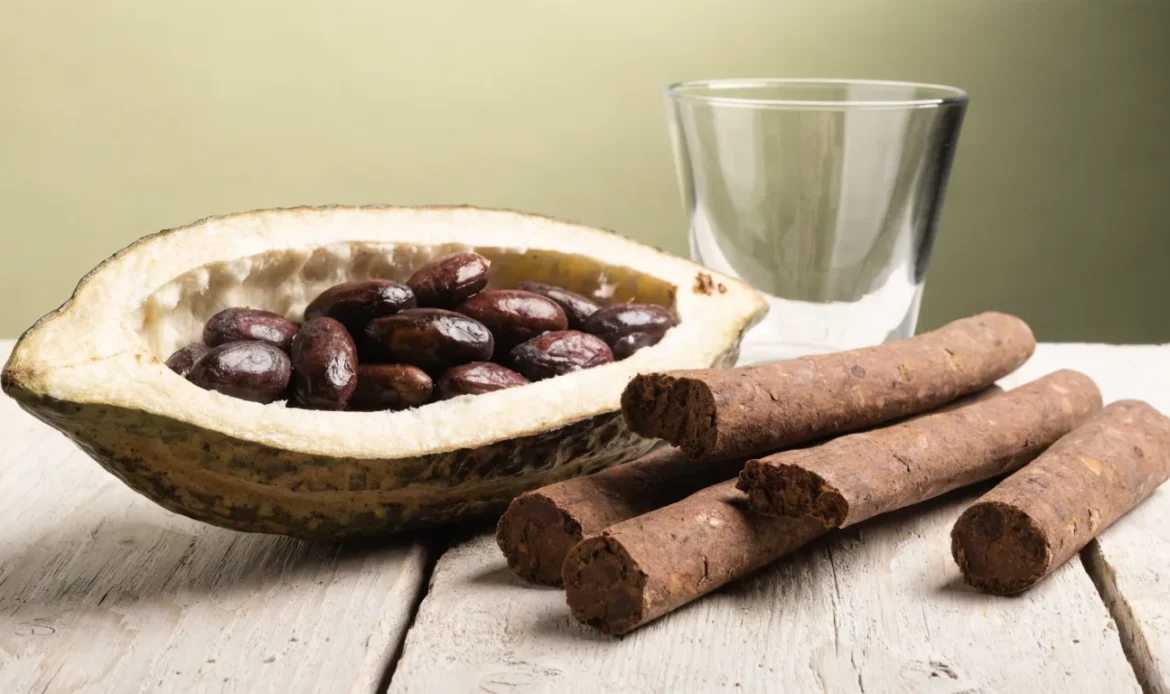
Short answer: St Lucia cocoa tea is a Caribbean hot drink made from roasted cacao formed into sticks or rounds. The taste and quality depend on where the cacao came from and how it was processed. If you want to source authentic St Lucia cocoa tea, check the ingredient list, processing notes, and supplier transparency.
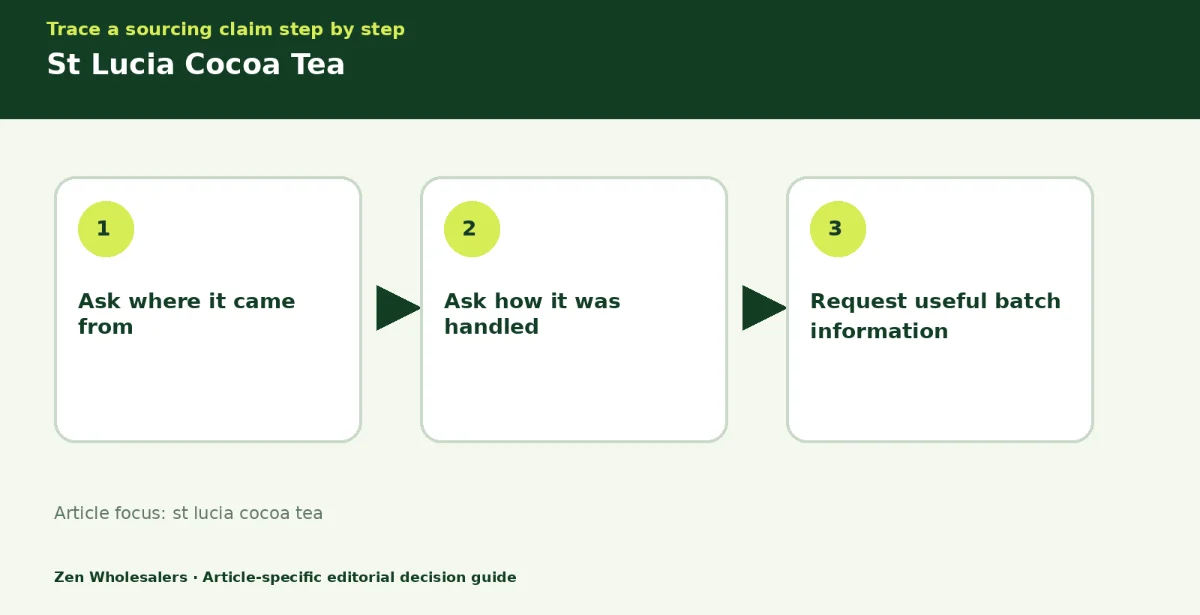
Why this guide: you want facts about origin and sourcing. You also want clear steps to choose a good supplier. This page focuses on those needs. It also explains how cocoa tea differs from sea moss products sold in the same markets.
What is St Lucia cocoa tea?
St Lucia cocoa tea usually refers to a traditional Caribbean beverage made by melting roasted cacao sticks or pieces into hot milk or water. The base is cacao (Theobroma cacao), not seaweed. Makers form roasted, ground cacao into compact shapes—sticks, balls, or discs—for easy storage and brewing.
Common features
- Made from roasted cacao that is ground into a paste or block.
- Often flavored with spices such as cinnamon, nutmeg, or vanilla.
- Prepared by grating or breaking a piece into hot liquid and whisking until smooth.
- Sold as whole sticks, discs, or ground blocks rather than fine powder.
Clear distinction: cocoa tea is a cacao product, not a botanical sea product. If you also buy sea moss or other marine botanicals, keep them labeled and stored separately.
How cocoa sticks are typically made (what to look for)
Producers use several steps that affect flavor and traceability. Look for sellers who explain these steps.
Typical steps (general)
- Fermentation of cacao beans after harvest. This develops flavor.
- Drying to reduce moisture.
- Roasting to deepen flavor and aroma.
- Grinding roasted beans into a paste (cacao liquor) and sometimes mixing with sugar or spices.
- Molding the paste into sticks or blocks and cooling.
What these steps tell you
- Fermentation and roasting affect flavor notes like fruity, nutty, or chocolatey. These steps also reduce raw-bean bitterness.
- Grinding and molding methods affect texture when the stick melts.
- Additives or sweeteners change the character. A single-ingredient cocoa stick will list only cacao (sometimes cacao mass or cacao liquor). Blends will list sugar, milk powder, spices, and stabilizers.
What sellers often don’t prove
- “Origin” can mean the island where the beans were grown, the factory where they were processed, or both. A label that names an island does not always mean beans were grown there. Ask for clarity.
- Words like “handmade,” “traditional,” or “authentic” describe method, not quality. Ask what those words mean in practice.
Why origin and processing matter
Flavor: Cacao beans from different places can taste different. Soil, climate, farming, and post-harvest processing all shape flavor.
Transparency: If you need consistent flavor for a menu, ask about batch-to-batch consistency, supplier practices, and whether beans are mixed from multiple origins.
Allergens and additives: Some sticks include milk powder, soy lecithin, or added sugar. These affect labeling and who can safely consume the product.
Traceability and food safety: For large orders, ask about packing dates, lot numbers, and the seller’s traceability practices. This helps with quality control and recalls, if needed.
What you should check before buying
Here is a practical sourcing checklist you can use when evaluating a St Lucia cocoa tea product or supplier.
Buying and sourcing checklist
- [ ] Ingredient list: Is it only cacao, or are sugar and dairy included?
- [ ] Origin statement: Does the label state where the beans were grown? Is it clear whether the product was processed locally?
- [ ] Processing notes: Does the seller describe fermentation, roasting, and molding?
- [ ] Packaging information: Is there a lot number, packing date, and storage instruction?
- [ ] Allergen labeling: Are common allergens declared (milk, soy, nuts)?
- [ ] Shipping and storage: Can the seller explain how the item is packed for transit and how to store it on arrival?
- [ ] Sample or tasting options: Can you try a small amount before a large order?
- [ ] Minimum order and lead time: What are shipping times and order quantities for wholesale?
- [ ] Returns and quality policy: What happens if a batch doesn’t meet expectations?
- [ ] Supplier transparency: Can the seller provide photos of production or a written description of who farms and processes the beans?
- [ ] Certificates (if needed): Ask if there are certificates (organic, fair trade) but do not assume their presence—request documentation.
Use this checklist with sellers and when comparing products online.
Questions to ask a supplier
When you contact a seller or wholesaler, these questions give quick clarity.
- Where were the cacao beans grown?
- Were the beans fermented and roasted on the island? If not, where?
- What ingredients are in the cocoa stick?
- Do you use local spices? If so, which ones and where do they come from?
- Do you provide lot numbers and packing dates?
- Can you describe how the product is packaged for shipping?
- Do you sell samples or small retail packs?
- If ordering wholesale, what are the lead times and minimums?
- Can you show photos or a short video of production?
Answers to these questions help you judge traceability and quality.
Preparing St Lucia cocoa tea (basic method)
This is a simple, widely used way to brew cocoa sticks. Quantities and steeping times are flexible and depend on taste.
Basic steps
- Break or grate a piece of cocoa stick.
- Heat milk or water until hot but not boiling.
- Add the grated cocoa to the hot liquid.
- Whisk or stir until smooth and melted.
- Sweeten or spice to taste (sugar, cinnamon, nutmeg, vanilla).
Notes
- Whole milk produces a richer mouthfeel. Plant milks are a common alternative.
- Some people simmer gently to meld flavors, then strain if there are solids.
- Cocoa sticks melt at different rates. Stirring or whisking helps.
Storage and shelf guidance
Simple practices keep cocoa sticks in good condition.
- Store in a cool, dry place away from direct sunlight.
- Reseal opened packages or transfer contents to an airtight container.
- Keep away from strong-smelling foods; cacao can absorb odors.
- If shipping to hot climates, ask the seller about heat-stable packaging.
Avoid numerical shelf-life claims unless the seller provides a date-stamped packing date and recommended use-by guidance.
Culinary and cultural context
Cocoa tea is part of many Caribbean food traditions. It often appears at breakfast or as a warm social drink. Spices vary by island and by family recipe. In St Lucia and neighboring islands, cocoa tea is a household favorite prepared in many small variations, from very spiced to lightly sweetened.
If you are exploring cocoa tea for a menu, tasting samples and noting regional spice blends will help you choose a style that fits your customers.
Cocoa tea and sea moss: keeping products distinct
On sites that sell Caribbean botanicals, cocoa tea and sea moss may appear near each other. They are very different:
- Cocoa tea is a cacao product, made from Theobroma cacao.
- Sea moss is a marine algae product and has entirely different sourcing, handling, and food-safety considerations.
Why this matters: seaweed products can contain variable levels of iodine and other minerals. If you source sea moss for supplements or food, consult food-safety guidance and laboratory testing as needed. Seaweed’s mineral content can vary by species and location; monitoring and testing help manage risks for sensitive consumers [1][2][5][4].
Decision guide: when to buy cocoa sticks vs alternatives
Consider these points if you decide between cocoa sticks and other cocoa forms.
- Choose cocoa sticks if you want traditional presentation and hands-on preparation.
- Choose fine powder if you need fast dissolution and consistent portioning.
- Choose instant mixes for speed and predictable sweetness, but expect added stabilizers or sugars.
If you need consistent flavor for foodservice, insist on samples and clear supplier notes about batch variability.
Where to learn more or buy
- Browse our Caribbean botanicals collection for product examples: /shop/caribbean-botanicals/
- See other items and general shopping options: /shop/
- Learn about sourcing and herbs on our learning hub: /learn/
- Want wholesale details or to discuss a bulk order? Visit /wholesale/ or contact our team: /contact/
- Return to the homepage: /
Conclusion
St Lucia cocoa tea is a traditional cocoa-based drink made from roasted cacao shaped into sticks or blocks. When sourcing, focus on transparency about origin and processing, ingredient lists, and clear packing information. Use the checklist in this guide to compare sellers and to ask the right questions. If you need wholesale or product details, use our shop and contact pages to start the conversation.
Continue reading
Frequently asked questions
Is St Lucia cocoa tea the same as hot chocolate?
They are similar but not identical. Cocoa tea is made from whole roasted cacao formed into sticks or blocks. Hot chocolate often uses cocoa powder and sometimes added milk powders or sweeteners. Cocoa tea can taste more like pure cacao.
Are cocoa sticks vegan?
Some are vegan and made only with cacao. Others include dairy or milk powders. Always check the ingredient list or ask the seller.
Does cocoa tea contain caffeine?
Cocoa naturally contains stimulants such as caffeine and theobromine. Levels vary by bean and processing, so the exact amount is not fixed.
Can I store cocoa sticks in a warm climate?
Yes, but take precautions. Ask how the seller packs the product for heat and humidity. Store in a cool, dry place and use airtight containers after opening.
How should I verify origin claims?
Ask the seller for details: where beans were grown, where they were processed, and whether beans are mixed from multiple sources. Request photos, batch notes, or supplier statements if origin matters to you.
Are there food-safety concerns I should note?
For cacao products, check allergen labeling and packaging hygiene. If you also source seaweed products, be aware that seaweed can have variable mineral content and requires different safety checks [1][2][4][5].
References
- Harvard T.H. Chan School of Public Health, “Seaweed.” https://nutritionsource.hsph.harvard.edu/seaweed/
- Smyth PPA. “Iodine, Seaweed, and the Thyroid.” European Thyroid Journal, 2021. https://pmc.ncbi.nlm.nih.gov/articles/PMC8077470/
- Operation Supplement Safety, “Sea Moss in Dietary Supplements.” https://www.opss.org/article/sea-moss-dietary-supplements
- Blikra MJ et al. “Consequences of acute and long-term excessive iodine intake: A literature review focusing on seaweed as a potential dietary iodine source.” 2024. https://doi.org/10.1111/1541-4337.70037