
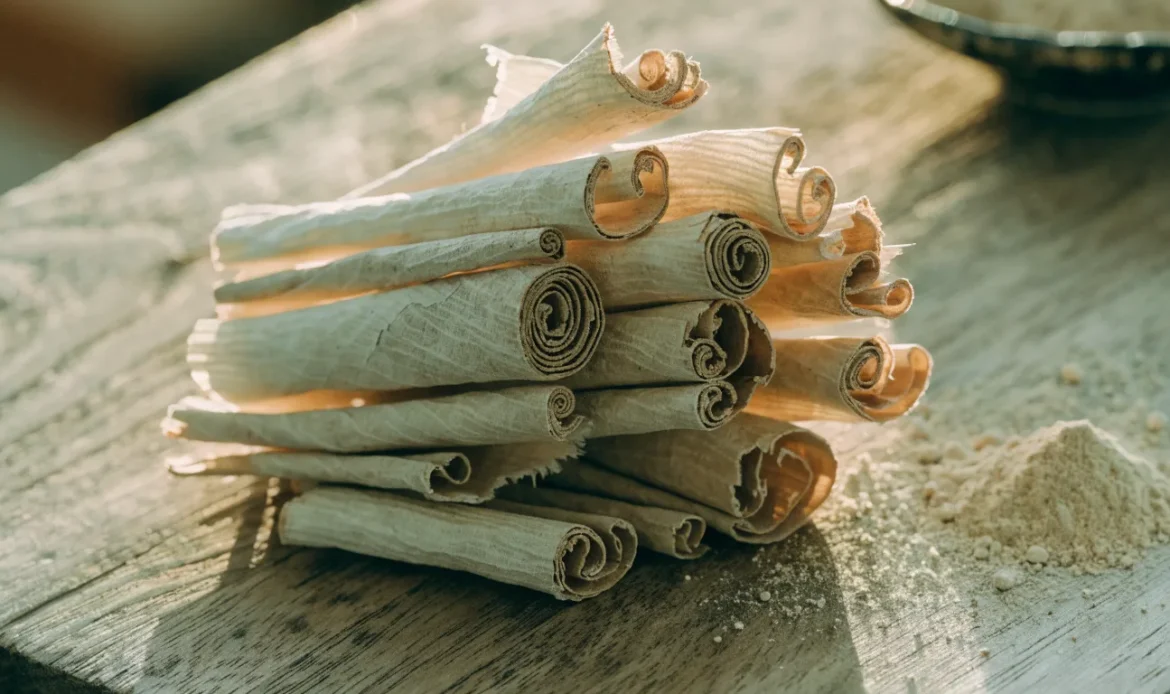
Short answer: Brands that truly sell Ceylon cinnamon usually call it Ceylon or “true cinnamon” and list the botanical name Cinnamomum verum (or zeylanicum) and a Sri Lanka origin. Many specialty spice makers, small importers, and some ethical or single-origin producers offer it. To know whether a brand’s product is Ceylon, check the label for botanical name and origin, inspect the form (thin, multi‑layered quills are a clue), and ask the seller for clear sourcing details.
This guide explains what to look for, why some labels are ambiguous, how to compare brands, and what to ask when you buy retail or wholesale.
Why “Ceylon” matters for identification (not for health claims)
“Ceylon cinnamon” is a common name for the bark of the tree Cinnamomum verum, native to Sri Lanka. The name signals a species and a regional tradition. Brands may use these words to describe the botanical source. But labels and marketing vary. Some products sold simply as “cinnamon” are a different species (often called cassia). The difference matters for cooks and buyers who want a particular aroma, texture, or culinary profile.
This article focuses on how to identify brands that actually sell Ceylon cinnamon, what clues to trust or question, and how to decide which product fits your use.
How brands label Ceylon cinnamon
Look for these label elements. Brands that are clear will include one or more of them:
- The common name “Ceylon cinnamon” or “True cinnamon.”
- The botanical name: Cinnamomum verum or Cinnamomum zeylanicum.
- Country of origin: Sri Lanka (often named directly) or “product of Sri Lanka.”
- Form: sticks/quills, ground powder, broken pieces. Photos that match the form are a good sign.
- Seller transparency: roast or harvest date, lot number, batch photos, or supplier name.
What a label cannot prove by itself:
- That the spice has been laboratory‑tested or authenticated.
- That “organic” equals species authenticity (organic refers to farming practices, not species).
- That the visual appearance in a photo is the actual batch you will receive.
If a brand does not show botanical name or origin, assume more checking is needed.
How to tell Ceylon from other cinnamon on a product page
On a product page, check these sections. Brands that provide useful details make it easier to verify authenticity.
- Product title and subtitle: Does it say “Ceylon,” “True cinnamon,” or “Cinnamomum verum”?
- Description: Is the origin stated? Do they explain the quill type or processing?
- Photos: Are there close ups of quills showing thin layers? Are ground samples photographed with texture visible?
- Certifications and documents: Does the product page offer COAs, third‑party test links, or photos of harvest/packing? These are more common for wholesale or high‑transparency sellers.
- Buyer notes: Does the brand explain how to use sticks vs powder and how they sourced the bark?
If photos and copy use generic words like “cassia” nowhere and “Sri Lankan” nowhere, treat the product as unlabeled for species.
Visual and physical clues: what to expect in a real Ceylon product
If you can inspect the product in person or via detailed photos, these clues help:
- Quill shape: Ceylon quills are usually thin and can have many fragile layers like cigar paper. They often roll into multiple thin concentric layers.
- Color and texture: Typically a lighter tan to reddish-brown and more delicate bark. Texture will feel brittle and paper‑thin; you may be able to flake it.
- Ground cinnamon: Powder hides many clues. High resolution photos may show lighter, finer texture than darker, coarser cassia powder. But powder alone is unreliable for species ID.
- Aroma: Ceylon is often described as more delicate and complex, rather than harsh or very strong. Aroma perception is subjective and not a proof.
Remember: you cannot prove botanical identity by sight alone when cinnamon is powdered. Visual clues reduce uncertainty for sticks and quills but are not definitive proof for ground spice.
What brands typically sell Ceylon cinnamon
Brands that commonly sell Ceylon cinnamon include:
- Small to medium specialty spice companies that list single‑origin spices.
- Importers and distributors that focus on Sri Lankan sourcing.
- Fair‑trade or small‑farm cooperatives that identify Sri Lanka origin.
- Some general spice brands may offer a Ceylon line alongside cassia.
Large commodity brands often supply cassia as “cinnamon” in mass retail. A brand that offers a dedicated Ceylon product line, with botanical name and origin, is more likely to carry true Ceylon cinnamon.
If you are comparing brands, give preference to those that:
- State botanical name and origin.
- Provide clear product photos and detailed descriptions.
- Answer customer questions about source and form promptly.
- For wholesale buyers, provide certificates of analysis (COAs) or lot traceability on request.
What a brand’s certifications mean (and don’t mean)
Common certifications:
- Organic: Indicates farming and processing practices that meet organic standards. It does not, by itself, guarantee species identity.
- Fair Trade / Ethical Trade: Relates to labor and trade practices.
- ISO, HACCP: Food safety systems that indicate handling standards.
What certifications do not prove:
- Botanical species identity (unless coupled with a species-specific test).
- That the product is free of substitution. Labels and certifications can be forged or applied to mixed batches. Always verify seller transparency.
For high-stakes purchases (large wholesale lots), ask the brand for provenance documents and, if needed, third‑party species verification.
How to evaluate brands when shopping online
Use this short process whenever you consider a new brand:
- Read the product title and description. Look for “Ceylon,” “Cinnamomum verum,” or “Sri Lanka.”
- Inspect product photos closely. For sticks, look for many thin layers.
- Check seller information. Does the brand explain how they source and pack cinnamon?
- Search customer questions and reviews for notes on authenticity and aroma.
- Contact the seller with one or two direct questions: “Is this Cinnamomum verum?” and “Where was this lot harvested?” A clear, prompt answer is a good sign.
- Compare return policies and guarantees—brands that offer satisfaction policies are easier to try.
If the seller hesitates to answer or avoids origin questions, treat the product with caution.
Decision guide: choose a brand based on how you will use the cinnamon
Below is a practical table to help match buyer needs to brand features to look for.
Use purpose -> Brand or product features to prefer -> What to ask on the product page or to the seller
- Baking (cakes, cookies)
- Prefer: ground Ceylon labeled Cinnamomum verum, fine grind
- Ask: Is it from Sri Lanka? Grind size? Packaging date?
- Infusing (tea, mulled drinks)
- Prefer: quills/sticks with intact layers, visible photos
- Ask: Stick length and thickness? Single piece or broken?
- Blending (spice mixes)
- Prefer: consistent ground cinnamon with ingredient transparency
- Ask: Is the cinnamon pure Ceylon or a blend with cassia?
- Wholesale or resale
- Prefer: supplier transparency, lot traceability, COAs available
- Ask: Can you share certificates of origin or lab results? Minimum order, lead time?
- Gift or presentation
- Prefer: whole quills, attractive packaging, single-origin story
- Ask: Are the sticks whole and uniform? Do you provide gift packaging options?
Use this guide to shape questions you pose to brands. If buying wholesale, request traceability and testing terms in writing.
Practical checklist: How to vet a brand or product page quickly
Before you buy, run through this short checklist:
- [ ] Does the product explicitly say “Ceylon” or “Cinnamomum verum”?
- [ ] Is Sri Lanka listed as the country of origin?
- [ ] Are clear photos provided (close‑ups of sticks or ground texture)?
- [ ] Does the brand explain processing (sun‑dried, hand‑rolled, turned into quills)?
- [ ] Is there an option to contact the seller with origin or lot questions?
- [ ] Does the return or refund policy allow you to return if the product is not as described?
- [ ] For larger purchases: can the brand provide COAs or supplier invoices?
If several boxes are unchecked, consider a different brand or ask the seller before buying.
How to check Ceylon cinnamon once you have it
If you receive a product and want to spot‑check authenticity:
- Inspect quills visually. Thin, rolled layers suggest Ceylon.
- Try a small snap test: Ceylon quills may break into flakier pieces; cassia tends to be harder and thicker. (This is a general clue, not proof.)
- Grind a fresh sample and compare aroma and texture to other known samples you trust.
- Contact the brand with batch details if something seems off.
If you need definitive proof (for resale or labeling), consider requesting a third‑party laboratory species identification from the seller. Labs can perform specialized tests, though these are uncommon for casual purchases.
Cultural and culinary context (what Ceylon cinnamon is used for)
Ceylon cinnamon has a long culinary tradition in Sri Lanka and other places. Typical uses by people and brands include:
- Baking and pastry for its delicate scent.
- Infusions and hot drinks for gentle warmth.
- Spice blends where a lighter cinnamon note is preferred.
- Some regional savory dishes that use a mild cinnamon profile.
When brands describe traditional or regional uses, note whether they reference Sri Lankan recipes or farming communities—that often points to a focus on authentic Ceylon product.
Wholesale buying: extra checks and questions for brands
If you are a retailer or buyer ordering larger quantities, add these steps:
- Ask for a Certificate of Origin and supplier name.
- Request sample lots before committing to a full order.
- Ask about packing and storage conditions during transit.
- Clarify lead times and batch traceability.
- For private‑labeling, ask for document templates that tie the botanical name to the product label.
Many brands that sell at wholesale will already have these processes. If a seller resists traceability questions, consider alternative suppliers.
Where to shop and what types of sellers to prefer
Places to find Ceylon cinnamon from transparent brands:
- Specialty spice shops and online single‑origin spice sellers.
- Importers and distributors who name Sri Lankan suppliers.
- Fair‑trade or cooperative shops focusing on Sri Lankan producers.
- Some marketplaces host small producers; vet their product pages carefully.
If you also look at botanical or sea moss shops, note that these sellers may carry a range of Caribbean botanicals. If a seller lists both sea moss and spices, check their individual product pages for the same transparency steps. If you need more information on seaweed or sea moss sourcing and safety, see authoritative resources about seaweed nutrition and supplement safety included in References.
What information you should not assume from a brand’s page
Do not assume the following unless explicitly stated and documented:
- That “Sri Lankan cinnamon” equals verified Cinnamomum verum without botanical name.
- That “organic” or “single‑origin” guarantees species identity.
- That powder appearance can reliably prove species.
- That marketing photos match your exact batch.
Always ask direct questions if authenticity matters to you.
Conclusion
When you ask “what brands are Ceylon cinnamon,” the best short answer is: pick brands that label the product clearly with the botanical name Cinnamomum verum or “Ceylon cinnamon,” show Sri Lanka as the origin, and provide transparent product details. For sticks, visual inspection of thin, multi‑layered quills helps. For powders, rely on seller transparency or request documentation. If you plan to buy in volume, request traceability and testing. Use the checklist and decision guide above to compare brands and to write clear questions to sellers.
If you want to explore spices and related botanicals we carry, visit our Caribbean botanicals collection, learn about our sourcing approach, or contact us directly for wholesale inquiries.
- Browse our Caribbean botanicals: /shop/caribbean-botanicals/
- See our general shop: /shop/
- Learn about our approach: /learn/
- For wholesale buying: /wholesale/
- Contact our team: /contact/
- Return to the home page: /
Continue reading
Frequently asked questions
Is “true cinnamon” the same as Ceylon cinnamon?
Often yes. Brands that use the term “true cinnamon” usually mean Ceylon cinnamon (Cinnamomum verum). Still check the botanical name and origin on the label to be certain.
Can you tell Ceylon cinnamon from cassia by smell?
Smell can give hints—many people find Ceylon milder and more complex—but aroma is subjective and cannot definitively prove species identity, especially for ground cinnamon.
If a product is ground, how can I be sure it’s Ceylon?
For powdered cinnamon, rely on brand transparency: look for the botanical name, origin, and seller reputation. If you need proof, ask the seller for documentation or a certificate of analysis.
Do certifications prove cinnamon species?
Certifications like organic or fair trade address farming and trade practices. They do not, on their own, verify botanical species. For species proof, ask for species-specific documentation or lab testing.
Is Ceylon cinnamon more expensive than other types?
Prices vary by supplier, origin, form, and packaging. Specialty single-origin or small-batch Ceylon products may cost more due to sourcing and processing. Compare product details rather than price alone.
Where can I buy Ceylon cinnamon in bulk?
Look for brands that offer wholesale or distributor channels and that provide traceability documents. Ask for samples and COAs before placing large wholesale orders.
References
- Harvard T.H. Chan School of Public Health, “Seaweed.” https://nutritionsource.hsph.harvard.edu/seaweed/
- Operation Supplement Safety, “Sea Moss in Dietary Supplements.” https://www.opss.org/article/sea-moss-dietary-supplements
- Smyth PPA. “Iodine, Seaweed, and the Thyroid.” European Thyroid Journal, 2021. https://pmc.ncbi.nlm.nih.gov/articles/PMC8077470/
- Blikra MJ et al. “Consequences of acute and long-term excessive iodine intake: A literature review focusing on seaweed as a potential dietary iodine source.” 2024. https://doi.org/10.1111/1541-4337.70037