
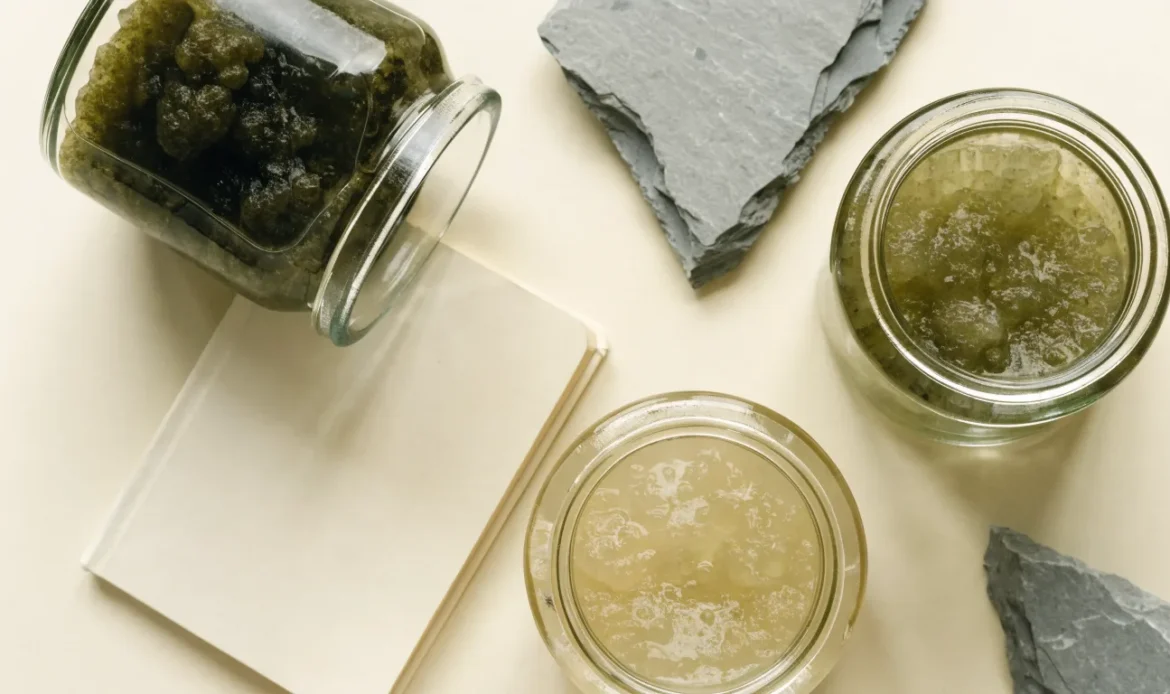
Short answer first: There is no single “best sea moss brand” for everyone. The right brand depends on what you value. Check sourcing, lab reports, product form, ingredient lists, storage needs, and subscription terms. Use a simple checklist to compare brands before you buy.
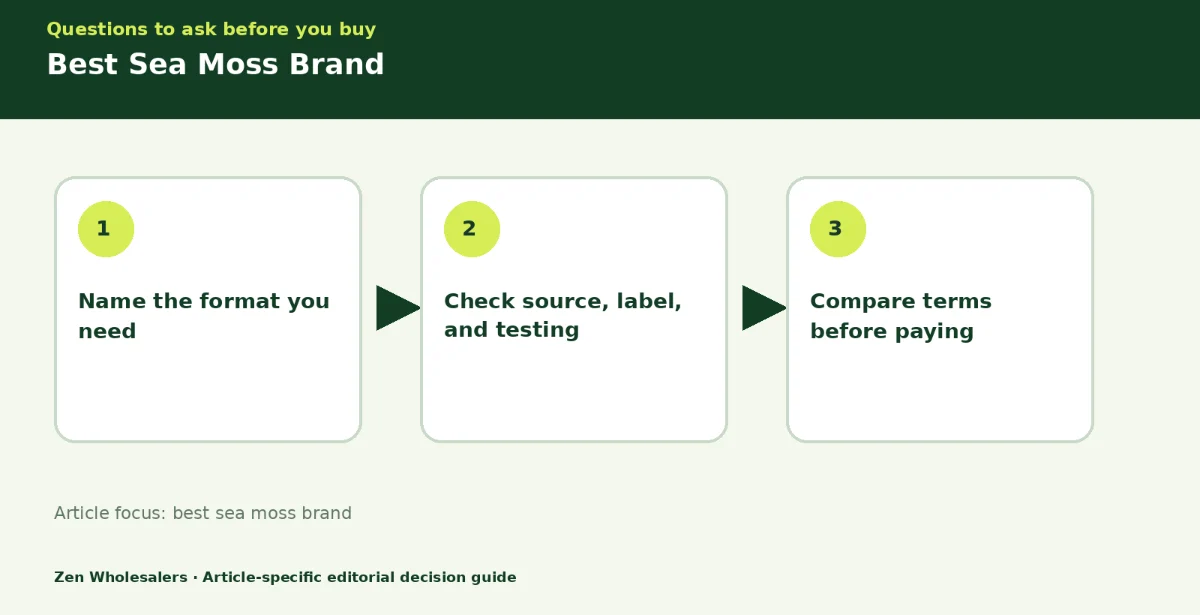
Why this guide
- You want a clear answer and steps to choose.
- You may be looking at sea moss gel, raw sea moss, capsules, or wholesale.
- This guide tells you what to check and what the checks cannot prove.
- It gives a practical checklist you can use today.
How to use this page
- Read the quick checklist below if you want a fast decision.
- Read the detailed sections to learn what each check means.
- Use the suggested visual to compare a few brands side by side.
- If you want to buy or ask about wholesale, visit our shop or wholesale pages.
Quick checklist: 7 checks for any brand
- Sourcing stated: Where the sea moss is harvested or grown is named.
- Product form listed: gel, dried, capsules, powder, or raw seaweed clearly noted.
- Ingredient list short: only sea moss and simple preservatives if any.
- Lab testing available: third-party test results (or a certificate of analysis) for contaminants and iodine.
- Iodine guidance: the brand warns that iodine content can vary and advises safe use.
- Transparent subscription terms: clear renewal dates and cancel policy for any D2C subscription.
- Clear storage instructions: how to store and shelf-life guidance for each form.
If a brand passes these checks, it is worth considering. If it fails one or more, ask questions before you buy.
What “best” means for sea moss
“Best” can mean different things:
- Best for purity: minimal ingredients and clear testing.
- Best for convenience: ready-made gel or pre-measured packs.
- Best for price: good value per usable serving.
- Best for business: reliable supply and consistent batch quality for wholesale.
You must match a brand to your need. A single brand may be great for one use and weak for another.
Key criteria explained
Sourcing and species clarity
What to check
- Does the brand name a harvest area or country?
- Does it state the seaweed species or common name?
Why it matters
- Sea moss is a broad market term. Different seaweeds have different textures and mineral profiles. Knowing the species or harvest area helps you compare.
What it cannot prove
- A harvest location listed on a label does not guarantee sustainable practices or absence of local contamination. It is a statement, not a lab test.
Third-party lab testing and Certificates of Analysis (COA)
What to check
- Does the brand publish third-party test results or a COA?
- Do tests cover heavy metals, microbes, and iodine?
Why it matters
- Lab testing is the clearest way to confirm safety markers. Independent labs are more reliable than in-house tests.
What it cannot prove
- A single COA covers only the tested batch. It does not prove every batch is identical. Ask how often the brand tests their product.
Relevant note on iodine
- Iodine levels in seaweed can vary widely. High iodine can matter for people with thyroid conditions. Read product warnings and look for iodine testing. [2][3][5]
Labeling and ingredients
What to check
- Is the ingredient list short and specific?
- Are additives, thickeners, or preservatives named?
Why it matters
- Plain sea moss or sea moss and water are common for gels. Extra ingredients change texture and shelf life. Know what you are getting.
What it cannot prove
- A short label does not guarantee the product was handled safely during processing.
Processing method and product form
Common forms
- Raw or dried sea moss: less processed. Needs cleaning or soaking.
- Sea moss gel: hydrated and blended. Ready to use.
- Capsules or powders: processed, convenient dosing.
What to check
- How the sea moss was cleaned and preserved.
- For gels: whether any stabilizers were used.
Why it matters
- Different forms suit different users. Dried sea moss stores longer. Gel is ready to mix.
What it cannot prove
- Labels cannot show exact nutrient levels unless accompanied by testing.
Packaging and storage guidance
What to check
- Is storage guidance clear? (Refrigerate, freeze, or keep dry.)
- Is shelf-life or “use by” date shown?
Why it matters
- Sea moss can degrade if stored poorly. Time and temperature affect texture and safety.
What it cannot prove
- An expiry date is a brand promise, not a lab result. If no tests back shelf-life claims, treat them cautiously.
Transparency and traceability
What to check
- Does the brand explain sourcing, processing steps, and testing frequency?
- Are batch codes or lot numbers visible for traceability?
Why it matters
- Traceability helps if a recall or question arises.
What it cannot prove
- Transparency reduces risk but cannot eliminate unknowns in raw harvests.
Safety communications and consumer guidance
What to check
- Does the brand warn about iodine variability?
- Does it recommend consulting a health professional if needed?
Why it matters
- Seaweed can contain high iodine. Brands that educate are more responsible.
Supportive references
- Public health sources show iodine in seaweed can be variable and that excess iodine has effects for some people. [1][2][3][5]
Price, value, and portion size
What to check
- How many servings per container?
- Are suggested serving sizes clear?
Why it matters
- Price alone is not enough. Value is price per suggested serving and product quality.
What it cannot prove
- Cheap price with no testing or sourcing info increases risk.
Reviews, reputation, and customer service
What to check
- Do reviews discuss consistency across orders?
- Is customer service responsive about lab tests, subscriptions, and returns?
Why it matters
- Repeats and long-term buyers often notice batch variation and subscription billing issues.
Sea moss and D2C subscriptions: what to watch for
Many sea moss brands sell gel and other products directly to consumers using subscription models. This makes buying convenient, but pay attention to:
- Clear billing: the invoice date, frequency, and renewal policy.
- Cancellation policy: how long ahead you must cancel and how to contact support.
- Price changes: whether introductory rates change after a period.
- Trial offers: understand what you are signing up for.
Do not rely on vague claims about company growth or “future revenue” when choosing a product. Those business signals do not prove product quality. Ask for the subscriber terms before you commit.
Note: Some industry observers track D2C subscription trends, but such market data does not replace safety and quality checks for individual products.
Practical decision table
| Question to ask | Good answer | Warning sign |
|---|---|---|
| Is harvest source named? | Yes — region or coast and species | Vague or “Caribbean” only |
| Are third-party lab reports posted? | Yes — recent COA covering heavy metals, microbes, iodine | No lab info or only vague claims |
| Are ingredients listed fully? | Sea moss (species), water, natural preservative if used | Long list of stabilizers or unnamed “natural flavors” |
| How is product sold? | Clear form: dried, gel, capsule; storage directions included | Unclear form, no storage advice |
| Are subscription terms clear? | Billing cycle and cancel steps shown up front | Hidden renewals or hard-to-find cancel policy |
| Does the brand warn about iodine? | Yes — guidance and suggestion to consult health professional | No mention of iodine variability |
| Is customer support reachable? | Address, email, and phone; fast answers to lab test questions | Only a contact form with no other channels |
Use this table as a quick screening tool. If a brand fails more than two “Warning sign” items, ask specific questions or consider another brand.
How to read a lab report (COA)
If a brand posts a COA, check:
- Date and batch code: Does it match the product batch you are buying?
- Tested parameters: heavy metals (lead, cadmium, mercury), microbes, and iodine are important.
- Lab accreditation: an accredited third-party lab is preferable.
- Limits and units: look for test thresholds and units. If you are unsure, ask the brand to explain.
What a COA cannot show
- Consistency across future batches. Ask the brand about testing frequency and how they handle batch failures.
Questions to ask a brand before you buy
- What species of seaweed is this product?
- Where and when was it harvested?
- Do you publish third-party lab tests for each batch? Can you share the COA?
- What preservatives, if any, do you use?
- How long will this product last unopened and opened?
- If I sign up for a subscription, how do I pause or cancel?
Keep copies of answers. Email is useful because it creates a record.
Practical checklist for a purchase decision
Before you click buy, run this quick checklist. Mark yes/no.
- [ ] Harvest source and species named
- [ ] Product form (gel/dried/capsule) clearly listed
- [ ] Ingredient list is short and clear
- [ ] Third-party COA available and recent
- [ ] Iodine guidance or warning present
- [ ] Storage and shelf-life instructions present
- [ ] Subscription terms clear (if applicable)
- [ ] Customer support contact info available
If you have 6 or more yes answers, the brand meets common transparency and safety checks. If not, contact the brand for more details.
If you want to sell sea moss or buy wholesale
- Ask suppliers for ongoing COAs and sample batches.
- Request lead times and stability data for products like gels.
- For recurring shipments, ask about batch consistency and traceability.
- Compare contract terms carefully for minimum order quantities and return policies.
If you want to explore buying or selling, our wholesale page explains options and how to start.
Common product forms explained
- Dried sea moss
- Pros: longer shelf-life; you can rehydrate or process.
- Cons: requires cleaning and preparation.
- Sea moss gel
- Pros: ready to use for smoothies or cooking.
- Cons: shorter refrigerated shelf-life; may contain added ingredients.
- Capsules and powders
- Pros: convenient dosing, travel-friendly.
- Cons: processed form; check for fillers and dose guidance.
Choose the form that matches your use case and storage ability.
Safety notes and iodine specifics
- Seaweed can contain variable iodine. This can be important for people with thyroid issues. [2][5]
- Public health sources note that iodine levels in different seaweeds and products vary widely. Brands should test and inform consumers. [1][3]
- If you have a medical condition or take medications, talk with a health professional before changing your iodine intake. Brands should advise this on product pages.
How to check reviews and claims
- Look for reviews that mention batch-to-batch consistency.
- Watch for reviews that cite lab reports or the brand’s response to questions.
- Be cautious of reviews with generic praise but no detail about product handling, shipping, or subscription problems.
Next steps
- Use the checklist to screen brands you find online.
- Ask brands for a COA and batch information if it is not posted.
- If you need ongoing supply or larger orders, contact the brand or their wholesale team for sample COAs and contract details.
If you want to explore products, visit our shop. If you are considering larger purchases for resale or events, see our wholesale page. For general learning, visit our learn hub.
Conclusion
There is no single “best sea moss brand” that fits every need. The best choice is transparent, provides testing, and matches the product form you want. Check sourcing, lab results, ingredients, storage, and subscription terms. Ask straightforward questions and keep records of answers. That approach gives you a clear, low-risk way to choose.
Internal links
- Home: /
- Learn hub: /learn/
- Shop products: /shop/
- Wholesale info: /wholesale/
- Contact us: /contact/
Continue reading
Frequently asked questions
Is there one brand that is the best sea moss brand?
No. “Best” depends on what you need. Use transparency, testing, and form to pick a brand that fits your needs.
Should I trust brands that sell sea moss gel by subscription?
Subscriptions can be convenient. But read the billing and cancel terms before you sign up. Clear terms and good customer service are positive signs.
How can I tell if a sea moss product is safe?
Look for third-party lab tests (COAs) covering heavy metals, microbes, and iodine. Also check storage instructions and ingredient lists.
What about iodine risks with sea moss?
Iodine levels in seaweed vary. Brands should warn customers and provide testing results. If you have a thyroid condition, talk to a health professional before making seaweed a regular part of your diet. [2][3][5]
Are “raw” and “wild-harvested” the same?
Not always. “Raw” means not heavily processed. “Wild-harvested” refers to the source. Ask the brand to describe how the product was collected and cleaned.
How often should brands test batches?
There is no universal rule. Frequent testing is better. Ask the brand how often they test and what they do if a batch fails a test.
References
- Harvard T.H. Chan School of Public Health, “Seaweed.” https://nutritionsource.hsph.harvard.edu/seaweed/
- Smyth PPA. “Iodine, Seaweed, and the Thyroid.” European Thyroid Journal, 2021. https://pmc.ncbi.nlm.nih.gov/articles/PMC8077470/
- Food Standards Australia New Zealand, “Survey of iodine levels in seaweed and seaweed containing products,” updated 2025. https://www.foodstandards.gov.au/science-data/monitoring-safety/surveyofiodinelevels
- Operation Supplement Safety, “Sea Moss in Dietary Supplements.” https://www.opss.org/article/sea-moss-dietary-supplements
- Blikra MJ et al. “Consequences of acute and long-term excessive iodine intake: A literature review focusing on seaweed as a potential dietary iodine source.” 2024. https://doi.org/10.1111/1541-4337.70037