
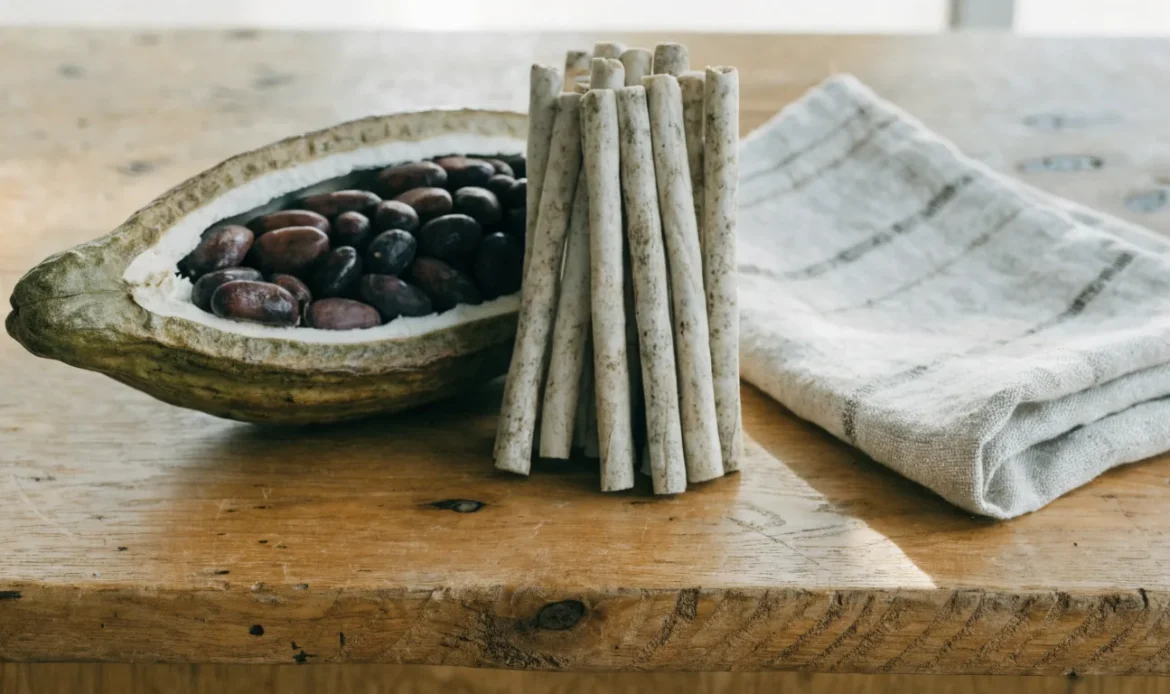
Short answer: Cocoa spheres are small, round chocolate or cocoa-based confections. They come as filled truffles, coated centers, or dry crunchy bites. Read labels to know ingredients, allergens, and whether any seaweed or sea moss is added.
Why this matters now: buyers want clear format and label checks. This guide explains what cocoa spheres are, typical ingredients, how they are used in cooking, what to check before you buy, and what the labels cannot prove.
What are cocoa spheres?
Cocoa spheres are a shape and format, not a single recipe. Makers use the round form for texture, portion size, and presentation. Common formats include:
- Filled spheres: soft centers like ganache, caramel, or nut paste with a chocolate shell.
- Solid chocolate spheres: firm chocolate made from cocoa liquor, cocoa butter, and sugar.
- Crunchy centers: puffed grains or sugar centers coated in chocolate.
- Rolled spheres: balls of ground ingredients (nuts, dates, cocoa) rolled in cocoa or powder.
Use the term “cocoa spheres” to describe the shape. The exact recipe varies by maker and region.
Typical ingredients and labels
Ingredients differ by type. Common items you’ll see:
- Cocoa liquor, cocoa butter, cocoa powder
- Sugar, glucose, or other sweeteners
- Milk powder or condensed milk (for milk chocolate types)
- Vegetable oils (sometimes used in coatings)
- Fillings: cream, nut pastes, fruit purees, caramel
- Coatings: cocoa dust, tempered chocolate, sprinkles
What to watch for on the label:
- Allergen statements (milk, nuts, soy, gluten)
- “May contain” cross-contact warnings
- Percent cocoa or chocolate type (dark, milk, white)
- Added ingredients like sea moss or other botanicals
- Storage and “best by” or production date
Labels tell you what was put in the product. They do not prove freshness beyond the date or guarantee sourcing details unless certified.
How cocoa spheres are made — simple overview
Small-scale and industrial methods differ, but the main steps are similar.
Artisanal steps:
- Prepare the filling (ganache, nut paste, fruit jam).
- Portion and chill the filling into small balls.
- Coat by hand: dip in tempered chocolate or roll in cocoa powder.
- Finish with decoration and allow to set.
Industrial steps:
- Prepare base chocolate and centers in larger batches.
- Use enrobing or depositing machines to apply shell or coating.
- Use tumble coaters for crunchy spheres.
- Package in sealed trays or bags.
The texture and shelf life depend on ingredients and how the product is stored.
Culinary uses and serving ideas
Cocoa spheres add shape and flavor to many dishes. Use them for:
- Dessert platters as a bite-sized sweet.
- Garnishes on cakes, mousse, or hot drinks.
- Trail mixes or snack bowls (choose crunchy types).
- Dessert tasting flights: offer different-filled spheres for variety.
- Gift boxes or hospitality baskets.
Serving tips:
- Bring chilled spheres to room temperature for 10–20 minutes before serving to improve texture and flavor.
- Pair dark cocoa spheres with strong coffee or red wine. Pair milk chocolate spheres with lighter coffees and teas.
- For plating, a single sphere on a small dish looks elegant. For groups, arrange several sizes for contrast.
Cocoa spheres vs. botanical or sea-moss products
Cocoa spheres are cocoa-based confections. They are botanically unrelated to sea moss or other seaweeds. However, some products labeled in Caribbean or botanical shops may include added botanicals (for flavor, texture, or novelty). If a cocoa sphere product lists sea moss, kelp, or dried seaweed on the ingredient label, that is an added ingredient — not a natural property of cocoa.
Why check the label:
- “Sea moss” or seaweed may add iodine or mineral content that you might want to note.
- Botanical claims like “made with sea moss” should be supported by ingredient listings and, ideally, clear amounts. Labels alone cannot prove nutritional or therapeutic benefits.
Safety note: certain seaweeds can be high in iodine and need attention for people who monitor iodine intake. For general guidance on seaweed and iodine, see public science and health summaries. [1][2][3][5] If you are concerned about iodine or supplement use, consult a qualified health professional. Reference material on sea moss in supplements is available for more detail. [4]
How to check quality — practical buyer checklist
Use this short checklist when you buy cocoa spheres. It helps you compare products and avoid surprises.
- Ingredient list: Are all components listed? Any seaweed, stabilizers, or unfamiliar additives?
- Allergen info: Does it match your needs (nuts, dairy, soy)?
- Cocoa content: Is the percentage or type of chocolate stated?
- Fillings and sweeteners: Natural sweeteners? Artificial flavors?
- Certifications: Organic, Fair Trade, kosher, or other seals you value.
- Packaging date and “best by” date: Is it recent?
- Storage instructions: Do they match your ability to store (cool, dry, refrigerated)?
- Origin and maker: Is the producer named? Is contact info listed?
- Wholesale terms (if buying bulk): MOQ, shelf life, packaging options.
Quick decision guide (table)
| Your priority | Choose product type | What to check on the label |
|---|---|---|
| Rich chocolate flavor | High cocoa % solid spheres or dark ganache | Cocoa % and type of cocoa listed |
| Low sugar or natural sweeteners | No added sugar or alternative sweetener recipes | Ingredient list; sugar types |
| Nut-free snack | Coated crunchy centers without nuts | Allergen and may-contain statements |
| Botanical or sea-moss inclusion | Specialty spheres labeled with botanicals | Exact ingredient name and amount; any iodine warnings |
| Wholesale purchase | Bulk-packed spheres, clear MOQ and shelf life | Packaging date, storage, labeling for resale |
Use the checklist and table together. They guide your next questions to the maker or seller.
Buying wholesale: what to ask
If you want cocoa spheres by the case or pallet, ask the seller:
- What is the minimum order quantity (MOQ)?
- Can you supply a sample before ordering?
- What is the product’s shelf life from production date?
- How are the spheres packed (tray, sealed bag, bulk)?
- Do you provide ingredient and allergen sheets for retailers?
- Is labeling compliant with local laws where I will sell?
Wholesale buyers should also check shipping and storage conditions to maintain quality.
Storage and simple handling tips
General storage tips for cocoa spheres:
- Keep in a cool, dry place away from direct sunlight.
- Ideal storage is typically below 70°F (21°C) and low humidity to avoid bloom (white film) and melting.
- Avoid strong odors — chocolate absorbs smells.
- Once opened, seal in an airtight container and consume within the recommended window on the package.
Specific shelf life varies by recipe and filling. Labels are the primary source for “best by” guidance.
Where cocoa spheres fit in Caribbean botanical shops
Caribbean botanical shops often sell confections alongside botanical preparations. If you see cocoa spheres in a Caribbean botanicals section:
- Treat them as food items, not botanical medicines.
- Read the ingredient list carefully if they are marketed with botanical additives.
- If botanical terms are used in marketing, check whether the ingredient list confirms the actual botanical presence.
If you want to explore cocoa spheres offered by our selection, see our Caribbean botanicals collection at Caribbean Botanicals (/shop/caribbean-botanicals/). For a broader shopping view, visit our main shop (/shop/). Learn more about product types and labeling on our learn (/learn/) pages. If you plan to resell, check wholesale (/wholesale/) options or contact us for details.
Next questions to ask before buying
- Exactly which ingredients are used and in what order on the label?
- Is there a sample I can try?
- How will the product be shipped and stored?
- If botanicals are listed, how much is included and what form is it?
Asking these questions will reduce surprises and help you match the product to your needs.
Conclusion
Cocoa spheres are a flexible, tasty format. They can be simple or complex. The most helpful things a buyer can do are read the ingredient list, check allergen statements, and ask the seller about shelf life and packaging. If a product mentions sea moss or other botanicals, treat that as an added ingredient and check labels closely. Use the checklist and decision table above to compare options and decide what fits your taste and needs.
Explore cocoa and botanical items at our Caribbean botanicals collection: Caribbean Botanicals (/shop/caribbean-botanicals/). For more product topics and labeling help, visit our learn (/learn/) center. Browse other items in the shop (/shop/) or learn about bulk orders on our wholesale (/wholesale/) page. Visit home for contact and company info: [/].
Frequently asked questions
Are cocoa spheres just chocolate?
Not always. Some are pure chocolate. Others have centers, crunchy cores, or mixed ingredients like nuts or fruit. Check the ingredient list to be sure.
Can cocoa spheres contain sea moss or other botanicals?
Yes, specialty products can include botanicals. If you care about that, read the ingredient line. Marketing claims should match the ingredient list.
How long do cocoa spheres last?
Shelf life depends on ingredients and packaging. Look for a production or “best by” date on the package. Store in a cool, dry place as the label suggests.
Are cocoa spheres vegan or nut-free?
Some are. Others contain milk, honey, or nuts. Look for clear labeling or a vegan/allergen statement.
I am worried about iodine and sea moss. What should I do?
If you see seaweed or sea moss listed, and iodine intake is a concern for you, check the label and consult authoritative sources or a healthcare professional. Public summaries explain that some seaweeds can contain high iodine levels and to be mindful of supplement products. [1][2][3][5]
Can I buy cocoa spheres wholesale from you?
For wholesale inquiries and terms, please check our wholesale (/wholesale/) page or reach out via our contact (/contact/) page.
References
- [1] Harvard T.H. Chan School of Public Health, “Seaweed.” https://nutritionsource.hsph.harvard.edu/seaweed/
- [2] Smyth PPA. “Iodine, Seaweed, and the Thyroid.” European Thyroid Journal, 2021. https://pmc.ncbi.nlm.nih.gov/articles/PMC8077470/
- [3] Food Standards Australia New Zealand, “Survey of iodine levels in seaweed and seaweed containing products,” updated 2025. https://www.foodstandards.gov.au/science-data/monitoring-safety/surveyofiodinelevels
- [4] Operation Supplement Safety, “Sea Moss in Dietary Supplements.” https://www.opss.org/article/sea-moss-dietary-supplements
- [5] Blikra MJ et al. “Consequences of acute and long-term excessive iodine intake: A literature review focusing on seaweed as a potential dietary iodine source.” 2024. https://doi.org/10.1111/1541-4337.70037