
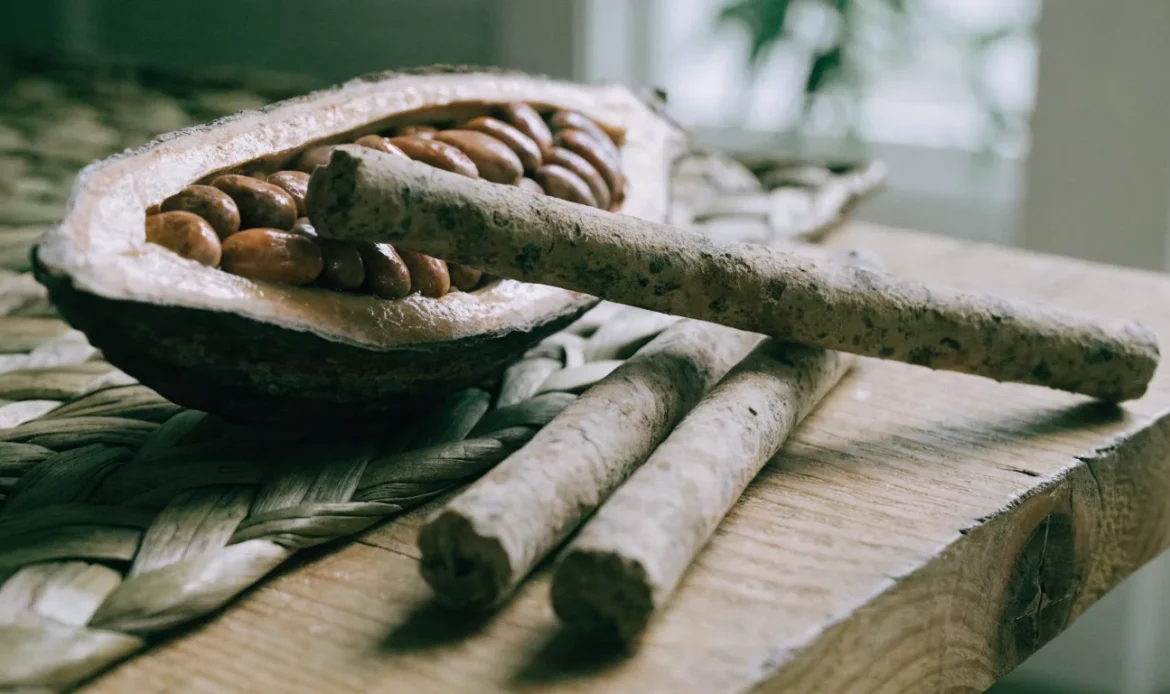
Short answer first: Trinidad cocoa usually refers to cocoa prepared or sold in a traditional Caribbean way — often formed into small balls or blocks from roasted cocoa, sugar, and spices. It is a culinary product, not a seaweed or supplement. Read on for how it’s made, how to use it, what to check on labels, and how to choose the right format for your needs.
Why this matters: people shop for “Trinidad cocoa” to make hot chocolate, flavor baking, or enjoy a traditional treat. If you are also buying sea moss or other Caribbean botanicals, it helps to know cocoa is a separate ingredient with very different sourcing, safety checks, and uses.
What is Trinidad cocoa?
Trinidad cocoa is a name used in Caribbean markets for cocoa products prepared in the local style. In the Caribbean, cocoa may be:
- Crushed, roasted cocoa beans formed into compact shapes (for easy storage and transport).
- Mixed with sugar and spices and shaped into “cocoa balls” or “cocoa blocks.”
- Sold as ground cocoa for cooking and beverages.
Important distinction: cocoa comes from the seeds of the Theobroma cacao tree. It is a plant seed product, not an algae or seaweed. If a product contains sea moss or other seaweed ingredients, those should be listed separately on the label.
Traditional forms and how they differ
H2: Common formats you may find
- Cocoa balls / cocoa blocks: These are compacted mixes of cocoa, sugar, and spices. They are convenient for making hot drinks; you break off a piece and dissolve it.
- Ground cocoa: Similar to cocoa powder, used for baking and drinks. It may be roasted or unroasted (raw).
- Cocoa nibs or broken beans: Less processed, crunchy and bitter, usually for baking or snacking.
- Finished confections: Bars, tablets, or candy-style cocoa products with added milk, nuts, or flavorings.
H3: How format affects use
- Cocoa balls: Good for making Caribbean-style hot chocolate. They are ready-made mixes and can be sweet and richly spiced.
- Ground cocoa: Best where you control sugar and fat, such as baking or custom drinks.
- Nibs/beans: Add texture and pure cocoa flavor; usually unsweetened.
How Trinidad cocoa is made — a simple overview
- Harvest: Ripe cocoa pods are harvested from cacao trees.
- Fermentation: The beans and pulp ferment; this develops flavor.
- Drying and roasting: Beans are dried, then roasted to deepen flavor.
- Grinding: Roasted beans are ground into a paste (cocoa liquor) and further processed into solids (cocoa powder) and fat (cocoa butter).
- Mixing and shaping: For cocoa balls, ground cocoa is mixed with sugar and spices, then pressed into shapes and allowed to set.
Note: Different producers and household recipes vary. “Trinidad cocoa” is not a single, regulated product name, so methods and ingredients can differ by seller, region, or family recipe.
Culinary uses and simple recipes
H2: How people commonly use Trinidad cocoa
- Hot cocoa drink: Grate or break a piece into hot milk or water. Stir and strain if needed.
- Baking: Use ground formats for cakes, cookies, and brownies. If using a spiced cocoa ball, cut sugar/spice in your recipe.
- Sauces and glazes: Melt and mix with liquids for a glossy cocoa sauce.
- Gifts and confections: Cocoa balls often wrapped and given as gifts during holidays.
H3: Basic hot cocoa from a cocoa ball (simple, no measures)
- Heat milk or plant milk until warm, not boiling.
- Grate or break a small piece of the cocoa ball into the milk.
- Whisk until dissolved. Add sweetener if desired.
- Taste and adjust. Strain if you used a lot of solids.
Tip: Because recipes and sweetness vary across cocoa balls and blocks, start with a small amount and add more to taste.
Safety, allergens, and labeling to check before you buy
H2: What to check on the package or from the seller
- Ingredient list: This is the primary source of truth. Check for added dairy, nuts, gluten-containing ingredients, or other allergens.
- Spices and sweeteners: Some cocoa balls contain local spices (cinnamon, nutmeg, ginger). If you prefer plain cocoa, look for a short ingredient list (just cocoa and sugar).
- Processing notes: Words like “roasted” or “raw” can tell you about flavor and heat treatment. “Roasted” usually means a fuller, toasted flavor.
- Date codes: Look for a production or best-by date. These give a sense of freshness.
- Storage instructions: Some products recommend cool, dry storage.
- Cross-contact warnings: Phrases like “made in a facility that also processes tree nuts” are important for people with allergies.
- Country of origin and seller transparency: Honest sellers will share where the cocoa was processed. If origin is important to you, ask the seller directly.
Do not assume a product includes sea moss or other botanicals unless those ingredients are listed. Sea moss is a different type of product (a seaweed) that may contain iodine and other minerals; it should only appear if explicitly included.
H3: What labels cannot prove
- A plain label cannot prove how the beans were handled in the field (pesticide use) or exact flavor notes unless a third-party certificate or lab report is provided.
- “Traditional” or “homemade” on a label tells you style, but not safety testing.
- If microbial testing, pesticide testing, or allergen testing matters to you, ask the seller for third-party lab reports.
Storage and shelf handling
- Keep cocoa in a cool, dry place away from strong smells.
- Use airtight containers after opening to protect flavor.
- Avoid freezing unless the product instructions say otherwise; condensation on thaw may affect texture.
- For long-term storage, follow any date codes and discard if odor or appearance changes.
Buying decisions: a practical decision guide
H2: Decision guide — choose the right Trinidad cocoa format
| Your goal | Best format to look for | What to check on label |
|---|---|---|
| Quick drinks, ready flavor | Cocoa balls / blocks | Ingredients list, spices, sweetener level |
| Baking control | Ground cocoa or powder | Unsweetened label, processing notes (roasted/raw) |
| Texture and crunch | Nibs or broken beans | Any added sweeteners or coatings |
| Gifting / traditional treats | Hand-formed cocoa balls | Packaging, date, allergen statements |
| Avoiding dairy or nuts | Unsweetened cocoa or clear ingredient listing | Allergen warnings, “may contain” notes |
Use this as a quick checklist when choosing a product.
H3: Short buyer checklist (use before purchase)
- Read the full ingredient list.
- Note any allergen statements or “may contain” notes.
- Check for processing type (roasted vs raw).
- Look for production or best-by date.
- Ask the seller where the cocoa was processed if origin matters.
- Ask for lab reports if you need pesticide/microbial/allergen testing information.
Quality cues you can check at home
- Aroma: Fresh cocoa has a clear chocolate aroma. Off or sour smells suggest age or contamination.
- Texture: Cocoa balls should be solid and intact. Powder should be free-flowing and not clumped by moisture.
- Taste: A small taste will tell you sweetness and spice levels. Start small, especially if you have allergies.
- Visual: Look for unusual discoloration, mold, or visible foreign matter. If you see anything suspicious, do not use.
How Trinidad cocoa interacts with sea moss and other botanicals
If you buy both cocoa and sea moss from a shop or vendor, note these points:
- Different ingredient types: Cocoa is a seed-derived product. Sea moss is a type of seaweed. They are not interchangeable.
- Labeling: Each product should have its own label listing ingredients and any supplement claims.
- Iodine and seaweed: Sea moss and other seaweeds can contain iodine. If you use seaweed products, be aware that iodine intake can be significant; check product labeling and guidance from reputable sources. For general background on seaweed and iodine, see authoritative sources. [1][2][3][4][5]
Do not assume that a product labeled “Trinidad cocoa” includes any seaweed or sea-moss-related nutrients unless those are explicitly listed.
Where to ask more questions
- Ask the seller for ingredient and processing details.
- If you need testing or certification details, ask for third-party lab reports.
- For questions about how a cocoa product might interact with supplements or medical conditions, consult a healthcare professional.
For product and wholesale inquiries, use our contact page. You can also browse more Caribbean botanicals and learn about other ingredients via the links below.
- Home: [/]
- Caribbean Botanicals shop: [/shop/caribbean-botanicals/]
- Learn more: [/learn/]
- Full shop: [/shop/]
- Wholesale inquiries: [/wholesale/]
- Contact us: [/contact/]
Conclusion
Trinidad cocoa covers a range of cocoa products sold in Caribbean markets. It can be a convenient, flavorful choice for drinks, baking, and gifts. Before you buy, read labels, check for allergens and dates, and ask sellers for details if origin or testing matters to you. Remember: cocoa is a seed product (Theobroma cacao), not a seaweed — any sea moss or algae must be listed separately. If you need help choosing the right format for a recipe, or want wholesale or product details, visit our Caribbean botanicals shop, browse our learn resources, or contact us.
Continue reading
Frequently asked questions
Is Trinidad cocoa the same as cocoa powder?
Not always. “Trinidad cocoa” can mean cocoa in several forms. Some are compacted mixes (cocoa balls) while others are ground powder. Always read the ingredient and format description.
Does Trinidad cocoa contain sea moss or seaweed?
Only if the ingredient list says so. Cocoa and sea moss are different ingredients. If sea moss is included, it must be listed on the label.
Are cocoa balls ready to drink straight away?
Cocoa balls are often made as a ready mix. You typically dissolve or grate a portion into hot milk or water. Because recipes vary, taste and adjust sweetening and spice to your preference.
What allergens should I watch for?
Common issues include added milk, tree nuts, and cross-contact in processing facilities. Check the ingredient list and any “may contain” statements.
How long will Trinidad cocoa last?
Products vary. Check the package for a production or best-by date. Store in a cool, dry place and use your senses (smell, look) for signs of spoilage.
How can I be sure of product safety?
Read labels, ask sellers for production details, and request third-party lab reports if you need testing data for pesticide, microbial, or allergen confirmation.
References
- [1] Harvard T.H. Chan School of Public Health, “Seaweed.” https://nutritionsource.hsph.harvard.edu/seaweed/
- [2] Smyth PPA. “Iodine, Seaweed, and the Thyroid.” European Thyroid Journal, 2021. https://pmc.ncbi.nlm.nih.gov/articles/PMC8077470/
- [3] Food Standards Australia New Zealand, “Survey of iodine levels in seaweed and seaweed containing products,” updated 2025. https://www.foodstandards.gov.au/science-data/monitoring-safety/surveyofiodinelevels
- [4] Operation Supplement Safety, “Sea Moss in Dietary Supplements.” https://www.opss.org/article/sea-moss-dietary-supplements
- [5] Blikra MJ et al. “Consequences of acute and long-term excessive iodine intake: A literature review focusing on seaweed as a potential dietary iodine source.” 2024. https://doi.org/10.1111/1541-4337.70037