
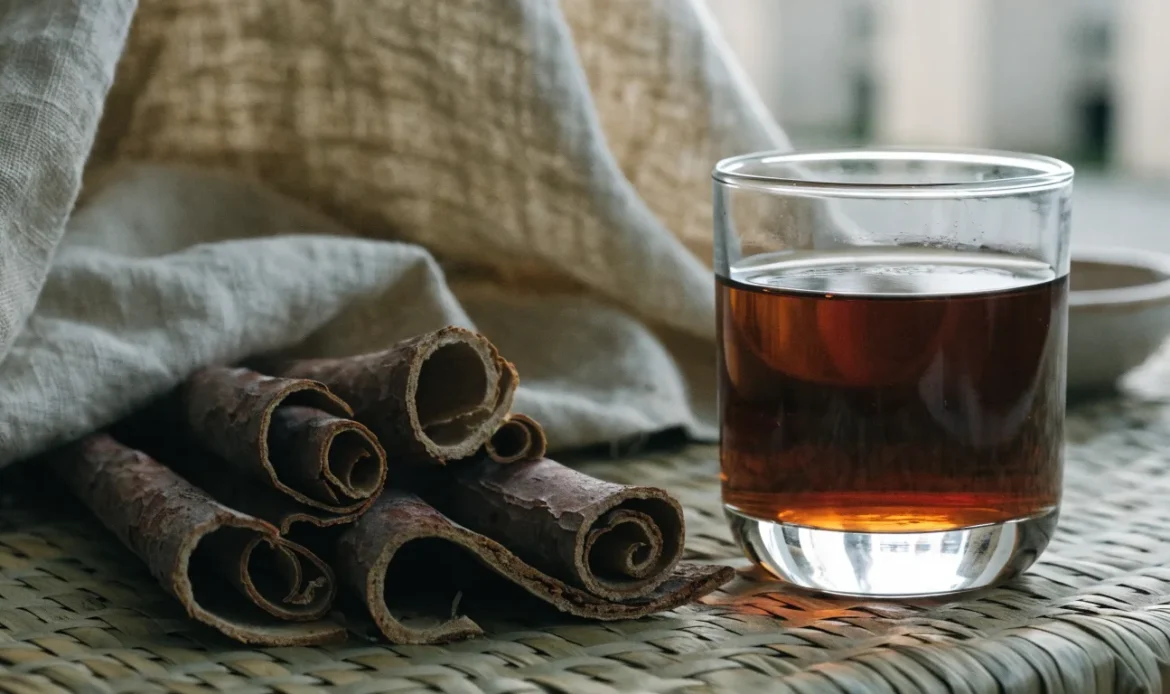
Short answer: Mavi bark (often spelled mauby or mabi) is dried tree bark used across the Caribbean to make a bittersweet, spiced drink called mauby or mavi. It is a culinary ingredient, not sea moss or seaweed. Read on for how to identify, buy, and use mavi bark safely and clearly.
What mavi bark is (plain definition)
- Mavi bark refers to dried bark from trees traditionally used in Caribbean recipes for a drink called mauby, mavi, or mabi.
- The bark commonly comes from small trees in the genus Colubrina, including Colubrina elliptica and Colubrina arborescens. These species are often called soldierwood, snakewood, or mabi in local names. (fairchild.gardenexplorer.org)
- The bark is boiled with water, spices, and sweetener to make a syrup or brewed beverage. The finished drink may be served fresh or after a short fermentation. (en.wikipedia.org)
What mavi bark is not
- It is not seaweed, sea moss, or any marine product. Do not confuse mavi bark with sea moss products. Sea moss are marine algae and carry different labeling, uses, and safety notes. (en.wikipedia.org)
Names and where the words come from
- Mauby, mavi, mabí, and mabi are regional names for the same drink and ingredient across Caribbean islands.
- In English-speaking islands you may see “mauby,” in Spanish-speaking areas “maví,” and in French-speaking islands “mabi.” The recipe and local spices can change from place to place. (atlasobscura.com)
Which tree species are used (botanical notes)
- Colubrina elliptica and Colubrina arborescens are the species most often named in botanical and culinary sources for mauby bark. These are members of the buckthorn family and grow in parts of the Caribbean and nearby regions. (fairchild.gardenexplorer.org)
- Local names and suppliers sometimes use other related species or bark from similar trees. If botanical precision matters for you, look for supplier notes or ask for the Latin name on the product label.
Culinary uses and common recipes
- The main culinary use is a beverage. Makers simmer bark to extract flavor. They add spices such as cinnamon, cloves, star anise, and sometimes citrus peel. Sugar or cane syrup is added to balance bitterness. (en.wikipedia.org)
- The liquid can be served chilled, with ice, or carbonated after a brief fermentation. Variants exist: some use fresh ginger, others add rum or bitters for cocktails.
- The bark also appears in syrups or bottled concentrates sold ready-to-mix. When you buy “mavi syrup” you may only need to dilute it with water.
Forms you’ll find for sale (what “mavi bark for sale” can mean)
- Dried bark pieces or sticks — the closest to traditional form. These need boiling and straining.
- Powdered bark — ground for ease, used like a tea or for quick infusion.
- Ready-made syrup or concentrate — brewed and sweetened, sold in bottles.
- Blended spice mixes — bark combined with cinnamon, cloves, and other spices for a single-use brew.
When a seller lists “mavi bark for sale,” check the form so you know if you will need to cook, strain, or dilute the product.
How to choose mavi bark to buy — what to check on the label
Look for clear, plain labeling. The label should show:
- Form (dried bark, powder, syrup, concentrate).
- Ingredient list. Pure bark should list the botanical name or “mauby/mavi bark” plus any added spices or sweeteners.
- Net weight and package size.
- Supplier or brand name and a way to contact them.
Avoid products with vague labels like “natural bark extract” without ingredient detail. If you need botanical certainty, ask the seller for the Latin name (for example, Colubrina elliptica).
Safety, quality, and what labels cannot prove
- A product label cannot by itself prove sustainable harvesting, pesticide-free processing, or exact botanical purity. Those claims require supporting certificates or supplier transparency.
- Labels may say “traditional” or “hand-harvested.” Those are descriptive terms. If you need verified claims (organic, third‑party tested), ask the seller for certificates or lab reports.
- If you have allergies to tree barks, spices, or other ingredients, review the full ingredient list and contact the seller before buying.
Storage and shelf life (practical guidance)
- Keep dried bark in a cool, dry place in a sealed jar or bag. Moisture encourages mold.
- Syrups and concentrates usually require refrigeration after opening. Follow the product label.
- If you see any odd smell, visible mold, or cloudy syrup with sediment that smells off, do not use it.
How to make mavi (basic home brew)
Here is a simple, short description rather than a detailed recipe:
- Simmer dried bark in water for 30–60 minutes to extract flavor.
- Add spices (cinnamon, cloves, star anise) during the simmer.
- Sweeten with sugar or cane syrup to taste while warm.
- Strain solids out with a fine sieve or cheesecloth.
- Cool and serve over ice, or allow a short fermentation for fizz.
If you buy powdered bark or syrup, follow the package directions. Be cautious with fermentation: keep equipment clean and maintain refrigeration once brewed or after desired fermentation is reached.
Why some people confuse mavi bark with sea moss
- Both mavi (mauby) and sea moss are Caribbean-associated ingredients, but they come from entirely different sources. Mavi is tree bark. Sea moss is a marine algae product. They are used differently in food and drink. If you see “sea moss” and “mavi” in one ad, examine the ingredient list closely to know what you are buying. (en.wikipedia.org)
Safety note on seaweed/sea moss (context for comparison)
- Seaweed and sea moss are marine foods that may contain variable amounts of iodine. Buyers of seaweed products should be aware of labeling, source, and iodine content. For more on iodine and seaweed, see public health resources. (fabulousfusionfood.com)
Who typically buys mavi bark — common use cases
- Home cooks and home brewers who want to make traditional mauby drinks.
- Small food businesses, cafés, or bars that serve Caribbean beverages.
- People who buy culinary botanicals for cultural recipes.
- Retailers who sell Caribbean ingredient kits or spice blends.
If you are a wholesaler or a retailer, check minimum order quantities and sample policies before committing to larger buys.
Buying guide: how to assess “mavi bark for sale”
Use this quick decision guide to choose between options. It helps you move from “interest” to “buy” with fewer surprises.
Decision guide: picking the right product
- Purpose: Traditional brewing? Quick mix? Cocktail use? Choose dried bark for tradition; syrup or powder for speed.
- Form factor: Dried bark = longer prep, more authentic. Powder = quick brew. Syrup = ready-to-use.
- Label clarity: Does it list the species or say “mauby bark”? If not, ask.
- Added ingredients: Are spices and sweeteners already mixed in? If you want control, choose plain bark.
- Supplier info: Can you contact the seller? Is there a return policy or sample option?
- Price per usable amount: A syrup may appear cheaper but is partly water/sugar; compare usable bark weight against syrup volume.
- Food safety: For syrups, check storage instructions and expiration; for dried bark, check for mold or insect damage.
Practical checklist: Before you buy mavi bark for the first time
- [ ] I know which form I prefer (dried, powdered, or syrup).
- [ ] The product label lists ingredients clearly.
- [ ] The seller provides contact information.
- [ ] The botanical name or local tree name is on the label or available on request.
- [ ] I can store the product as recommended (cool/dry for bark; refrigerated after opening for syrup).
- [ ] I checked whether added sugars or other ingredients fit my recipe.
- [ ] If buying wholesale, I requested a sample or small initial order.
- [ ] I understand the product is a culinary ingredient, not a medical treatment.
Packaging and wholesale: what to expect
- Dried bark may be sold in small retail packets (1–8 oz) and larger bags for wholesale orders. Syrups are usually in bottles.
- Wholesale buyers should ask about lot numbers, packaging dates, and sample availability. This helps you check quality before scaling up orders.
- If you are reselling, ask the supplier for ingredient lists and any claims you should include for labels.
Transparency: what sellers can and cannot prove
What you can reasonably ask a seller to prove:
- Ingredient list and form.
- Contact information and return policy.
- Storage instructions.
What a label alone usually cannot prove:
- Exact botanical purity without testing.
- Harvest methods or sustainability unless supported by third-party certification.
- Absence of trace contaminants unless a lab report is provided.
If any of those details matter to you, request additional documentation.
Legal and health caution (brief, non-medical)
- Mavi bark is a culinary ingredient. Sellers and labels may sometimes imply traditional health uses. Those are cultural or folk uses. They are not guaranteed effects and should not replace professional medical advice.
- If you have a health condition, are pregnant, nursing, or taking medicines, talk with a qualified health professional before using new botanical ingredients.
Where to look next (site links)
- Home: learn more about our products and values at Zen Wholesalers.
- Caribbean botanicals: see our curated items at [/shop/caribbean-botanicals/].
- Learn: background on ingredients and safe use at [/learn/].
- Shop: browse the full product range at [/shop/].
- Wholesale: information for retailers and bulk purchases at [/wholesale/].
Conclusion
Mavi bark is a clear culinary ingredient with a long Caribbean history. If you want to make traditional mauby, buy dried bark. If you need speed, choose powder or syrup. Read labels carefully. Ask suppliers for botanical names and ingredient lists when you need certainty. Keep storage, prep, and safety in mind. If you want samples or wholesale info, check our wholesale page and contact the seller before a large order.
If you want help picking between forms (dried bark vs. syrup vs. powder) tell me how you plan to use it. I can make a short recommendation for your needs.
Continue reading
Frequently asked questions
Is mavi bark the same as sea moss?
No. Mavi bark is dried tree bark used to make the mauby drink. Sea moss is a marine algae product. They are different ingredients with different uses and labeling.
Can I buy ready-made mavi syrup?
Yes. Some sellers offer bottled syrups or concentrates that you dilute. Check storage instructions and ingredient lists on the label.
How do I store dried mavi bark?
Store it in a cool, dry place in an airtight container. Keep it away from heat and moisture. Throw it out if you see mold or a bad smell.
Does mavi bark need fermentation?
Fermentation is optional. Traditional recipes sometimes allow a short fermentation to add fizz. You can also serve freshly brewed and chilled without fermenting.
How can I tell if a product labeled “mavi” is actually bark?
Look at the ingredient list. If it says mauby, mauby bark, or lists the botanical name (Colubrina elliptica or Colubrina arborescens), that is a good sign. If the label is vague, ask the seller for details.
References
- Colubrina elliptica — Fairchild Tropical Botanic Garden plant notes.
- “Mauby” — overview of the Caribbean bark drink and recipe traditions.
- Simple Mauby Recipe and species references.
- Harvard T.H. Chan School of Public Health, “Seaweed.” https://nutritionsource.hsph.harvard.edu/seaweed/
- Smyth PPA. “Iodine, Seaweed, and the Thyroid.” European Thyroid Journal, 2021. https://pmc.ncbi.nlm.nih.gov/articles/PMC8077470/
- Food Standards Australia New Zealand, “Survey of iodine levels in seaweed and seaweed containing products,” updated 2025. https://www.foodstandards.gov.au/science-data/monitoring-safety/surveyofiodinelevels
- Operation Supplement Safety, “Sea Moss in Dietary Supplements.” https://www.opss.org/article/sea-moss-dietary-supplements
- Blikra MJ et al. “Consequences of acute and long-term excessive iodine intake: A literature review focusing on seaweed as a potential dietary iodine source.” 2024. https://doi.org/10.1111/1541-4337.70037